Two shutters can look nearly identical in a showroom, yet the wood underneath affects how the grain reads, how paint settles, and how the louvers respond to seasonal humidity. That is why the species deserves a closer look before you order, especially for rooms where you want a painted finish to stay clean and even.
Call Vineyard Blind & Shutter at (951) 757-4188 for a free in-home measure.
Q: How do you compare basswood vs cottonwood shutters? A: Look for basswood's fine, straight, even grain and lighter weight. The two woods are close in hardness, but cottonwood tends to move more unevenly across the grain as moisture changes. Basswood is the practical choice when you want stain or paint, and room humidity still matters more than the label.
At Vineyard Blind & Shutter, our real-wood line includes kiln-dried basswood that can be painted or stained, and we help match the material to the room during an in-home measure. The useful comparison starts with what you can see in the grain, then moves to what the finish and the room's humidity may reveal over time.
Here is how the two species differ in the details that matter for a custom shutter.
What separates basswood from cottonwood?
When you compare basswood and cottonwood for interior shutters, the practical difference is easiest to see in the surface. American basswood, or Tilia americana, has a fine, even texture and straight grain. Its pale, creamy color gives paint a smooth, consistent base. If you choose stain, the grain remains quiet rather than becoming the main feature of the room. That understated look works well when you want the shutters to coordinate with trim, flooring, or built-ins.
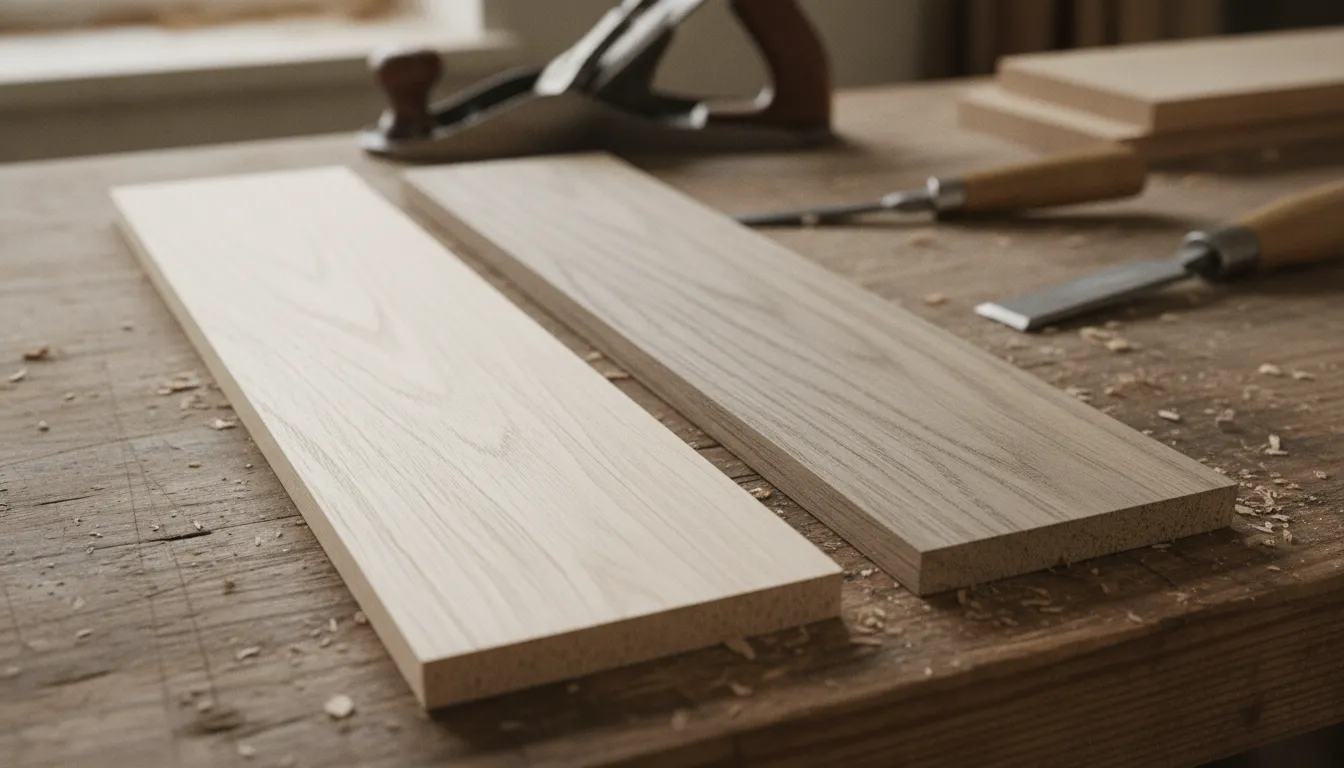
Eastern cottonwood, Populus deltoides, can look more varied from board to board. Its whitish sapwood is not always clearly separated from a grayish-brown heartwood, and its small pores contribute to a uniform grain that is less refined in appearance. Cottonwood also has a tendency to fuzz during machining and can discolor easily from oxidation or fungal stain, details documented by Purdue Extension. Those characteristics matter because shutter louvers and frames need clean, finished edges before paint or stain is applied.
- Color: Basswood is generally pale and creamy; cottonwood may show more contrast between whitish sapwood and grayish-brown heartwood.
- Grain: Basswood has a fine, straight, even grain; cottonwood is uniform but typically less delicate in appearance.
- Paint: Basswood's even surface provides a predictable base for a painted finish.
- Stain: Basswood accepts a quieter stained look, while cottonwood can show discoloration and oxidation more readily.
These woods are close enough in basic strength that the choice should not be framed as one being dramatically stronger. The more useful questions are how consistently the material machines, how the grain looks in your room, and how the finished shutters fit the home's humidity conditions. Basswood's relatively even grain and stable appearance make it a natural fit for a polished painted or stained finish. As with any real wood, controlled indoor humidity and careful manufacturing still matter.
Our Lexwood line is made from 100% kiln-dried basswood from Sunland Shutters. We finish it with water-based, low-VOC stains or paints, so you can choose a finish that works with the light and wood tones already in your home. To see options for custom plantation shutters, we can measure your windows and help you compare the grain and color in your own space.
For a technical reference on basswood's fine, straight grain and pale coloring, see the basswood wood profile. Purdue Extension's eastern cottonwood guide provides additional detail on its color, machining, and staining behavior.
How hard are basswood vs cottonwood shutters, and how much do they move?
On paper, basswood and eastern cottonwood are remarkably close. Cottonwood is only slightly harder and heavier, while basswood has a small edge in bending strength. Those differences are not large enough to make strength the deciding factor for a plantation shutter. The more useful question is how evenly each species responds when indoor humidity changes.
| Property | Basswood | Eastern cottonwood |
|---|---|---|
| Janka hardness at 12% MC. | 410 lbf. | 430 lbf. |
| Weight. | About 26 lb per cubic foot. | About 28 lb per cubic foot. |
| Bending strength. | About 8,700 psi. | About 8,500 psi. |
| Tangential shrinkage, green to oven-dry. | 9.3%. | 9.2%. |
| Radial shrinkage. | 6.6%. | 3.9%. |
The figures are drawn from the USDA Wood Handbook data summarized by Woodworking Math for basswood and Builderology for cottonwood. The hardness and bending numbers tell a straightforward story: neither wood has a dramatic strength advantage here. Both are relatively light woods, and the difference between 8,700 and 8,500 psi is not a practical reason by itself to choose one shutter material.
Movement is where the comparison becomes more useful. Cottonwood's tangential-to-radial shrinkage ratio is about 2.4, compared with about 1.4 for basswood. In plain language, cottonwood has a wider difference between movement across the grain and movement through the grain. A wide louver can therefore be more susceptible to cupping as humidity swings. That is a species tendency, not a promise that every cottonwood shutter will warp or that every basswood louver will stay perfectly flat.
Drying and room conditions still matter. We use kiln-dried basswood for our Lexwood shutters, which lowers the moisture level the wood starts with before it is finished and installed. Kiln drying does not make wood waterproof. Real wood is best suited to rooms such as living rooms, dining rooms, bedrooms, and home offices where humidity is reasonably controlled. For bathrooms, kitchens, or other consistently damp spaces, we can discuss a moisture-resistant alternative during an in-home measure.
Which rooms suit real wood shutters?
Real wood shutters are a strong fit for rooms where humidity stays fairly steady. In a Southern California home, that usually means the living room, dining room, bedroom, or home office. These spaces let basswood show its fine grain and warm character without asking the material to handle constant steam or splashing water.
Basswood and cottonwood are both light hardwoods, and neither should be treated as a moisture-proof material. Neither heartwood is naturally decay resistant, so a bathroom, busy kitchen, laundry room, or other steamy space is a poor place for either one. Cottonwood can also move unevenly as humidity changes. That movement is a species tendency, not a promise that every finished shutter will warp, but it is one reason room conditions matter when comparing basswood vs cottonwood shutters.
For a room that regularly sees moisture, we point homeowners toward moisture-tolerant Polycore shutters instead of real wood. This keeps the material matched to the room rather than forcing a wood product into a setting it was not designed to handle. We can help compare the options during an in-home measure, but the final recommendation should start with how the room is actually used.
Finish is another reason to see samples in place. A stain that looks balanced in a showroom can read warmer, darker, or lighter beside your flooring and trim. Our mobile showroom brings finish samples to your home, so you can view the stain or paint in that room's natural and artificial light. If you are considering a stained finish, our guide to stained wood shutters in Riverside County can help you think through the look without turning this room decision into a design project.
We serve homeowners in San Diego, Riverside, and Orange counties. We take measurements in the home and include free professional installation, so the fit and finish are handled as part of the project. For the right room, real wood gives you a practical combination of privacy, light control, and a finish selected for the space it will live in.
What should you check before you order?
A wood sample can look right in a small photo and still raise questions once it is painted, stained, and installed across several windows. Before you place an order, use this checklist to confirm that the material and the measurements fit your home.
Ask exactly what wood is in the shutters. Confirm whether the louvers are solid basswood or a cheaper cottonwood or mixed lot. Basswood and cottonwood are fairly close in basic strength, so “harder” is not the only useful comparison. Grain quality, machining, and how the wood behaves as humidity changes can matter more to the finished shutter. If the product is marketed as basswood, ask whether that applies to the louvers, frames, and other visible parts.
Inspect an unfinished sample. Look closely for fuzzy grain and gray heartwood streaks before choosing a finish. Cottonwood can fuzz during machining, and uneven color or grain may telegraph through paint. A sample lets you see the surface itself rather than judging only a finished color chip. It is also a good time to compare stain and paint in the light of your room.
Confirm that the wood is kiln-dried. Drying matters because wood moves as moisture conditions change. Cottonwood has a greater difference between tangential and radial shrinkage than basswood, a species tendency that can contribute to uneven movement across a board. That does not guarantee that a finished shutter will warp, but kiln-dried material is an important question to ask before ordering.
Choose the finish that suits the grain. Paint is usually the safer visual choice when the grain is wild, inconsistent, or includes streaks you do not want to highlight. Save stain for fine, even basswood with a surface you genuinely want to see. Lexwood is made from 100% kiln-dried basswood and can be finished with paint or stain. You can also choose 2.5-, 3.5-, or 4.5-inch louvers, with hidden tilt or a tilt rod; see our guide to plantation shutter louver sizes when comparing those options.
Book an in-home measure. Do not order from a width and height you measured yourself and assume every opening is square. We measure each opening, bring samples so you can view the grain and finish at home, and handle professional installation. Vineyard provides free measuring and free professional installation. Contact us to schedule your in-home measure before finalizing the order.
Frequently asked questions
What is the difference between basswood and cottonwood shutters?
Basswood has a fine, straight grain and a pale, even color, so paint covers cleanly and a stain stays quiet. Eastern cottonwood is a bit heavier and can show gray-brown heartwood against whitish sapwood. The two woods are close in hardness. Cottonwood tends to shrink more unevenly across the grain, which is the difference that matters on a wide louver.
Are basswood shutters good quality?
Kiln-dried basswood is a sound shutter wood when the room stays reasonably dry. It is light, it machines cleanly, and it takes paint or stain. Quality still depends on the build: solid stock, a stable finish, and a measure taken in the opening. Our Lexwood shutters are 100% kiln-dried basswood from Sunland Shutters, finished with water-based, low-VOC coatings.
Does cottonwood show through paint?
It can. Cottonwood often fuzzes when it is machined, and oxidation can leave gray streaks in the heartwood. Those marks can telegraph through a thin coat of paint. Ask to see an unfinished sample. If the grain is wild, paint is the safer finish, and a fine basswood surface is the better candidate for stain.
Which rooms should not get real wood shutters?
Skip real wood in bathrooms, kitchens, laundry rooms, and any opening that sees regular steam or splashes. Neither basswood nor cottonwood heartwood resists decay. Those rooms are a better match for a moisture-tolerant polymer shutter. Living rooms, dining rooms, bedrooms, and home offices are where basswood belongs.
Can basswood shutters be stained instead of painted?
Yes. Basswood's even grain takes a stain without shouting, and it also paints well when you want the louvers to disappear into the trim. We bring finish samples to the house so you can judge the color in that room's light before you order.
See basswood samples on your own windows
A photo cannot show how a pale basswood stain reads next to your trim, or whether a painted louver will hide the grain you actually have. We bring finish samples to the house, measure each opening, and install the shutters. Measuring and professional installation are free.
If you are comparing basswood vs cottonwood shutters, start with the wood in front of you, not a catalog name. Call us and we will walk the rooms that should stay in real wood and the rooms that should not.
Call Vineyard Blind & Shutter at (951) 757-4188 to schedule a free in-home measure.
You can also request a visit online and tell us which rooms you want sampled.