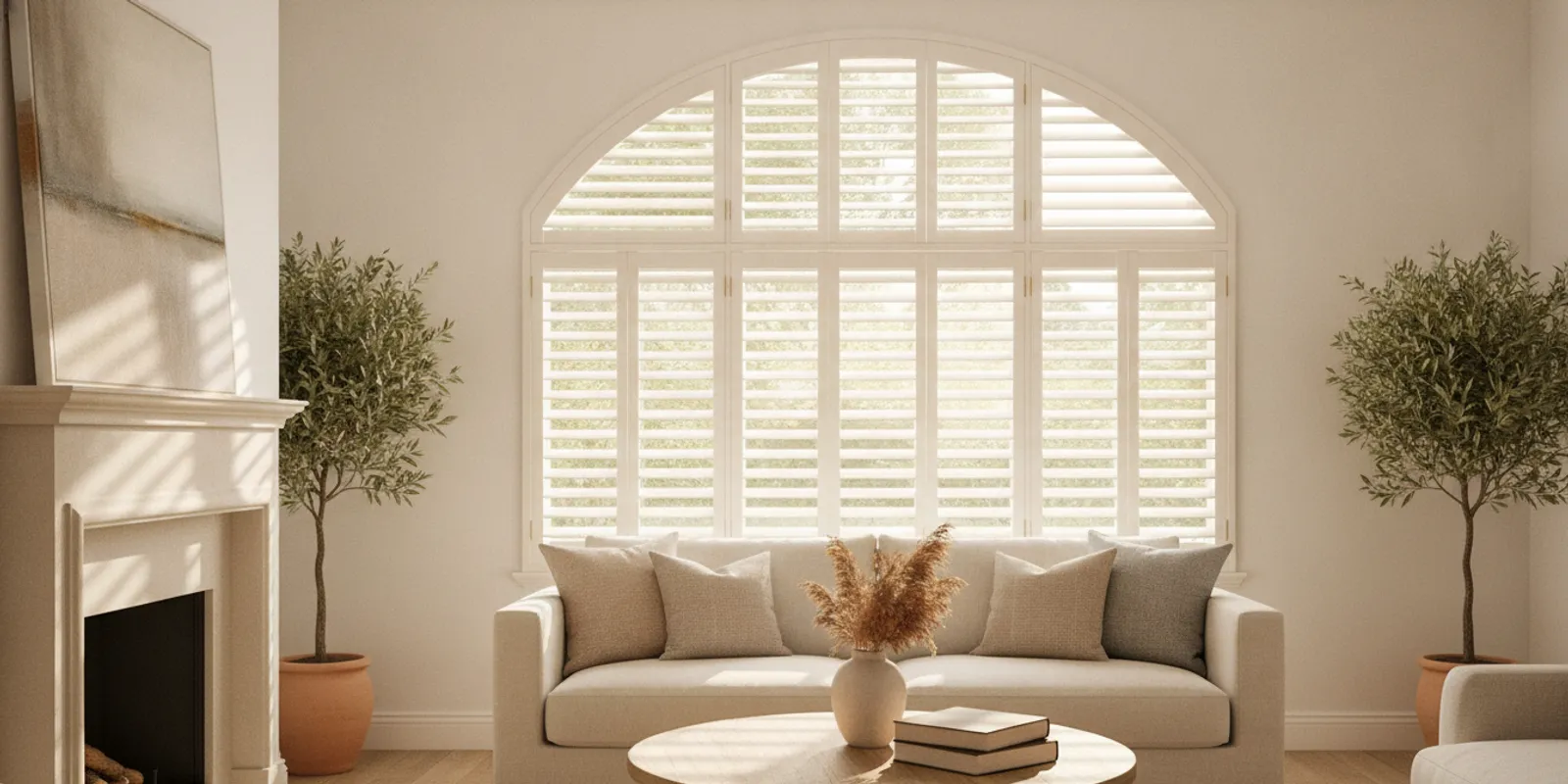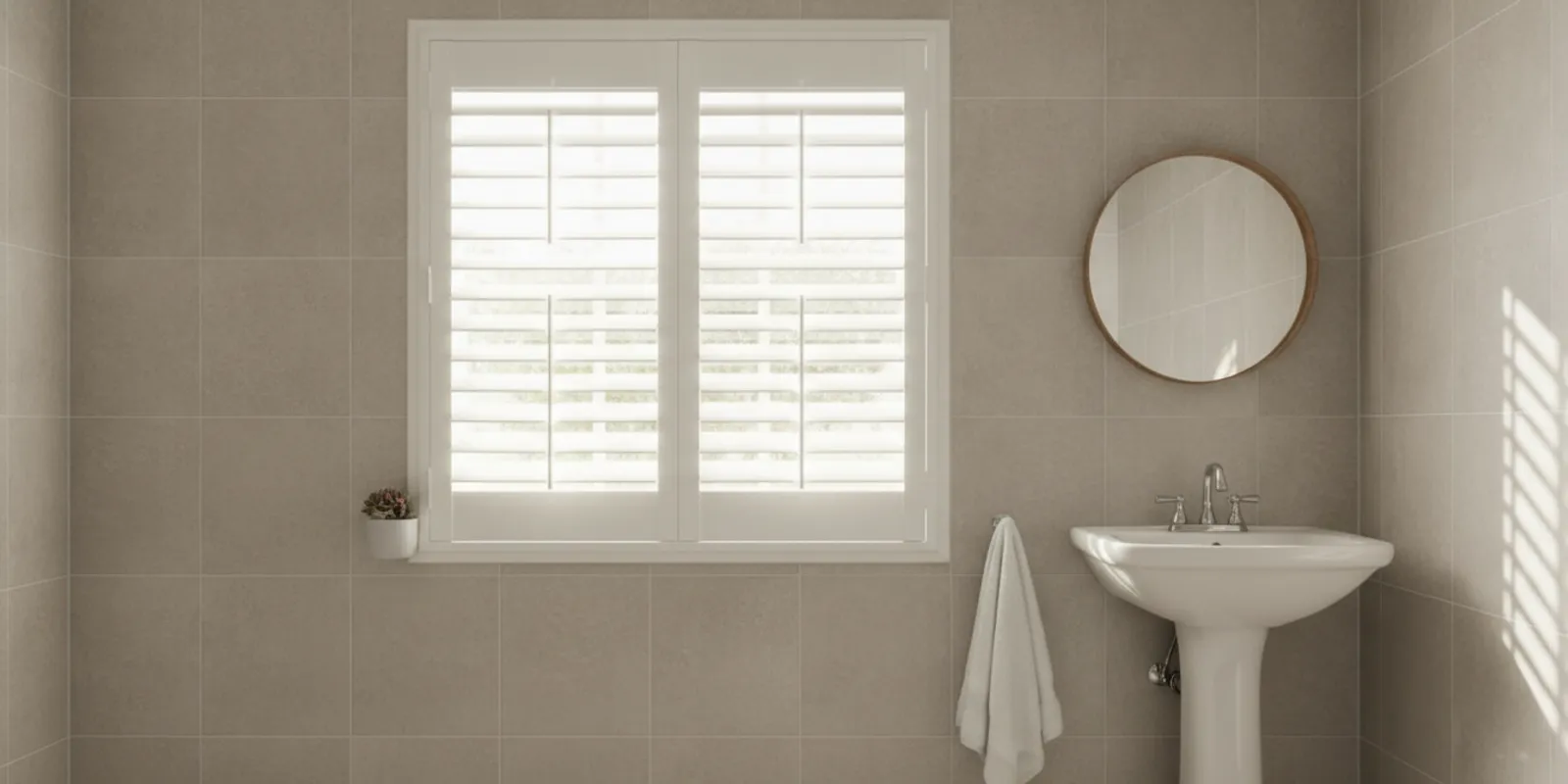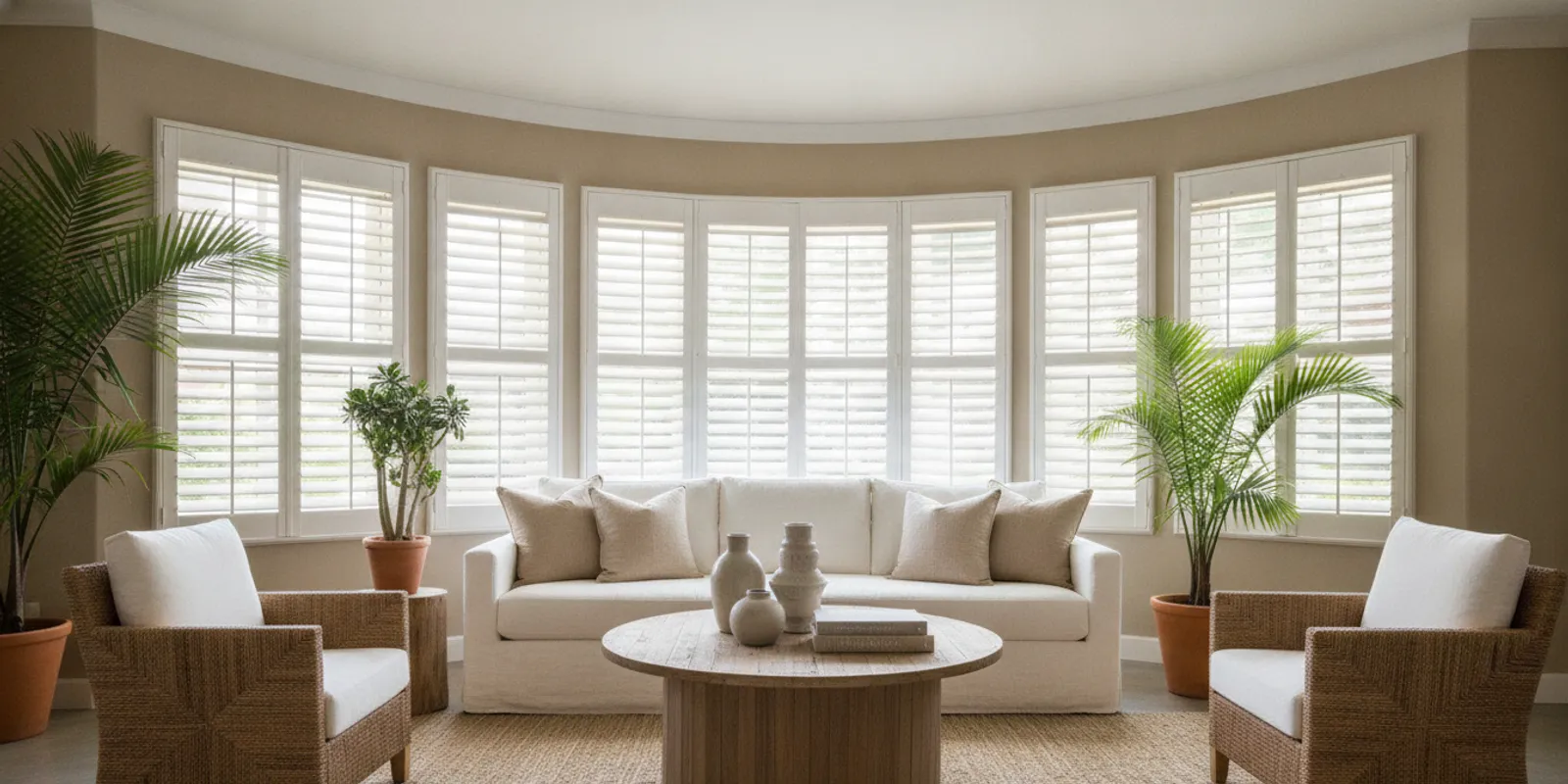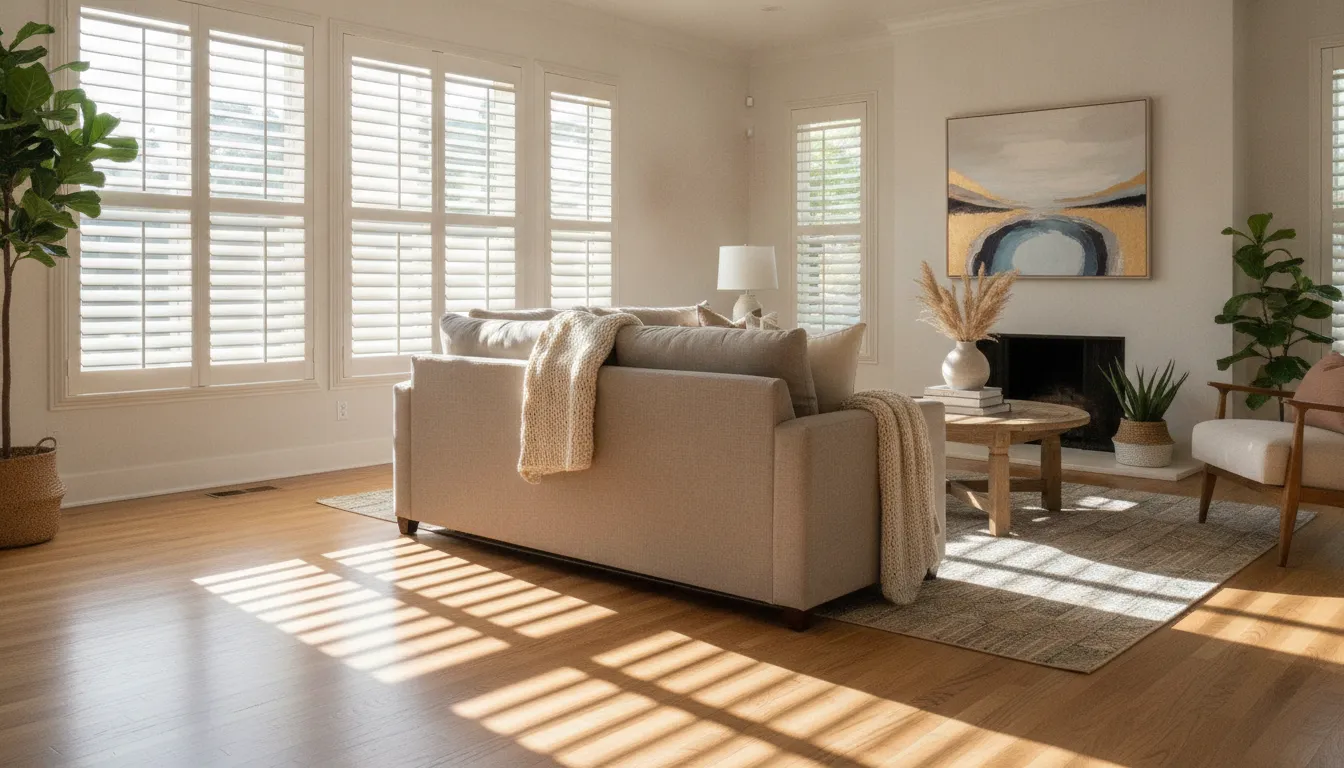
Plantation shutters Orange County homeowners choose should fit the window, the room, and the way the home is used every day. The right decision is not only about the shutter color. It also involves the mounting method, material, louver size, panel layout, privacy goals, and the clearances around each opening. This buyer guide explains what to compare before requesting custom measuring and installation.
Call Vineyard Blind & Shutter at (951) 757-4188 to discuss your plantation shutter project.
Q: What is the most important first step when comparing plantation shutters in Orange County? A: Have each opening assessed for mounting depth, trim, hardware, panel movement, and the room’s priorities before selecting a material or louver size. A professional measure is more reliable than assuming every window in the home is identical.
What should Orange County buyers know before choosing plantation shutters?
Plantation shutters are fitted window coverings with a frame and louvers, sometimes called slats, that tilt to adjust light and privacy. Because they are designed around the opening, the same product category can look and operate differently from one window to another. A deep bedroom recess may allow a different layout than a shallow kitchen opening, while a window beside a door may require a careful panel and clearance plan.
Start with the job each treatment needs to do. A homeowner may want adjustable daylight in a living room, privacy in a street-facing bedroom, or a durable treatment for a high-use family space. Note whether the window opens, which direction the handle points, whether furniture sits close to it, and whether a curtain or another treatment must share the wall. These practical details help narrow the options before appearance becomes the only deciding factor. For regional context, Vineyard’s service-area information explains where the company provides window-covering help.
Which plantation shutter material is a good fit for the room?
Material choice should follow the window’s location, the moisture and cleaning demands of the room, the desired appearance, and the product specifications of the exact shutter being considered. Ask to see samples in the room because a finish can look different next to flooring, cabinets, paint, and natural light.
- Polycore or composite-style shutters: Worth comparing when a homeowner wants a structured, easy-to-clean appearance and a product suited to the practical demands of frequently used rooms. Confirm the specific construction, finish, warranty, and care instructions.
- Stained wood shutters: A choice to explore when natural grain and a particular stain are central to the design. Compare samples against the trim and ask how the finish should be maintained.
- Painted wood shutters: Useful to compare when the goal is a painted finish and the wood character or custom color matters. Review the actual finish sample rather than relying on a screen image.
- Other shutter constructions: Product names and specifications vary. Ask what the frame, louvers, tilt system, and finish are made from, and which rooms the manufacturer recommends.
No material should be treated as automatically right for every room. Kitchens, bathrooms, bedrooms, and sunny living areas have different demands. Ask about moisture exposure, cleaning, color stability, operating hardware, and the limits of the selected product. If the window is near a sink, shower, cooking area, or exterior door, describe that use during measuring so the recommendation is based on the actual conditions.
How do louver sizes affect light, view, and the look of a room?
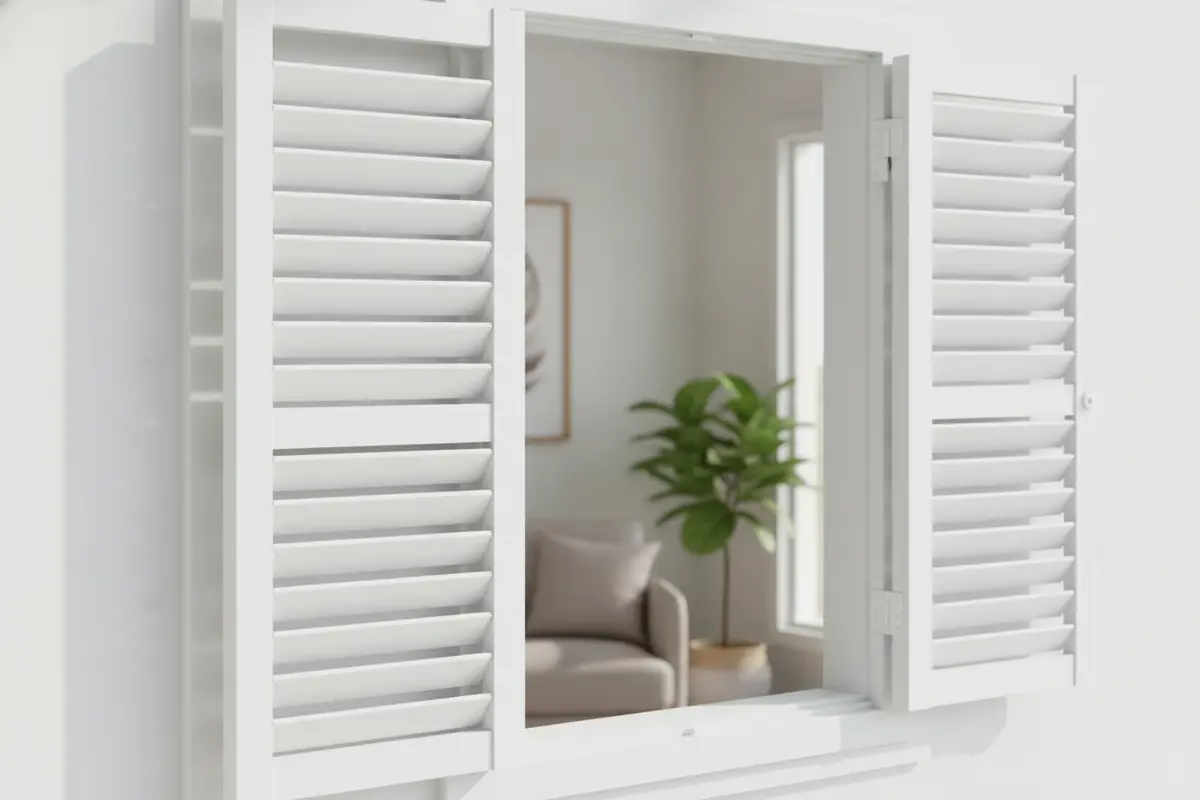
Louver size changes the visual proportion of the shutter and the way the open louvers frame the view. Larger louvers can create a cleaner, more open appearance when tilted, while smaller louvers may suit a room where a different scale or traditional look is preferred. There is no universal best size. The window height, panel width, trim, furniture, and the homeowner’s preferred sightline all matter.
Think about the position from which the window is normally used. A seated person may want the louvers to tilt for privacy while preserving daylight above eye level. A street-facing opening may need a different tilt position from a backyard window. Ask to compare physical samples and, when possible, view them at the actual opening during both bright and low-light conditions.
Louver size also interacts with panel divisions and the opening direction. A tall window may be divided into sections so the panels remain manageable. A narrow opening may need a layout that avoids crowding the handle or reducing the usable glass area. These decisions are best discussed together rather than selecting louver size in isolation.
Should plantation shutters use an inside or outside mount?
An inside mount places the frame within the window recess. An outside mount, sometimes called a face mount, attaches to the trim or wall surface around the opening. The right approach depends on recess depth, the shape of the opening, trim, hardware, the amount of coverage wanted, and how the frame will meet the surrounding surface.
| Detail to compare | Inside mount | Outside mount |
|---|---|---|
| Frame position | Within the window recess | On the face of the trim or wall around the opening |
| What to inspect | Recess depth, shape, sill, hardware, and panel clearance | Trim or wall condition, flatness, frame coverage, and projection |
| Visual effect | Leaves more surrounding trim visible when the opening allows | Creates a defined border and may cover some trim |
| Questions to ask | Will the panels operate without contacting the recess or handle? | Where will the frame sit, and how far will it extend into the room? |
Neither mounting method is automatically better. A shallow or irregular recess may make an outside mount worth discussing, but the installer still needs to confirm that the trim or wall can support the frame and that the projection works with nearby furniture, drapes, and walkways. An inside mount may preserve the surrounding casing, but it still requires enough room for the frame and the panels to operate as planned.
What window details need to be measured?
Custom shutters depend on more than the width and height of the visible glass. The measuring process should account for the opening at several points, the depth and condition of the recess, the trim profile, the sill, hardware, and any nearby obstruction. Windows that appear similar may not be perfectly identical, especially in an older home or after remodeling.
Before a measuring visit, make a short list for each opening. Note whether the window opens inward, slides, cranks, or stays fixed. Identify handles, locks, sensors, alarm contacts, air vents, countertops, furniture, and doors that might affect the frame or panel swing. If several windows are intended to match, point out any opening that has a different trim, depth, or operating mechanism.
Photos can help explain the layout, but they do not replace an on-site measure. Take a straight-on view and an angled view that shows the sill, frame depth, and nearby wall. During the visit, ask the installer to show where the shutter frame will sit and how each panel will open. That makes the proposed coverage easier to evaluate before an order is approved.
How should you compare privacy and light control?
Shutters allow the louvers to be tilted, but the result depends on the angle of the sun, the room’s position, the surrounding buildings, and whether interior lights are on. Decide whether you are primarily trying to reduce direct glare, soften daylight, improve daytime privacy, or create a more closed feeling at night. These are related goals, but they are not identical.
Walk through the room at different times and note where the sun reaches the glass. Look toward the window from the seating position and from outside if nighttime privacy matters. Ask how the louvers can be positioned for the desired balance and whether the frame or panel layout leaves any area uncovered. Do not assume a shutter category alone guarantees a particular level of darkness, privacy, or heat reduction. Ask about the documented specifications for the exact product and installation.
For a broader comparison of blinds, shutters, and shades, Vineyard’s window-covering guide can help you identify which product family fits the room. Homeowners who are already focused on shutters can review the custom shutters service page and then bring specific questions to a measuring visit.
What panel layout and operation should you review?
Panel layout affects how much of the window can open, how the treatment looks when closed, and whether someone can reach the window hardware. A single panel may be suitable for a narrow opening, while a wider window may need multiple panels. The planned division should reflect the window’s width, the frame, the direction of movement, and how people use the room.
- Panel count: Ask why the proposed number of panels suits the opening and whether the divisions line up with the window’s structure.
- Opening direction: Confirm which panels open, where they stack, and whether they clear furniture, a counter, a door, or a walkway.
- Window access: Make sure handles, locks, and operable sashes remain usable when the shutters are open or tilted.
- Tilt control: Review the location and operation of the tilt system, especially near children’s rooms, seating areas, or frequently used windows.
- Consistency: If several rooms are being treated, compare how the layout will look across openings with different widths and trim.
A product sample can show color and construction, but only a measured proposal can show how the panel divisions and clearances apply to your windows. Ask for the layout to be explained in plain language and keep the final specifications with the quote.
What should Orange County buyers ask about installation?
Installation is part of the fit, not an afterthought. Ask what surfaces the frame will attach to, how uneven trim will be handled, and what the finished edge will look like. If an outside mount is being considered, ask how much casing or wall will be covered and how far the frame will project. If an inside mount is proposed, ask how the installer will handle differences in depth or an opening that is not square.
Also confirm how the finished shutters will be checked after installation. Panels should open in the planned direction, louvers should tilt as expected, and the window hardware should remain accessible where intended. Ask about care instructions and what to do if an adjustment is needed. Clear answers help separate a visual preference from a fit problem that should be solved before manufacturing.
Vineyard Blind & Shutter provides mobile service across Southern California, including Orange County. The mobile measuring and installation information explains how to begin with an in-home appointment. You can also review the company’s service areas and contact page when you are ready to discuss the next step.
How should you consider window-covering safety?
Ask how the selected shutter operates and whether any accessible cords or control components are part of the configuration. Keep operating components in good condition and follow the product instructions for use and care. The U.S. Consumer Product Safety Commission’s window-covering safety information is a useful authoritative reference when reviewing cord-related risks and current safety standards. Discuss the exact operating system with the installer, especially in rooms used by children.
What is a practical plantation shutter buying checklist?
Use this checklist before approving a custom shutter order:
- List the privacy, glare, daylight, and window-access goals for each room.
- Record handles, locks, trim, sills, furniture, counters, doors, and other possible obstructions.
- Compare material samples and finishes in the room where the shutters will be installed.
- Review louver size, panel divisions, tilt control, and opening direction together.
- Ask whether inside mount, outside mount, or another treatment is practical for each opening.
- Confirm frame coverage, projection, attachment surfaces, and the finished edge.
- Keep the written product, measuring, installation, and care details with the proposal.
When several openings are involved, do not approve a layout based on one representative window. Have the differences identified so the final order reflects the actual home. A careful comparison at the beginning can make the installation plan clearer and reduce surprises about trim coverage, panel movement, or access.
Plantation shutters are a custom decision, so the most useful comparison happens at the window. When the product, frame, operation, and installation plan all match the way the room is used, you can move forward with clearer expectations.
Call Vineyard Blind & Shutter at (951) 757-4188 to arrange free measuring and discuss installation.