Choosing cellular shades is less about finding a universal winner and more about matching construction and controls to the room. A south- or west-facing window may call for stronger heat management, while a bedroom may prioritize privacy, blackout performance, and quiet operation. Fit matters, too, because gaps around an otherwise well-made shade can limit its practical benefit.
I could not verify a current Consumer Reports test or ranking specifically for cellular shades. Consumer Reports does publish guidance on using window coverings to manage heat and energy, but that is not a cellular-shade product ranking. So the phrase best cellular shades consumer reports is best treated as a search question, not a published result. A useful independent-style review instead compares insulation, opacity, durability, operation, fit, and installation, while separating sourced testing from product or company claims.
That distinction makes the buying process clearer. Look at how established review methods evaluate construction and performance, then apply those criteria to your own windows. You can make a more confident comparison without mistaking marketing language for laboratory evidence. Start by interpreting what a genuine Consumer Reports result would mean, and what it cannot tell you here.
How Should You Interpret Best Cellular Shades Consumer Reports Results?
The phrase best cellular shades consumer reports can suggest that a current Consumer Reports ranking is available. However, there is no verified Consumer Reports cellular-shade test or ranking to use as a definitive buying list. That distinction matters. A search result, retailer comparison, or product review should not be presented as a Consumer Reports recommendation.
Instead, look at how the information was produced. Consumer Reports explains its broader approach to independent product evaluation, but that does not establish cellular-shade results that are not published. By contrast, Wirecutter describes testing 16 shades after interviews with salespeople and industry experts. Its blackout recommendations were designed to block at least 99 percent of light. Which is a stated testing goal for that category, not a universal result for every cellular shade.
Bob Vila says its cellular-shade review combined hands-on testing with research into materials, design features, and performance. Those details are more useful than a vague "best" label, but they still represent that publication's review process and selected products. They are not Consumer Reports findings.
Use this practical checklist when comparing options:
- Insulation: Ask whether the shade uses single-cell or dual-cell construction, then consider the window's direction, glass, and fit.
- Light control: Confirm whether the fabric is light filtering or blackout. Privacy and darkness are different requirements.
- Operation: Compare cordless, top-down-bottom-up, and motorized controls for the room and the people using it.
- Fit and installation: Check inside versus outside mounting, potential light gaps, and whether the shade can move without contacting the frame.
- Real-room appearance: View fabric samples in the room's actual lighting. Color and opacity can look different online.
A sound decision comes from matching those criteria to your windows, rather than treating an unverified ranking as a guarantee. In Southern California homes, the right choice may differ between a sunny bedroom, a street-facing living room, and a shaded office.
How Cellular Shade Construction Affects Insulation
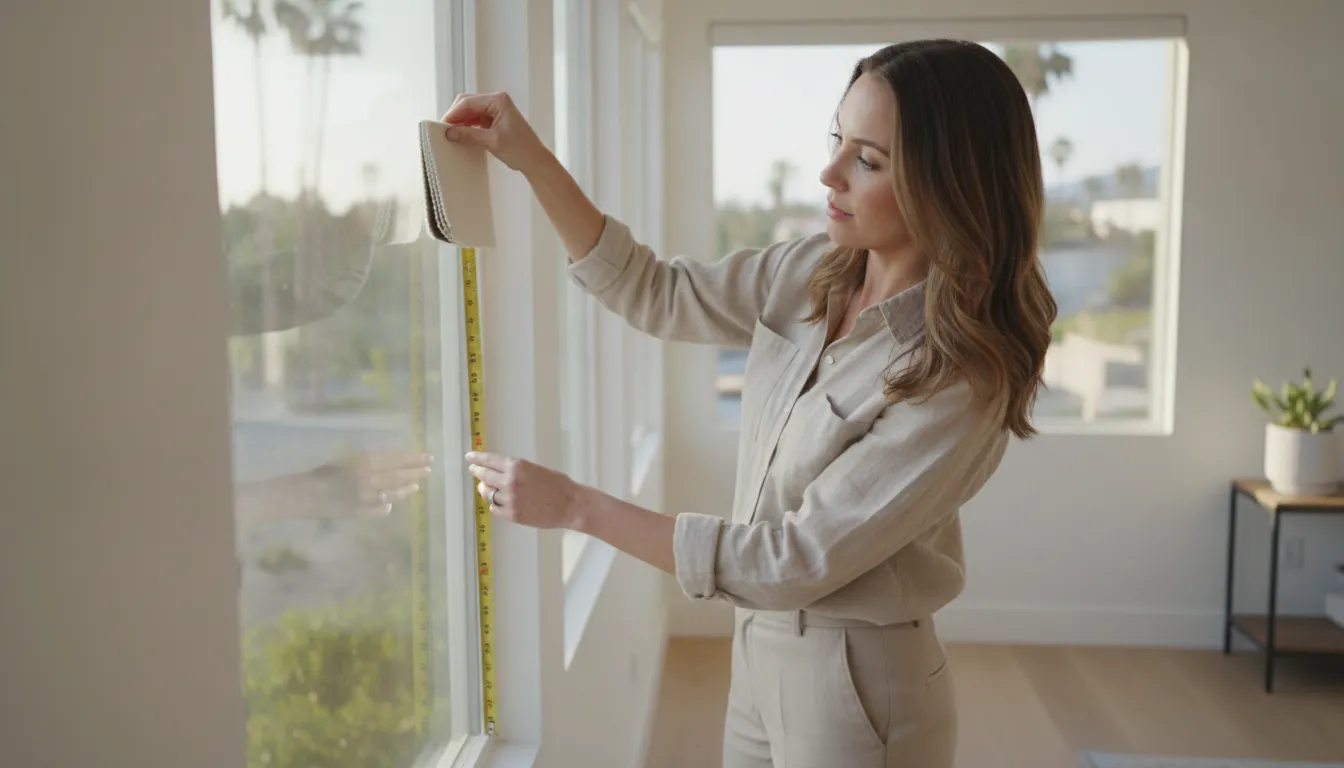
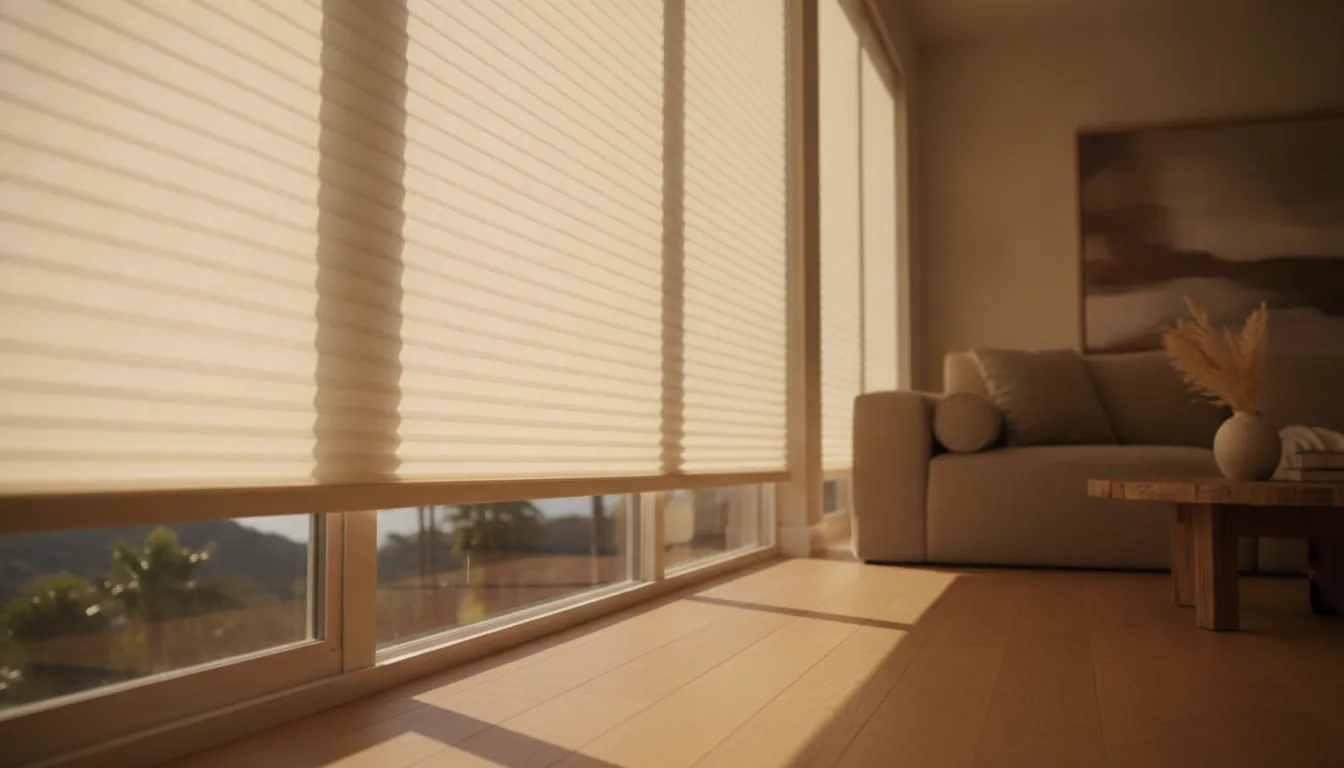
The insulating feature of a cellular shade is its honeycomb construction. Fabric folds create air pockets that add separation between the glass and the room. That layer can help moderate heat transfer, but it is not a guarantee of identical results in every window. Glass type, shade fit, mounting position, orientation, and how consistently the shade is used all affect the outcome.
Cell configuration is an important comparison point. A single-cell shade has one row of air pockets, while a dual-cell shade has two. Dual-cell construction generally provides more insulating structure, which may be worth considering for a room with pronounced temperature swings. Single-cell construction can be a practical choice when the window has more moderate comfort needs or when a slimmer profile matters. The right choice depends on the room, not simply on choosing the most layers.
Window direction also changes the job a shade needs to do in Southern California. A west-facing room may receive intense afternoon sun, while a south-facing room can collect substantial daylight for much of the year. A light-colored cellular fabric may help reflect some summer solar gain, but it should be evaluated alongside the window's exposure and the homeowner's preferred view and privacy. The U.S. Department of Energy explains that window-covering management can influence heat gain and comfort; see its cellular shades factsheet for the technical overview.
Fit and mounting are just as important as the cell design. A shade mounted close to the window can better support the intended heat-control effect. Gaps at the sides or top may allow light and heat to pass around the fabric. Inside mounts can preserve a clean appearance when the frame provides enough depth. Outside mounts may be more suitable when the frame, handle, or trim limits that depth. Accurate measuring helps determine which approach will operate smoothly and cover the opening effectively.
Operation matters, too. Lowering a shade during the brightest part of the day may limit incoming solar heat, while opening it later can restore daylight and views. Because room priorities differ, compare cellular shades with other cellular shades and custom shades in the actual space, considering the window's orientation, daily schedule, and desired light level. This kind of practical evaluation is more useful than treating any single construction as universally best.
Choosing Opacity for Bedrooms, Living Rooms, and Privacy
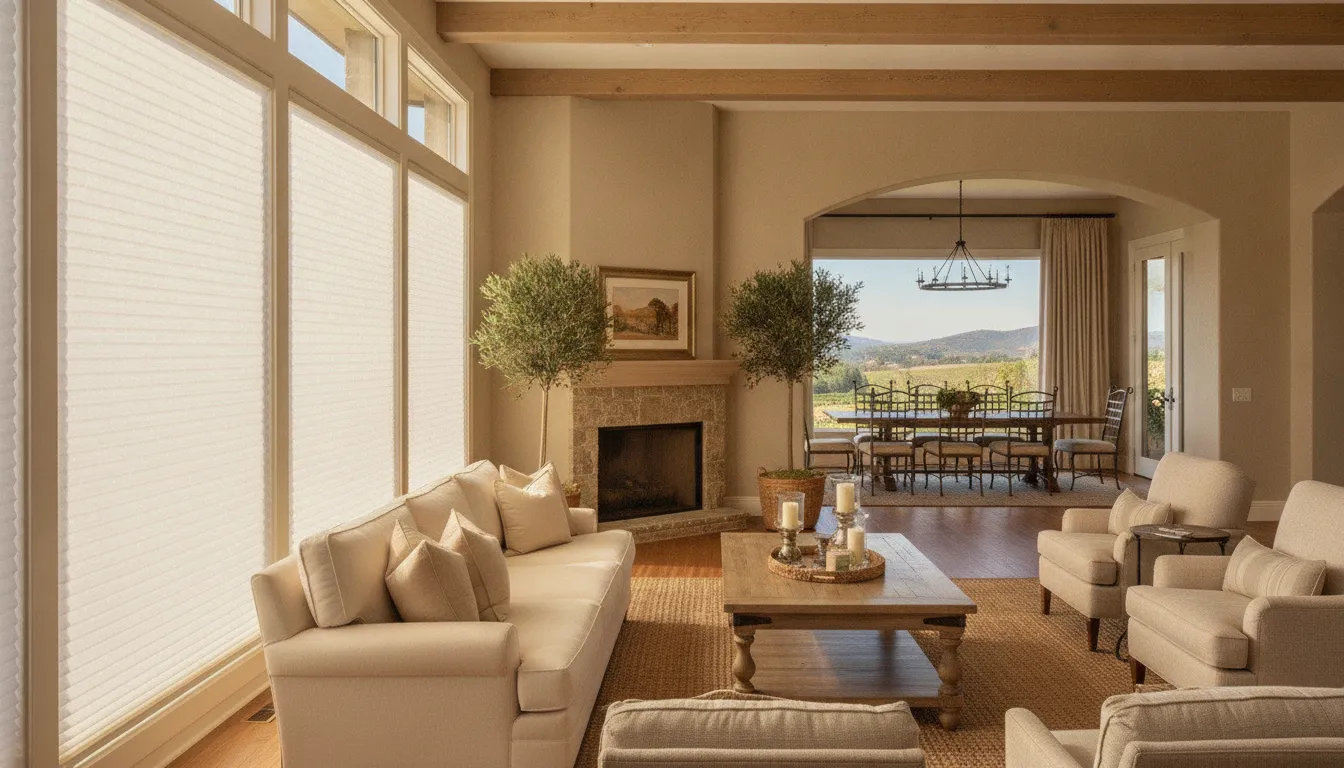
Opacity is the amount of light a shade allows through. It is separate from insulation, so a cellular shade can help moderate heat while still admitting a soft glow. It is also separate from privacy: a fabric that looks private during the day may reveal silhouettes at night when interior lights are on. Cellular shades are available across a range from sheer and semi-sheer to semi-opaque and opaque options, giving each room a different balance of daylight and coverage.
| Option | Daylight | Privacy | Best fit |
|---|---|---|---|
| Sheer or light filtering | Bright, softened light | Limited, especially at night | Living rooms and rooms where preserving a view matters |
| Semi-opaque | Gentle light with less glare | Better daytime coverage | Living rooms, dining areas, and bedrooms needing flexibility |
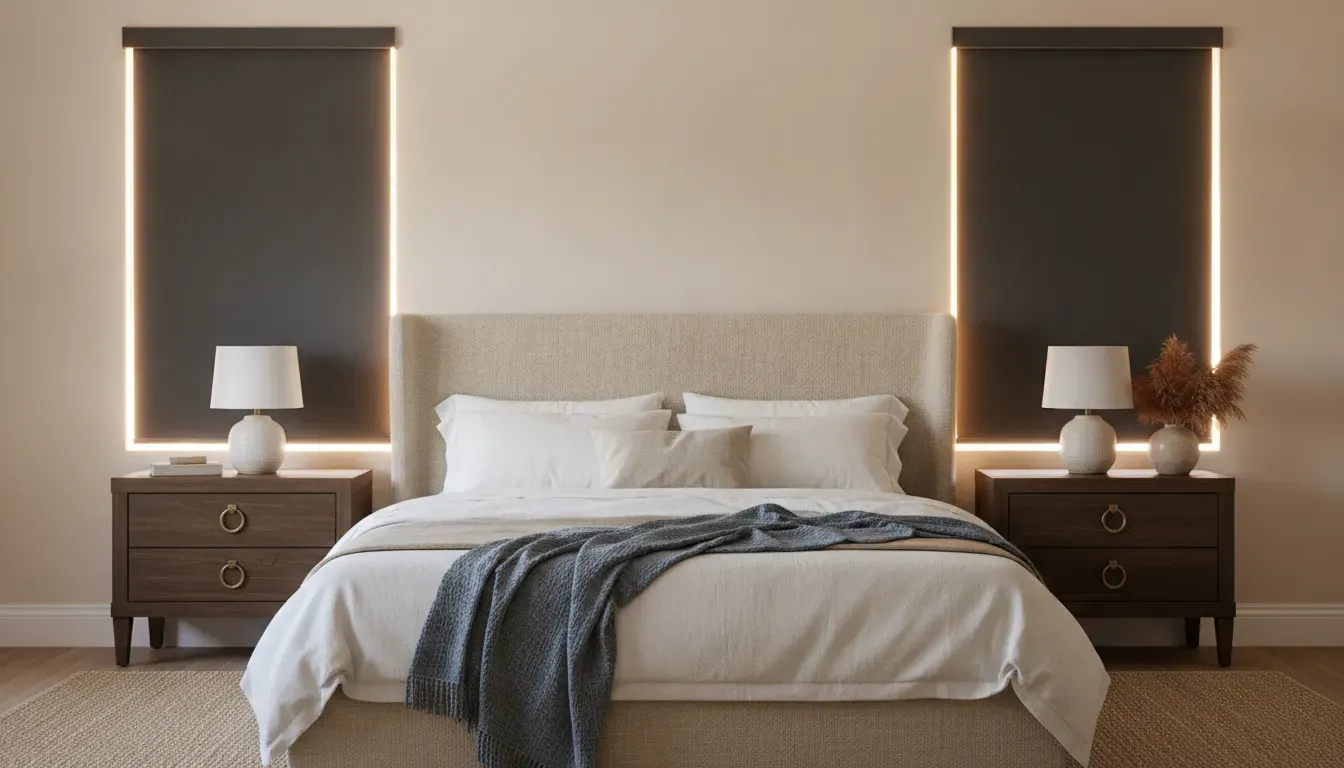
| Blackout or opaque | Very little light through the fabric | Strong coverage when properly fitted | Bedrooms, nurseries, media rooms, and shift workers |
Light filtering is not the same as blackout. A filtering shade reduces brightness and glare, but it does not promise a dark room. Blackout construction may use a liner between fabric layers to block sunlight and ultraviolet rays, according to reported hands-on product research. Even then, light can enter around the edges.
Why the installation details matter
Mounting and window gaps affect the result as much as the fabric choice. An inside mount can leave narrow spaces beside the shade, while an outside mount may extend beyond the frame to improve privacy and light control. Room lighting, window orientation, and the accuracy of the fit also change how the shade looks and performs. For a bedroom, discuss both the desired darkness and the acceptable edge light. For a living room, consider whether softened daylight or nighttime privacy is the higher priority.
Durability, Materials, and Daily Wear
A cellular shade can look excellent on day one and still disappoint if its construction does not suit the way the room is used. Inspect the pleats for consistent folds. Check that the fabric feels stable rather than flimsy. Look closely at seams, edge finishing, and the way the shade attaches to its operating hardware. These details matter most on windows that are opened often, used by children, or exposed to strong afternoon sun.
Cellular shades use insulating cells, while dual-cell construction is described as offering enhanced insulation properties. Those designs may also change how thick the shade feels when raised. A single-cell option may be appropriate where moderate light control and a simpler profile matter more. Bob Vila notes that single-layer shades are generally less expensive, while suitability depends on the room's need for light, sound, and temperature control. That is a tradeoff, not a universal quality ranking.
Color is another practical consideration. White or cream fabrics can reflect sunlight well, while darker colors may provide more privacy and a stronger visual accent. Neither choice guarantees a particular level of durability. In a sunny room, compare the actual fabric, lining, and window exposure rather than choosing from a small screen swatch.
For cleaning, follow the manufacturer's care instructions and use gentle dusting or vacuuming with a suitable attachment. Avoid pulling on pleats or scrubbing fabric, especially around seams and operating components. Frequent raising and lowering can shorten service life, and Bob Vila cites a rough five-to-seven-year average for cellular shades depending on construction quality and frequency of use. That is a general estimate, not a Vineyard warranty or promise.
For a closer look at custom window-covering materials and fit, review custom blinds in Southern California, then compare samples in the room where they will be used.
Which Operation Is Best for Safety and Convenience?
Operation affects more than how quickly a shade opens. It can shape daily comfort, child and pet safety, privacy, and whether everyone in the home can use the window treatment independently. Cellular shades may be configured with cordless, top-down bottom-up, or motorized operation, but the available choice depends on the specific product and window.
Cordless operation for family spaces
A cordless shade removes a dangling operating cord that could become an entanglement concern around children or pets. It can also create a cleaner appearance in bedrooms, playrooms, and living areas. The tradeoff is that manual cordless shades still require someone to reach the shade and guide it by hand. For a frequently used window, consider the shade's size and weight, as well as who will operate it every day. Cordless does not automatically mean that every window treatment is equally easy to move.
Top-down bottom-up for privacy and daylight
Top-down bottom-up operation allows the upper portion to open while the lower portion remains closed. This can let daylight enter without leaving the entire window exposed, which is useful for bathrooms, street-facing rooms, and homes where privacy changes throughout the day. It is a practical middle ground when you want manual control without giving up the ability to screen the lower glass. Because not every cellular shade includes this configuration, confirm the option before choosing a fabric or ordering a custom size.
Motorized control for hard-to-reach windows
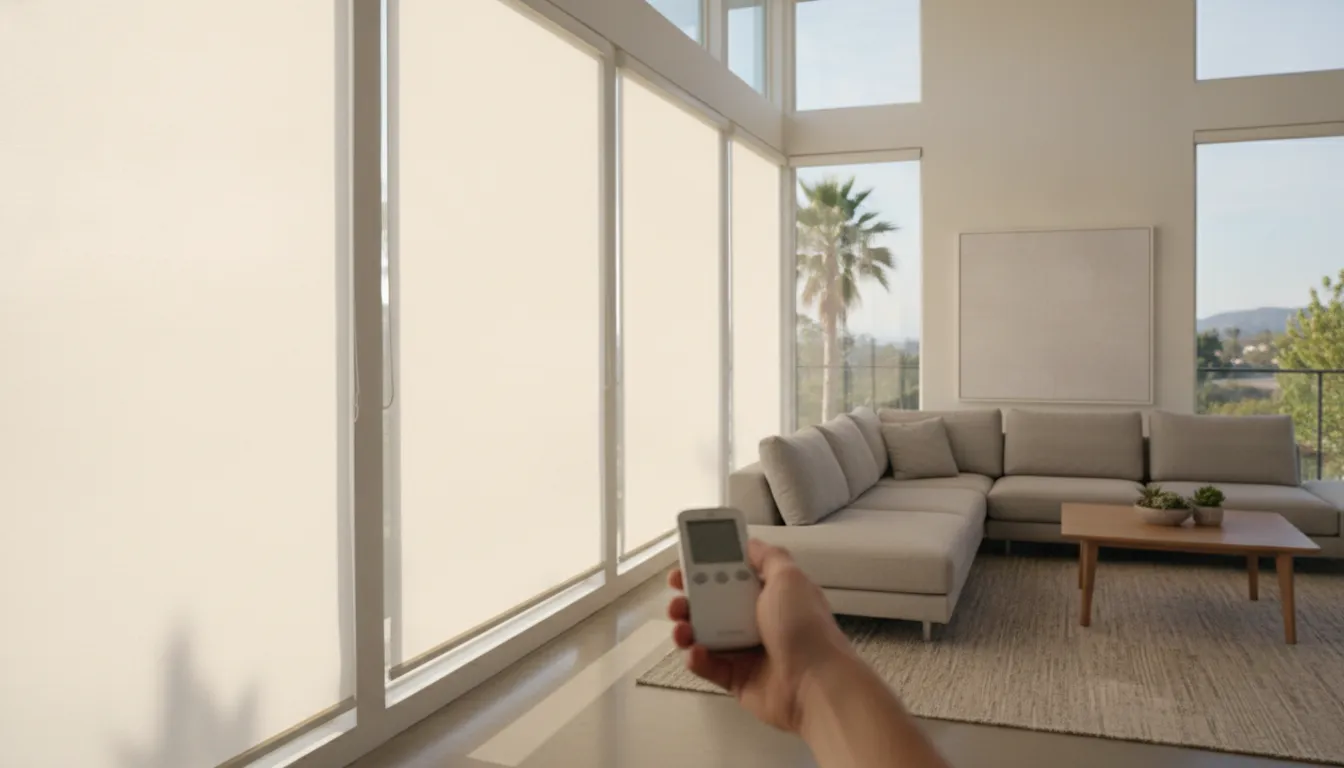
Motorization can be valuable for tall windows, wide openings, and rooms where several shades need to move together. Depending on the product, controls may include a remote, smartphone app, or smart-home assistant. It can also help people with limited reach or mobility avoid repeated stretching and lifting. However, motorized installation and setup can be more involved than a basic manual shade. So ask what control system, power source, and installation support apply to the selected product.
The best choice is the one that matches the room and the people using it. Compare samples in your actual lighting, then discuss cordless, top-down bottom-up, or motorized options during a professional consultation rather than assuming one operation works for every window.
Why Fit and Installation Matter as Much as the Shade
Even a well-designed cellular shade can underperform when its size or mounting position does not suit the window. Fit affects how much light enters around the edges, how smoothly the shade moves, and how closely the insulating material sits to the glass. The right installation also depends on the window frame, trim, handle clearance, and how you use the room.
- Choose the mounting style. An inside mount sits within the window opening and creates a clean, integrated look. It can work well when the opening is deep and reasonably square, but the shade may leave small side gaps that allow some light through. An outside mount attaches to the wall or trim around the opening. It can help cover uneven frames and reduce edge gaps when privacy and light control are priorities. The available surface, trim, and nearby hardware still need to be checked before choosing it.
- Measure the opening carefully. Record the width at more than one point, along with the height and depth of the opening. Variations can affect whether an inside mount is practical. Check for window cranks, locks, handles, screens, and trim that could interfere with the headrail or fabric. For an outside mount, the shade should extend far enough beyond the opening to cover the areas where light could otherwise spill through. One general review guideline suggests about three inches beyond each side, but the appropriate coverage depends on the window and product.
- Plan for light gaps and daily operation. Look at the room during the hours when glare is most noticeable, especially on bright Southern California exposures. A close fit may support the shade's intended heat-control role, while the fabric's opacity determines how much daylight remains. Before finalizing the order, confirm that the shade can raise, lower, or use top-down operation without striking handles, furniture, or adjoining treatments.
- Have the finished treatment checked. Professional installation can identify structural considerations that a quick measurement may miss. Vineyard's service includes professional measuring for inside- or outside-mount options, followed by installation and a demonstration of operation and maintenance. That process can make it easier to spot an alignment issue before the installer leaves. You can schedule a free in-home consultation to review the window, samples, and mounting approach in the actual room.
A mobile showroom appointment also lets you view materials and colors in your own lighting and decor. That context matters because the best choice is not only the one with the right insulation or opacity on paper. It is the one that fits the opening, operates comfortably, and supports the way you use the room.
Frequently Asked Questions
Does Consumer Reports test and rank cellular shades?
No verified Consumer Reports test or ranking of cellular shades is available for this comparison. Treat the phrase "best cellular shades consumer reports" as a search for trustworthy buying guidance, not as proof that Consumer Reports endorsed a particular product. Compare insulation, opacity, operation, durability, fit, and installation instead.
Are double-cell shades better for insulation than single-cell shades?
Double-cell shades add another insulating air pocket and may be the better fit for windows with significant heat gain or heat loss. Single-cell shades can be a practical choice when the climate and room needs are more moderate. Fit, mounting, color, and how you operate the shade also affect real-world performance.
Do cellular shades provide blackout privacy?
Not automatically. Cellular shades are available in light-filtering and blackout options, so check the fabric and liner rather than assuming every honeycomb shade blocks all light. Blackout shades can suit bedrooms, media rooms, or rooms facing bright outdoor lighting, while light-filtering fabric may work better where you want daytime illumination.
What operation should I choose for a cellular shade?
Cordless operation reduces entanglement risks in homes with children or pets. Top-down bottom-up hardware can preserve privacy while admitting light from above. Motorized operation adds convenience for hard-to-reach windows and can support remote or smart-home controls, but it may involve more complex installation.
Should cellular shades be professionally measured and installed?
Professional measuring can help determine whether an inside or outside mount will provide the best fit, privacy, and light control. Outside-mounted shades generally need extra width beyond the frame, while inside mounts depend on available recess depth. Installation also helps confirm smooth operation and a close fit to the window.
Ready to Compare Cellular Shades at Home?
Samples can look different in your own rooms, lighting, and window orientations than they do in photos. A practical consultation can help you compare opacity, fit, operation, and installation details before choosing.