A bay window can be the room's best feature, but its angles and closely spaced frames make ordinary coverings difficult to fit. The best window treatments for bay windows control each panel independently, clear nearby handles and corners, and complement the bay as one architectural feature. Cellular shades, plantation shutters, roller shades, Roman shades, and layered curtains can all work well when selected for the window's depth, use, and exposure.
Quick answer: Cellular shades are the most versatile choice for many bay windows because their slim profile fits tight angles and each shade can move independently. Plantation shutters offer a durable, built-in appearance. Roman, roller, solar, and woven shades provide distinct style and light-control options. The right choice depends on panel depth, sun exposure, privacy needs, and how you use the bay.
The best window treatments for bay windows at a glance
A successful bay window design solves practical problems without hiding the architecture. Before choosing a material or color, decide whether the room needs daytime glare control, nighttime privacy, insulation, or an unobstructed view. Then compare options based on how much space they need around each frame.
| Treatment | Best for | Key advantage | Planning note |
|---|---|---|---|
| Cellular shades | Versatile everyday use | Slim profile and insulation | Choose independent shades for flexible control |
| Plantation shutters | A tailored, permanent look | Precise privacy and light control | Custom fitting is important at angled joins |
| Roller or solar shades | Clean, modern rooms | Compact and easy to operate | Select openness and opacity for the exposure |
| Roman shades | Soft, decorative interiors | Fabric adds color and texture | Confirm the folded stack will not crowd the glass |
| Woven wood shades | Warm, natural style | Distinctive texture | Add a liner when more privacy is needed |
| Curtains with shades | Layered style and softness | Combines function with a finished look | Mount across the bay or outside the recess |
The most effective setup often uses one treatment on each window panel. Independent operation lets you block strong sun on one side while keeping another panel open for daylight or a view. It also respects the bay's shape instead of covering it with one bulky treatment.
Why cellular shades suit many bay windows
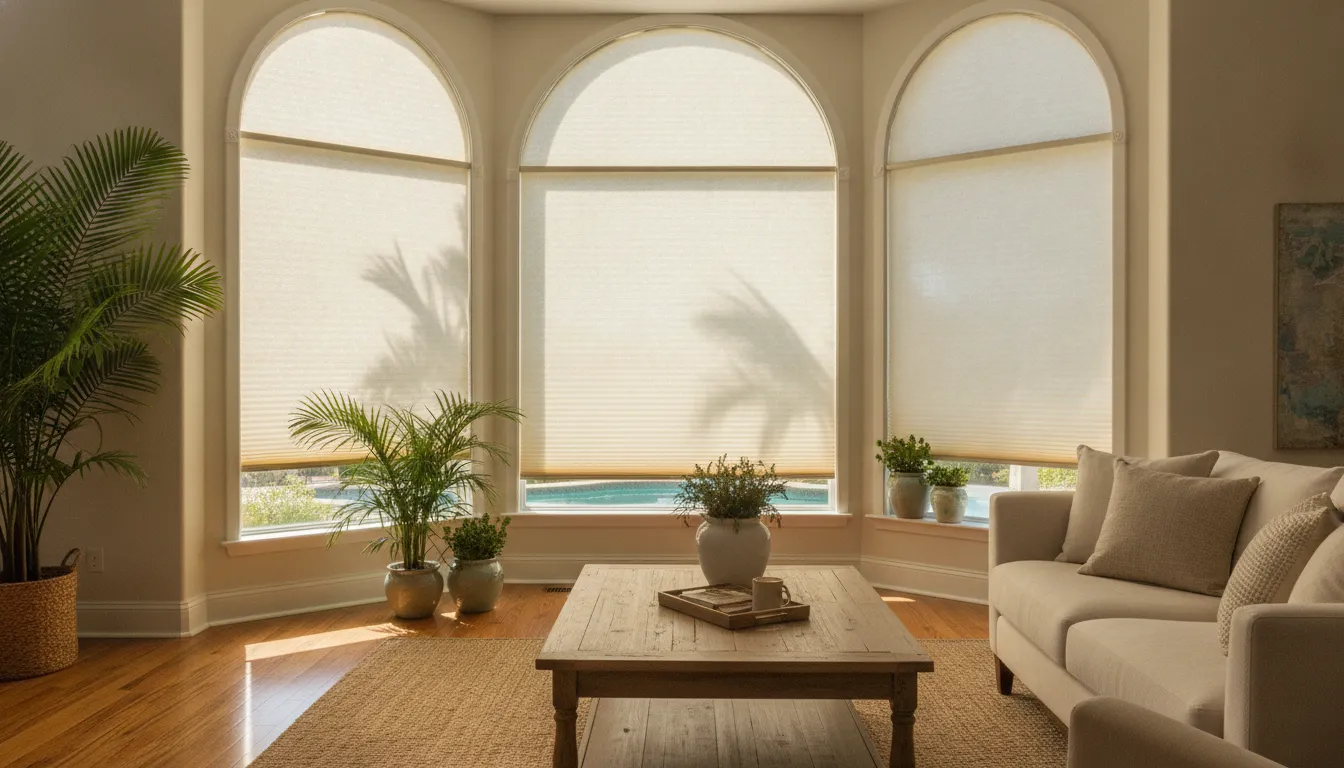
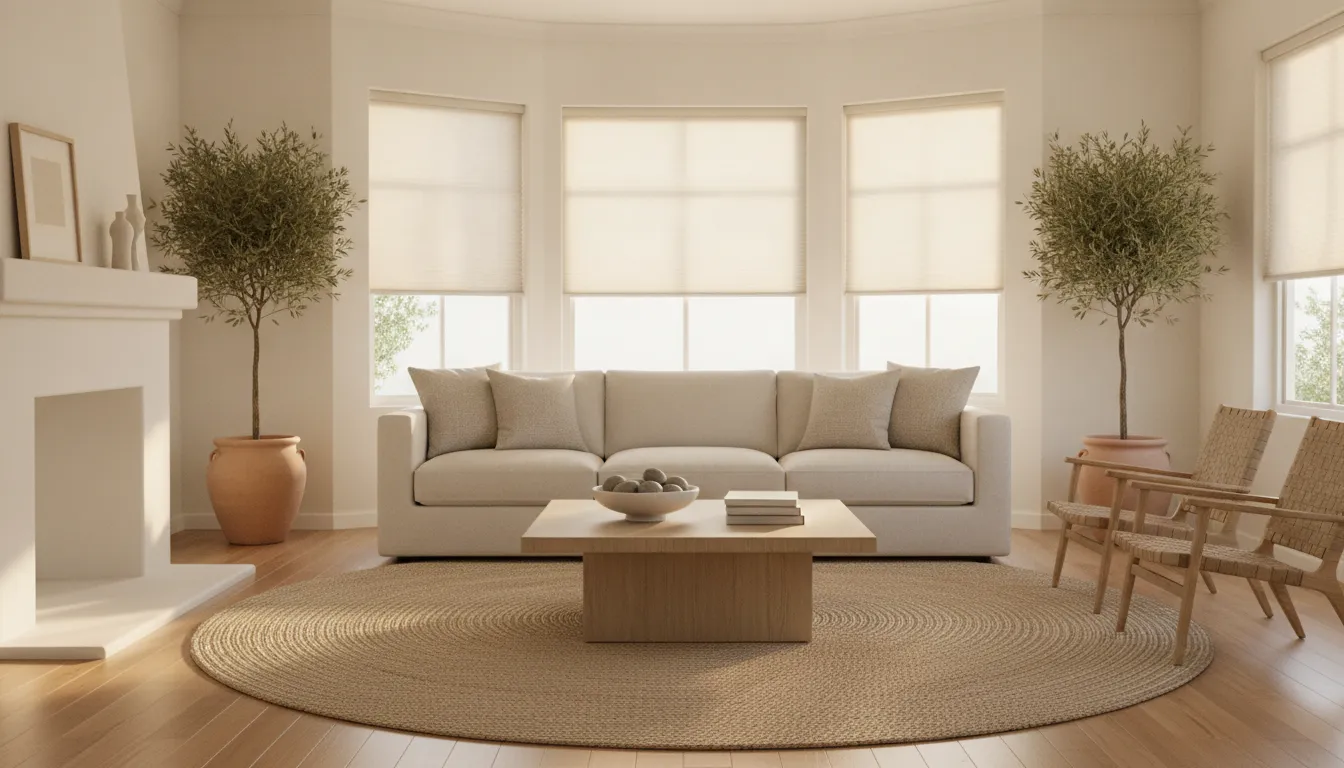
Custom window shades are a practical starting point when a bay has shallow frames or tight inside corners. Cellular shades use a compact headrail and fold into a relatively small stack when raised. That helps preserve glass area and reduces visual clutter across a multi-panel window.
Slim design for tight corners
The side panels in a bay often angle toward the center panel. A bulky treatment on one frame can collide with the treatment next to it. Properly sized cellular shades minimize that risk. Separate shades also make it easier to account for small differences in the width or depth of each opening.
Comfort and privacy control
The honeycomb structure creates air pockets that can help reduce heat transfer at the glass. This is useful for a bay that receives long periods of direct Southern California sun or feels cooler at night. Light-filtering fabrics soften daylight while room-darkening fabrics provide greater privacy. Top-down, bottom-up operation can preserve daylight above eye level while shielding the lower part of the window.
Are plantation shutters a good fit for a bay window?
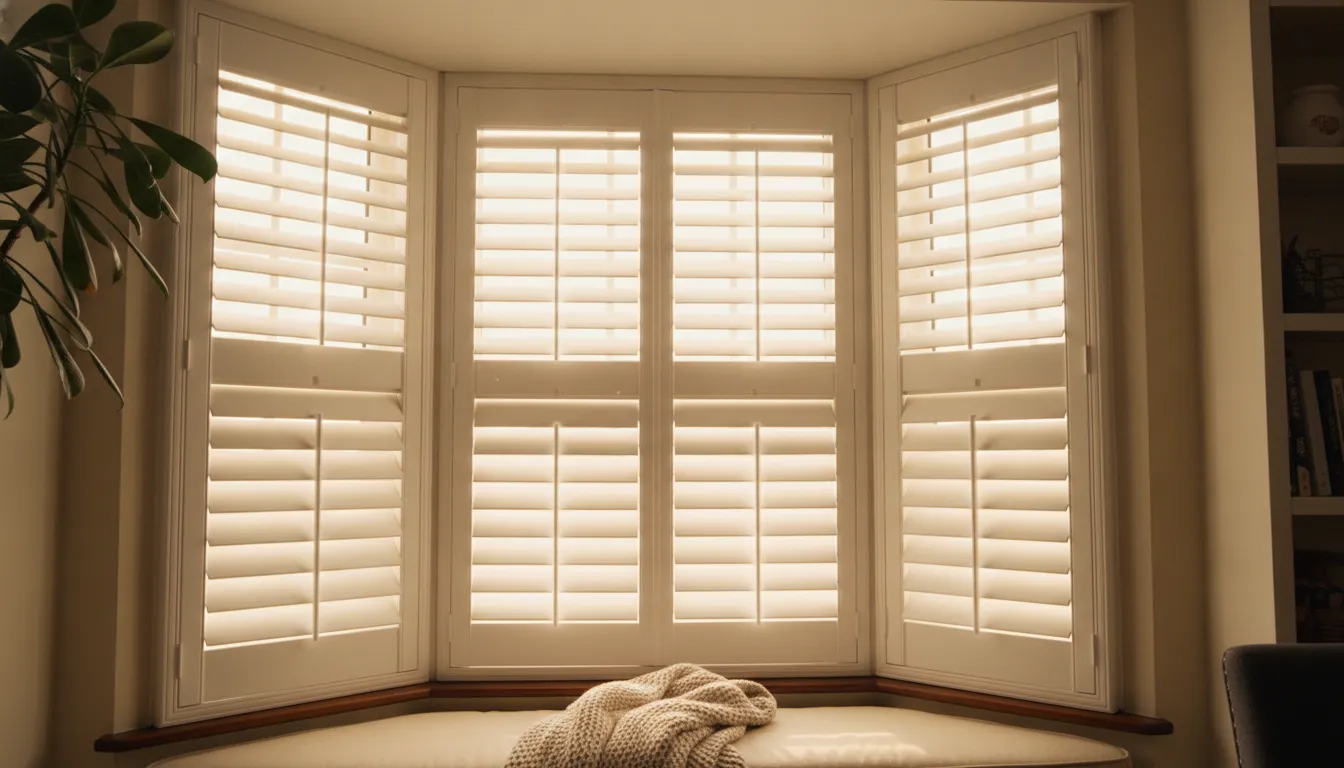
Plantation shutters are an excellent choice when you want the bay to feel like a finished architectural feature. Their clean frames and adjustable louvers create a tailored look that suits both traditional and updated interiors. Because every bay has its own angles, custom measurement and installation are especially valuable.
Precise control for each panel
Louvers can tilt to redirect glare while still admitting daylight. Separate shutter panels can also open when you want a fuller view or access to the window. This makes shutters useful in living rooms, dining areas, and front-facing rooms where privacy changes throughout the day.
A durable, integrated appearance
Unlike fabric treatments, shutters hold their shape and create crisp lines around the glass. They can visually connect three different window sections without making the bay look crowded. Explore Vineyard Blind & Shutter's custom shutter options to compare materials and configurations.
When should you choose Roman, roller, or woven shades?
Not every bay calls for the same solution. The room's design may favor a softer fabric, a simple modern profile, or a natural texture. Roman, roller, solar, and woven wood shades provide those choices while keeping individual control over each panel.
Roman shades for softness
Roman shades introduce fabric, color, and pattern without requiring a full curtain treatment. They work particularly well in bedrooms, dining rooms, and comfortable seating nooks. Consider the depth of the folds when the shade is raised. A custom plan can keep the stacked fabric from blocking more of the view than expected.
Roller and solar shades for simplicity
Roller shades have a clean profile that works well in modern rooms. Solar materials can reduce glare and preserve an outward view during the day, while more opaque rollers prioritize privacy. Nighttime privacy varies by fabric, so discuss how the room is used after dark before selecting openness or opacity.
Woven wood shades for texture
Woven shades bring visual warmth to a bay and pair naturally with wood furniture or relaxed interiors. Their weave may allow some visibility, so a privacy liner can be important in bedrooms or street-facing rooms. For more inspiration, review these current window treatment trends.
Should you treat each window or the whole bay?
Most homeowners get the best function from individual treatments on each panel. This approach follows the window frames, makes each section easy to operate, and lets you respond to changing sun throughout the day. It is often the cleanest way to showcase the bay's shape.
A whole-bay treatment can still make sense when softness and visual drama are the priority. Curtains mounted across the front of the recess can frame the entire feature and close for privacy at night. They need enough wall space and a suitable rod or track. They may also hide the angles when closed.
Layering shades and curtains
Layering offers the best of both approaches. Shades handle daily privacy and glare at each panel, while curtains add color, acoustic softness, and a finished frame around the bay. Keep the layers coordinated rather than competing. A restrained fabric and a simple shade usually create a more unified result than several strong patterns.
How to plan and measure a bay window treatment
Bay windows reward careful planning because a small measurement error can create collisions or uneven gaps. Each opening should be measured separately, even when the panels appear identical. The plan also needs to account for handles, cranks, trim, sills, and the point where neighboring treatments meet.
- Define the goal. Rank privacy, glare control, insulation, view preservation, and decorative impact.
- Inspect each panel. Note differences in width, depth, trim, hardware, and opening direction.
- Check the corners. Confirm that adjacent headrails, frames, louvers, or fabric stacks will clear one another.
- Choose the mount. An inside mount emphasizes trim and architecture, while an outside mount can help when depth is limited.
- Test material in the room. Look at samples in morning and afternoon light before finalizing color and opacity.
- Plan operation. Decide which panels need frequent adjustment and whether cordless or motorized control would make them easier to use.
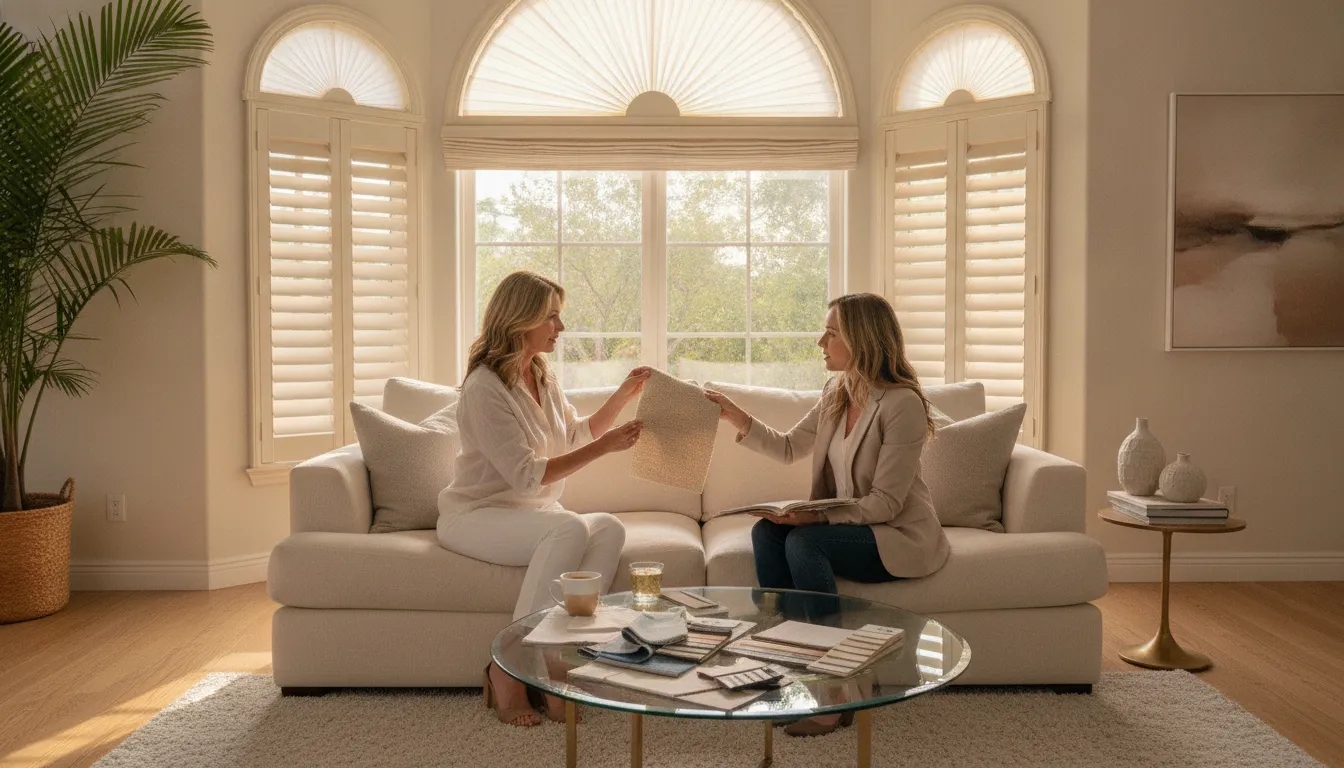
A mobile showroom visit makes these decisions easier because you can compare materials against the actual wall color, furnishings, view, and daylight. Professional measuring also reduces the risk of a beautiful treatment interfering with another panel or window handle.
How do you choose the right style for the room?
Start with the bay's role in the room. A breakfast nook may benefit from easy-clean, compact shades. A formal living room may call for shutters or layered Roman shades. A sunny home office may need glare-reducing solar shades that keep the space comfortable without removing the view.
Then connect the bay to nearby windows. The treatments do not have to be identical, but they should share a color family, material, or design detail. A consistent visual language helps the bay stand out for the right reasons. Vineyard Blind & Shutter's overview of types of window coverings can help you compare the broader range before narrowing the choice.
Finally, think about daily operation. A treatment that looks appealing but is awkward to reach will not serve the room well. Cordless options reduce visible clutter. Motorized options may be helpful for deep bays, wide center panels, or windows behind furniture. The right design should feel easy every day, not only look good when first installed.
Bring a few ideas to the consultation, but stay open to comparing them in the room. A material that looks perfect online may feel different beside your flooring, furniture, and trim. Seeing real samples at the bay helps turn a broad style preference into a confident final choice.
Frequently asked questions
What are the best window treatments for a bay window?
Cellular shades are a versatile choice because they fit tight spaces and offer flexible privacy and light control. Plantation shutters are ideal for a durable, built-in appearance. Roman, roller, solar, and woven shades work well when selected for the bay's depth, sun exposure, and room style.
Should you put curtains on a bay window?
Yes. Curtains can frame the whole bay or add a soft layer over individual shades. Mounting them across the front creates a simple closing plane, while a custom track can follow the bay's angles. Make sure the chosen setup leaves enough room for easy operation.
Is it better to use one shade or separate shades?
Separate shades usually provide better control because each panel can be adjusted for its own sun and privacy conditions. They also follow the bay's architecture more closely. One whole-bay treatment may be appropriate when a unified decorative effect matters more than independent operation.
Can bay window treatments be motorized?
Many shade styles can be motorized, which is useful when the bay is deep, hard to reach, or positioned behind furniture. Available controls vary by product. An in-home consultation can help identify options that fit the layout and the way you use the room.
Find your best bay window solution at home
The right bay window treatment balances precise fit, reliable operation, privacy, light control, and a look that belongs in the room. Vineyard Blind & Shutter brings samples to your home, where you can compare them in the light and space they will actually serve. The team provides custom measuring and professional guidance for homeowners across San Diego County, Riverside County, and Orange County.
Call Vineyard Blind & Shutter at (951) 757-4188 to schedule your free in-home consultation.