West-facing rooms can feel bright and warm late in the day, especially when direct sun reaches a large window. The right thermal window coverings for west facing rooms can help manage glare and create a more comfortable space, but results depend on the product, its fit, and how you use it. Start by deciding whether your main concern is heat, light, privacy, or a mix of all three.
Call Vineyard Blind & Shutter at (951) 757-4188 for a free in-home consultation.
Why can west-facing rooms feel uncomfortable in the afternoon?
A west-facing window receives sunlight later in the day. Depending on the season, window size, nearby shade, and room layout, that light may cause glare or make the room feel warmer. A treatment can intercept or diffuse some sunlight before it reaches the room, and can give you more control over brightness and privacy.
It helps to separate three goals that often get grouped together:
- Glare control: Reduce direct brightness on screens, furniture, or work surfaces.
- Light control: Choose how much daylight enters, from filtered light to a darker room.
- Thermal comfort: Limit the sun’s impact at the window and improve the sense of comfort. A window covering alone cannot guarantee a specific temperature change or energy savings.
These goals overlap, but one fabric or construction may not be ideal for every one. A room used for afternoon television may need more glare control than a kitchen where you want daylight. A bedroom may need stronger light control and privacy. For additional background about home energy use and efficiency, see the U.S. Department of Energy at energy.gov.
Before choosing a product, observe the room during the hours when the problem appears. Notice whether the sun lands directly on a person, a screen, or a broad section of the floor. Also note whether the room stays uncomfortable after the direct beam moves. Those observations help distinguish a glare problem from a broader comfort concern, and keep the product conversation focused on what a covering can and cannot do.
Which window coverings are worth comparing?
Compare a few product types based on the way you use the room. The table is a starting point, not a guarantee of performance. Product construction, opacity, installation, and the specific window all matter.
| Option | What it can help with | Consider before choosing |
|---|---|---|
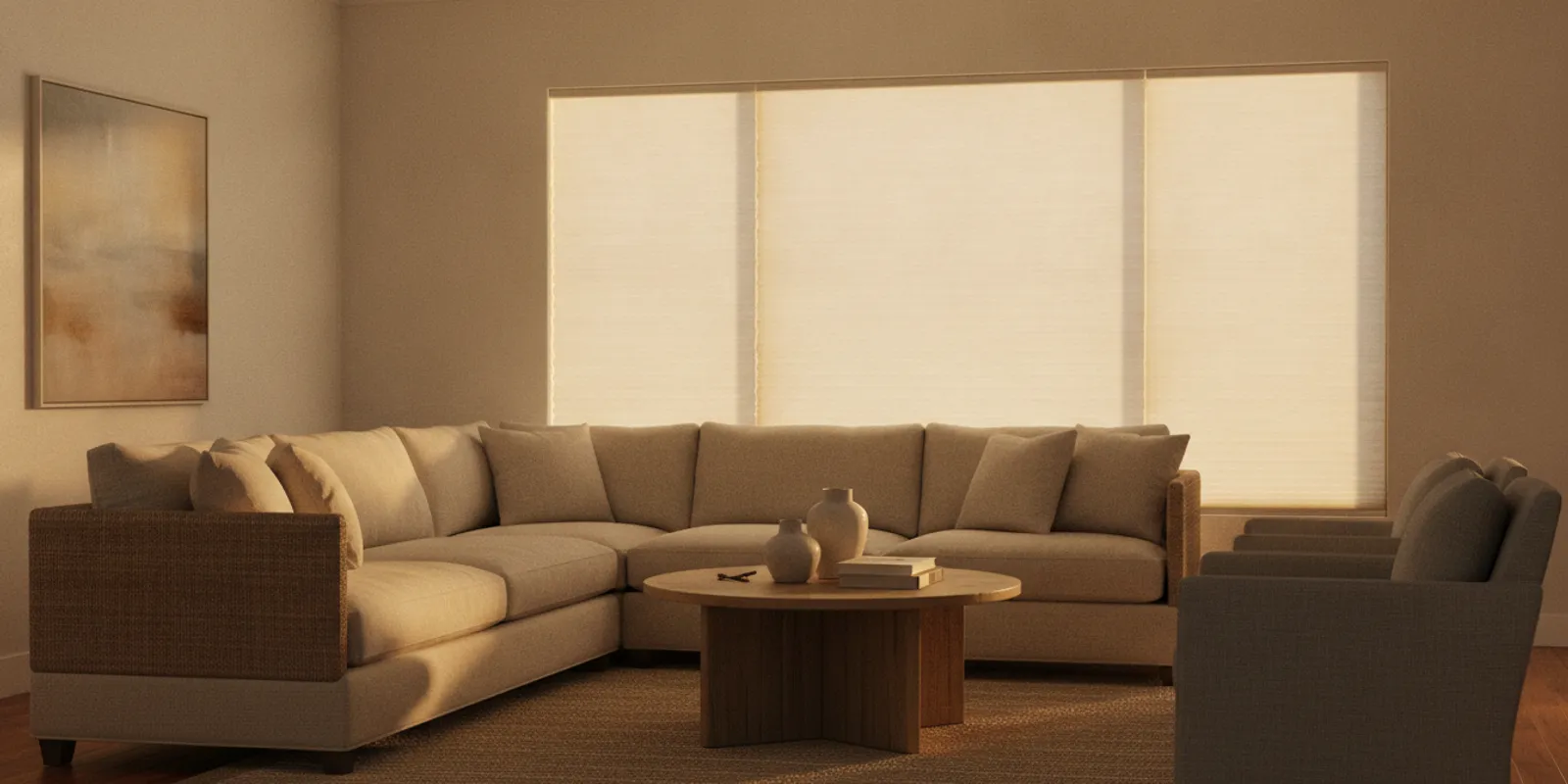
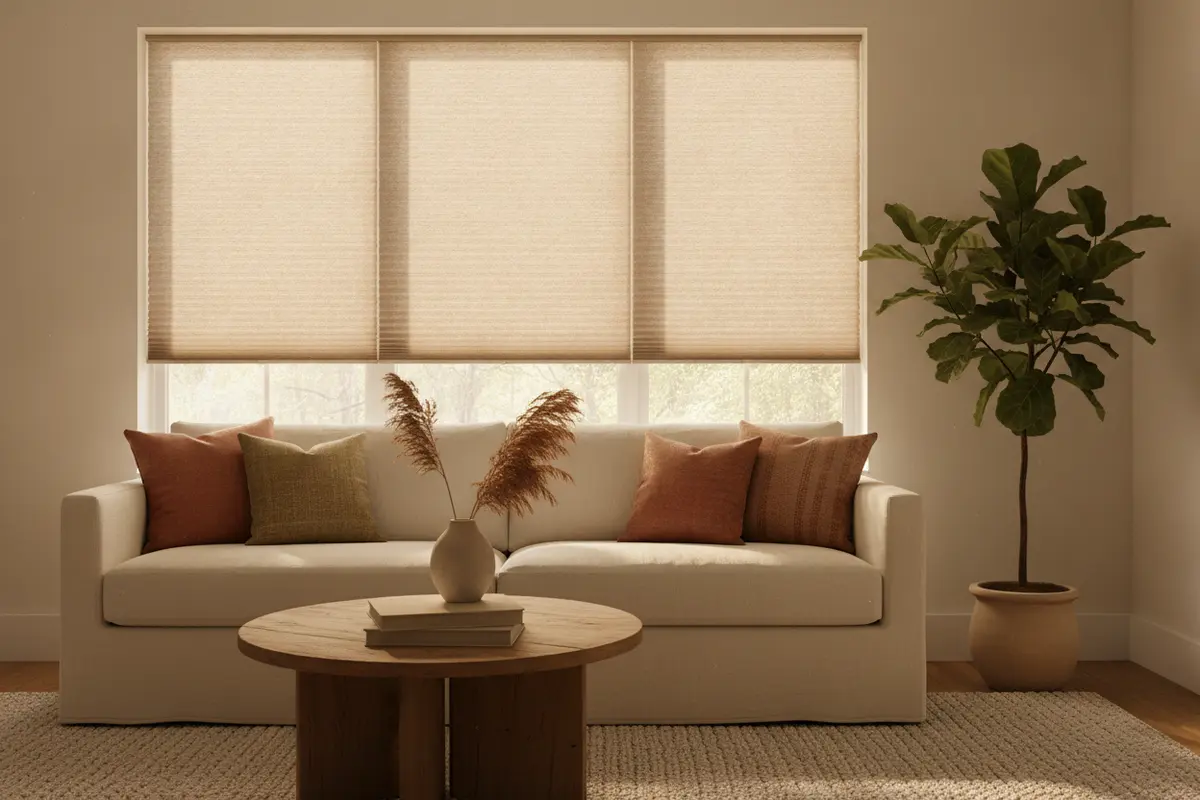
| Cellular shades | Adjustable light control and a layered construction that may suit comfort-focused rooms. | Ask about the exact fabric, cell construction, mounting, and available opacity; do not assume every model performs the same. |
| Solar shades | Softens incoming light and can reduce the harsh feel of glare while preserving some view, depending on openness. | More openness generally means a clearer view but also allows more light through. Check samples in the room. |
| Roller shades | Simple, streamlined light control, with options ranging from light-filtering to room-darkening. | Choose fabric for your actual goal. Darker or room-darkening fabric is not automatically an insulating product. |
| Plantation shutters | Adjustable louvers let you change the balance of light, privacy, and view. | Consider the frame, louver size, material, and how the shutter will fit the opening. |
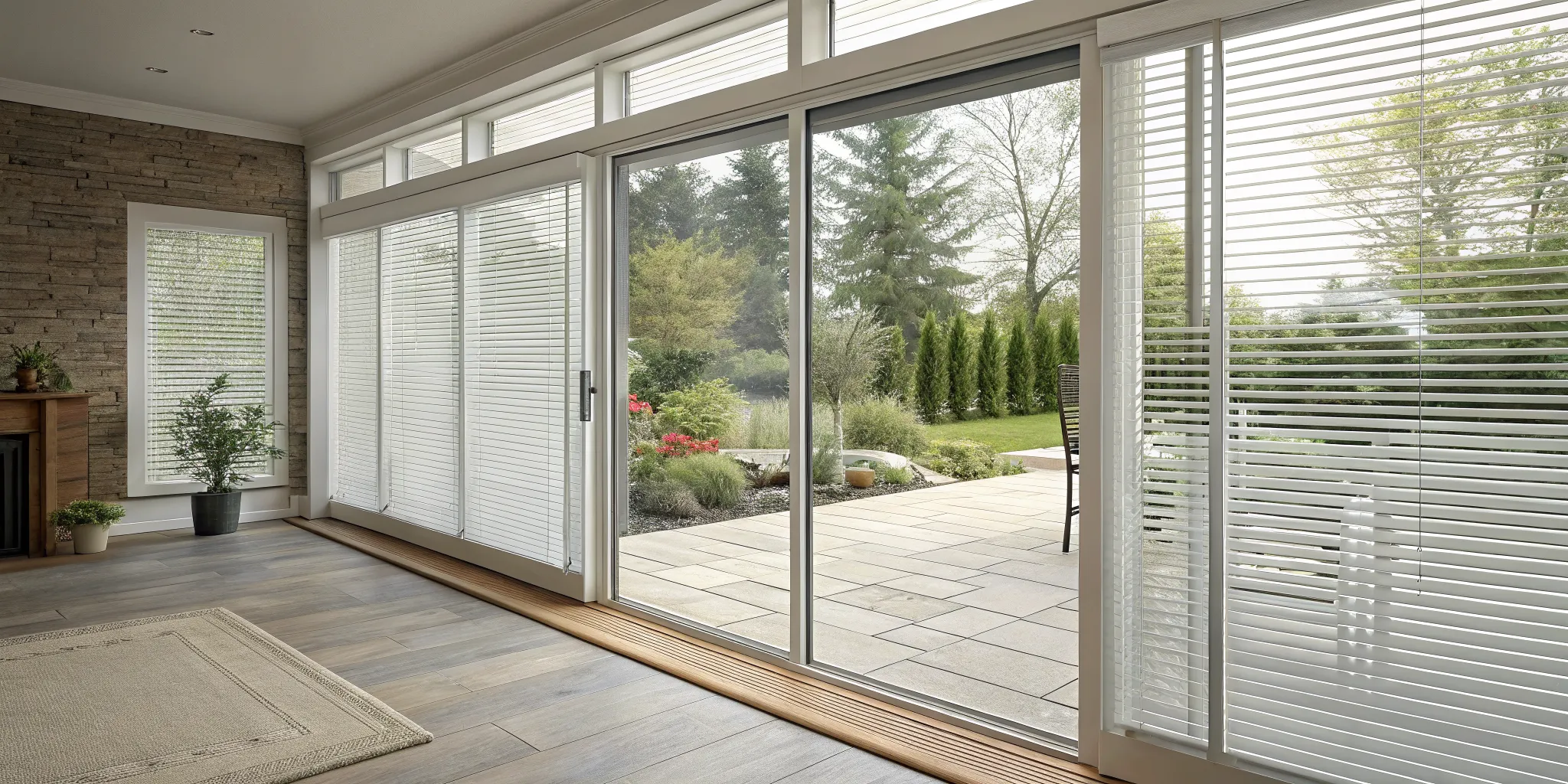
| Blinds | Tilting slats provide flexible control over light direction and privacy. | Compare faux wood and other options for the room’s look, use, and cleaning needs. |
For a wider product overview, see Vineyard’s guide to types of window coverings. If shades are your leading option, browse the custom shades page. Homeowners comparing slats can also review blinds for Southern California homes and custom shutters.
The comparison is easier if you describe the tradeoff you are willing to make. A more open shade fabric may keep an outdoor view while softening the light, but it will not create the same visual barrier as a more opaque material. Adjustable slats or louvers let you change direction and openness, though they require a different operation style than a single continuous shade. A layered cellular shade may be worth discussing when comfort is a priority, but ask about the construction and specifications of the exact product rather than relying on the category name.
How do you choose between light filtering and room darkening?
Start with the task in the room. Light-filtering materials soften daylight while keeping the space bright. They may be a good fit for living areas where you want to reduce harshness without closing off the window. Room-darkening or blackout options can limit incoming light more strongly, which may be useful for media viewing or sleep. They do not automatically block heat. Do not treat darkness as proof of thermal performance; ask for product-specific specifications if heat control is a priority.
Think about the hours when the room is hardest to use. If the problem is a band of sun across a sofa or computer screen, you may want a treatment that can be adjusted through the day. If the room needs privacy after sunset, consider how the fabric or slats look when interior lights are on. For west-facing rooms, seeing a sample near the window at the relevant time of day can be more useful than judging it under showroom lighting.
Q: What is the first thing to decide for a west-facing room? A: Identify the main problem—afternoon glare, brightness, privacy, or warmth—then compare coverings designed to address that concern.
Match the control to the room’s routine
Think about how the room changes over the day. A family room used from morning to evening may need a flexible treatment that can stay open when the sun is mild and close partway when glare builds. In a home office, screen reflections may be the main issue, so adjustable slats or a shade with a suitable openness could be worth comparing. In a bedroom, privacy and a darker environment may carry more weight. The same covering does not need to serve every room in the same way.
Also consider whether someone needs to adjust the window covering often. A treatment that is easy to raise, lower, or tilt is more likely to be used when the light changes. Look at the position of furniture, the window’s height, and whether the controls are reachable. If the window is behind a desk or a sofa, operation and clearance matter just as much as fabric appearance. For wider windows or multiple openings, ask how the selected products will look together when open and closed.
When you compare samples, note the conditions rather than relying on memory. Check the room in the afternoon, look at the sample against the window, and decide whether you want to preserve an outdoor view. Different fabrics can look brighter or darker depending on light outside and the interior finish. A sample is not a substitute for product specifications, but it can help you judge color and visual comfort in the space.
A simple observation note can make sample comparisons more useful. Record the approximate time, whether the sky is clear or overcast, where the sunlight falls, and what you are doing in the room. For example, you might note that glare reaches the television shortly before dinner, while the reading chair remains comfortable. If the room has two windows with different exposures or obstructions, note each one separately. This does not need to be a formal measurement; it is a practical way to explain the real-life problem and check whether a proposed covering addresses it.
What details influence comfort and fit?
Even a suitable product may disappoint if it does not fit or operate as intended. Look at the full window opening, not just the visible glass. Trim, handles, cranks, nearby furniture, and the depth of the frame can affect mounting and clearance. An inside mount sits within the frame when there is sufficient depth. An outside mount attaches around the opening and may cover more of its edges. The right choice depends on the window and the look you want.
Consider these practical details before ordering:
- Coverage: Decide whether you want the treatment inside the frame or extending beyond it to cover more of the opening.
- Operation: Check whether you can reach the control and adjust the covering comfortably throughout the day.
- Glare direction: Slats or adjustable louvers can redirect light; continuous fabrics mainly filter or block it.
- Privacy: Think about sightlines both during the day and at night, when interior lighting changes what people can see.
- Maintenance: Choose a surface and operating style that suit how you use and clean the room.
- Other windows: If the room has several windows, decide whether they should match or whether each needs a different level of control.
For example, a window with a handle that projects into the room may affect how a shade sits or moves. Furniture directly below the sill may make a longer treatment awkward to operate. A deep frame may permit an inside mount, while a shallow or irregular frame could make an outside mount worth considering. These details are not just finishing touches: they can affect coverage, appearance, and whether you will use the covering as often as intended.
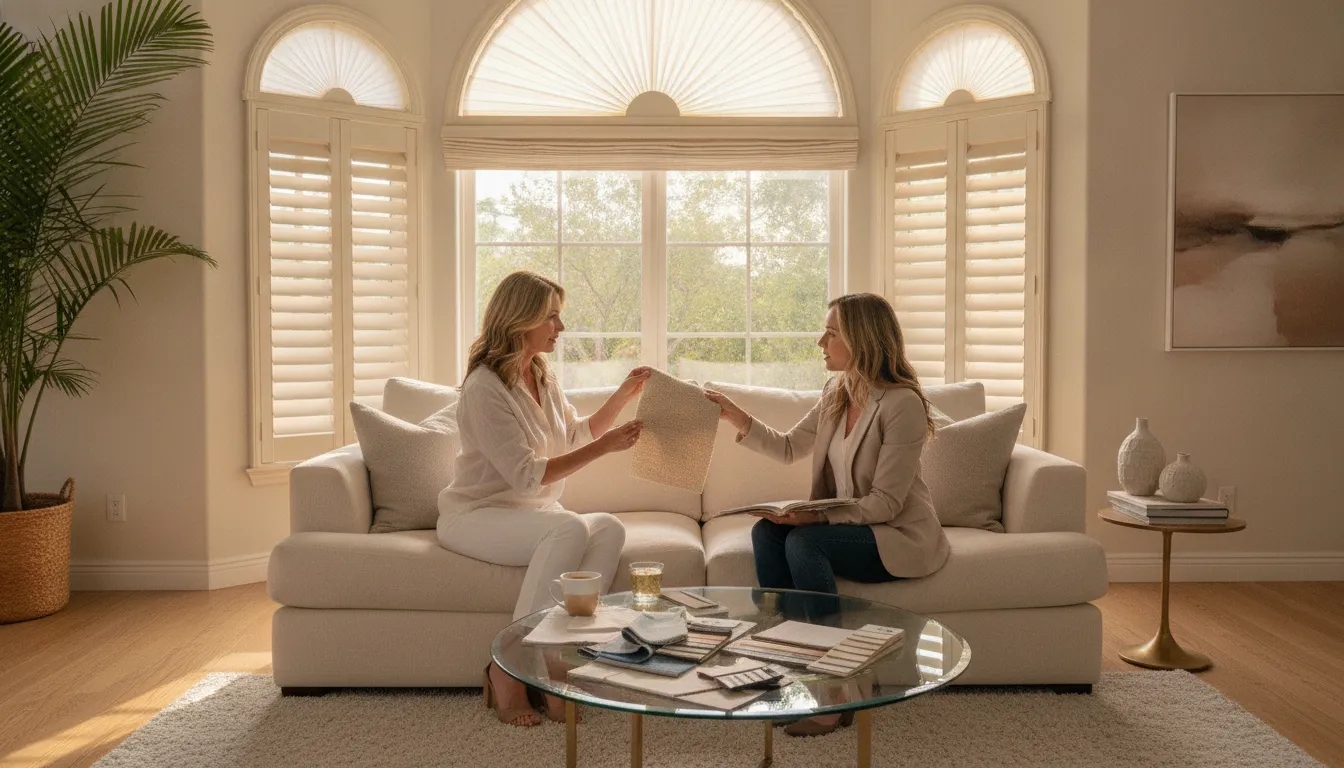
A mobile in-home consultation makes it possible to view samples in the actual room and discuss the window itself. Vineyard brings samples to customers’ homes, and provides free measurements and free installation. Learn more about its mobile window treatment service and how an in-home visit works.
How can you compare options without guessing?
Use a short checklist to make the decision specific to your room. First, note when direct light is strongest and where it lands. Next, decide what you want to preserve: a view, daylight, privacy, or a darker interior. Then compare a few material and operating options against those needs. Bring photos of the window and room to a consultation, but remember that photos cannot show how a fabric looks in changing natural light.
- Describe the issue. For example, say the late-day sun creates glare on a television, or that you want more control over brightness during work hours.
- Set a light-control preference. Choose a starting point such as filtered daylight, adjustable slats, or stronger room darkening.
- Check the window. Note unusual shapes, existing hardware, trim, and obstacles that may affect mounting.
- Review real samples. Compare color, texture, and opacity at the window, if possible.
- Ask what the product claim means. If thermal performance is important, request the specifications for the exact product rather than assuming based on the product category or color.
- Compare the complete quote. Confirm what is included, including measuring, product, and installation, before making a decision.
When discussing options, ask the same questions about each one. How does it operate? How much of the view remains when it is lowered? Which light-control choices are available? What fit or clearance issues should be resolved? If someone describes a product as thermal or energy efficient, ask for the applicable specifications and what conditions they represent. That gives you a more useful comparison than relying on a broad product label or a color sample.
There is no single best covering for every west-facing room. For one homeowner, an adjustable shutter may balance privacy and a changing view. Another may prefer a shade that lowers quickly during a bright afternoon. The right answer follows the room’s use and the customer’s priorities, rather than a generic promise that any covering will eliminate heat.
When does a custom in-home consultation help?
A consultation can be useful when the window is unusually wide, tall, shaped, or difficult to reach, or when different people in the household want different things from the room. It also gives you a chance to compare samples against your paint, flooring, and furnishings instead of selecting from an online image alone.
Before the visit, make a note of the room’s most uncomfortable time of day and the way you use it. Identify whether glare, privacy, view, darkness, or temperature is most important. If you have several west-facing windows, say whether you prefer a consistent look or different controls for different parts of the room. Vineyard serves customers in San Diego County, Riverside County, and Orange County. You can review the service areas or contact Vineyard to ask about a free in-home consultation.
It can also help to bring a few simple references. Take a photo of the full window, including trim and nearby furniture, and note any handles or hardware that could affect clearance. If screens or artwork are affected by glare, describe when the problem occurs and whether moving a chair or changing the screen angle helps. Share which features you do not want to lose, such as a daytime view or natural light. These points help guide a practical comparison without assuming that one style or opacity will solve every issue.
During the visit, compare more than one sample if the window’s light changes noticeably. Ask to see the material both against the glass and in the room’s interior lighting. Confirm how each option is mounted and operated, and ask what product-specific information is available about the goal you care about. A clear conversation about expectations is useful: a covering can offer control and may improve how a room feels, but it should not be presented as a guaranteed temperature fix.
Frequently Asked Questions
Do thermal window coverings stop all afternoon heat?
No window covering should be assumed to eliminate heat. Comfort depends on the window, sun exposure, room, product, and fit. Ask for specifications for the exact product if you need to compare thermal performance.
Are blackout shades the best choice for a west-facing living room?
Not always. Blackout or room-darkening shades can limit light, but a living room may benefit more from filtered daylight or adjustable slats. Choose based on how you use the room and whether darkness, glare control, privacy, or view matters most.
Should I choose shades, blinds, or shutters?
Compare the light control, look, operation, and maintenance you want. Shades offer fabric-based filtering or blocking, blinds have tilting slats, and shutters use adjustable louvers within a frame. A sample and in-home measurement can help narrow the choice.
Can I use different coverings on windows in the same room?
Yes. Different windows may have different sun exposure, privacy needs, or furniture nearby. You can choose options that coordinate in color while varying the operation or light control, as long as the overall look works for the room.
The most useful choice is the one that addresses the room’s specific afternoon conditions while fitting the window and your daily routine. Compare samples, ask clear questions about product specifications, and choose a solution you can comfortably operate.