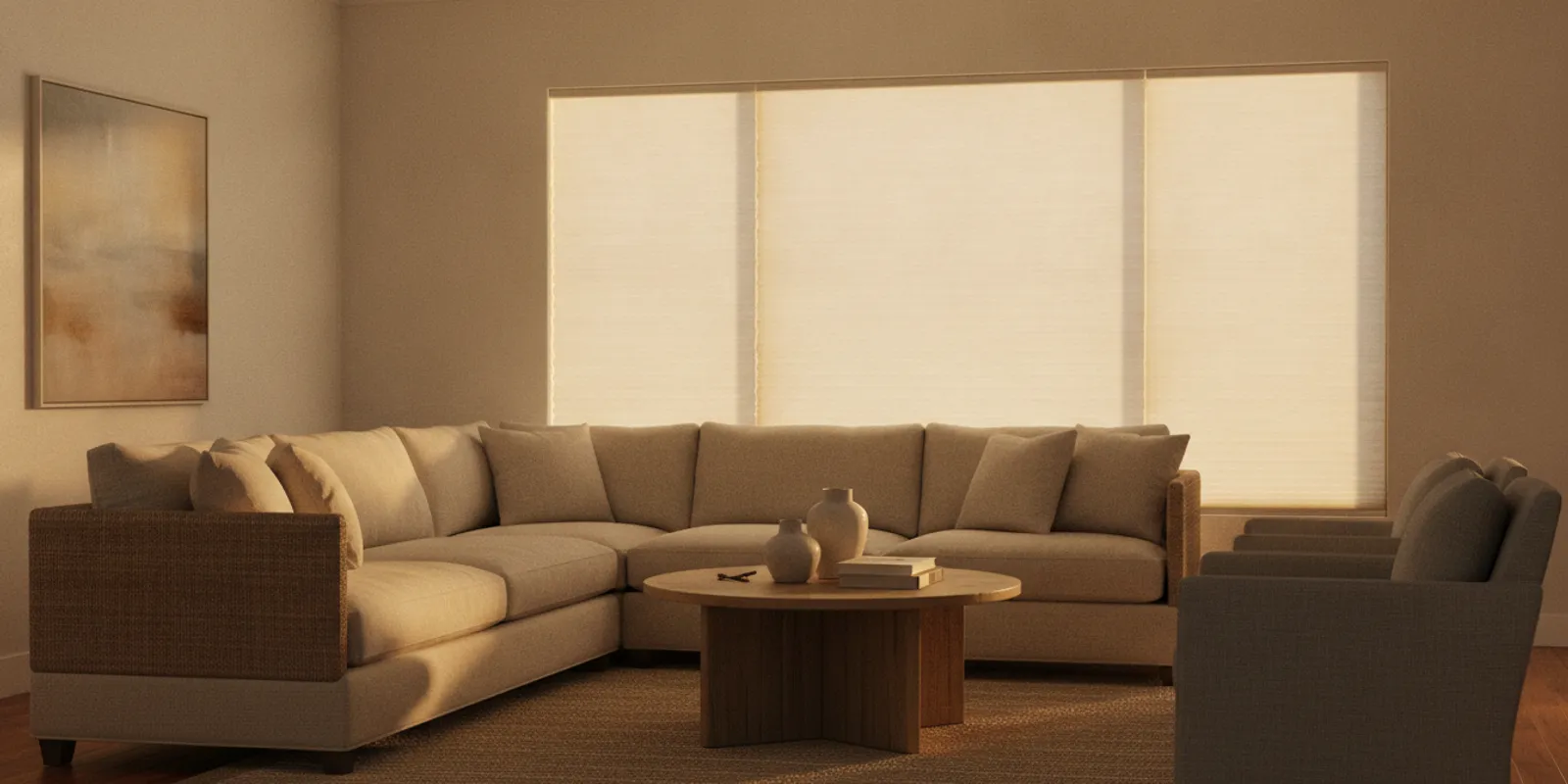
West-facing windows can turn a comfortable room into the hottest spot in the house just as the afternoon sun drops low. The best window treatments for west-facing windows control that intense heat and glare without making the room feel closed off all day. Cellular shades provide the strongest insulation, solar shades preserve the view while cutting glare, and plantation shutters deliver precise light control with lasting style. The right choice depends on how you use the room, how much view you want to keep, and whether your priority is insulation, darkness, or flexibility.
Best window treatments for west-facing windows at a glance
West-facing glass receives direct sun during the hottest part of the day. Unlike morning light, late-day sunlight enters at a low angle and can reach deep into a room. That creates three connected problems: a rapid temperature increase, bright glare on screens, and fading on floors, furniture, and artwork.
A good treatment must solve the problem that matters most without creating a new one. A blackout shade may cool a bedroom effectively, but it may feel too dark in a living room where you want to enjoy the sunset. A solar shade can preserve a view, but it will not provide the same nighttime privacy or insulation as a cellular shade.
| Treatment | Best for | Heat control | View when closed |
|---|---|---|---|
| Cellular shades | Insulation and bedrooms | Excellent | No |
| Solar shades | Glare control and views | Very good | Yes, depending on openness |
| Plantation shutters | Adjustable light and long-term style | Very good | Partial |
| Roller shades | Simple operation and room darkening | Good to excellent | No |
| Layered treatments | Maximum day-to-night flexibility | Excellent | Varies |
For many Southern California homes, the strongest solution is not a single product. A solar shade paired with drapery, or a cellular shade paired with side channels, can address different needs throughout the day. A custom fit matters because gaps at the sides allow direct sun to enter and reduce both comfort and glare control.
Why do west-facing windows need a different strategy?
West-facing rooms usually feel comfortable in the morning, then heat up quickly between mid-afternoon and sunset. The low sun angle is difficult for roof overhangs to block, and direct light can land on a television, desk, sofa, or hardwood floor for hours. This pattern calls for a treatment you can adjust as the sun moves.
Afternoon heat gain
Window glass allows solar energy to enter and warm interior surfaces. According to the U.S. Department of Energy, properly selected window coverings can improve comfort and reduce unwanted heat gain. For a west-facing room, closing an effective treatment before the strongest sun arrives is more helpful than waiting until the room already feels hot.
Glare and fading
Direct afternoon light creates sharp contrast between the bright window and the rest of the room. That contrast makes screens harder to see and can cause people to avoid an otherwise useful space. Sun exposure can also fade fabrics and discolor flooring over time. Treatments that filter or block ultraviolet light help protect the room while allowing you to choose how much visible light remains.
Changing privacy needs
A treatment that preserves an outdoor view during the day may become more transparent from outside after dark when interior lights are on. West-facing windows often face streets, yards, or neighboring homes, so nighttime privacy should be part of the decision. Layering a solar shade with drapery or choosing an opaque secondary treatment provides a practical day-to-night solution.
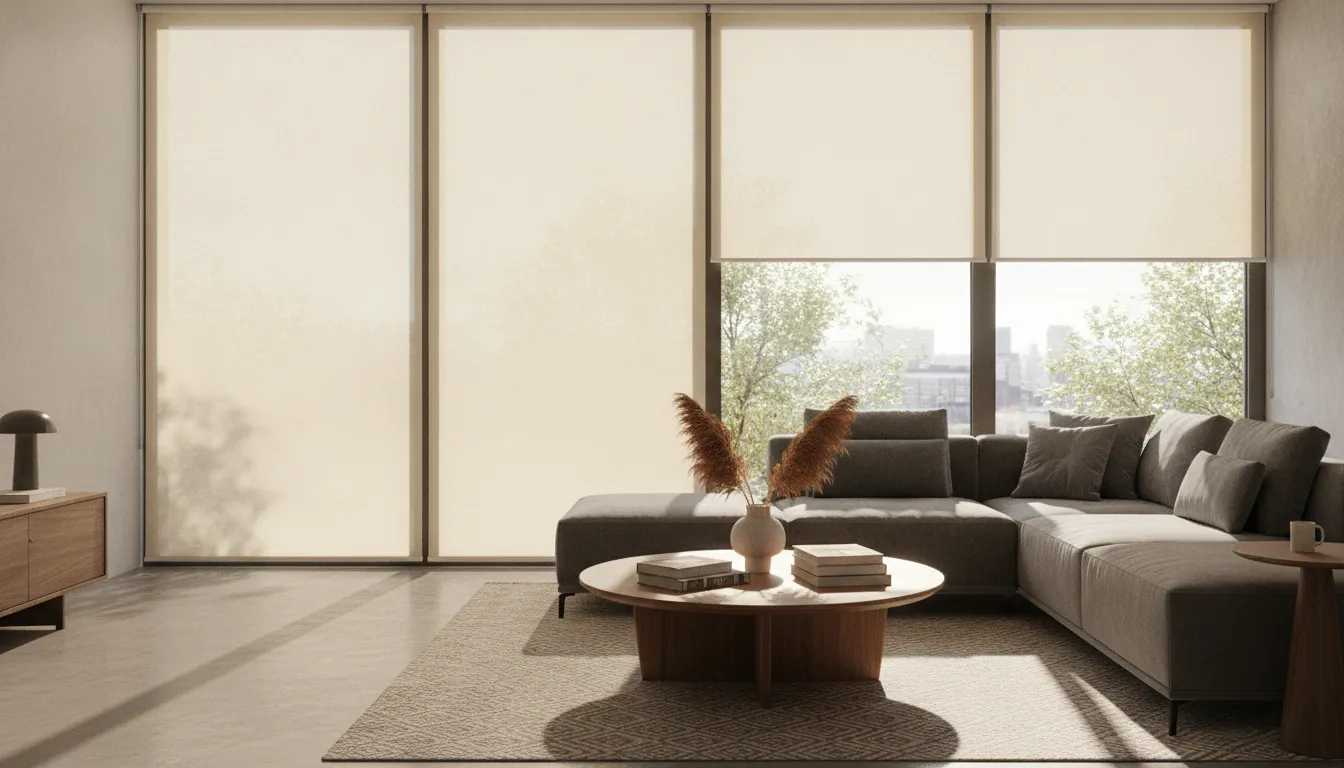
Cellular shades provide the strongest insulation
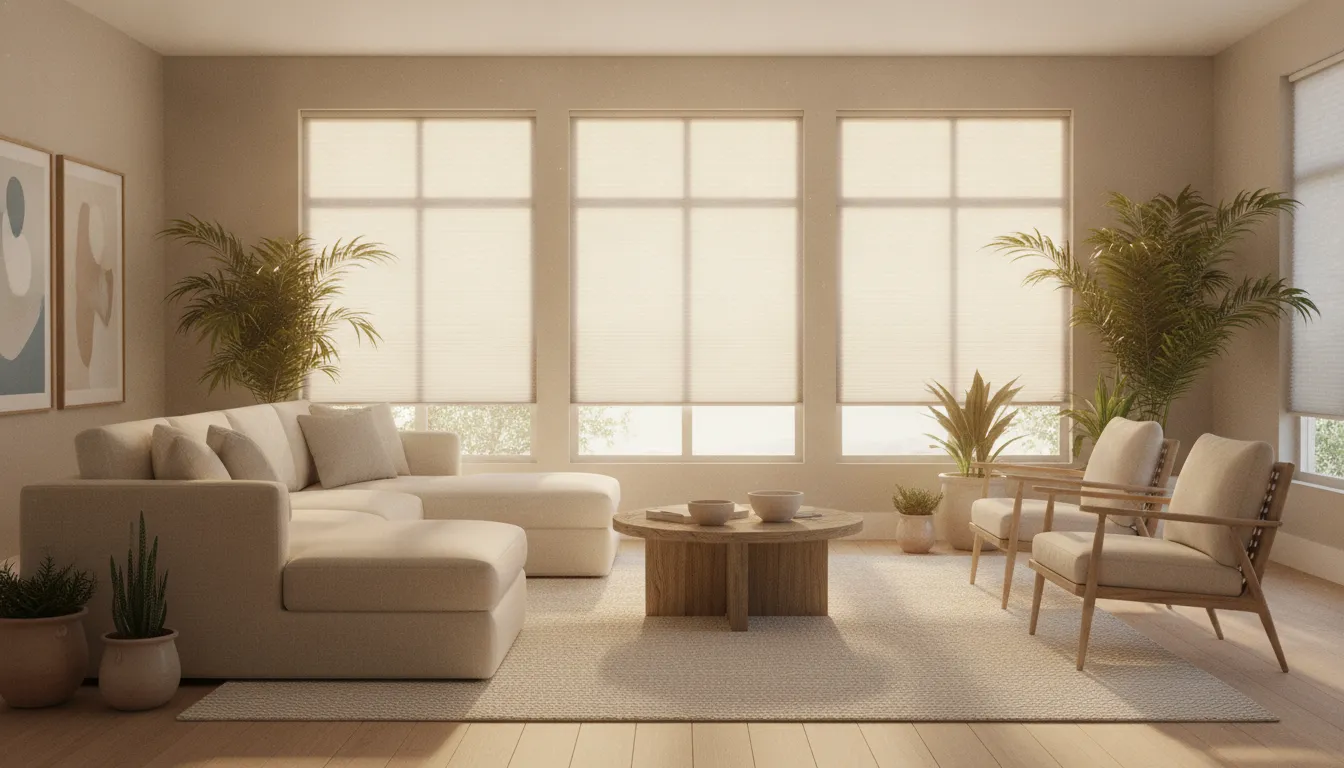
Cellular shades, also called honeycomb shades, use rows of fabric pockets to trap air near the window. That air layer slows heat transfer and makes cellular shades one of the strongest options for a room where temperature control is the main concern. They are especially useful for bedrooms, upstairs spaces, and rooms with large expanses of west-facing glass.
Single-cell versus double-cell shades
Single-cell shades have one row of air pockets and offer a clean, lightweight profile. Double-cell shades use two rows for greater insulation. The right construction depends on window depth, size, and your comfort goals. A custom consultation helps confirm that the shade can operate smoothly without looking bulky inside the frame.
Light-filtering versus blackout fabric
Light-filtering cellular shades soften the sun and keep a room bright, but they do not eliminate all glare. Blackout fabrics provide stronger room darkening and are usually the better choice for a west-facing bedroom, nursery, or media room. Top-down, bottom-up operation adds flexibility by allowing daylight near the top while covering the most exposed part of the window.
Fit makes the difference
Even a high-performing cellular fabric cannot block a beam of sunlight that passes through a large side gap. Precise measurement reduces those gaps while preserving reliable operation. Vineyard Blind & Shutter includes professional measuring and installation, which helps the completed treatment perform as intended rather than simply fitting the approximate window size.
Explore the broader selection of custom shades to compare cellular, roller, solar, Roman, and woven options.
Are solar shades best for glare and preserving the view?
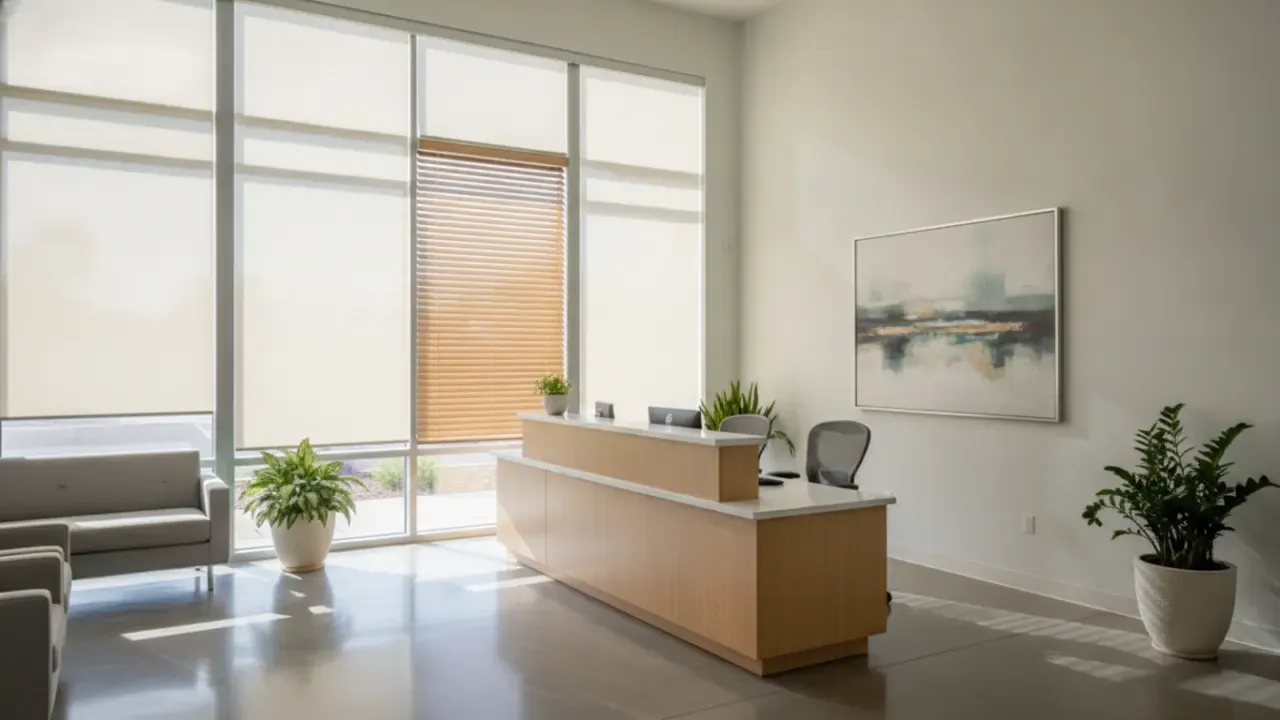
Solar shades are often the best answer when glare is the main problem but the view is worth keeping. Their performance fabric filters strong light and reduces visual discomfort while maintaining outward visibility. This makes them particularly useful in living rooms, home offices, kitchens, and patio-facing spaces.
Choose the openness factor carefully
The openness factor describes how much of the solar fabric is open space. Lower openness provides stronger glare control and more daytime privacy, but it also reduces the view. Higher openness preserves a clearer view while allowing more light through. A west-facing window typically benefits from a tighter weave than a window that receives only indirect light.
Color affects performance and appearance
Lighter solar fabrics tend to reflect more sunlight and blend into bright interiors. Darker fabrics often provide a clearer outward view because the eye looks through the dark mesh more easily. The best balance depends on the room, exterior view, and performance goals. Reviewing full-size samples in the room during the afternoon is more reliable than choosing from a small online swatch.
Plan for nighttime privacy
Solar shades are not generally a complete privacy solution at night. When indoor lights are brighter than the exterior, people outside may be able to see through the fabric. Pairing the solar shade with side panels, drapery, or an opaque secondary shade solves this issue without sacrificing the daytime view.
Plantation shutters offer precise, durable light control
Plantation shutters are a strong choice for homeowners who want architectural style and adjustable light control. Tilting the louvers changes the direction of the incoming sunlight without requiring the entire window covering to be raised. During the strongest afternoon sun, the louvers can redirect light upward while still allowing some airflow and brightness.
Why shutters work well in intense sun
A closed shutter panel creates a substantial barrier between the window and the room. Unlike soft shades, shutters also hold their shape and do not move when a nearby door opens or the air conditioner runs. They are easy to adjust throughout the afternoon and can be divided into sections so the upper and lower louvers operate separately.
Material selection matters
West-facing windows receive sustained heat and ultraviolet exposure. The shutter material and finish should suit those conditions as well as the room's moisture level and design. Custom sizing is important because shutters become a fitted part of the window opening. View Vineyard Blind & Shutter's shutter options to compare styles for your home.
When shutters are not the only layer
Shutters provide excellent adjustable control, but a room that needs complete darkness may still benefit from a blackout shade or drapery layer. A layered approach also softens the visual character of a room and helps cover small light paths around the shutter frame.
When should you choose roller shades or layered treatments?
Roller shades offer a streamlined look and are available in light-filtering, solar, and room-darkening fabrics. Their simple operation works well on large windows and in modern interiors. When raised, the shade rolls into a compact profile that keeps the window open and the view unobstructed.
Roller shades for simple room darkening
An opaque or blackout roller fabric is practical when you want the room bright at one time and dark at another. The shade can remain open through the morning, then close before the low afternoon sun reaches the glass. Side channels or a carefully planned mounting position can improve darkness in bedrooms and media rooms.
Layer solar control with privacy
A layered treatment handles more situations than a single fabric. A solar shade can manage daytime glare and preserve the view, while drapery or an opaque roller shade provides nighttime privacy. Layering also lets you fine-tune the room instead of choosing between fully open and fully closed.
Consider motorization for hard-to-reach glass
High windows, wide openings, and several shades in one room can be difficult to adjust every afternoon. Motorization makes it easier to close treatments before the heat builds up and reopen them after sunset. It is also a convenient cordless option for homes with children or pets. A professional can evaluate the window size, power options, and controls before recommending a motorized design.
How to choose the right treatment room by room
The same west-facing exposure can call for different products in different rooms. Use this quick process before comparing fabrics and styles:
- Note when the room becomes hot or uncomfortable.
- Identify where direct sunlight and glare land.
- Decide whether insulation, view, darkness, or privacy matters most.
- Compare suitable samples in the room during the afternoon.
Living rooms and great rooms
Preserving the view is often important in a shared living space. Solar shades or adjustable shutters can reduce glare without making the room feel closed all afternoon. If the television sits opposite the window, choose stronger glare control and consider a layered option for movie viewing.
Bedrooms and nurseries
Temperature control, privacy, and darkness usually matter more than maintaining the view. Blackout cellular shades or room-darkening roller shades are strong candidates. Careful sizing reduces bright edge gaps, while cordless or motorized operation supports a clean, convenient design.
Home offices
A home office needs comfortable daylight without screen reflections. Solar shades filter direct light and usually keep the room more visually open than a blackout treatment. Positioning the desk perpendicular to the window can further reduce glare while allowing you to enjoy the softened light.
Kitchens and dining areas
These rooms often need a treatment that is easy to operate and suits the surfaces nearby. Solar or roller shades provide a simple profile, while shutters offer adjustable light and a fitted appearance. Consider privacy after sunset if the window faces a neighbor or street.
Get a better result with professional measuring and installation
West-facing windows reveal small design and installation mistakes quickly. A narrow light gap can produce an intense beam across a screen, and a fabric chosen under showroom lighting can look very different in direct afternoon sun. Professional measuring and in-home sample review help prevent those problems.
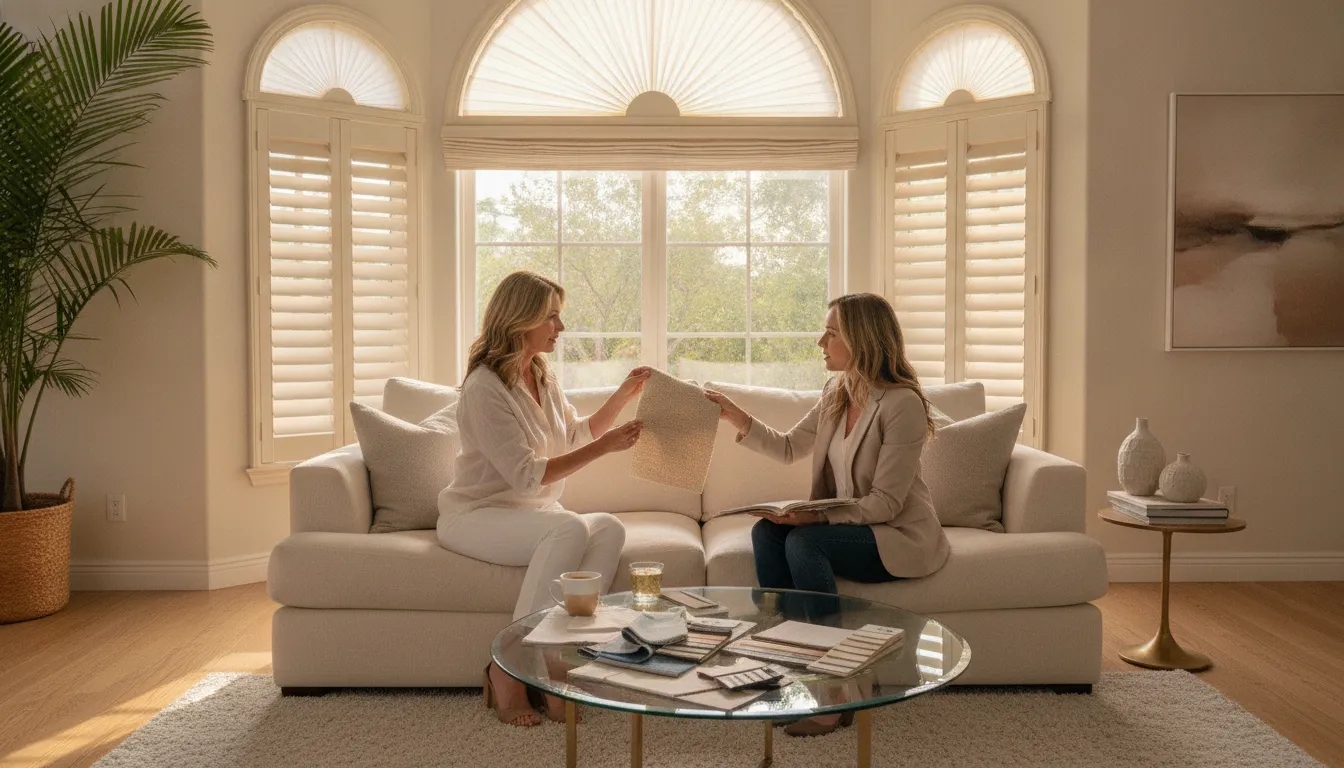
Vineyard Blind & Shutter brings a mobile showroom to homes throughout San Diego County, Riverside County, and Orange County. You can compare colors, textures, opacity, and operation in the room where the treatment will be used. The consultation also makes it easier to compare a single product with a layered design before deciding.
Frequently asked questions
What is the best shade for blocking heat from west-facing windows?
Cellular shades are usually the strongest shade option when insulation is the main priority because their honeycomb pockets trap air near the glass. For maximum performance, select an appropriate fabric and make sure the shade is measured and installed to minimize side gaps.
Can solar shades block heat without blocking the view?
Yes. Solar shades reduce glare and solar heat while preserving an outward view. The openness factor determines the balance. A lower openness blocks more light and provides more daytime privacy, while a higher openness keeps the view clearer.
Are shutters good for west-facing windows?
Yes. Plantation shutters provide durable, adjustable control over strong afternoon light. Their louvers can redirect sunlight while maintaining some brightness, and closed panels create a substantial barrier at the window.
Should west-facing window treatments be motorized?
Motorization is helpful for high, wide, or hard-to-reach windows and for rooms with several treatments. It makes daily adjustment convenient, which can improve results because the shades are more likely to be closed before the strongest afternoon heat arrives.
Can one window treatment provide both a view and nighttime privacy?
Usually, the best solution is layering. A solar shade can preserve the daytime view, while drapery or an opaque secondary shade provides privacy after dark. An in-home consultation can identify a combination that fits the window without looking bulky.