A single standard blind can look like a quick weekend project, but the result depends on more than attaching brackets. Accurate measuring, the right mount, suitable hardware, and a level installation all affect how smoothly the treatment operates and how well it protects the window. Call Vineyard Blind & Shutter at (951) 757-4188 for a free consultation and professional installation.
Blind installation DIY vs professional comes down to scale, window complexity, and confidence in precise measuring. DIY may suit one straightforward window when you have the right tools and follow the manufacturer's instructions. A professional is the safer choice for multiple rooms, specialty or high windows, motorized treatments, and custom shutters that require a precise fit.
The decision becomes clearer when you compare the time, tools, safety considerations, and potential cost of correcting an error. Vineyard's mobile showroom brings samples and design guidance to your home, so the installation plan can account for your actual windows and lighting before the work begins.
Blind Installation DIY vs Professional: Key Differences
The right choice depends on the number of windows, the type of treatment, and how comfortable you are with measuring and using tools. A single standard window may be a manageable weekend project. Several rooms require more planning, consistent measurements, and time than many homeowners expect.
Q: What is the main difference between DIY and professional blind installation? A: DIY installation can work well for a few simple, standard windows. While professional installation is usually the better choice for more than one room or more than five windows because the installer handles measuring, fitting, and installation efficiently.
Time and project size
Some horizontal blinds, including faux wood, real wood, and mini-blinds, are relatively straightforward to install. Certain cellular, pleated, and Roman shades can also take about 5 to 10 minutes per window once the measurements and hardware are ready. That estimate applies to easy installations, not the entire project.
Measuring your own windows may add approximately 15 minutes per window. Installation can then take another 20 to 40 minutes per window, depending on the mount type, hardware, access, and your experience. For five windows, that can represent several hours before accounting for unpacking, leveling, cleanup, or correcting a measurement.
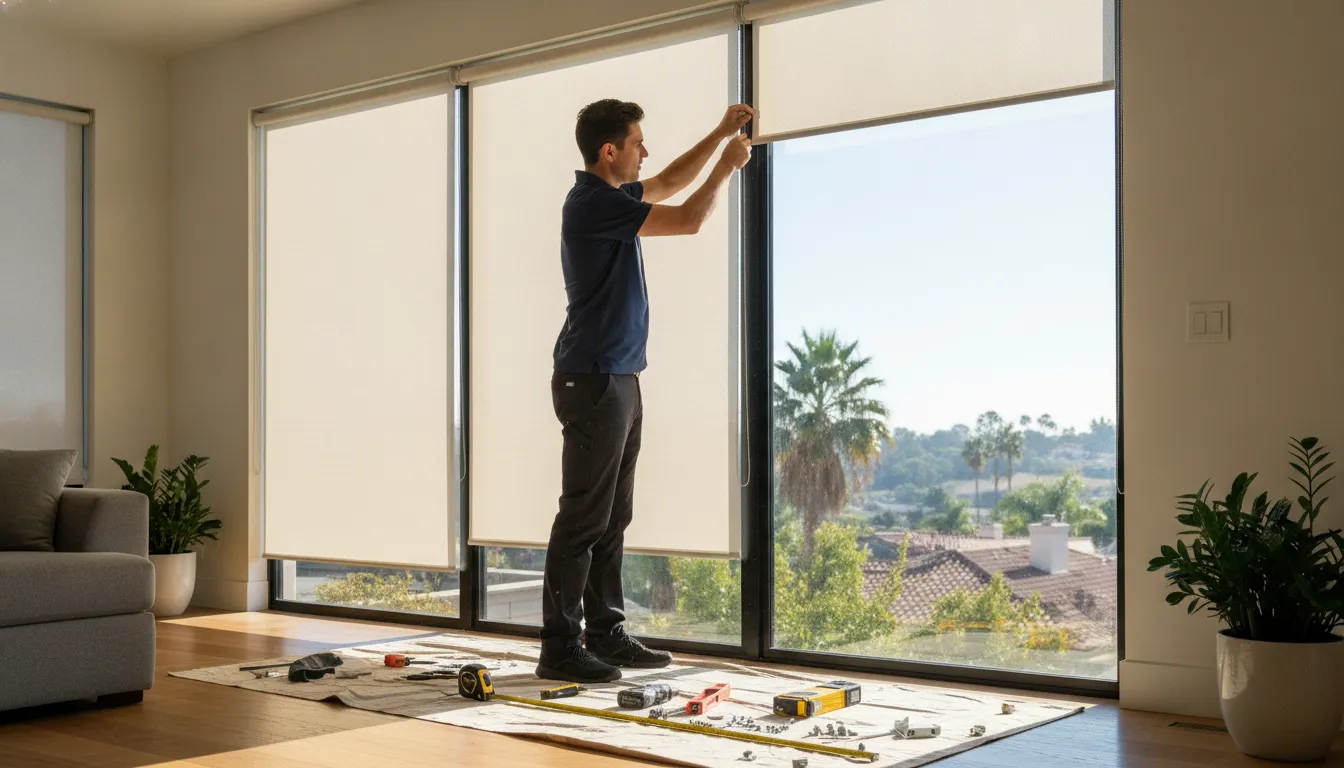
Professional installers typically complete a standard installation in under two hours. More importantly, they can work across multiple rooms without requiring you to pause other responsibilities. If your project includes more than one room or over five windows, hiring a professional is generally recommended. The installation scope, window count, and treatment type all affect whether DIY remains practical.
Precision and confidence
DIY installation gives you scheduling flexibility and can suit a homeowner who has standard windows, basic tools, and time to work carefully. However, the difference between an inside mount and an outside mount affects both the measurement and the installation approach. A small mistake can leave blinds uneven, difficult to operate, or poorly aligned. For a larger order, professional measuring and installation reduce the uncertainty and help ensure every treatment works as intended.
What Are the Most Common DIY Blind Installation Mistakes?
DIY blind installation can look straightforward, but small decisions made before the drill comes out often determine whether the finished treatment fits and operates smoothly. Accurate measuring is frequently described as 90 percent of the work. Because a mounting bracket cannot correct a window measurement that is too wide, too narrow, or taken from the wrong points. Careful measuring guidance can help, but every window still needs to be measured individually.
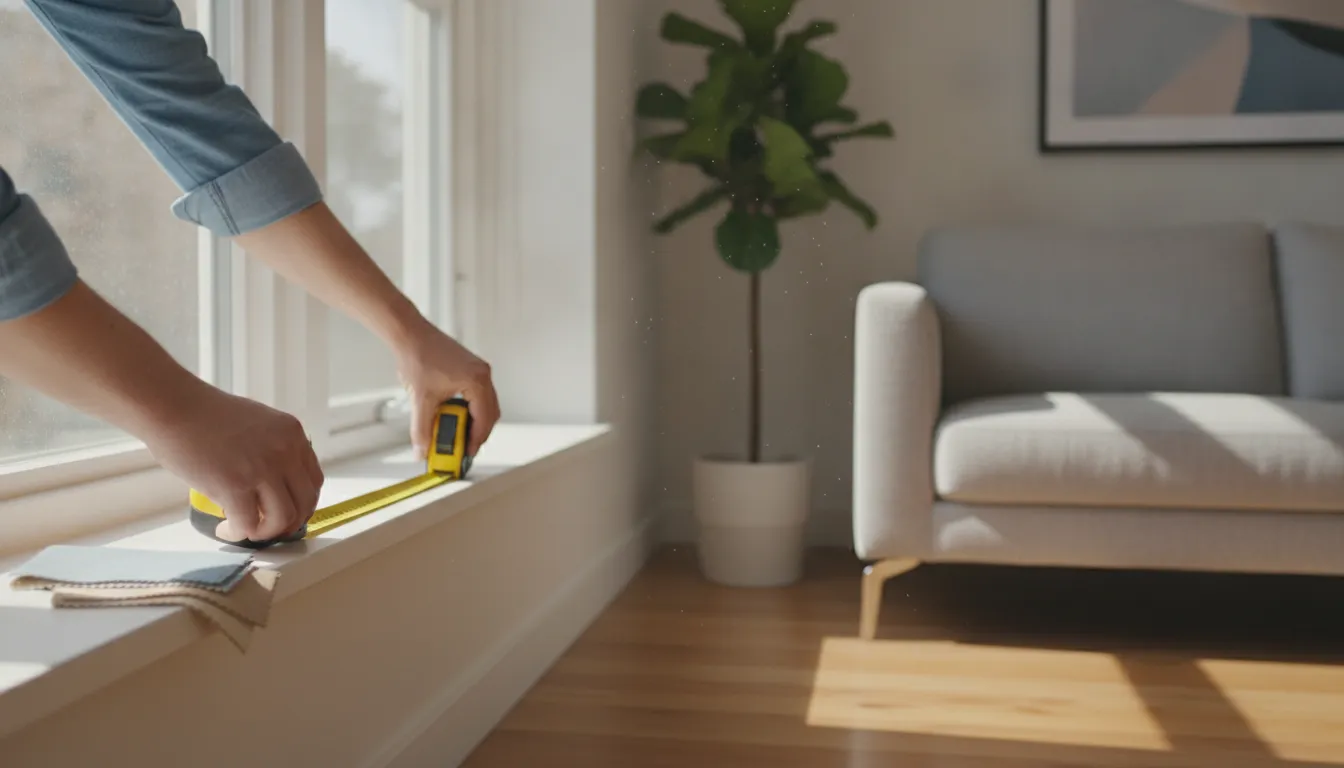
- Measuring only once: Windows can vary slightly from top to bottom and side to side. Skipping repeat measurements can lead to gaps, binding, or a treatment that does not fit the opening.
- Choosing the wrong mount: An inside mount sits within the window frame, while an outside mount attaches to the casing or wall. The choice affects light control, appearance, clearance, and where the brackets must be secured. Review the inside- versus outside-mount basics before ordering.
- Using the wrong hardware: Drywall, wood, concrete, and other wall materials require different anchors and screws. Hardware selected without identifying the mounting surface may loosen, pull out, or leave the blind unsupported.
- Forcing a poor fit: Brackets mounted out of level or too close to moving parts can make a blind tilt, bind, or wear prematurely. Improper installation can also damage the treatment or window frame and may affect warranty coverage.
Why do installation errors matter beyond appearance?
A blind that looks slightly uneven may also fail to raise, lower, tilt, or close correctly. Correcting the mistake can mean removing brackets, patching the frame or wall, reordering a custom treatment, and repeating the installation. That is why the blind installation DIY vs professional decision should account for the cost of an error, not just the time saved by doing the work yourself. For several windows, unusual frames, or custom shutters, precise measuring and proper mounting help protect both the treatment and the home.
DIY vs Professional: A Cost and Time Comparison
The lowest upfront cost is not always the lowest total cost. DIY installation may make sense for one straightforward window, but the equation changes when a project includes several rooms, custom measurements, specialty products, or a tight schedule.
| Consideration | DIY installation | Professional installation |
|---|---|---|
| Time per window | Allow about 15 minutes to measure, plus 20 to 40 minutes to install one window. | A standard project can often be completed in under two hours, depending on the number and type of windows. |
| Direct labor cost | No installation invoice, but you may need a drill, bits, level, and other tools. | Vineyard Blind & Shutter includes professional measuring and installation with every purchase, which can save an estimated $300-$500 compared with paying separately for those services. |
| Risk of added expense | A wrong measurement, damaged frame, or failed mounting point can mean replacement products, repairs, and more time. Improper installation may also affect a manufacturer warranty. | Professional labor guarantees provide additional protection if an installation issue arises. |
| Best fit | One or a few standard windows, with a homeowner who is comfortable measuring and using basic tools. | More than five windows, more than one room, or treatments requiring especially precise fitting. |
For a small, uncomplicated project, the flexibility of doing the work yourself may outweigh the time involved. For a larger order, however, measuring every opening and repeating the mounting process can quickly consume a weekend. The risk is not limited to labor. A measurement error can make a custom treatment unusable, while an incorrectly anchored bracket can damage the wall or window frame. Lowe's notes that improper installation can damage both the treatment and the frame: review the measurement and installation guidance before deciding.
Professional installation is particularly valuable when the product must operate smoothly and look consistent across multiple windows. It also shifts the responsibility for accuracy, setup, and final adjustments to an experienced installer. When comparing options, consider the complete long-term value, not just the price of a box and a free afternoon.
Which Window Treatments Are Easiest to Install Yourself?
If you are comparing blind installation DIY vs professional service, start with the simplest product and the simplest window. Standard horizontal blinds, including faux wood blinds, real wood blinds, and mini-blinds, are usually the most approachable choices for a careful homeowner. Cellular shades, pleated shades, and Roman shades can also be manageable when the mounting surface is accessible and the product arrives with clear instructions.
Choose a standard window first
For a first project, choose one standard-size window with an easy-to-reach frame. Starting with one opening lets you confirm that your inside- or outside-mount measurements are correct before buying or installing treatments throughout a room. Even an easy blind can fit poorly when measurements are off, so take your time with the width, height, and depth requirements listed by the manufacturer.
Have the right tools ready
Most basic installations need only a few household tools:
- Drill and the correct driver or drill bits
- Tape measure
- Level
Check the included hardware before drilling. The fasteners supplied for drywall may not be appropriate for masonry, wood trim, or another wall material. Hold each bracket in position, confirm that the marks are level, and follow the manufacturer's instructions from beginning to end. Skipping a small step can leave the headrail crooked, make the blind difficult to operate, or damage the frame.
Know when DIY stops being simple
A basic blind may take roughly 5 to 10 minutes per window once you understand the process. But that estimate assumes accurate measurements, suitable hardware, and a straightforward opening. Multiple windows quickly introduce more opportunities for inconsistent spacing or ordering errors. Specialty shapes, difficult-to-reach windows, and treatments that need a particularly precise fit deserve more caution.
If you want the look of fitted window coverings without managing every measurement and bracket, explore Vineyard Blind & Shutter's custom blinds. A professional can verify the fit and help you select the right mount before installation.
When Should You Call a Professional for Blind Installation?
Answer: Call a professional when your project includes more than five windows, multiple rooms, specialty-shaped windows, motorized treatments, high or vaulted windows, or large, heavy coverings. Professional measuring and installation reduce fit, safety, and handling risks, especially when the treatment must operate smoothly every day.
You have more than one room or five windows
A single standard window may be manageable for an experienced DIYer. The calculation changes when the project spreads across several rooms. Industry guidance recommends hiring a pro when you have more than one room to cover or more than five windows. Measuring each opening, selecting the right mount, installing brackets, and checking alignment can turn into a full weekend of repetitive work. A professional can organize the installation and maintain a consistent look throughout the home. See the installation guidance behind this recommendation.
Your windows are specialty, elevated, or difficult to reach
Arched windows, bay windows, and large sliding glass doors require more than attaching a standard bracket. Their dimensions, angles, clearances, and operating paths must work together. High or vaulted windows add a safety concern because ladder work may require specialized equipment and training. If you cannot comfortably reach the window from a stable position, professional installation is the safer choice. Home improvement guidance also recommends professional help for high, hard-to-reach treatments because of the risks involved.
You are installing motorized treatments or heavy coverings
Motorized window treatments can involve electrical connections, battery systems, setup, and troubleshooting. If the installation requires more electrical knowledge than you normally use for home projects, do not guess. Have a qualified installer handle the work. Large shutters and layered treatments can also be heavy and awkward to position. Extra help protects the treatment, the wall, and the people doing the lifting.
You want shutters to open and close correctly
Shutters require a particularly precise fit. If the frame is not square, panels and louvers may not open or close properly. That is one reason to consider custom shutters with professional measuring and installation rather than treating them like a simple blind replacement. A pro can identify clearance issues before ordering and make appropriate on-site adjustments during installation.
In short, the blind installation DIY vs professional decision comes down to project scale, window complexity, safety, and the value of getting the fit right the first time. For one accessible standard window, DIY may be reasonable. For a whole-home project or any difficult opening, professional installation is the more controlled option.
Top Benefits of Professional Blind Installation
Choosing professional installation can make the difference between window treatments that simply hang and treatments that fit, operate, and protect your investment. For custom blinds and shutters, the value comes from more than saving a few minutes with a drill.
- Faster completion with less disruption. A standard professional installation can often be completed in under two hours, according to installation guidance from LoConsolo. That is especially useful when several rooms need treatment. Instead of measuring, sorting hardware, and working through each window on separate evenings, an experienced installer can move efficiently from one opening to the next.
- Less risk to walls, trim, and frames. Mounting brackets need to be positioned accurately, and the hardware must match the wall material. Professional installers use the right tools and techniques to reduce marring or other damage during installation. That matters in homes with finished trim, narrow window frames, or expensive custom treatments. Improper installation can damage the treatment or frame and may create warranty complications, as Lowe's measuring guidance notes.
- Adjustments happen on site. A professional can test the fit, check alignment, and make minor adjustments before leaving. That may include correcting tension, refining the position, or addressing a small fit issue that would be difficult to diagnose after a DIY installation. The result is smoother operation and a cleaner finished appearance.
- Measuring comes with accountability. Accurate measurements are essential to a successful installation. With a professional measuring guarantee, the installer or retailer takes responsibility if the treatment does not fit correctly. Rather than leaving you to absorb the cost of an avoidable replacement. This is one of the clearest advantages in the blind installation DIY vs professional decision.
- Better performance from a proper fit. Correctly measured and installed window treatments can help block unwanted summer heat gain or winter heat loss. Gaps, uneven mounting, or an incorrect mount can reduce that benefit. Professional fitting helps the treatment perform as intended, particularly when light control or insulation is a priority. See Bob Vila's overview of blinds and curtains for additional context on fit and energy performance.
- Support beyond the appointment. Vineyard Blind & Shutter includes free professional measuring and installation with every purchase. Its mobile showroom brings samples and design guidance to your home, where you can evaluate color, texture, and light in the actual room. You can learn more about working with a professional installer or request a free consultation without the pressure of an online-only purchase.
For homeowners comparing convenience, fit, and long-term confidence, professional installation is not just a finishing service. It is part of getting the window treatment right from the start.