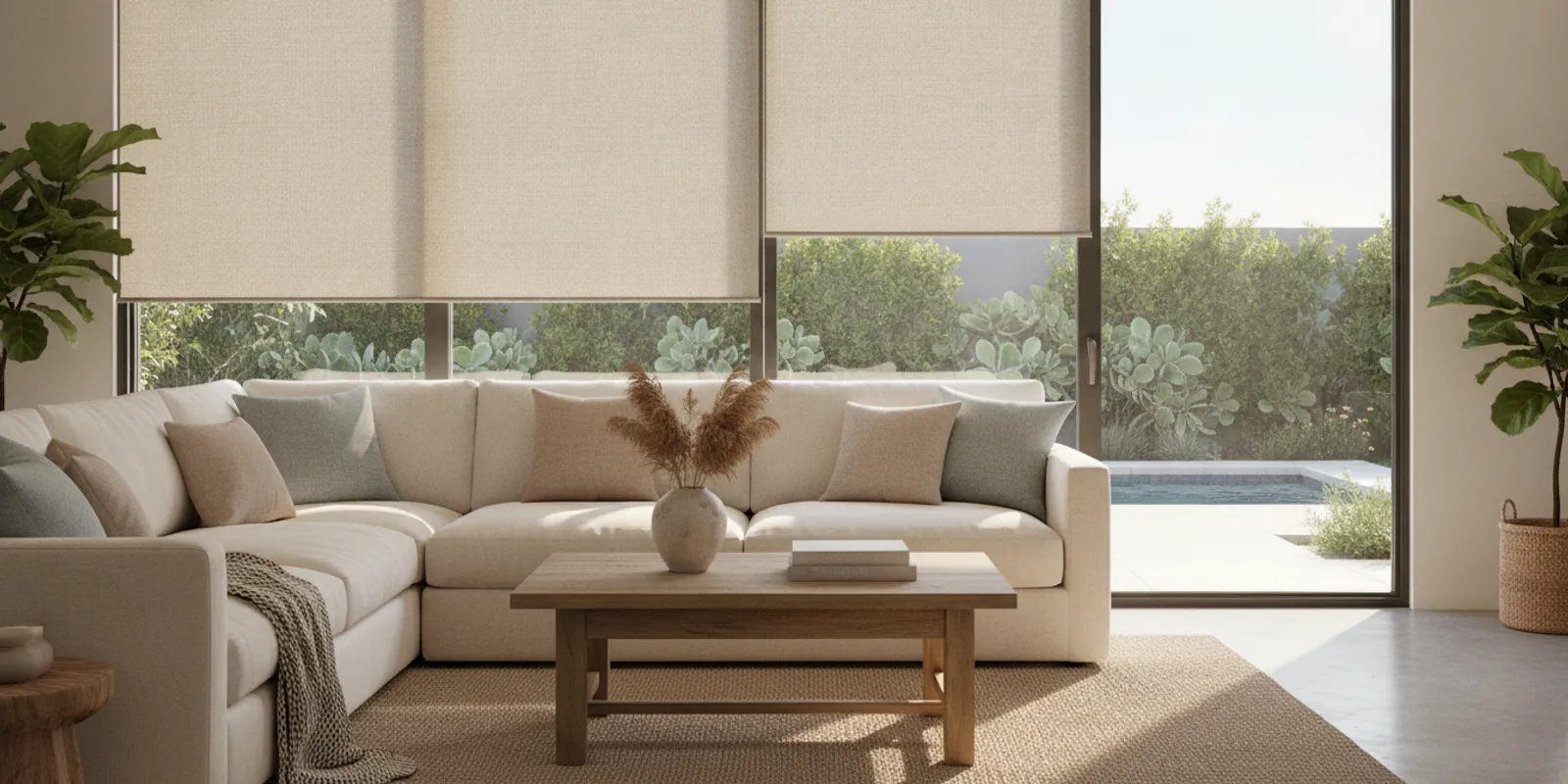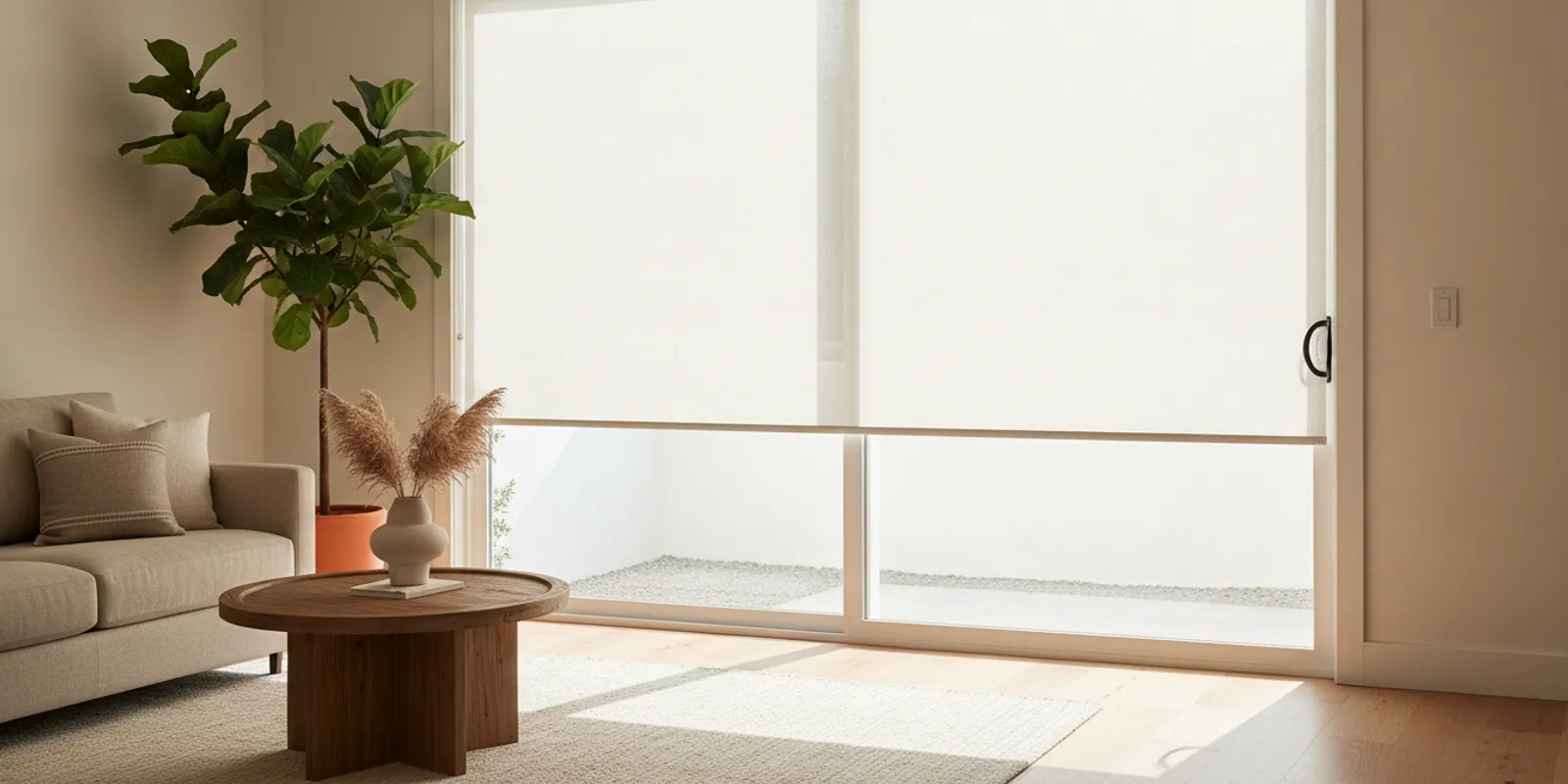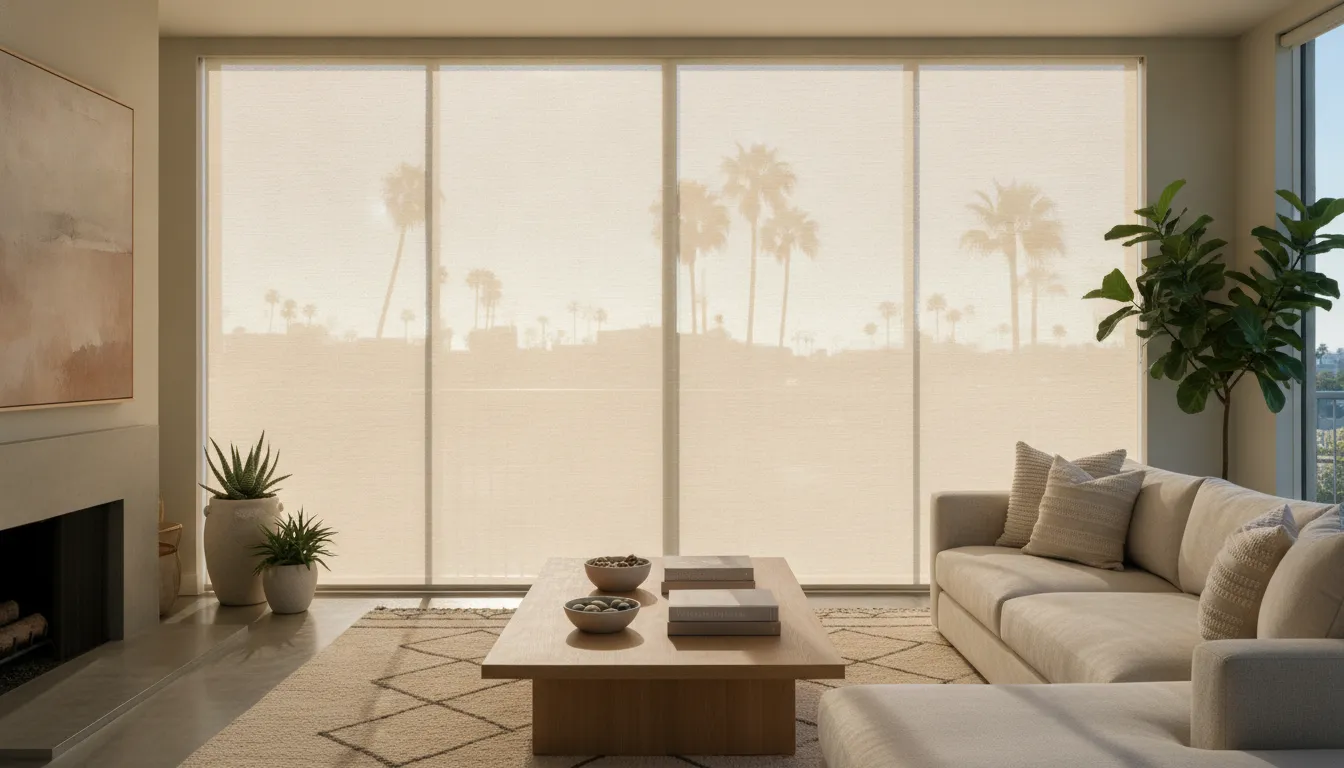
A window treatment that works well in a bedroom may be a poor choice for a humid bathroom or a west-facing room. The right comparison starts with the window’s conditions: how much light enters, how much privacy you need. How often the surface will be cleaned, and whether children or pets use the room.
Call Vineyard Blind & Shutter at (951) 757-4188 for a free in-home consultation.
Cordless vinyl blackout roller shades can be a practical option when you want a streamlined lift, strong privacy. And substantial light control, but verify the specific product’s material, moisture guidance, edge-gap design, and operating system. Blackout labeling does not automatically mean total darkness, waterproofing, insulation, or heat reduction.
For families, the cordless design also deserves careful attention. The U.S. Consumer Product Safety Commission identifies cordless window coverings as the safest option when young children are present, while furniture placement remains part of a safer room setup. Before comparing rooms, it helps to understand what these shades are made to do and which claims depend on the exact product.
What Are Cordless Vinyl Blackout Roller Shades?
Answer: Cordless vinyl blackout roller shades are roller-style window coverings designed to reduce incoming light without a dangling lift cord. But the actual darkness depends on the shade, mounting, and window fit.
The product name combines three separate features. Roller shade describes the design: a single sheet rolls around a tube as the shade opens and closes. Cordless describes the operating system, usually a spring-assisted bottom rail or another lift mechanism that does not leave a loop or pull cord within reach. Cordless is a meaningful safety consideration in homes with young children, but you should still verify the exact operating system and follow the manufacturer’s installation guidance.
Blackout describes the opacity or light-blocking construction of the shade material. It does not automatically mean that a room will be completely dark. Light can still enter around the side channels, below an inside-mounted shade, or through gaps created by an imperfect fit. A product listing may describe a blackout shade as fabric with a blackout backing. But that example does not establish the material construction or performance of every vinyl shade. Check the product specification rather than assuming all vinyl roller shades use the same layers.
It is also important to separate blackout from room darkening. Room-darkening shades reduce daylight and glare but may allow more light through the material or around the edges than a true blackout product. Neither term, by itself, proves that the shade insulates a room, blocks heat, or delivers a measurable energy benefit.
For a useful comparison, ask four questions: Is the material genuinely vinyl or a different substrate with a coating? What opacity rating or light-control description does the manufacturer provide? How are the edges and bottom gap handled? And is the cordless lift rated for the specific shade size? Those details matter more than the word “blackout” on a product label.
Are Cordless Vinyl Blackout Roller Shades Good for Bedrooms?
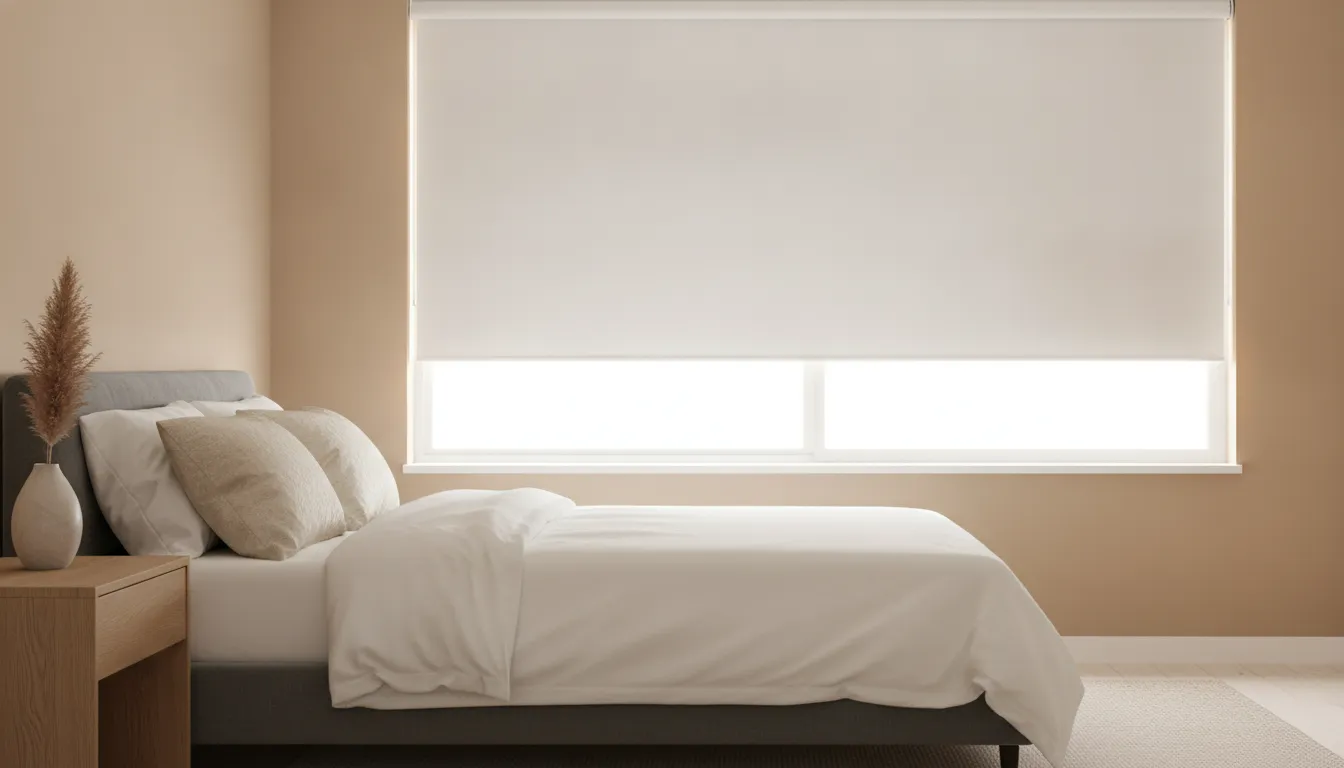
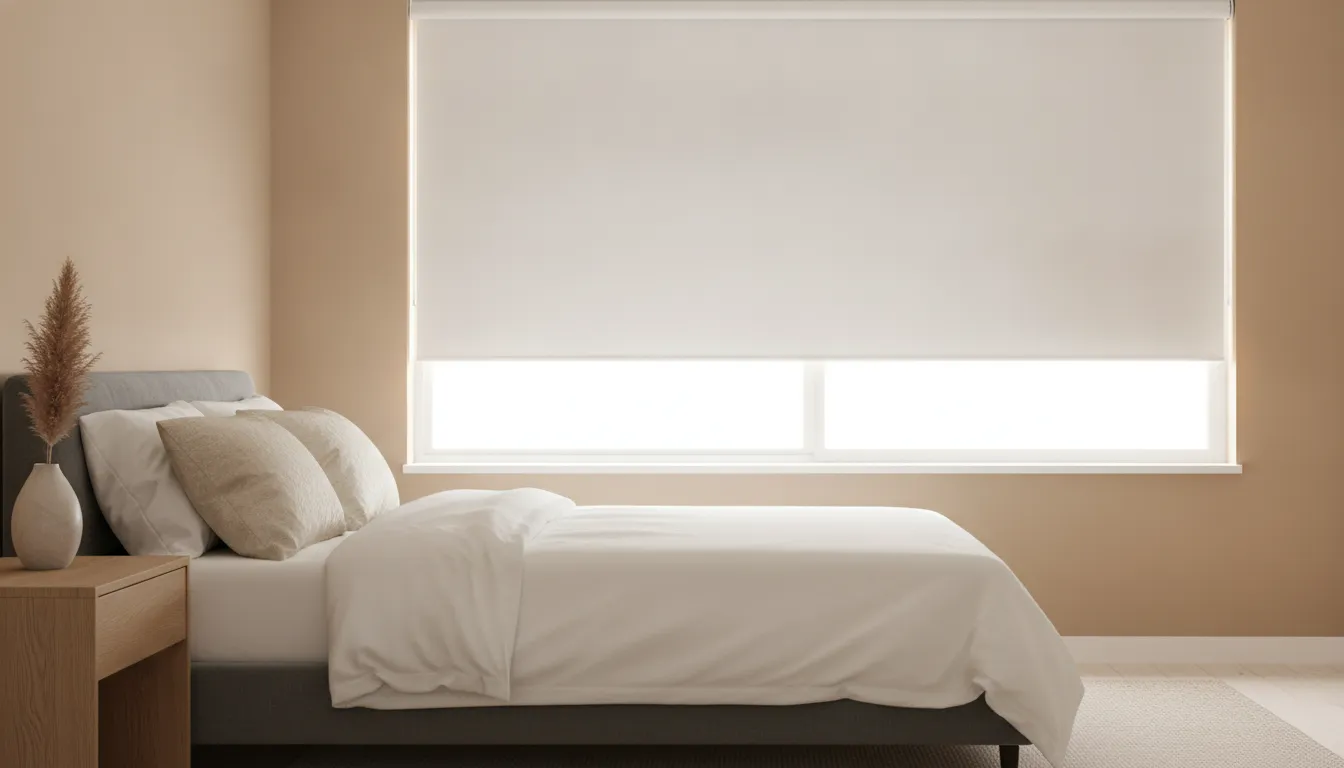
They can be a practical bedroom choice when your priorities are privacy, straightforward light control, and a clean-looking lift. A blackout label does not guarantee a completely dark room, however. Light can still enter around the sides, top, or bottom when the shade is mounted inside the window opening. Measure the opening carefully and ask whether an outside mount, overlap, side channels, or another edge-gap solution is available for the specific product.
It is also important to separate darkness from thermal performance. The U.S. Department of Energy defines visible transmittance as the amount of light transferred through a window. But that measure does not by itself establish how much heat a shade will block. Treat bedroom comfort and energy claims as separate questions, and request documented product specifications before assuming a shade will reduce heat.
For a child’s bedroom or nursery, cordless operation is a meaningful safety consideration. The Consumer Product Safety Commission says cordless window coverings are the safest option when young children are present and the only option that eliminates the strangulation hazard from window-covering cords. Keep beds, cribs, furniture, and toys away from window coverings as well. Review the CPSC guidance on cordless window treatment safety, and confirm that the shade you select is genuinely cordless rather than simply fitted with a cord-management device.
The lift should suit the room and the person using it. A manual cordless shade may be simple for an adult to raise and lower. While a motorized option may be more convenient for hard-to-reach windows or a consistent bedtime routine. Verify operating limits and controls instead of assuming every cordless system works the same way.
For more room-specific ideas, see this guide to bedroom privacy and light control. Samples viewed in the actual bedroom can also reveal how much glow remains at the edges and how the vinyl looks in morning and evening light.
Can They Work in Bathrooms and Other Humid Rooms?
They can be a practical option in some bathrooms, but the answer depends on the exact shade specification and window location. Before choosing cordless vinyl blackout roller shades for a humid room, use this checklist:
- Confirm the material. Do not assume that every vinyl shade is waterproof, moisture-proof, or suitable for direct contact with splashing water. Ask for the manufacturer’s care and placement guidance, especially for a window beside a shower, tub, or sink.
- Check ventilation. A working exhaust fan and normal airflow help limit condensation around the window and shade. A treatment may tolerate ordinary bathroom humidity without being designed for persistent dampness.
- Follow the cleaning instructions. General vinyl-care guidance recommends removing dust with a soft brush or microfiber cloth, then using warm water with a few drops of dish soap when needed. It also warns that vinyl can streak if cleaned improperly. Use the product instructions first, since a coated blackout surface may have different requirements. See the general vinyl cleaning guidance.
- Use limited moisture and dry the shade. Wring out the cloth before wiping rather than soaking the material. Rinse with a damp cloth and dry thoroughly to help prevent water spots. Do not leave the shade rolled up while wet.
- Review the mounting position. An inside mount, outside mount, sill depth, and clearance from fixtures can affect how much moisture reaches the shade and how easily you can clean around it. Accurate measurements also help prevent gaps that compromise privacy and light control.
These checks matter in laundry rooms and other humid spaces, too. A bathroom-friendly specification is not transferable from faux-wood blinds or another shade material. If the product documentation does not clearly address moisture, cleaning, and installation conditions. Treat that uncertainty as a reason to compare another option rather than assuming the shade is protected.
Do They Make Sense for Rentals, Children, and Pets?
For rentals, cordless vinyl blackout roller shades can offer a straightforward combination of privacy, light control, and simple operation. A consistent roller-shade style may also make turnover easier when replacement shades need to match across bedrooms or living spaces. Before ordering, confirm the exact shade’s dimensions, mounting method, and lift system. A secure, correctly sized installation matters more than choosing a material by name alone.
Families with young children should give the operating system particular attention. The U.S. Consumer Product Safety Commission says cordless window coverings are the safest option when young children are present and the only option that eliminates the strangulation hazard from window-covering cords. Review the CPSC’s cordless-safety guidance before selecting treatments. The agency also recommends moving cribs, beds, furniture, and toys away from windows and cords, noting that incidents can happen quickly even when an adult is nearby.
That guidance does not make every cordless shade universally safe. Check that the product is genuinely cordless, that controls are out of a child’s reach when applicable, and that the shade is installed according to its instructions. A landlord or property manager should also confirm whether the mounting approach is allowed and whether the shade can be replaced without damaging the window opening.
Pets create a different set of tradeoffs. A smooth roller surface may have fewer loose slats or hanging cords for a curious pet to reach, but no window treatment is automatically pet-proof. Look at how far the shade sits from a sill, whether a cat can pull at its bottom rail. And whether the fabric or vinyl has care instructions that fit the household. For more room-by-room guidance, see this guide to durable, easy-care window treatments.
When child safety is the priority, compare cordless and motorized options rather than assuming one lift works for every window. This cordless window treatment safety guide can help families identify questions to ask before installation.
What Should High-Sun Rooms Prioritize?
A bright room needs more than a simple blackout label. Start by identifying the problem you want to solve: direct glare on a screen. Excessive visible light, fading risk from ultraviolet exposure, indoor heat, or a combination of these. Those outcomes overlap, but they are not interchangeable. A shade that makes a room look darker is not automatically an insulating treatment, and a material that reduces glare may still preserve a useful amount of daylight.
For light control, ask about opacity, edge gaps, and how the shade fits the window. The U.S. Department of Energy defines visible transmittance as the amount of light transferred through a window. That is a more useful lens than treating “blackout” as an all-purpose performance claim. Even a highly opaque shade can allow bright lines around the sides or bottom if the mount and measurements leave exposed glass.
High-sun rooms may also benefit from a solar screen-style fabric, but that is a different design from cordless vinyl blackout roller shades. Solar fabrics are available in different openness levels. Lower openness examples, such as 3% to 5%, are positioned for stronger glare control, while higher openness options preserve more of the view and admit more light. These tradeoffs are described by Blindsgalore’s solar-fabric guidance, and they should not be applied to a blackout vinyl product without a matching specification.
Heat performance requires separate verification. The Department of Energy notes that window-treatment results vary by attachment, season, climate, and operation. If reducing solar heat is a priority, look for documented performance information, including relevant heat-gain metrics, rather than assuming blackout construction provides insulation. In Southern California, compare samples in the room where the treatment will be installed. The sun’s angle, surrounding walls, and your daily operating habits can change what feels comfortable.
Finally, decide whether preserving the view, reducing screen glare, or limiting daytime brightness matters most. The right choice may be a glare-control fabric, a room-darkening shade, or a combination of window treatments. Product specifications and the exact mounting approach should make that decision, not the word “blackout” alone.
How Do Cleanability, Privacy, and Room Darkening Compare?
The best choice depends on which problem matters most in the room. A cordless vinyl blackout roller shade may support privacy and strong light control, but the result still depends on the exact product, mounting method. Fabric or vinyl specification, and how closely the shade fits the opening. “Blackout” should not be treated as a promise of total darkness or automatic heat reduction.
| Room or priority | Potential fit | What to verify |
|---|---|---|
| Bedroom | Privacy and reduced daylight can support a darker sleeping environment. | Edge gaps, mounting depth, opacity, and whether the product is truly blackout or only room-darkening. |
| Bathroom | A smooth surface may be convenient to wipe, if the manufacturer allows that care method. | Moisture limitations, cleaning instructions, ventilation, and whether the shade is suitable for the specific location. |
| Rental or family room | Cordless operation can reduce cord-related risks and keep the window treatment simple to use. | Lift type, secure installation, window access, and the child-safety guidance for the exact product. |
| High-sun room | Strong light control may help reduce glare, but it is separate from insulation or measured heat performance. | Visible-light control, solar specifications, window exposure, and documented thermal claims. |
For cleaning, general vinyl-care guidance recommends dusting with a soft brush or microfiber cloth. It also suggests using warm water with a few drops of dish soap, wringing out excess water, then rinsing with a damp cloth and drying thoroughly. That guidance notes that vinyl can streak when cleaned improperly. Use it as general maintenance information, not as a substitute for the shade manufacturer’s instructions or a guarantee that every vinyl product is washable.
Bedroom listings commonly market blackout construction for privacy and light control, but marketing language is not a substitute for checking the specification. A close fit can improve results, while gaps around the sides or bottom can still admit light. If you are also weighing insulation, cellular designs may have different construction and performance considerations; compare roller shades and cellular shades by the needs of the room rather than by the label alone.
How Do Fit, Mounting, and Cordless Operation Affect Results?
A well-chosen shade can still disappoint if the measurements, mounting position, or lift system do not match the window. Use this checklist before ordering cordless vinyl blackout roller shades:
- Measure the window opening carefully. Record the width at the top, middle, and bottom, then measure the height in more than one place. Note handles, trim, screens, and any uneven surfaces that could affect how the shade sits. Custom sizing is useful only when the measurements reflect the actual opening and the product’s measurement instructions.
- Choose inside or outside mounting deliberately. An inside mount gives a cleaner, built-in appearance, but the window opening and shade hardware may leave small gaps at the sides. An outside mount can cover more of the trim and reduce visible light around the edges, provided there is enough flat surface for secure installation. Neither mounting style guarantees total darkness by itself.
- Check the product’s size limits. Dimensions and operating-system choices are tied together on many roller shades, so confirm that the selected cordless mechanism is available for your window size. Manufacturer or retailer specifications should identify the maximum width, height, and weight the system can support. Product listings commonly display the configuration only after dimensions and operating features are selected: review the sizing and operating details before committing.
- Verify the lift in the finished position. A cordless shade should move smoothly, stay level, and stop where you expect it to. Ask how the bottom rail is operated, whether the shade is suitable for frequent use, and whether a motorized alternative better fits a hard-to-reach window. The U.S. Consumer Product Safety Commission identifies cordless coverings as the safest option when young children are present; its cordless window treatment safety guidance also supports keeping furniture away from window coverings.
- Plan care and installation around the room. Follow the specific product instructions rather than assuming every vinyl shade is waterproof or washable. For general vinyl-care guidance, dust with a soft brush or microfiber cloth, use mild soapy water sparingly. Wring out the cloth, and dry the surface thoroughly to help prevent streaks and water spots.
- Use a consultation to resolve uncertain details. A mobile showroom can bring samples into your room’s actual light and help check mounting surfaces, edge gaps, and operation before installation. That practical review is especially helpful when several windows have different trim, depths, or exposure.
Frequently Asked Questions
Are cordless vinyl blackout roller shades a good choice for bedrooms?
They can be a practical bedroom option when you want privacy, reduced incoming light, and a clean, simple profile. Blackout performance still depends on the shade, mounting style, window recess, and side gaps, so do not assume the room will become completely dark. Confirm the exact product’s opacity and fit before ordering.
Do cordless roller shades work with children and pets in the home?
A cordless lift removes the operating cord, but it does not make every window treatment risk-free. The U.S. Consumer Product Safety Commission identifies cordless coverings as the safest option around young children and says they are the only option that eliminates the strangulation hazard from window-covering cords: CPSC guidance. Keep beds, cribs, furniture, and toys away from windows, and consider how pets may interact with the shade.
Are vinyl roller shades suitable for bathrooms?
They may work well in a bathroom if the specific shade is approved for that environment, but vinyl alone does not guarantee waterproofing or moisture resistance. Follow the manufacturer’s care instructions. General vinyl-care guidance recommends dusting with a soft brush or microfiber cloth, using mild soapy water sparingly. Wringing out excess moisture, and drying thoroughly to prevent streaks and water spots: cleaning guidance.
Will blackout shades block heat in a high-sun room?
Not automatically. Blackout describes light control, while heat performance depends on the window, shade construction, installation, climate, and operation. The U.S. Department of Energy notes that window-treatment results vary by attachment, season, climate, and operation: DOE guidance. Ask for product-specific performance information if reducing solar heat is a primary goal.
How can I reduce light gaps around a roller shade?
Start with accurate measurements and choose the mounting position carefully. An outside mount may cover more of the window, while an inside mount can preserve trim but leave edge gaps. Review the product’s width limits, cassette or side-channel options, and installation requirements before choosing a shade for sleep or media use.