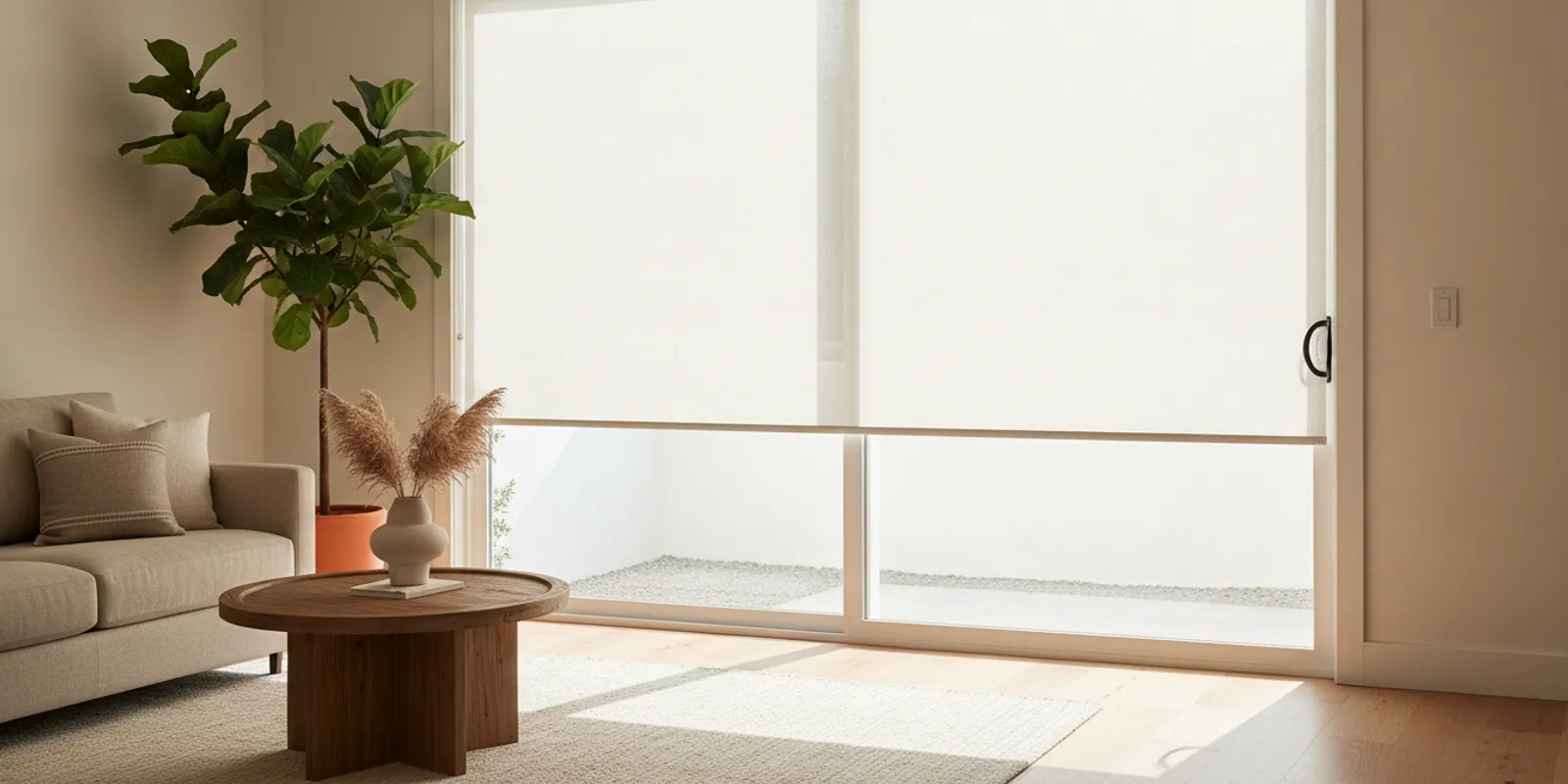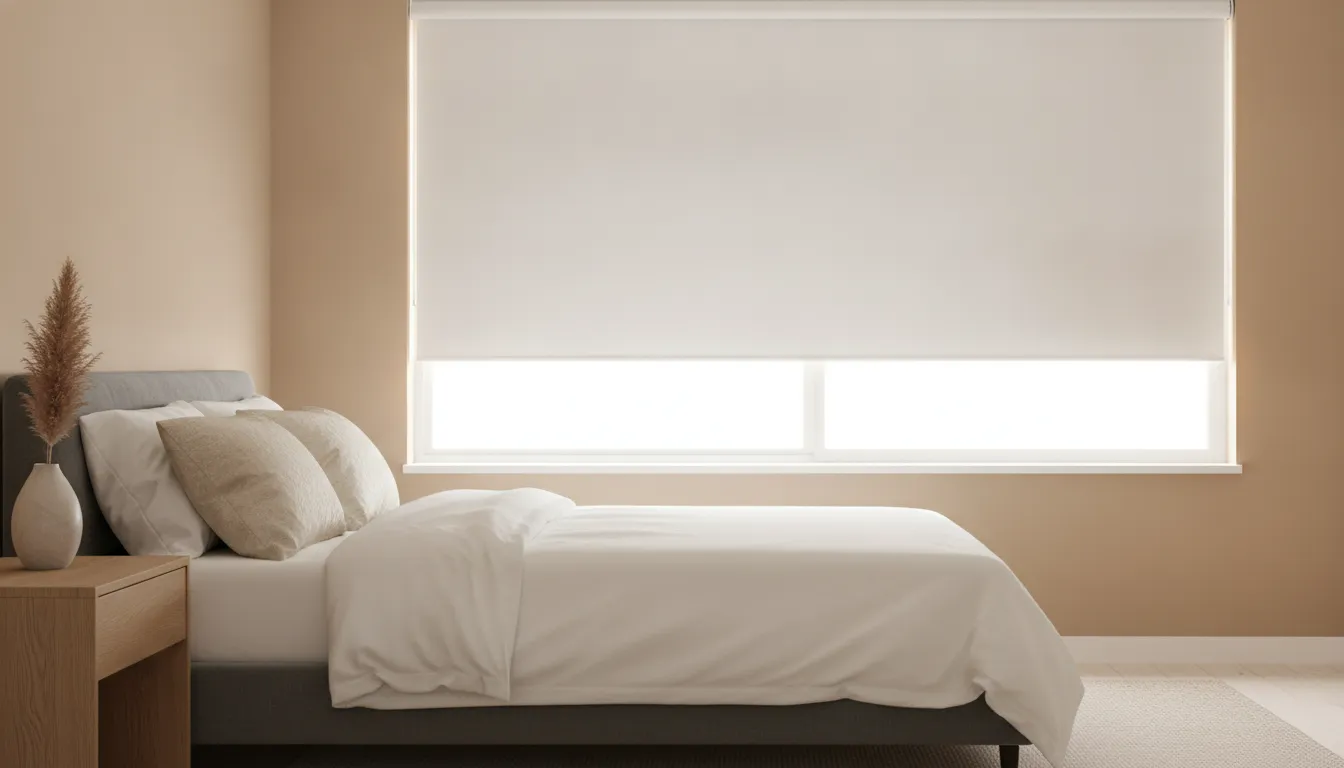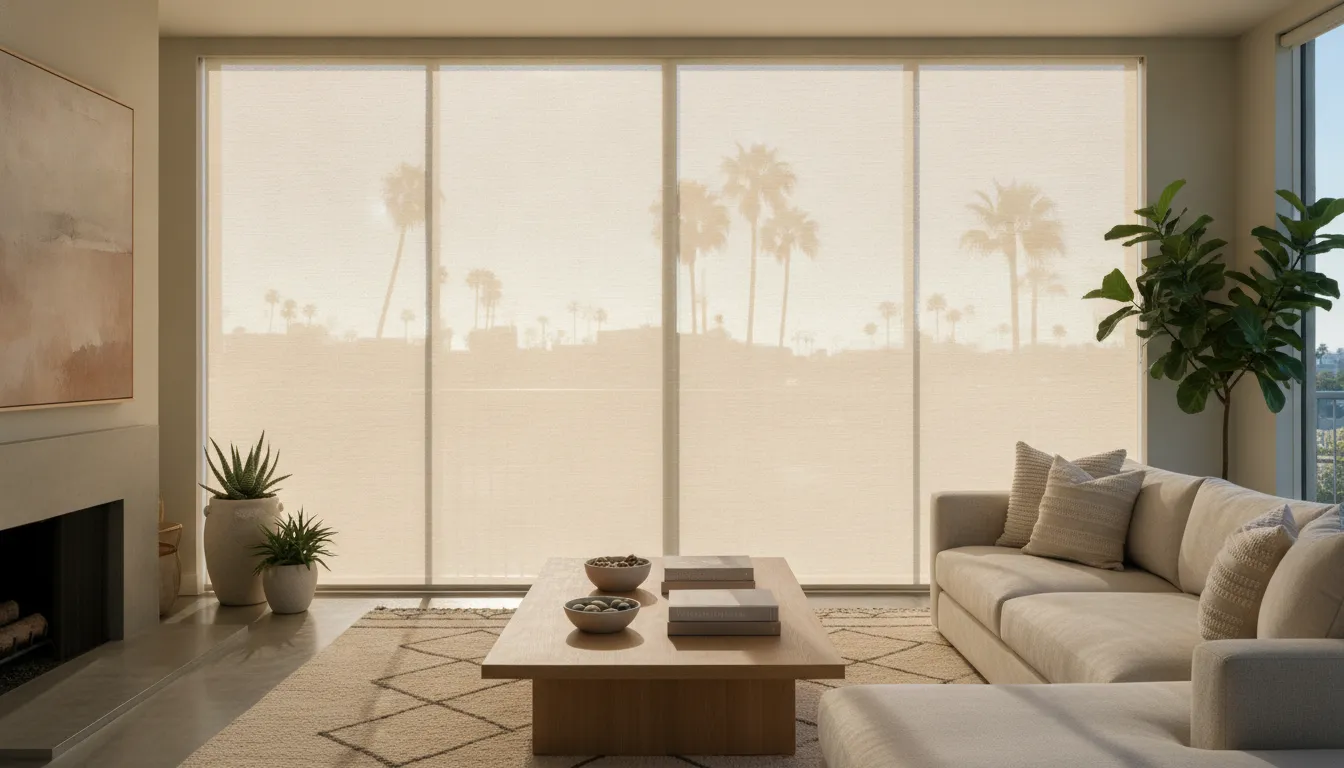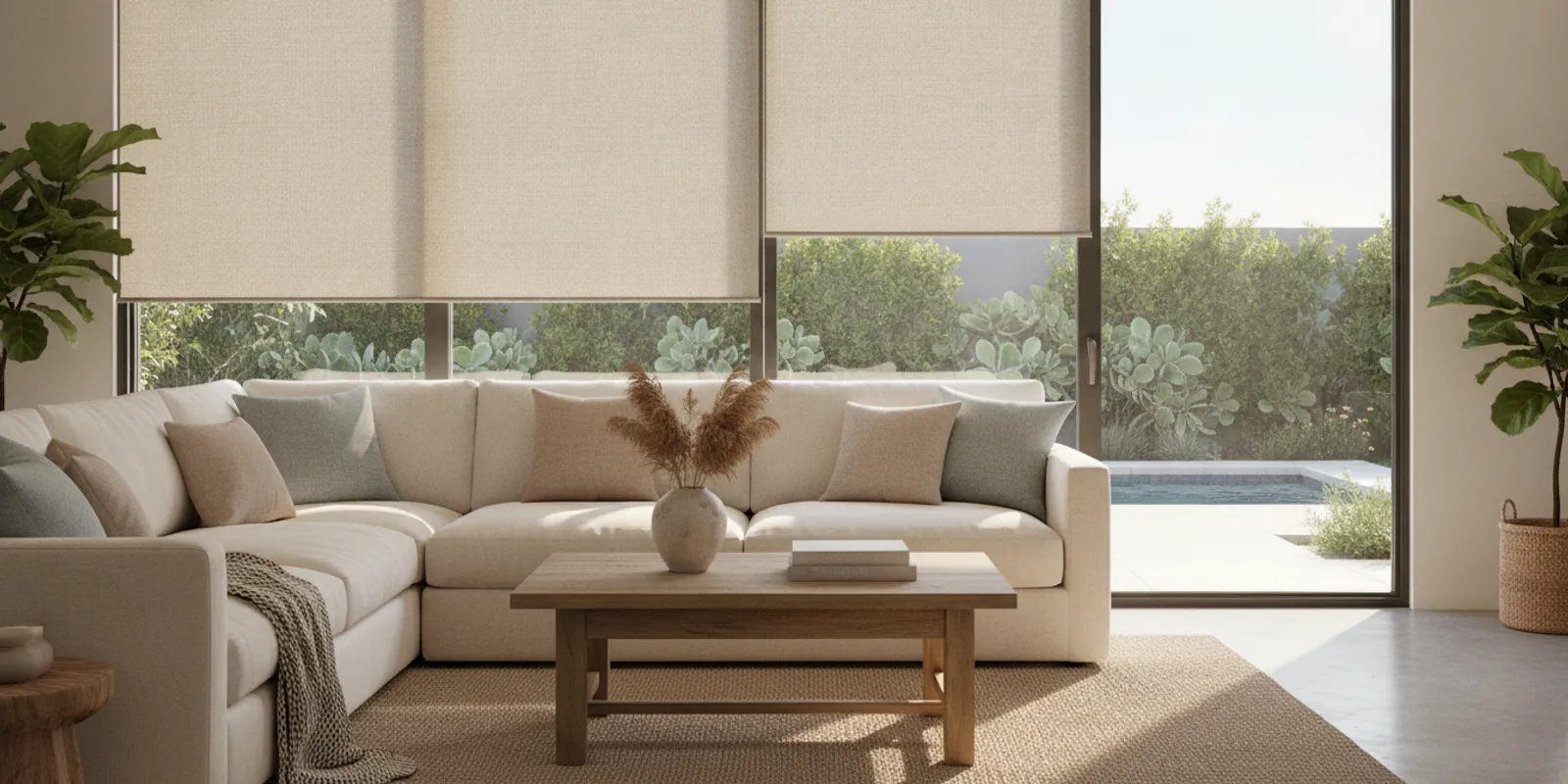
Choosing roller shades for patio doors takes more than picking a fabric color. The shade must suit the door's operation, leave room for handles and trim, and provide the right balance of privacy and daylight. A few measurements and decisions make it easier to compare options before ordering.
Call Vineyard Blind & Shutter at (951) 757-4188 to arrange a free consultation.
What makes patio doors different from regular windows?
Patio doors are wide, frequently used openings, so the treatment has to work with movement as well as glass. A sliding panel needs a clear path along its track. A hinged door needs room for its swing. Handles, locks, trim, nearby furniture, and the shade's raised position all affect whether roller shades for patio doors will feel convenient in daily use.
Q: What should you check first when planning a patio-door shade? A: Check which panel moves, how the door opens, where the handles sit, and whether the shade can raise without blocking the passage or hardware.
Consider a residential example: a family may open a kitchen patio door several times a day while carrying food outside. The control should be reachable without stepping into the door's path, and the bottom rail should not interfere with the handle or moving panel. If a fixed glass panel sits beside the door, one wide shade and multiple shades create different seam, control, and clearance considerations.
The same planning matters in commercial spaces. In an office boardroom, a shade may need to cover a broad glass wall while keeping controls accessible between meetings. In a hotel reception area or restaurant, staff may need to adjust light without placing a control where guests or an opening door can catch it. University of Houston roller-shade specifications specifically call for operational clearances, relationships to adjacent work, and a plan showing manual control locations. Review the specification example for the level of planning involved in larger spaces.
Professional measurement should confirm the opening width and height at multiple points, mounting depth, handle location, trim, and available wall space above the door. It should also identify which panel is fixed, which panel opens, and where the shade will rest when raised. Motorized options may help when a shade is wide, high, or difficult to reach, but the control location and operating sequence still need to be planned. A careful site review prevents a treatment that looks right on a small window from becoming awkward at a frequently used doorway.
How do you choose privacy and daylight control?
Start with what you want the room to feel like during the day and at night. Fabric openness, color, and opacity affect how much light enters and how much of the room is visible from outside. A sheer or light-filtering fabric can soften daylight while preserving some view. A more opaque fabric gives stronger privacy and light control when lowered.
Those are different goals, so decide which matters most. If the patio faces a nearby home or a busy walkway, privacy may be the priority. If you want to keep a view and avoid a fully covered feeling, a more open fabric may work better. In a media room or bedroom connected to a patio, stronger light blocking may be useful. A shade's light control is not the same as a promise of insulation or heat reduction; ask for product-specific details if those performance claims matter to your decision. For broader guidance on home energy use, consult the U.S. Department of Energy and ask about specifications for the exact shade and fabric.
Also consider nighttime. A fabric that appears private in bright daylight may not provide the same privacy after dark when interior lights are on. If the room needs privacy at different times, ask to see representative fabric samples in both daylight and evening conditions. A mobile, in-home consultation can help you compare samples against the actual glass, flooring, wall color, and light in the room. Learn more about in-home mobile window treatment service.
Which roller shade layout works for a patio door?
The best layout depends on the door and the surrounding wall. One wide shade may cover a broad opening with a simple appearance. Separate shades can allow more flexible control, especially when a fixed panel sits beside a sliding panel. The trade-off is that separate units may have a visible gap or seam. Ask how the proposed layout will look when both shades are raised and lowered.
Next, consider who will operate the shade and where they will stand. A control that is easy to reach beside a fixed panel may be inconvenient if the only accessible side is behind a chair or table. Think through the routine: entering the room, opening the patio door, raising the shade, and lowering it again. If the control hangs near a door handle or the opening is especially wide, ask how the selected operating system will be positioned and whether it is comfortable to use.
For multiple shades across one opening, ask whether each shade will operate independently or together. Separate controls can provide more flexibility when sunlight reaches only one side of the room. A shared operation may be simpler when you normally cover the entire glass area at once. Confirm that the control arrangement, shade count, and placement are included in the estimate rather than assuming that a visual mock-up answers those practical questions.
Consider how the fabric will look when it is partly lowered, too. Patio doors often serve as a focal point, and a shade may remain at an intermediate height during the day. Ask to see the fabric sample and discuss the bottom rail, side gaps, and alignment with adjacent windows. These details are especially useful when the patio door sits beside a fixed glass panel or a row of windows. A clear plan helps the finished treatment feel intentional, whether one wide shade or a coordinated set is chosen.
Check the available mounting surface above the door. An inside mount sits within the frame and can look integrated, but it needs enough depth and must clear handles and other hardware. An outside mount attaches above or around the frame. It can cover more of the glass at the edges, but the shade needs enough wall space and should not interfere with trim, a ceiling, or the door's movement.
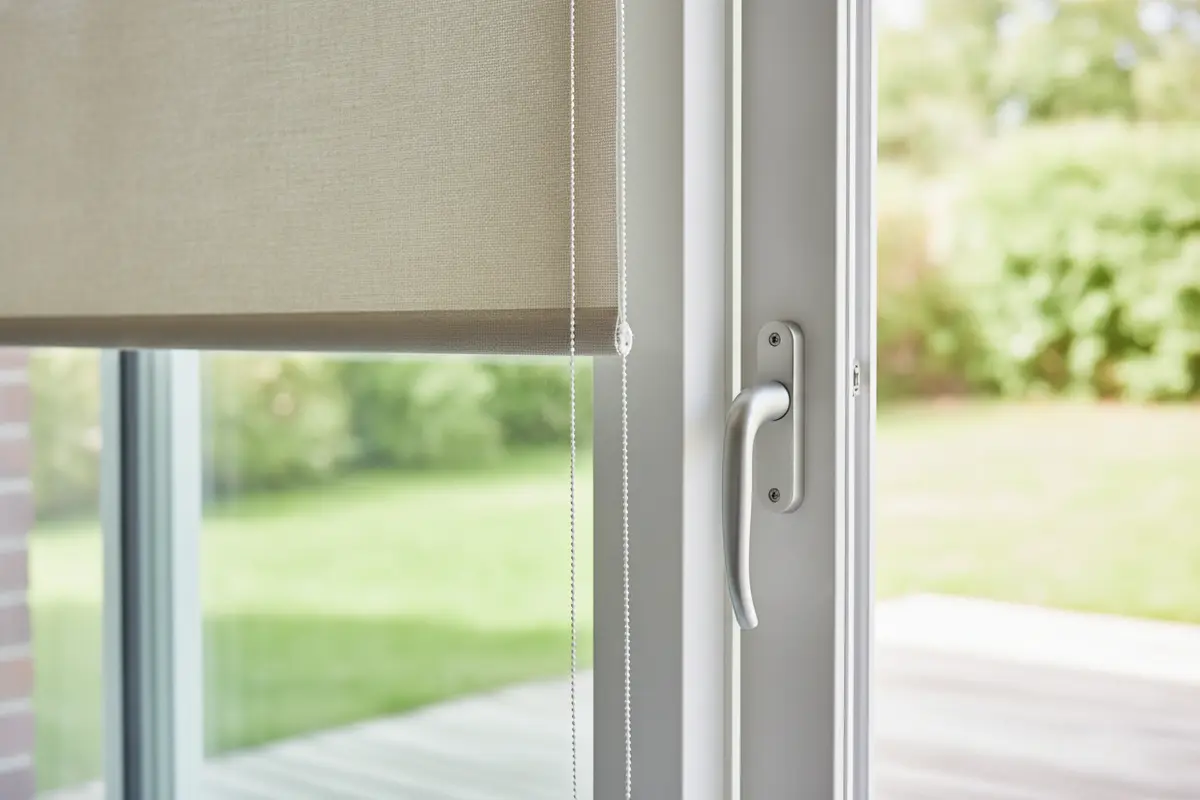
Think about where the shade will sit when fully raised. A large roller can occupy noticeable space above the opening. If the shade is close to a ceiling, crown molding, or a transom, that location deserves careful checking. Ask the measurer to explain the proposed head position and how much glass will remain covered when the shade is open.
How can you test a proposed layout in everyday use?
Walk through the room as if the shade were already installed. Start from the approach to the door and check whether you can reach its control without squeezing between furniture. Then open and close the door in its normal sequence. For a sliding door, check that the shade's lower edge, control, and raised roll do not interfere with the panel or its track. For a hinged door, consider the swing arc and whether a lowered shade could be brushed or caught as the door moves.
Use a simple scenario list when discussing the design. For example, ask how the treatment works when you want a clear route outside, when you want privacy but still want daylight, and when you want the entire glass area covered. If one shade covers several panels, determine whether raising it fully is easy enough for the person who uses the door most. If the panels will have separate shades, picture the seams and controls from the main seating area. These small use cases often reveal a layout concern before the order is finalized.
It can also help to mark approximate shade edges with removable tape or a paper sketch before a consultation. This is not a substitute for measuring or a product drawing, but it gives everyone a shared reference for discussing width, mounting height, and adjacent trim. Take a photo from across the room and from the side of the opening. The full-room view shows how the treatment relates to windows and furnishings; the close-up shows handle clearance and mounting depth. Ask the consultant to explain any compromise, such as a small side gap or glass covered by the raised roll, so you can decide whether it is acceptable.
What should you measure before requesting a quote?
Preliminary measurements help describe the project, but they are not a substitute for a final fit check on a custom shade. Record the opening width and height, then note whether you measured inside the frame or across the outside trim. Measure at more than one point if the frame appears uneven. Write down the door type and which side moves.
- Measure the width and height of the glass or frame, and label where each measurement was taken.
- Note the depth of the frame and the location of handles, locks, tracks, and trim.
- Photograph the full opening and close-ups of hardware or unusual corners.
- Mark which panels are fixed and which open, and show the direction of movement.
- Describe nearby furniture, outlets, or other items that could affect access to the shade.
Bring these details to a consultation, but avoid ordering solely from a rough measurement. Small differences can matter across a wide opening, particularly if the frame is out of square or the shade must clear a handle. Vineyard Blind & Shutter offers free measurements and installation; use the contact page to arrange a consultation and confirm the details for your project.
For a more useful estimate, separate what you know from what still needs confirmation. You may know the approximate width, whether the door slides, and which side gets the strongest afternoon sun. The final measurer can confirm the exact width and height, mounting depth, and clearance. When the opening is wide, ask whether the suggested product is available in one unit at that size or whether the design calls for two shades. This question matters because a split configuration changes the number of controls and creates a meeting line between fabrics.
Keep a short priority list beside the measurements. Rank privacy, view, glare control, easy access, and visual simplicity. If two goals conflict, such as preserving an outdoor view while gaining nighttime privacy, say which one matters most and when. It helps the consultant recommend a fabric and operating plan based on real use rather than guessing from a sample alone. Include any accessibility or reach concerns as well, since they may affect control placement.
How do roller shades compare with other patio-door coverings?
The right treatment depends on how often the door opens, how much clearance is available, and whether the priority is a clean span of fabric, directional control, or a more substantial frame. Patio-door coverings need to balance privacy, light control, and access rather than simply cover the glass. Wide glass expanses may also limit which treatments are practical.
| Option | Best suited for | Operation and access | Clearance and planning questions |
|---|---|---|---|
| Custom roller shades | A streamlined look with adjustable light control across a broad glass opening. | The shade rolls up to clear the doorway. Choose the operating side, control location, and whether motorization would make frequent use easier. | Confirm inside- or outside-mount depth, handle clearance, fabric openness, and where the shade will sit when raised. Roller shades are available in light-filtering and room-darkening opacities, but the selected fabric should match the actual privacy and light goals. |
| Vertical blinds | Sliding doors, large windows, French doors, and spaces where directional coverage is useful. | Individual vanes draw to the side and can be tilted, allowing the door to open without removing the covering. Vineyard identifies vertical blinds as an option for large commercial spaces, including boardrooms. | Plan the stack side around the active door panel, nearby furniture, and wall space. Check the track position and vane movement so the treatment does not interfere with handles or traffic. |
| Panel-style shades | Very wide openings or rooms where large fabric panels suit the design. | Panels glide along a track and may stack to one side or open from the center, depending on the configuration. That movement can preserve a clear passage when the door is in use. | Measure the full track area, stack depth, and preferred opening direction. Confirm that the panels will not collide with adjacent walls, cabinetry, or the active door path. |
| Custom shutters | Rooms seeking a structured, built-in appearance and durable frame around the opening. | Shutter panels open or fold away, so the layout must work with the sliding door and the desired access point. | Review frame depth, panel swing or bifold clearance, sill conditions, and handle locations. Shutters require especially careful measuring when the opening is tight or furniture sits nearby. |
In a boardroom, vertical blinds may make sense when a large glass wall needs side-stacking access between meetings. In a hospitality space, panel-style shades can be planned around a patio entrance and nearby seating. At home, the same decision comes down to whether the family uses the door constantly or mainly wants privacy and glare control. Professional measuring helps verify the opening, mounting surface, stack position, and clear passage before selecting custom window shades or another treatment.
What details can change the final fit and price?
A wide door may require a different shade configuration than a single standard window. Product width limits, the number of units, and how the shade is operated can all affect the plan. Unusual shapes, deep trim, nearby cabinetry, and a need to cover multiple glass sections may call for extra measuring and design attention.
Fabric choice also affects the result. A darker, more opaque fabric can change the room's appearance differently from a light-filtering fabric. Request samples when possible, and compare them near the door in the light where the shade will be used. If a view is important, check the fabric from both sides and at the time of day when glare is strongest.
Ask what is included in the estimate, including measuring, installation, hardware, and any options you requested. Vineyard emphasizes free measurements and free installation. For custom products, confirm the scope for your specific order in writing. If you are comparing a roller shade with shutters, review the available custom shutter options and ask how their mounting and operation would work with your patio door.
How can you avoid common patio-door shade problems?
Most frustrating outcomes can be anticipated during planning. A shade may look right in a picture but prove awkward if it overlaps a handle, collides with a door that swings inward, or blocks the route to the patio. Discuss the day-to-day movement of the door, not only how the shade looks while closed.
- Do not overlook the handle. Check that the shade and its bottom rail clear the handle through the full range of movement.
- Do not assume one shade fits every opening. Confirm the maximum suitable width and whether one or more units make sense.
- Do not ignore the raised position. Ask where the roll sits and how much of the upper glass it covers when open.
- Do not judge privacy only in daylight. Consider how the fabric looks after dark with room lights on.
- Do not rely on a generic heat claim. Ask for documented details for the exact product and fabric if thermal performance is a deciding factor.
If the patio door is a main route through the home, ask to see how the shade will be operated without obstructing that route. The window covering FAQ may also help with common service questions before you schedule.
Call Vineyard Blind & Shutter at (951) 757-4188 to plan your patio-door shades.
Frequently Asked Questions
Are roller shades a good choice for sliding patio doors?
They can be a practical choice when the shade is sized and mounted to clear the sliding panels, handle, and track. The right setup depends on the opening's width, the number of panels, and how often you use the door. Confirm the raised position and clearance before selecting a configuration.
Should patio-door roller shades be inside mount or outside mount?
Inside mounting can create a neat fit within a sufficiently deep frame. Outside mounting can work when the frame is shallow or when more coverage beyond the glass is desired. Check trim, hardware, wall space, and the shade's position when raised before choosing.
Do light-filtering roller shades provide nighttime privacy?
Privacy varies by fabric and lighting. A fabric that obscures a view in daylight may look different at night when the room is bright and the outdoors is dark. Test a sample in conditions similar to how you use the room, and choose a more opaque option if stronger privacy is needed.
Can roller shades block heat through patio doors?
Do not assume that a shade automatically blocks heat. Light and glare control are not the same as a verified thermal result. Ask for specifications for the specific fabric and product if heat performance is important to your decision.
What should I have ready for a patio-door shade consultation?
Have photos, approximate opening dimensions, the door's operating direction, and your priorities for privacy and light control. Point out handles, trim, nearby furniture, and any time-of-day glare concerns. A professional measurement can then confirm the dimensions and fit details.
With the door operation, clearance, fabric, and privacy needs considered together, it is easier to compare roller shades and choose an arrangement that works in everyday use.