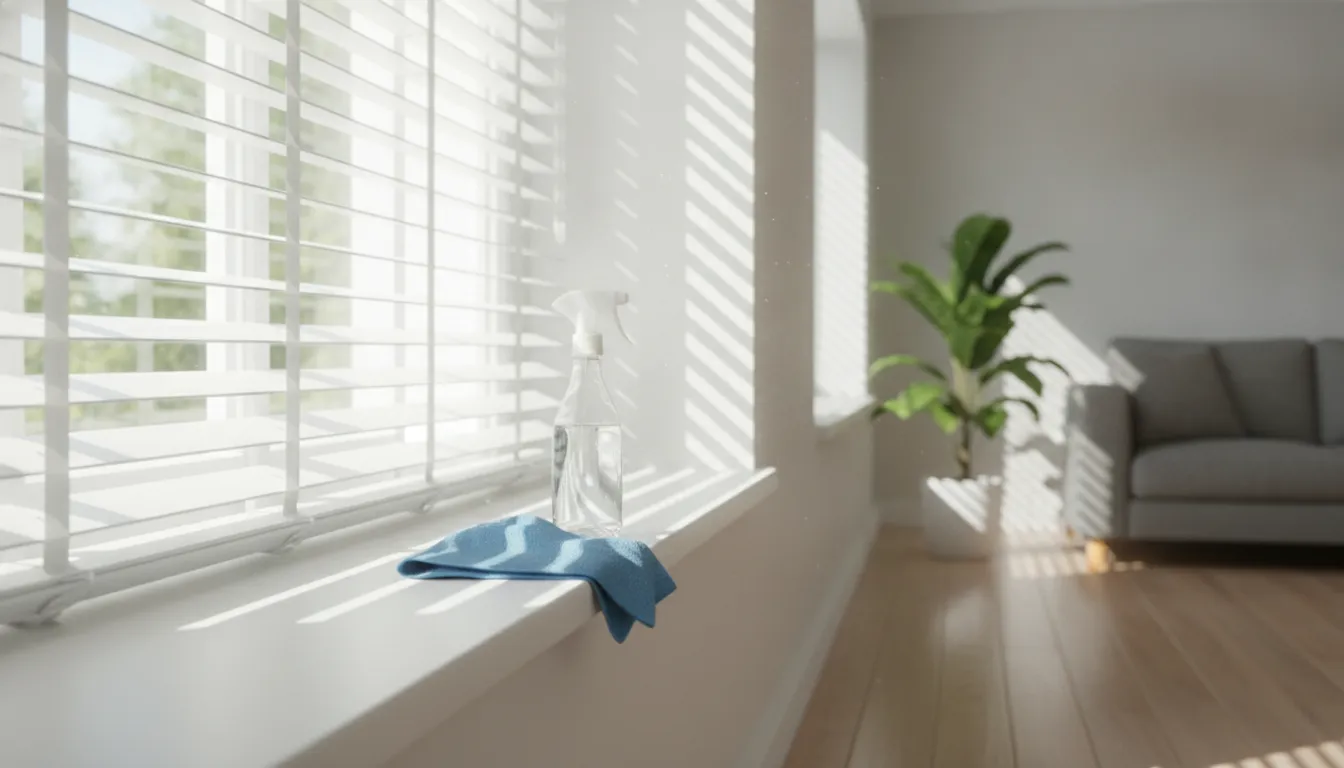
Southern California winds often blow gritty dust and spring pollen right onto your clean window treatments. Letting this buildup sit on your slats will scratch the finish and ruin your indoor air.
Call Vineyard Blind & Shutter at (951) 757-4188 for a free consultation today.
Q: What is the easiest way to clean window blinds?
A: Learning how to clean window blinds is very easy when you match your cleaning method to each type of blind. Keeping up with regular dusting using a soft microfiber cloth is the best way to prevent thick dust buildup. Indeed, an academic study proves that routine cleaning of your window coverings will reduce common household dust mites and allergens in your home. Most sturdy faux wood or metal blinds can handle soapy water, but delicate custom shades need a gentle vacuum brush. This guide details the best tips and simple steps to safely refresh and maintain every custom shutter in your home.
To keep your home fresh and healthy, you might wonder where to start. Before grabbing your duster, it helps to know how often your window coverings really need care. We answer this question first in our section below.
How Often Should You Clean Your Window Blinds?
Keeping a routine schedule for your window treatments is key to keeping your home fresh and clean. A variety of custom shades and blinds will make your rooms look great. To keep them nice, you must clean them on a set schedule.
Homeowners in San Diego County, Riverside County, and Orange County face unique weather patterns that affect their homes. Wind, sea air, and dry heat can make your window coverings get dirty much faster.
Routine dusting every two weeks
You should dust your blinds at least once every two weeks. This quick task stops dirt and pollen from building up on the slats. In Southern California, open windows let in a lot of dry soil and outdoor dust. Routine dusting is key to reduce the buildup of dust mites and other allergens.
If you skip this task, the dust can settle and become much harder to wipe away later. A simple microfiber duster or a soft cloth is the best tool for this job. You do not need to take the blinds down to dust them.
Deep cleaning every few months
Along with quick dusting, your blinds need a deep clean every few months. This process involves a more thorough wipe down to wash off sticky grime and oils. Over time, film from cooking or heating can build up on the slats. Knowing how to clean window blinds deeply will extend their life and keep them working well. Call us at (951) 757-4188 or visit our contact page for expert advice on maintaining your window coverings.
If you have faux wood or vinyl, you can use a damp cloth with mild soap. For real wood, you should use dry methods to prevent warping. Taking time to deep clean your window blinds prevents long term stains.
When to clean more often
Some spots in your home will need more care than others. You may have to dust your blinds once a week if you live in these areas:
- Kitchens: Cooking grease and steam mix with dust to form a sticky film on slats.
- Homes with pets: Pet hair, dander, and fur float in the air and cling to blinds.
- High-traffic rooms: Spaces near doors or open windows catch more outdoor dirt and pollen.
By checking these spots in your house, you can keep your home healthy and your blinds looking like new.
What You Will Need to Clean Your Window Blinds
You do not need fancy tools or strong soaps to clean your window blinds at home. In fact, using basic household items is the safest way to keep your window blinds looking clean and fresh. Getting these simple tools is the first step. It helps you clean your window treatments without damage to the slats or cords.
Essential Cleaning Tools
Before you start, make sure you have the right gear. A vacuum with a HEPA filter is a great choice. It traps dust instead of blowing it back into your room. You should also grab a bucket and some mild dish soap for deeper cleaning. Avoid strong cleaners that can strip wood finishes or warp the slats.
For the best results, use these basic items:
- Microfiber cloths: These are much better than cotton cloths for grabbing dust.
- Vacuum: Use a model with a soft brush attachment.
- Dish soap: A mild, clear soap is safest for most blinds.
- Sponge and bucket: Great for wiping down faux wood or vinyl slats.
- Lukewarm water: Never use hot water, which can warp certain blinds.
Cleaning Methods by Blind Type
Different blind materials require different cleaning approaches. Use this quick reference table to find the right method for your window coverings:
| Blind Type | Daily Dusting | Deep Cleaning | What to Avoid |
|---|---|---|---|
| Faux Wood | Microfiber cloth or vacuum brush | Damp cloth with mild soap; bathtub soak | Hot water, harsh chemicals, abrasive pads |
| Real Wood | Dry microfiber cloth only | Slightly damp cloth, dry immediately | Soaking, wet cloths, bleach, steam rooms |
| Aluminum Mini-Blinds | Microfiber duster or vacuum | Bathtub soak with mild soap | Abrasive scrubbers, hot water |
| Vertical Blinds | Dust from top down while hanging | Damp cloth wipe, leave in track | Removing slats, soaking in water |
| Cellular Shades | Vacuum with soft brush on low suction | Compressed air for interior cells | Submerging in water, high suction |
| Roller Shades (Vinyl) | Damp cloth wipe | Soapy water and towel dry | Machine washing, soaking |
| Roller Shades (Fabric) | Vacuum with hose attachment | Vacuum only, no water | Water, soap, any liquid cleaner |
Smart Hacks for Faster Dusting
You do not have to take your blinds down to clean them. One smart hack is to use a clean white sock. Put the sock on your hand like a glove. Dip it in water with a drop of soap, and squeeze it until it is just damp. This lets you wipe both sides of a slat at once to finish the job fast.
Choosing the right cloth makes a big impact. Tests show that microfiber cloths do a better job than cotton cloths when you wipe dusty surfaces. Keeping household surfaces clean helps reduce microbial loads. This cuts down on the spread of germs from hand contact.
How to Clean Faux Wood Blinds
Faux wood blinds resist water and are the most popular choice for Southern California homes. They work well in damp rooms like bathrooms and kitchens. Regular cleaning helps keep your custom window shades looking new for years. When you learn how to clean window blinds made of this sturdy material, the task becomes simple.
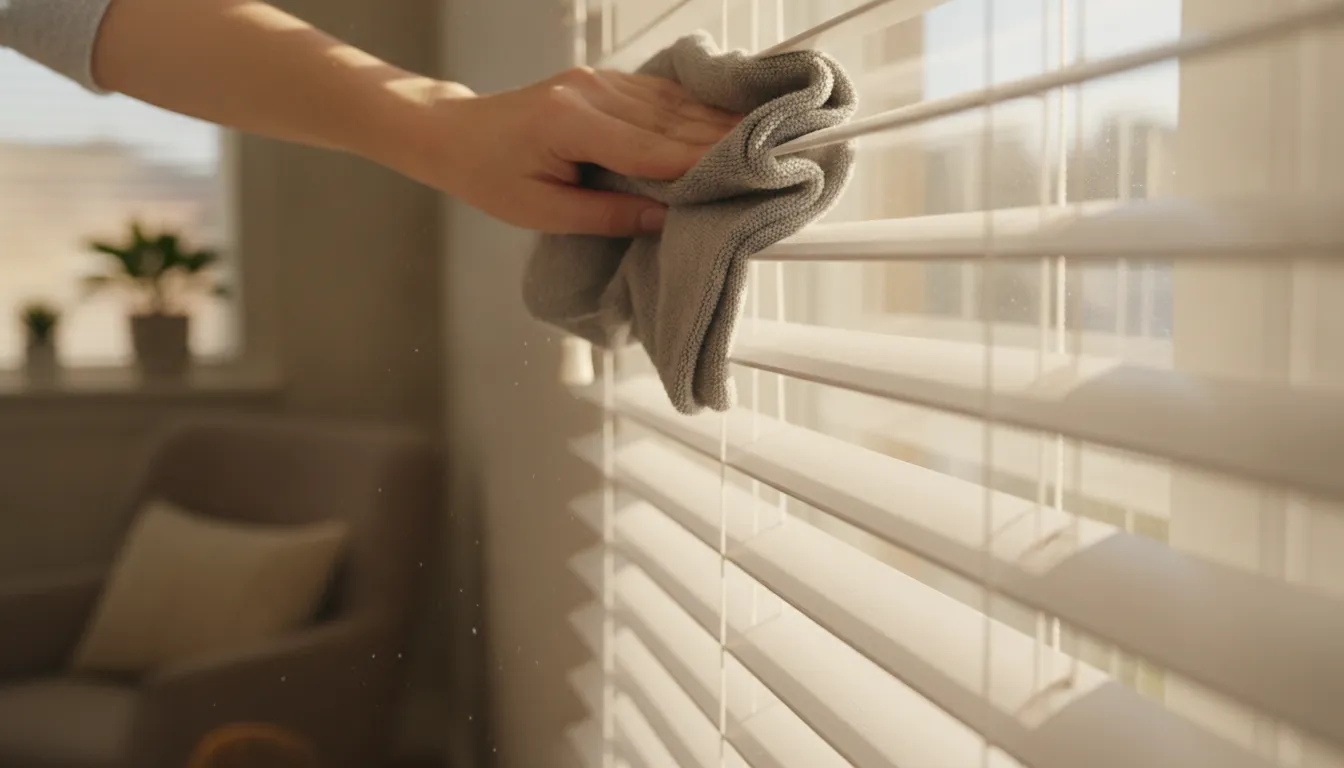
Tools for Faux Wood Care
You do not need fancy tools to clean faux wood. A vacuum with a soft brush, a bucket of warm water, and a mild soap are all it takes. A high-quality microfiber cloth works best because it traps more dust than old cotton rags. Avoid harsh chemical cleaners that can strip the finish or yellow the slats.
The Routine Wiping Process
Start by closing the slats so they lie flat. Run your vacuum brush over the surface from top to bottom. This prevents loose dirt from falling onto parts you just cleaned. Next, mix a few drops of dish soap into your bucket of water. Dip your cloth into the soapy water and wring it out well. The cloth should be damp, not soaking wet, to prevent water spots. Wipe each slat from side to side to lift stuck-on dust. Studies show that regular dusting of window treatments helps lower home allergens like dust mites.
Deep Cleaning in the Bathtub
Sometimes, kitchen grease or heavy grime builds up on the slats. If a simple wipe is not enough, you can deep clean your blinds in a tub. Remove the blinds from the window brackets first. Fill your bathtub with warm water and a small amount of mild dish soap. Place the blinds in the soapy water and let them sit for ten minutes. Use a soft sponge to gently wash the grime off each slat. Do not use hot water because high heat can warp the plastic material. Avoid harsh scrubbing pads that might scratch the surface. Rinse the blinds with clean water and shake off the excess. Lay them flat on dry towels or hang them outside in the shade to dry. Do not hang them in direct Southern California sun because extreme heat can warp them. Once they are dry, snap them back into the window brackets.
How to Clean Real Wood Blinds
Real wood blinds add warmth and class to any room, but real wood needs special care to keep its look. When learning how to clean window blinds made of real wood, avoid soaking the slats. Do not use harsh soaps that can strip the finish. Simple care will help protect your blinds and keep the wood from warping.
Dry dusting techniques
Dusting your blinds is the best way to keep them clean. Dust can build up fast, which can cause health issues in your home. Cleaning your blinds every two weeks helps reduce dust mites and other pests that trigger breathing problems. Always clean your blinds from the top slat down to the bottom slat so dust does not fall on clean surfaces.
A dry microfiber cloth or duster is the best tool for this job. Microfiber is much better at picking up and holding dust than old cotton rags during surface cleaning. Wipe them with the slats closed flat, or use a vacuum with a soft brush tool. For a full selection of wood window treatments, explore our custom shutters and wood blind options.
Safe moisture and spot removal
Sometimes, dry dusting is not enough. If you must use water, make sure your cloth is only slightly damp and not wet. Too much water can soak into the wood pores, which leads to warping and swelling. Never soak wood slats in a tub or spray them with a hose.
Also, avoid harsh sprays, bleach, or scrub pads. These rough tools can scratch the wood or strip the wood stain. If you use a damp cloth, dry each slat right away to remove wet spots.
Protecting wood from damp air
Because real wood absorbs water, you should not hang these blinds in wet rooms. Bathrooms and saunas have too much steam. Over time, the damp air will cause the slats to warp, bend, or crack.
For wet areas, other options work much better. You can use faux wood blinds or select waterproof custom shutters for your bathrooms. These options give you the look of wood but stand up to heavy moisture with no risk of damage. Our veteran-owned team can help you choose the best moisture-resistant treatments for every room.
How to Clean Aluminum Mini-Blinds
Aluminum mini-blinds are a common and low-cost choice. Because they resist water, they are easy to keep clean. You can do this in place. Routine cleaning not only keeps them looking bright, but it also helps your window treatments last much longer.
Routine Dusting for Aluminum Slats
To start, close the slats fully so they lay flat. Use a soft microfiber duster or a vacuum with a soft brush head on low suction. Always wipe from top to bottom so loose dust does not fall onto clean sections. Regular dusting of window treatments is a simple way to reduce the accumulation of allergens like dust mites. For a deeper clean, you can wipe each slat with a damp microfiber cloth.
Deep Cleaning with a Bathtub Bath
When dust builds up and turns to grime, a quick wipe may not be enough. Since aluminum and plastic resist water, you can take these blinds down to wash them in a tub. First, fill your tub with warm water and a few drops of mild dish soap. Let the blinds soak for ten minutes, then gently scrub away dirt with a soft sponge. Never use this soaking method for real wood or fabric blinds, as water will warp or ruin those blinds.
Here is a quick guide to clean window blinds made of aluminum:
- Close the slats and dust them from top to bottom using a soft microfiber cloth or vacuum.
- Wipe both sides of each slat with a damp cloth to remove any stuck-on dirt.
- For a deep clean, soak the aluminum blinds in a tub of warm, soapy water for fifteen minutes.
- Rinse the blinds with clean water and let them air dry fully before hanging them back up.
How to Clean Vertical Blinds and Cellular Shades
Learning how to clean window blinds is essential for a fresh and healthy home. Regular dusting is important because it reduces the accumulation of dust mites and allergens. Using a microfiber cloth is highly effective for removing these particles. These simple habits protect your custom window treatments and prolong their lifespan.

How to Clean Vertical Blinds
Vertical blinds are popular for large windows and sliding glass doors. To clean them, always start at the top and work your way down. This method prevents dust from falling onto sections you already wiped. Do not remove the vertical slats from the track. Removing them can damage the clips. Instead, leave them in place and wipe each individual slat with a soft, damp cloth. Use a cloth that is slightly moist but not soaking wet to avoid water spots. For larger windows, custom plantation shutters offer an easy-clean alternative that requires only a quick dusting.
How to Clean Cellular Shades
Cellular shades help insulate your home, but their hollow pockets can collect dust. To clean the interior cells of these custom shades, blow out any debris using a can of compressed air. For the exterior fabric, vacuum gently. Use the lowest suction setting with a soft brush attachment. This low setting stops the fabric from stretching. Our experts strictly warn: NEVER submerge cellular shades in water, as moisture can dissolve their glue and ruin their shape.
How to Clean Roller Shades
Roller shades are sleek, but different fabrics require different methods. For vinyl roller shades, wipe the material with a towel and soapy water, then let them air dry. For fabric roller shades, do not use water. Instead, use a vacuum cleaner with a hose attachment to remove the dust. If you want to clean your window blinds and other treatments, always follow the material instructions. Our blog has more care guides for every type of window covering.
What Cleaning Mistakes Can Damage Your Window Blinds?
When you learn how to clean window blinds, knowing what to avoid is just as important as knowing the correct methods. Using the wrong techniques or products can ruin your custom window shades and blinds. Avoiding these common errors will keep your blinds looking beautiful and functioning properly for years.
Using Harsh Chemicals
Never use harsh cleaning agents like bleach or ammonia on your window coverings. These chemicals can strip the protective finish off real wood, leading to severe discoloration or warping over time. Instead, always use a soft, damp cloth and avoid harsh chemicals on all materials to preserve their look.
Machine Washing Your Blinds
It can be tempting to throw fabric or vinyl parts into the washing machine, but most window blinds should not be machine washed. The aggressive washing process can cause permanent damage to both the delicate materials and the operating mechanisms.
Soaking Wood or Faux Wood
Excessive moisture is a major threat to window coverings. You must avoid soaking real wood blinds, as water absorption causes the wood to warp, crack, or rot. While faux wood is moisture-resistant, you should still avoid soaking them in hot water during deep cleaning to prevent the slats from warping.
Abrasive Scrubbing and Wood Polish
Using abrasive scrubbing pads can scratch the surface of your blinds. This scrubbing also destroys the anti-static coatings that help modern treatments repel dust. Additionally, avoid using wood polish on faux wood blinds. Faux wood does not absorb polish, which leaves a sticky buildup that actually attracts more dust.
Summary of What to Avoid
To protect your investment in custom window treatments, keep this quick reference checklist in mind:
- Do not use bleach, ammonia, or other harsh chemical cleaners.
- Never clean your window blinds in a washing machine.
- Avoid soaking wood or faux wood blinds in water.
- Do not use abrasive pads that can scratch the surface or strip anti-static coatings.
- Do not apply wood polish to faux wood blinds, as it causes a sticky residue.
Frequently Asked Questions About Cleaning Window Blinds
What is the easiest way to clean window blinds?
The easiest and most effective way to maintain window blinds is through regular dusting using a microfiber cloth or a vacuum attachment. This simple routine prevents heavy buildup and keeps your window coverings looking fresh and clean with minimal effort throughout the year.
What cleaning products are safe for blinds?
As a general rule, the safest way to maintain most window coverings is to use a soft, damp cloth. You should strictly avoid using harsh chemicals or abrasive cleaners, which can strip finishes or warp materials. Mild soap and warm water are sufficient for tougher spots.
How often should I clean my window blinds?
To prolong the lifespan of your window coverings, you should perform regular maintenance on a consistent schedule. Dusting your blinds every couple of weeks combined with a thorough deep clean every few months is highly recommended. This routine prevents dust from embedding into the materials.
Can I put my blinds in the washing machine?
No, you should never place your window coverings in a washing machine. Most window blinds are not designed for machine washing because the process can cause significant, irreversible damage to both the materials and the internal operating mechanisms. Always follow manual cleaning methods instead.
How do you clean cellular shades without damaging them?
Cellular shades require a specialized approach to protect their delicate structure. You should clean the interior air pockets using compressed air. To clean the exterior fabric, gently vacuum the surface using a soft brush attachment on a low suction setting to prevent stretching.
Can you use vinegar to clean window blinds?
While vinegar is a natural cleaner, it is not recommended for most blind materials. The acidity can strip protective coatings on wood and faux wood finishes over time. For safe cleaning, stick to mild dish soap and warm water instead.
Keep Your Window Blinds Looking Like New
Knowing how to clean window blinds properly is the best way to protect your investment and maintain a beautiful, healthy home. Regular cleaning ensures your window treatments stay free of dust, allergens, and grime, extending their lifespan for years to come. At Vineyard Blind & Shutter, we offer a premium selection of durable, easy-to-clean custom window blinds designed to withstand daily life in Southern California homes.
As a veteran-owned local business, we take pride in providing professional service and top-quality products across San Diego, Riverside, and Orange Counties. When you are ready to upgrade your window coverings, we make the process simple by bringing our mobile showroom directly to you. Call Vineyard Blind & Shutter at (951) 757-4188 for a free consultation today. Simply contact Vineyard Blind & Shutter to discuss the best options for your home. Our friendly experts are ready to help you find the perfect window treatments for your style and budget.