When you see a plantation shutters for bathroom windows sale, the advertised price is only one part of the decision. First check whether the specific shutter is suitable for the window’s moisture exposure, fits the opening, and includes the work you expect. Comparing those details helps you judge the offer without assuming every bathroom or every shutter is the same.
Call Vineyard Blind & Shutter at (951) 757-4188 to discuss your project.
Contact Vineyard Blind & Shutter to discuss your bathroom window
What should you check in a bathroom shutter sale?
Q: What matters most when comparing a sale listing? A: Confirm the exact product and material, the window’s distance from water, the quoted configuration, what measuring and installation include, and the warranty terms. A lower advertised price is not necessarily a better fit if the product is unsuitable or important project work is excluded.
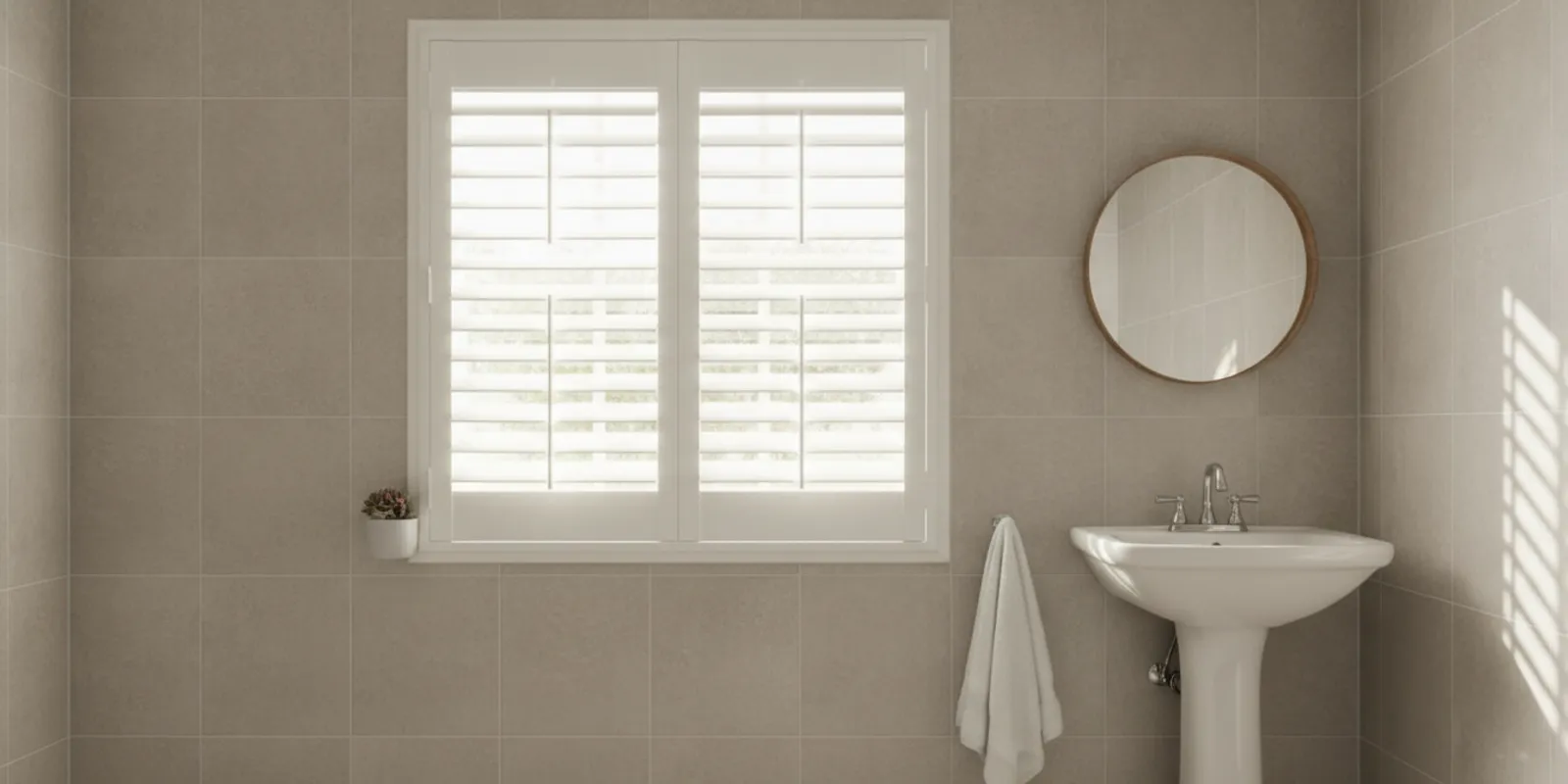
A bathroom window can face humidity, condensation, cleaning products, and occasional splashes. Its position changes the conditions: a window beside a shower is different from one across the room, and ventilation and daily use matter too. Avoid relying on a broad label such as “bathroom-ready.” Ask what the manufacturer says about the exact product, and whether its guidance covers your particular location.
- Identify the product material and construction, not just the collection name.
- Explain whether the window is near a shower, tub, sink, or direct spray.
- Ask for written care and cleaning instructions.
- Review warranty exclusions related to moisture, finish, hardware, and installation.
- Confirm the quote applies to the measured opening and selected configuration.
A useful comparison starts with the conditions in your own room. Note where water can reach the sill, whether the window is opened, how steam leaves the room, and whether the treatment will sit close to a tiled or painted surface. These observations help the seller respond to the real installation rather than to the room label alone.
How do material and moisture exposure affect the choice?
Plantation shutters are offered in different materials and constructions. Natural wood can provide a distinctive grain and finish, but the maker’s care and humidity guidance should be checked before choosing it for a bathroom. Composite options may be worth comparing where moisture is a concern, but the word “composite” does not by itself establish that a product is waterproof or appropriate for a window exposed to direct water.
Ask the seller to identify the precise material and finish in the quote. If the product has a coating, ask how it should be cleaned and whether that coating changes the manufacturer’s recommendations. The answer should distinguish normal humid-room use from repeated splashing or water collecting on a surface. If the manufacturer does not recommend a product for the exposure you describe, compare another treatment rather than assuming careful use will override the limitation.
Think about exposure in practical zones. A shutter on a window opposite the shower may face humidity but little direct water. A window within reach of a handheld shower or beside a tub may be exposed to spray. A sill that stays damp after bathing deserves attention too. Describe the pattern honestly and ask which specific product is approved for those conditions. If the response is unclear, request the product documentation before ordering.
| Comparison point | What to ask or check | Why it matters |
|---|---|---|
| Material and finish | What is the exact construction, and what does the manufacturer recommend for a humid room? | Material names alone do not establish moisture suitability or care needs. |
| Water exposure | Is the window exposed to humidity, condensation, splashes, or direct spray? | Exposure level helps determine which product guidance applies. |
| Privacy and daylight | Can louvers be angled for privacy, and are there sightlines around the frame? | The best setting should address both the view and the light you want. |
| Fit and operation | Will the frame clear the sill, handle, locks, trim, and window swing? | Obstructions can affect mounting and everyday use. |
| Quote and warranty | What work is included, and what moisture or finish exclusions apply? | Terms and project scope affect the actual value of an offer. |
How can you balance bathroom privacy, light, and ventilation?
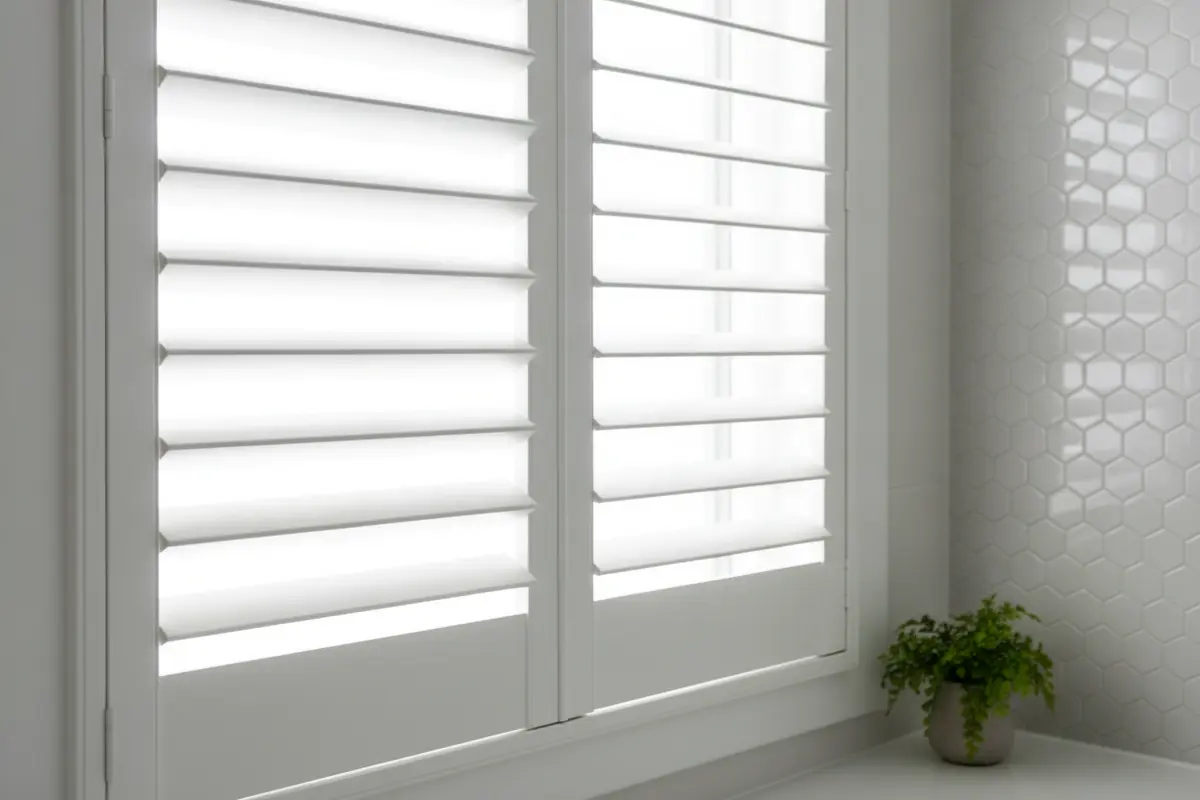
Adjustable louvers let you change the angle of incoming light and the view through the window. Before choosing a configuration, consider who can see the window from outside and whether the room is used after dark. Look from likely viewing positions inside and outside the home, where practical. A louver angle that feels private in daylight may create a different sightline at night when interior lights are on.
Check the whole opening, not only the center of the shutter. Consider gaps at the sides, the frame, and any division between panels. Ask to see how the chosen louver angle looks in a sample or product demonstration. If privacy is a priority, explain whether you want to block a direct view while still letting daylight in, or whether you prefer a more closed setting at certain times.
Shutters can be adjusted to change airflow through an open window, but they do not replace a bathroom fan or other ventilation. The U.S. Environmental Protection Agency provides general indoor-environment information through its official EPA resource site; use product and ventilation guidance appropriate to your home rather than treating window coverings as ventilation equipment. Also ask whether panels or louvers could interfere with a window handle, lock, or opening mechanism.
For a small window, pay particular attention to reach and clearance. A louver control that is awkward to operate may be frustrating when the window is above a tub or behind a fixture. Ask where the tilt control will sit and whether you can open and close the window after installation. If you often open the window for fresh air, make that part of the fit discussion rather than assuming the shutter will not affect access.
It can help to describe the bathroom in a short, practical way before comparing products. For example: “The window is above the sink, several feet from the shower, and we open it sometimes.” Or: “The lower part of the window is beside the tub and can get splashed.” Those are different conditions, and the product recommendation should address the one that applies. If a seller gives a broad assurance, follow up by asking whether it is based on the manufacturer’s instructions for that exact product.
Also distinguish occasional damp air from standing or repeated water contact. After a shower, note whether water beads on the glass, runs down to the sill, or reaches the shutter itself. If the sill remains wet, explain that clearly and ask how the product is expected to be maintained in that setting. A treatment can be easy to wipe while still having limits on prolonged moisture exposure, so ask what the guidance actually says instead of inferring suitability from a quick-clean surface.
What should the sale price include?
The word “sale” can describe a limited promotion, a discounted product, or simply a price shown for one configuration. Do not assume that an advertised amount includes measuring, delivery, hardware, installation, removal of an old treatment, or taxes. Ask for a written quote that lists the product and all included work. Check the offer’s dates and any minimum order or size requirements if it is a time-limited promotion.
- Material, finish, color, louver choice, and panel configuration.
- Frame style, mounting approach, and included hardware.
- Whether the amount applies per window or to the entire project.
- Measuring, delivery, installation, and removal of existing coverings.
- Taxes, fees, minimums, promotion dates, and any other conditions.
- Warranty duration, covered parts, and exclusions.
- How adjustments or fit concerns are handled after installation.
Custom shutters are planned for a particular opening, so a sample price for a standard size may not describe your project. Compare identical assumptions: same window count, approximate dimensions, material, frame, finish, and service scope. If one quote includes installation and another is product-only, put those services beside the price before comparing totals. Do not infer an installed project cost from a headline discount.
Ask how changes are handled if the measured opening differs from your preliminary dimensions or if the installation surface presents an issue. A clear quote should explain what is known, what will be confirmed during measuring, and which choices could change the total. If a promotion has restrictions, request them in writing so you can evaluate the offer without relying on an informal verbal summary.
For example, imagine two offers for the same bathroom window. One advertises a lower product price but does not state whether measuring, the frame, hardware, or installation are included. The other lists those components and identifies the material and warranty. You cannot compare the headline amounts fairly yet. Ask the first seller to itemize the same scope, or ask the second to clarify each line. The aim is not to assume the more detailed offer is automatically better; it is to understand what each total buys.
Write down the promotion’s start and end dates and ask whether the terms depend on a minimum number of windows, a specific finish, or a particular product line. Clarify whether the quoted amount is firm after the final measure or subject to confirmation. If the quote uses phrases such as “starting at,” ask what assumptions that starting figure uses. These small checks help prevent a promotional amount from being mistaken for the final price of a custom, installed treatment.
How should you prepare for measuring and installation?
Take preliminary notes about the window, but treat them as planning information unless the seller says otherwise. Measure width and height at more than one point, and note whether the opening appears out of square. Record the sill depth and any trim, tile, handles, locks, or nearby fixtures that could affect mounting. Photos from straight on and from the side can make those constraints easier to explain.
During the measuring visit, ask how the installer will assess the frame, mounting surface, clearance, and panel swing. Discuss whether the shutters will mount inside the opening or over the trim, and what that means for the look and light gaps. Ask how the configuration works with the window latch and whether the panels can open without contacting a faucet, towel bar, or other obstruction.
Vineyard Blind & Shutter offers free measuring and free installation. Its mobile window treatment service brings product samples to the home, which lets you consider finishes alongside the room’s actual colors and light. Review the company’s custom shutter options and ask which products are appropriate for the conditions you described.
On installation day, clear access to the window and confirm the planned panel swing with the installer. Before the work is complete, operate the louvers and panels, check the window latch, and make sure the installed treatment matches the agreed configuration. Ask for care instructions and the warranty information to keep with your project documents. If anything differs from the written quote or plan, raise it before the installer leaves so the next step is clear.
How can you compare shutter options and total value?
Value is not just the amount saved from a list price. Compare the product specifications, fit, finish, warranty, and work included. A lower figure may reflect a different material, a simpler frame, fewer services, or a different size assumption. A higher figure may include measuring and installation, but verify this rather than guessing. The goal is to compare like with like and decide whether the product is suitable for your room.
Some buyers want the appearance and adjustable light control of shutters; others may prioritize a different operating style or a treatment that better suits the window’s exposure. If you are uncertain about materials, review Vineyard’s explanation of what Polycore shutters are and its guide to different shutter types. If you want to compare broader product categories, see the overview of blinds, shutters, and shades.
Consider a simple side-by-side worksheet. In one column, record the product, material, finish, and mounting plan. In another, record the included services, delivery expectations, warranty, exclusions, and full quoted total. Add a final note for unresolved questions. This makes it easier to spot when two offers are not equivalent and gives you a concrete list to resolve before committing.
What questions should you ask before ordering?
Give the seller enough context to recommend the right product: tell them where the window sits, whether it receives direct spray, how the room is ventilated, what privacy you need, and whether the window is opened regularly. Then ask for the recommendation and its limitations in clear terms. A useful answer connects the product to the actual window, rather than relying only on a general description.
- What is the exact shutter material, finish, and product configuration?
- What does the manufacturer say about humidity, condensation, splashes, and cleaning?
- Does the product suit this window’s location, including any direct water exposure?
- How will the shutters mount, and will panels clear the sill, trim, locks, and fixtures?
- Can I adjust the louvers for the privacy and daylight I want?
- What exactly does the quoted price include, and what could change it?
- Which warranty terms or exclusions apply to moisture, finish, hardware, and installation?
- Who measures and installs the shutters, and how are fit adjustments addressed?
To make those questions easier to use, prepare a one-page note before comparing quotes. Start with the window location and a short description of water exposure. Add a photo showing the sill and nearby shower, tub, or sink, plus a note about whether the window opens inward or outward. List the privacy concern and any handle or fixture that may obstruct the panels. That gives each seller the same information and makes their answers easier to compare.
Then separate your decision into three checks. First, confirm that the product guidance fits the room’s exposure. Second, confirm that the proposed frame and panel layout will work with the window and your privacy needs. Third, compare the written total and warranty for the same set of services. If one check remains unanswered, pause before treating the offer as a complete solution. A seller’s willingness to clarify the specific material, installation plan, or written terms is more useful than a general assurance that shutters are suitable for bathrooms.
After you select a configuration, keep the quote, product details, care instructions, and warranty together. If you later need to clean the shutters or ask about an issue, having the exact product description and installation scope at hand can make the conversation more precise. Follow the manufacturer’s care directions, and raise any uncertainty about water exposure before the order is placed rather than after the treatment is installed.
Vineyard Blind & Shutter serves customers in San Diego, Riverside, and Orange counties. Use the contact page to discuss your window and request next steps. Free measuring and free installation are part of the company’s service offer; confirm the details that apply to your specific project and quote.
When you compare the actual product, room conditions, warranty, fit, and full project scope, you can judge a bathroom shutter offer on more than its advertised discount.
Call Vineyard Blind & Shutter at (951) 757-4188 to discuss shutter options.