Choosing window treatments for vaulted ceilings takes more planning than choosing a color or fabric. Window height, angled frames, sunlight, privacy, and how you will operate a covering each affect whether it works in daily life. Start by matching the treatment to the specific window, not just to the room's style.
Request an in-home window treatment discussion
Call Vineyard Blind & Shutter at (951) 757-4188 to discuss your windows.
Quick answer: First identify each window's shape, height, access, and purpose. Then compare blinds, shutters, or shades based on the light and privacy you want and the way the treatment can be reached and operated. Unusual shapes and high installations call for careful measuring and a clear operating plan.
What should you check before choosing treatments for vaulted windows?
Make a window-by-window inventory before looking at samples. A room may have a large triangular upper window, ordinary rectangular windows below it, and a different opening beside a stairway. Treating every opening as identical can lead to controls that are hard to reach or a style that does not fit the frame.
- Shape: Note whether each opening is rectangular, triangular, arched, or follows a sloped ceiling. Record whether the top edge is level or angled.
- Approximate size and position: Estimate width and height, and note how high the glass begins above the floor. These notes help frame a discussion, but should not replace accurate measuring.
- Access: Identify windows above furniture, stairwells, or other places where a ladder or special access may be needed. Consider whether anyone can safely reach the controls.
- Use: Mark which windows open, which are fixed, and which need frequent adjustment. A fixed high window may have different operating needs from a lower window you open often.
- Light and privacy: Note when direct sunlight reaches the glass, whether glare is a problem, and whether passersby or neighboring homes can see inside.
- Room conditions: Record nearby moisture, strong sun, furnishings, trim, and finishes that matter to the design or product choice.
Think about the room at different times of day. In the morning, a window may be bright but private; in the evening, the same glass may reveal the room from outside. A quick note such as “glare on the television after 3 p.m.” is more useful than a general request to make the room darker. It helps narrow the question to light direction, coverage, and control.
Also decide whether a consistent look matters more than identical operation. You might use a similar color across a wall of windows while selecting different products for high and low sections. The visual connection can remain while each treatment is planned for its own shape and use.
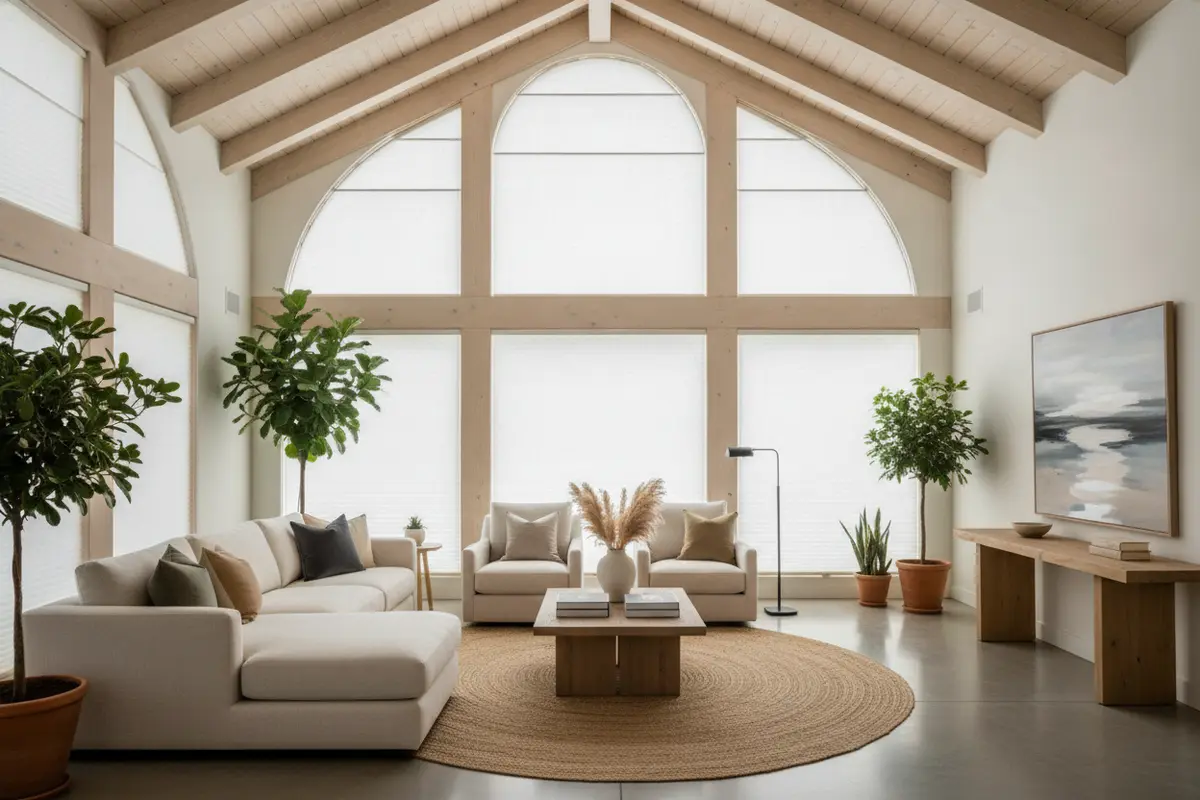
Which window treatments can suit a vaulted ceiling?
Blinds, shutters, and shades are all worth comparing. The right option depends on the actual frame, the desired appearance, and the way the covering will be used. Browse custom blinds and window covering options as a starting point, then consider the particular window before settling on a product.
Blinds: when adjustable slats are useful
Blinds use slats that can be tilted to adjust the view, privacy, and incoming light. Faux wood blinds can offer a wood-like appearance in another material; vertical blinds may be considered for broad openings when the layout suits them. A blind can be a practical choice when you want to change the angle of the slats during the day.
For a tall or angled opening, ask how the blind will be mounted and operated. Is it intended to remain in one position, or will you adjust it often? Where will the controls sit? Will the full blind raise or lower, or is the priority simply tilting the slats? A design that looks straightforward on a sample may be inconvenient if its controls are out of reach. Review blind styles and configurations while keeping those practical questions in view.
Shutters: when a defined architectural look matters
Plantation shutters have louvers that adjust light and privacy and create a structured appearance around a window. They may complement rooms with prominent trim or architectural details. The frame shape matters: an angled or triangular top can change how panels are laid out and whether they can move as you expect.
Ask how the proposed panel layout follows the frame and how the louvers can be reached. Consider whether the shutter needs to open for access to the glass or can stay in place while you adjust the louvers. Vineyard offers plantation, Polycore, and stained-wood shutter options; view custom shutter options and ask which configurations are suitable for your opening. Do not assume every product or shape can be made to operate in the same way.
Shades: when a continuous surface fits the room
Shades cover the glass with a continuous material. Roller, cellular, Roman, and woven wood styles offer different appearances and light-control choices. Depending on the selected material and style, a shade may filter daylight or provide more coverage when closed. The exact result depends on the product, fit, and how it is mounted.
For an upper window, consider whether the shade will remain at a set position or need to move regularly. Ask how the shade fits a sloped or unusually shaped frame and what control methods are available for that configuration. Light filtering or room-darkening describes light control; it does not by itself establish a particular heat-reduction result. Review custom shade styles and ask about the specifications of the products you are comparing.
How do blinds, shutters, and shades compare?
This table is a planning aid, not a promise that every style will fit every vaulted window. Specific mounting, operation, material, and available shapes depend on the individual product and opening.
| Option | How it changes light and privacy | Question for a high or angled window | May suit you if |
|---|---|---|---|
| Blinds | Tilting slats adjust light and the view. | How will you reach the tilt and lift controls? | You want adjustable slats and a defined horizontal or vertical pattern. |
| Shutters | Louvers adjust light and privacy within a framed panel. | Can the frame and panel layout follow the shape and still operate as needed? | You prefer a structured appearance that relates to the window trim. |
| Shades | Coverage and light control vary with material and style. | Will it stay in place or move, and how will it be operated? | You want a continuous surface and a choice of fabric or material styles. |
Use the table to narrow the choices, then test each option against the room. For example, if an upper window is fixed and rarely needs adjustment, the appearance and desired amount of coverage may guide the decision. If a lower window is opened regularly, access to the treatment and the window itself becomes more important. If several windows share one wall, discuss whether consistent finishes can connect different product types.
How can you plan for high or hard-to-reach windows?
Start with the operating routine. Picture a typical day and decide when you would adjust the covering. If you expect to change it repeatedly to manage glare or privacy, easy operation should be a core requirement. If the covering can stay in one position most of the time, you may have more flexibility in the operating method.
Motorization may be worth discussing when the window is difficult to reach. Vineyard offers motorization and smart-home integration options, but availability depends on the selected product and configuration. Ask whether the specific treatment can be motorized, what controls it supports, and how it will be used from the room. If you already use a smart-home system, name it during the discussion rather than assuming compatibility.
Think about operation for every window separately. A room may call for a motorized treatment at the highest point and a manual treatment on a reachable window below. The goal is a plan that matches the actual use, not adding the same control to every opening by default. Ask whether controls can be positioned for convenient access and whether the operating method affects the appearance or mounting plan.
Installation access and future care also matter. Tell the measuring professional if a window sits above stairs, behind furniture, or near a sloped ceiling that limits working space. Note any obstacles that cannot be moved. A photo can help explain the room, while an in-person assessment can clarify dimensions, mounting space, and practical access.
What details matter for angled and unusually shaped windows?
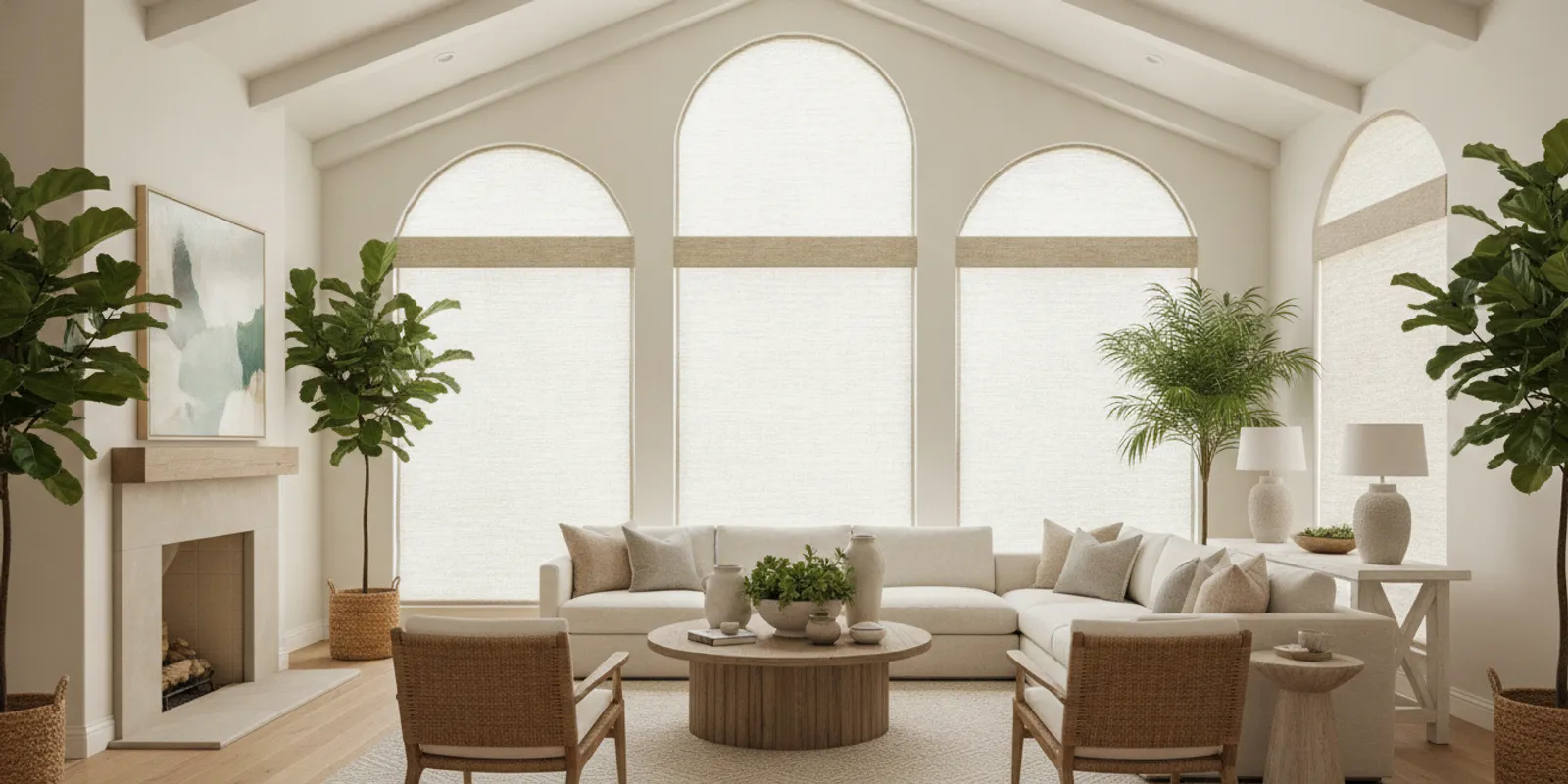
A vaulted room may include triangular, arched, or sloped windows. A standard rectangular treatment may not follow the outline, and a shape-specific solution may not move like a conventional window covering. Before choosing, confirm the frame shape, where the treatment can be mounted, and whether it needs to open or can remain in a fixed position.
Look at how the treatment will meet the edges. Consider whether the chosen coverage leaves a visible gap, follows the angled top, or divides the opening into sections. These are design and fit questions to resolve before ordering. Ask to see how the proposed arrangement relates to the room's trim and other windows, and discuss what happens at the point where a slope meets a vertical edge.
Do not assume two openings that look alike have identical measurements. Frames can vary, especially in older homes or rooms with custom architecture. Each window should be assessed for width, height, angle, mounting depth, and nearby obstructions. When several treatments are installed together, alignment and consistent spacing may also matter to the overall appearance.
For a group of windows, decide which elements should match: color, material, louver or slat style, or the way the treatments sit within the trim. Matching every detail is not the only route to a cohesive room. Similar finishes can visually connect different treatments when one opening's shape or access needs call for another configuration.
How should you compare the full project and its cost?
Compare complete proposals rather than a generic per-window number. The total depends on the selected product, each opening's size and shape, operating method, and installation conditions. A quote based on the actual windows is more useful than a broad estimate that does not account for vaulted heights or unusual frames.
When reviewing options, ask that each proposal make clear what product and configuration it covers. Check that the number of openings is right, the expected control method is noted, and any shape-specific assumptions are explained. If two options differ, identify exactly what changed: material, coverage, operation, or fit. This makes it easier to compare what matters instead of treating unlike proposals as equivalent.
- List the windows and note their shapes, approximate dimensions, and access conditions.
- Write down the priority for each opening: privacy, adjustable light, view, appearance, or ease of operation.
- Choose two or three product types to discuss where more than one might work.
- Ask how each option will be mounted, reached, and operated, including any motorization question.
- Confirm what measuring and installation cover and how unusual access or shapes affect the plan.
- Compare the written product and configuration details before deciding which option best serves the room.
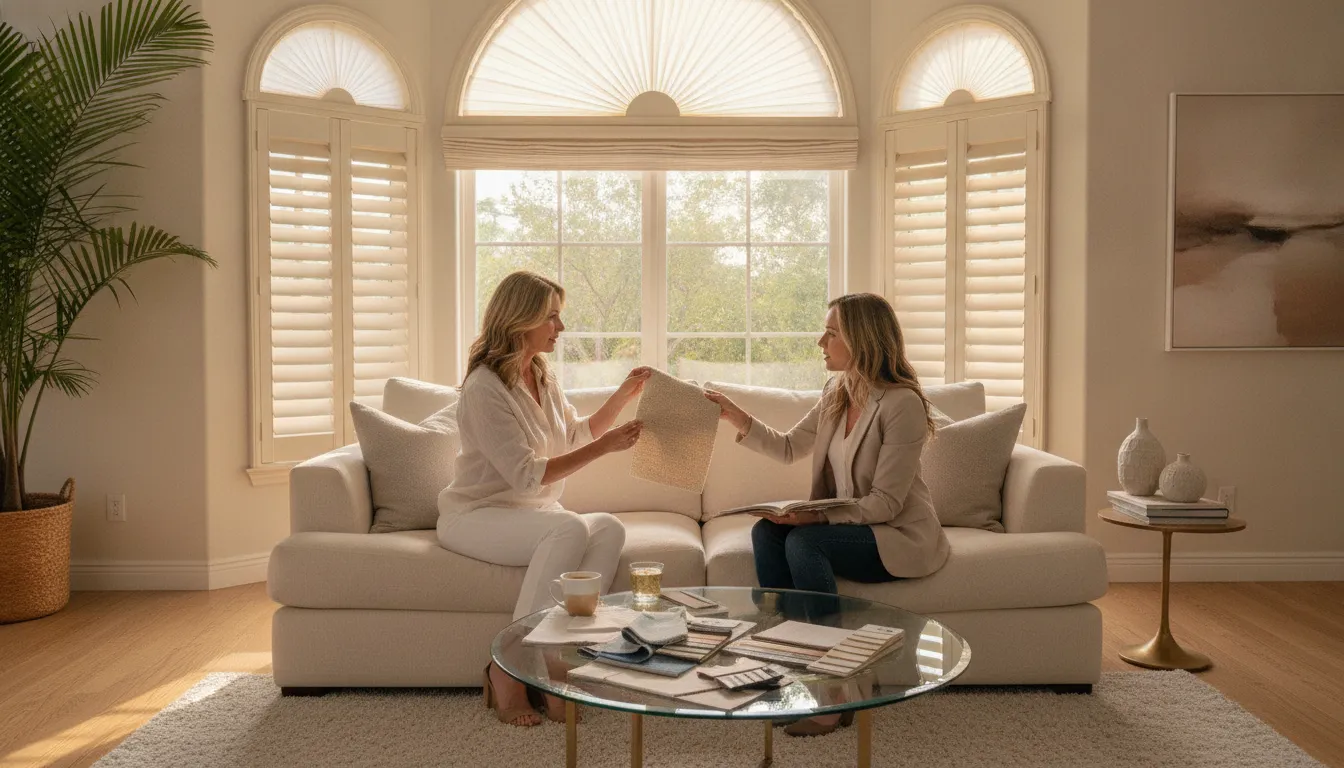
Vineyard Blind & Shutter brings a mobile showroom to customers' homes, making it possible to consider samples alongside the room's light and finishes. The company provides free measuring and free installation. You can learn about the mobile window treatment service and check the service areas before arranging next steps. Vineyard serves customers in San Diego, Riverside, and Orange counties.
How can you prepare for a measuring discussion?
Make the windows accessible if you can, but do not put yourself at risk trying to reach a high opening. Move small items away from sills, note furniture that cannot be moved, and describe any access limits. If you are renovating, mention planned changes to trim, paint, or wall finishes that could affect the final fit.
Bring your window inventory and identify the room's main priorities. Useful questions include:
- Which treatments can suit this window's specific shape and mounting area?
- How will I operate this treatment from the floor, and what control choices are available?
- Can the treatment be motorized in this size and configuration?
- How will the design look alongside the other windows in the room?
- What product specifications describe light filtering, privacy, or room-darkening?
- What should I expect for measuring, ordering, and installation?
A mobile showroom visit also lets you consider samples in the actual room rather than relying only on a small screen image. Daylight and nearby finishes can change how a color appears. Compare samples near the window and elsewhere in the room, and keep separate notes for the upper and lower openings if their requirements differ.
Q: What is the first decision to make for a vaulted window? A: Decide whether the treatment needs regular adjustment and how it can be operated safely. Then compare blinds, shutters, and shades for the opening's shape, light needs, privacy, and appearance.
Once you have a shortlist, ask for the actual windows to be measured and discuss the installation and operating details. A room-specific plan can account for the ceiling angle, the way you use the space, and the look you want across the full window group.
With the window shape, access, and daily routine in mind, you can compare treatments for how they will work in the room as well as how they look. For general information on home energy topics, consult the U.S. Department of Energy; evaluate any window-covering performance claim against the specifications for the product you are considering.
Call Vineyard Blind & Shutter at (951) 757-4188 to discuss a measuring visit.