Moving into a new home is an exciting milestone that brings a long list of choices. Finding the right window coverings for every room can quickly feel overwhelming as you try to balance style, light, and privacy. Having a clear plan saves you time and prevents costly mistakes.
A window treatment checklist for new home buyers is the best tool to simplify your design decisions and budget. This checklist guides you room by room to evaluate your needs for light control, privacy, and insulation. According to the U.S. Department of Energy, about 30% of a home's heating energy is lost through windows. Selecting the right coverings can lower your utility bills while protecting your family's privacy from day one. By walking through your home with a checklist, you can easily decide whether custom blinds. Plantation shutters, or shades are best for each space before you make a purchase.
Before you start browsing styles, it is vital to check the specific needs of each room. In the next section, we look at the main factors to keep in mind, titled Assess Your Window Treatment Needs Before You Buy. Call Vineyard Blind & Shutter at (951) 757-4188 for a free consultation today.
Window Treatment Checklist For New Home: Assess Your Window Treatment Needs Before You Buy
Moving into a new home is an exciting step, but finding the right window coverings can feel like a major chore. Before you start looking at fabrics or colors, you must understand what your windows actually need. Planning ahead ensures you get the best fit for your budget, daily routines, and local climate. Building a clear professional consultation near you helps you narrow down your choices and avoid costly mistakes.
Understand Room Function and Sun Exposure
Each room in your new home has unique needs for light and privacy. A bedroom needs total darkness for a good night of sleep, while a home office needs glare control so you can work on a computer screen. You must also check the sun exposure of each window throughout the day. Windows that face south or west get hit with intense heat, while north-facing windows get cool, soft light all year long.
Manage Heat Loss and Solar Heat Gain
In Southern California, managing the sun is key to keeping your home comfortable and your utility bills low. A large amount of your home's heating energy, about 30%, is lost through standard windows government window energy data shows. During hot cooling seasons, about 76% of the sunlight that falls on standard double-pane windows enters your living space as heat. Choosing energy-efficient window treatments is important for both new and existing homes to stop this heat transfer. When you pick the right coverings, you keep your rooms cooler in the summer and warmer in the winter.
Set Your Budget and Product Preferences
Window treatments are a long-term home investment. When planning your budget, balance the upfront cost with the durability and maintenance needs of each product. For example, some rooms might benefit from simple shades, while others need sturdy shutters. To get the best results, you should look for window attachments certified by the Attachments Energy Rating Council, or AERC. This certification helps you find products with proven energy performance. Unfortunately, most residential window coverings remain in the same position every day. This simple habit reduces their potential energy-saving benefits. Adjusting your treatments with the sun is an easy way to boost comfort.
See Your Options in Your Own Home
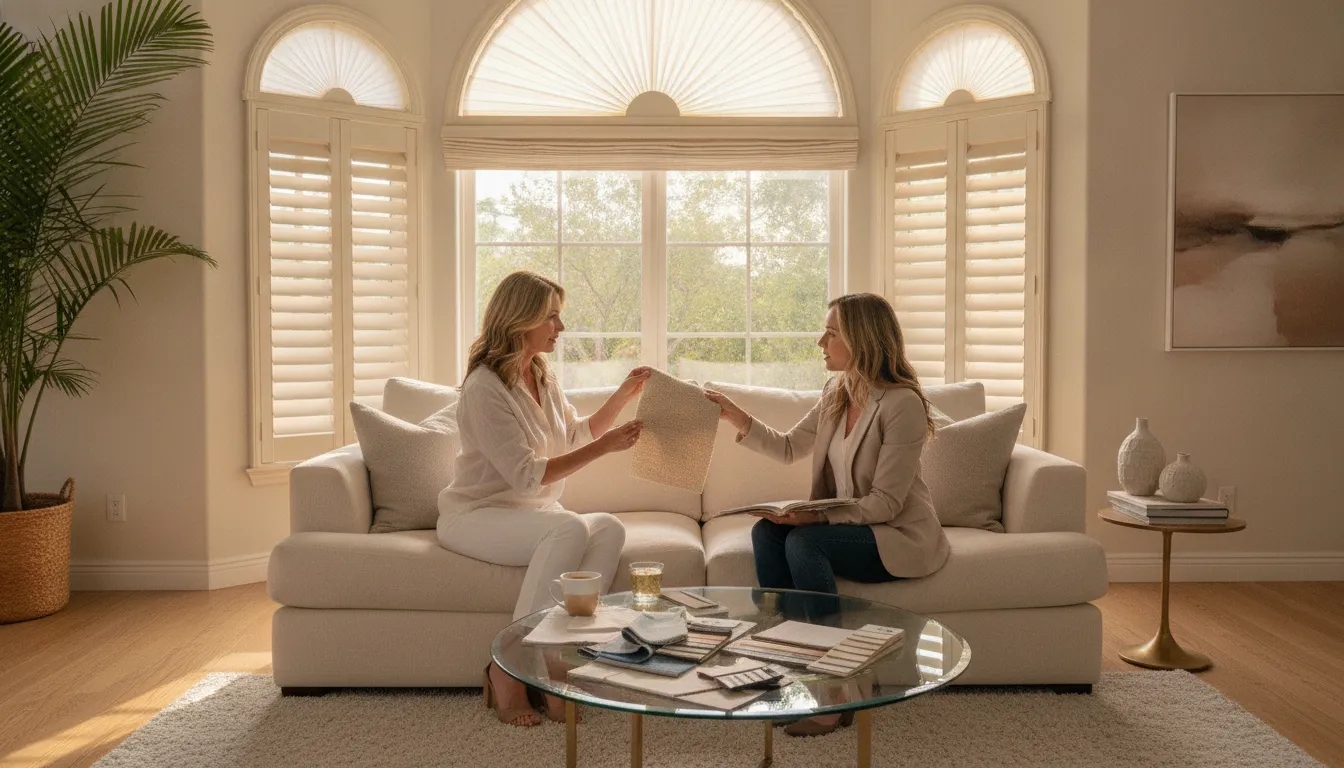
It is hard to choose materials from a small sample in a giant retail store. Colors and textures look different depending on the light in your room. This is why our mobile showroom is a great way to start your search. We bring the store to you so you can see how different blinds, shades, and shutters look next to your walls and furniture. Our expert team will help you walk through your custom needs right in your own living room.
Best Window Treatments for Every Room in Your New Home
Moving into a new home is exciting, but empty windows can quickly make you feel exposed. Each room in your house serves a unique purpose and has its own lighting needs. To build a complete long-term value window treatments plan, you must choose styles that match the specific function of every space.
Living Rooms: Light Control and Style
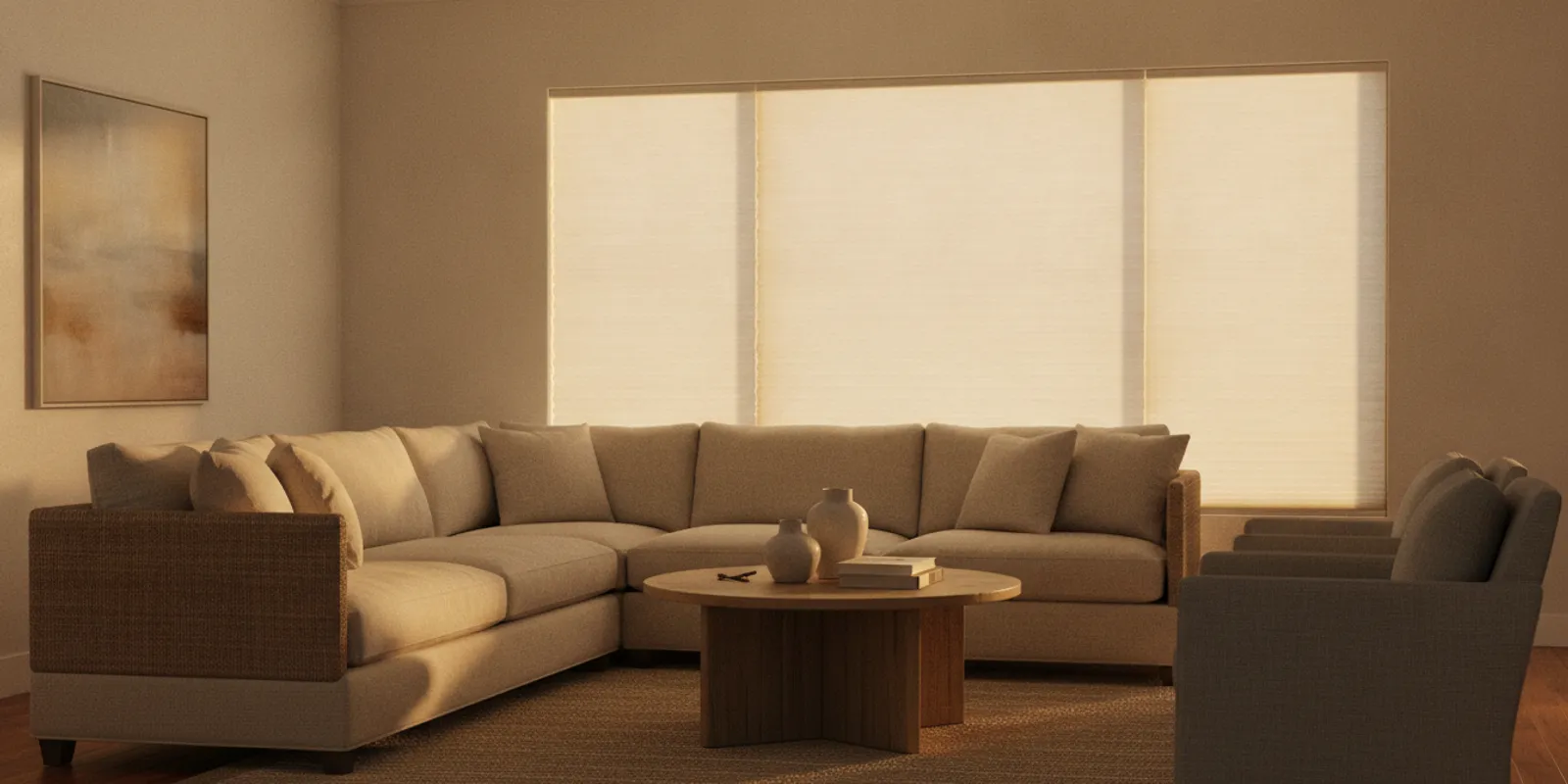
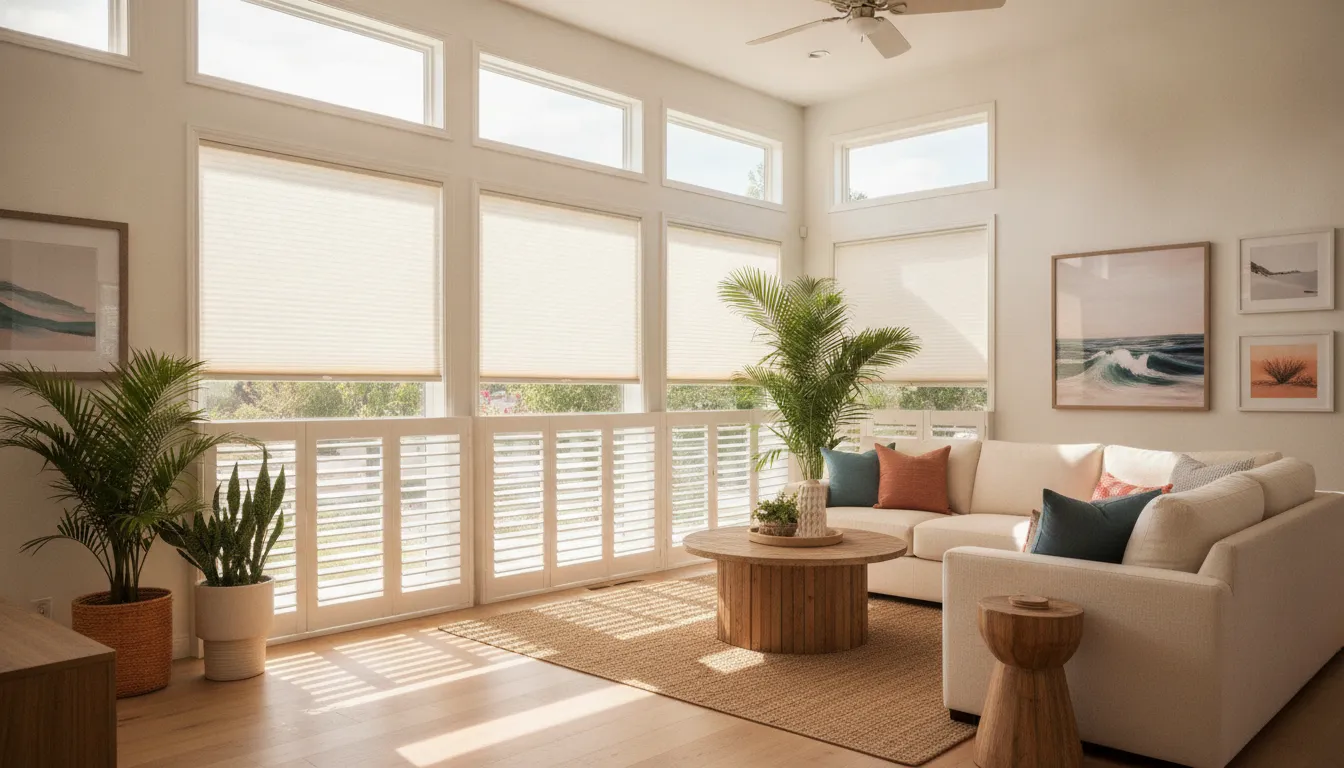
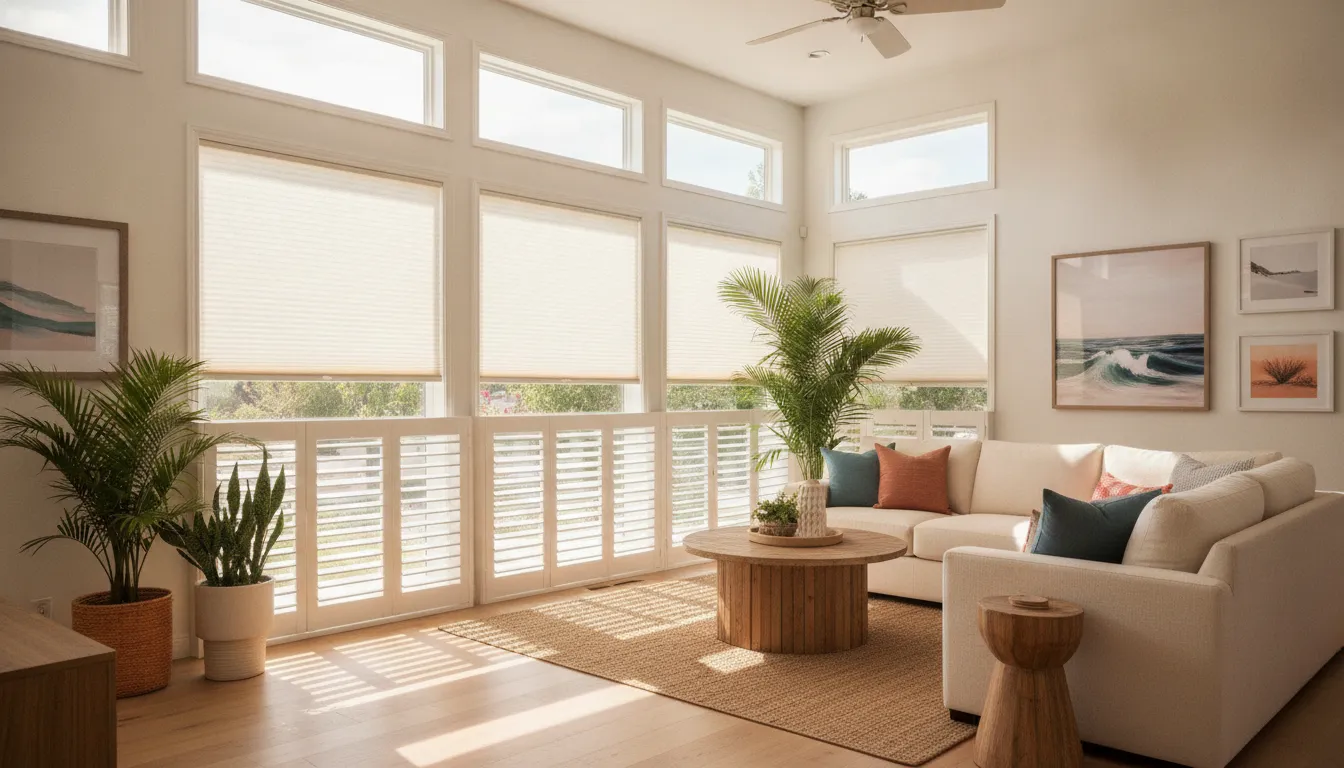
The living room is where your family gathers and hosts guests. You need a setup that offers privacy but still lets in beautiful Southern California sunshine. For these wide windows, consider elegant plantation shutters or flexible sheer shades. If you want to keep up with modern home designs, look at trending window treatment styles for 2026 to find a look that fits your aesthetic. Selecting the right window treatments for your new home should always balance your visual taste with daily privacy needs.
Bedrooms: Sleep Quality and Safety
In bedrooms, sleep and safety are the top priorities. Blackout cellular shades are a great option because they block light and insulate the room. When choosing covers for kid rooms, safety must come first. According to the U.S. Consumer Product Safety Commission, cordless window coverings are the only option to completely eliminate the danger of strangulation for young children. You should also move all cribs and beds away from any corded window treatments to keep your little ones safe.
Kitchens and Bathrooms: Moisture Resistance
High humidity and splashes can ruin real wood blinds and soft fabrics in kitchens and bathrooms. Faux wood blinds are an excellent choice for these wet areas because they do not warp, crack, or peel when wet. For bathrooms, durable Polycore shutters offer complete privacy while resisting water and steam. These synthetic materials are easy to clean and maintain, making them ideal for the high-moisture rooms on your new home checklist.
Home Offices: Glare Reduction
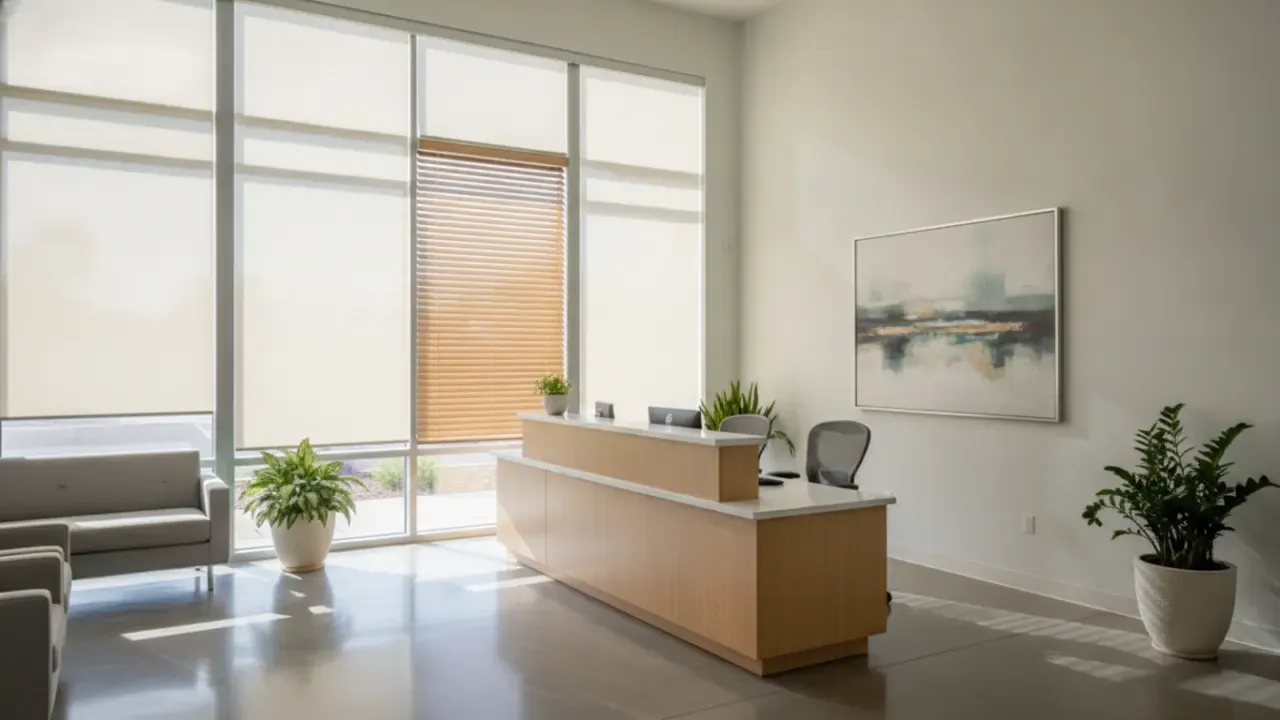
Working from home requires precise light control to prevent screen glare. Solar shades block harsh sunlight while keeping your view of the outdoors. You can also choose adjustable horizontal blinds to direct light away from your computer screen throughout the day. Getting the right window treatments for your new home office will help you stay comfortable and productive during your work hours.
Blinds vs Shades vs Shutters: What Is the Difference?
When choosing a window treatment checklist for new home setups, you must know the difference between the three main styles. Each type has its own strengths for light control, price, and energy use. A proper comparison helps you make the right choice for your specific needs, budget, and lifestyle.
Custom Blinds for Classic Control
Traditional window blinds have hard, horizontal or vertical slats. You can tilt these slats to let light in while keeping your privacy. Material choices like faux wood are popular because they resist moisture in wet rooms like kitchens and bathrooms. If you want classic style on a budget, custom blinds are an excellent starting point for your new home.
Custom Shades for Energy Savings
Shades are made of continuous fabric panels that roll or fold up and down. They do not have slats, which means they offer clean lines and excellent glare control. According to the U.S. Department of Energy, window attachments can significantly reduce glare and improve comfort in a home. For example, cellular shades trap air in honeycomb cells, making them the best option for keeping your home cool under the California sun. If energy savings are your goal, choosing custom shades is your best path.
Custom Shutters for Permanent Value
Shutters are premium, permanent window fittings. Unlike blinds or shades, they attach directly to the window frame with hinges. Plantation shutters, especially those made from Polycore, provide great durability and style. They do not warp, crack, or fade, making them a top long-term investment. Selecting custom plantation shutters adds real value and curb appeal to your new property.
Comparing Your Options
Here is a quick checklist to help you decide which window treatment fits each room in your new home:
- Living rooms: Plantation shutters or sheer shades for style and light control
- Bedrooms: Blackout cellular shades for sleep quality and privacy
- Kitchens and bathrooms: Faux wood blinds or Polycore shutters for moisture resistance
- Home offices: Solar shades or adjustable blinds for glare reduction
- Nurseries and kid rooms: Cordless cellular shades for child safety
To help you decide, we have compared these three main types. Use this comparison to see which style fits your room-by-room needs best.
| Type | Best For | Light Control | Energy Efficiency | Price Range |
|---|---|---|---|---|
| Blinds | Moisture resistance and low budgets | Excellent (adjustable slats) | Moderate | Budget-Friendly |
| Shades | Glare reduction and insulation | Good (full open or closed) | High (especially cellular) | Moderate |
| Shutters | Durability and home value | Excellent (adjustable louvers) | High (tight frame seal) | Premium Investment |
No matter which option you prefer, a perfect fit is key. Professional measuring ensures your new window treatments look and perform beautifully from day one.
How to Measure Your Windows for Custom Treatments
Getting a perfect fit starts with precise details. If your numbers are off by even a fraction of an inch, your new coverings may rub against the frame or let in unwanted light. While Vineyard Blind & Shutter provides free professional measuring as part of our service, you can use this simple guide to draft your initial plan. Using a physical steel tape measure rather than a cloth one is the best way to get accurate numbers.
A Step-by-Step Guide for Homeowners
Whether you choose inside or outside mount options, you must log three separate numbers for each window. Standard windows are rarely perfectly square, so taking multiple readings ensures your custom blinds, shades, or shutters fit beautifully without catching on the frame. This guide forms a key part of any comprehensive window treatment checklist for new home projects.
- Measure width at three points: Run your steel tape measure across the top, middle, and bottom of the opening. Note the exact width for each spot, and use the narrowest measurement if you want an inside mount.
- Measure height at three points: Measure from the top of the opening down to the sill on the left, center, and right sides. Keep the longest height for an outside mount, or use the shortest height for an inside mount.
- Check frame depth for inside mount: Place your tape measure inside the window frame and read the distance to the glass. You will need enough room to clear the mounting brackets without hitting the window pane.
- Note any local obstructions: Check for window cranks, handles, locks, or trim that might block your shades. Note these on your layout sheet so your design expert can plan the right bracket spacing.
- Write down all measurements: Log all six width and height numbers clearly. Do not round your numbers up or down; write down the exact fraction to ensure a correct build.
Why Professional Measuring Prevents Costly Mistakes
Even a small error can ruin custom window coverings. If a DIY measurement is off by just one-eighth of a inch, a custom shade may not fit inside the casing, leaving you with a costly pile of scrap. This risk is especially high in Southern California homes, where settling over time can warp window frames. Our trained design experts take full responsibility for every measurement, ensuring a perfect fit with zero risk to your budget.
According to the U.S. Department of Energy, well-fitted window treatments can also significantly cut thermal loss. Our team visits your space in our mobile showroom to handle the measuring, show you materials in your own home lighting, and provide an exact price quote with a price match promise.
Energy-Efficient Window Treatments for California Homes
Selecting the right products for your new home is more than a style choice. It is a smart way to manage your indoor comfort and utility bills. High-performance coverings play a key role in keeping your home comfortable throughout the year. If you are building a new space or updating your current house, an energy-efficient thermal treatments approach should be on your window treatment checklist for new home projects.
Understand Your Solar Heat Load
Windows are the primary source of thermal transfer in residential spaces. According to the U.S. Department of Energy, about 30% of a home's heating energy is lost through windows. This loss forces your HVAC system to work much harder to keep your rooms warm.
The issue is even greater during hot Southern California summers. In the cooling season, about 76% of sunlight that falls on standard double-pane windows enters the home as heat. To combat this solar heat gain, you need treatments that block rays before they warm your living space.
Choose Insulating Materials and Styles
Different product types offer unique thermal benefits. Cellular shades, or honeycomb shades, feature a unique pocket design. These cells trap air next to the glass. This barrier acts as a strong layer of insulation to keep temperatures stable.
Solar shades are another excellent option for rooms with high sun exposure. These shades block harmful UV rays and harsh glare without blocking your outdoor views. For ultimate thermal performance, Polycore shutters offer thick, solid-state composite structures. These synthetic components provide great insulation and will not warp under the hot California sun.
When you shop for these products, check their certified performance ratings. Homeowners should look for window attachments certified by the Attachments Energy Rating Council (AERC) to ensure maximum energy savings and comfort.
Use Smart Seasonal Habits
Your window coverings can only save energy if you use them correctly. Research shows that 75% of residential window coverings remain in the same position every day, which reduces their thermal benefits. Adjusting your shades based on the time of day can lower your energy use.
In the winter, open your shades on sunny mornings to let the sun warm your rooms for free. Close them as soon as the sun goes down to lock that warmth inside. During hot summer days, keep your coverings fully closed. This simple step blocks solar heat gain and keeps your air conditioning costs down.
Child and Pet Safe Window Treatment Options for New Homes
When you move into a new house, safety is a top priority. Exposed cords on window coverings pose a serious strangulation hazard for young children and pets. This danger can happen in mere moments, even with an adult nearby. To build a secure space, your window treatment checklist for new home projects must focus on safety first.
Eliminate Cord Hazards with Cordless Shades
The U.S. Consumer Product Safety Commission (CPSC) states that going cordless is the safest option when young children are present. Cordless window coverings completely eliminate the hazard of strangulation. Cordless cellular shades are an excellent choice for bedrooms and playrooms. They have no pull cords, so they are easy to lift and lower with a simple touch. If you are shopping online, look for products that are described as cordless to ensure they meet modern safety standards.
Durable and Safe Polycore Shutters
For homes with active pets, you need options that resist scratches and wear. Custom plantation shutters made of Polycore are ideal for high-traffic rooms. These shutters have no cords at all, which keeps both dogs and cats safe. The tough composite material does not chip or warp when pets paw at the slats. This makes them a great way to add long-term value window treatments to your new living spaces.
Motorized Solutions for Tall Windows
Hard-to-reach windows can also be a safety challenge. Motorized shades and blinds remove cords while adding daily convenience. You can control these treatments with a remote or a phone app. If you have older coverings from a past home, keep safety dates in mind. The CPSC warns that most window blinds sold before November 2000 have inner cords that form dangerous loops. You should replace those older blinds right away rather than moving them into your new home.
Quick Safety Adjustments for Existing Cords
If you cannot replace your corded treatments immediately, you must take quick steps to protect your family. First, move all beds, cribs, and toys away from windows and cords. Keep pull cords short and place them out of reach. Cord stops should be within 1 to 2 inches from the head rail when the blind is lowered. You can also contact the Window Covering Safety Council at 800-506-4636 for free retrofit kits. For the best setup, a professional can help you choose and install the right safe options for every room.
Frequently Asked Questions
What should you consider before buying window treatments?
You should consider four main factors before you buy. First is light control, which changes how much sun enters a room. Second is privacy from neighbors. Third is energy efficiency to help lower power bills. Fourth is your budget. A good way to choose is to test samples in your actual home lighting to see how they look. This helps you avoid any guesswork.
Should I choose blinds or shades for a new home?
It depends on what each room needs. Custom blinds use slats that let you adjust light and privacy at the same time. Custom shades use solid fabric and are great for blocking out all light or keeping heat out of your home. You can mix both styles across different rooms in your new house to get the best of both worlds.
What are the best window treatments for energy efficiency?
Cellular shades are the best choice to save energy. According to the U.S. Department of Energy, about 30% of a home's heating energy is lost through windows. Cellular shades use a honeycomb design to trap air. This creates a strong barrier that keeps your home cooler in the summer and warmer in the winter.
How do you measure windows for blinds and shades?
To measure for an inside mount, you must find the exact width and height. Measure the width at the top, middle, and bottom of the frame. Then measure the height at the left, middle, and right. Use the smallest width and the largest height. If you want to avoid mistakes, you can get free professional measuring from our team.
Ready to Choose Your Perfect Custom Window Treatments?
Leaving your windows bare or using temporary paper shades can compromise your home privacy, drive up cooling bills, and ruin your interior design. Making the wrong choices on your own can also lead to costly fitting mistakes and frustrating returns. Let our team simplify the entire process so you can get the exact look and fit you want from day one.
Ready to schedule a free in-home consultation? Call Vineyard Blind & Shutter at (951) 757-4188 to book your appointment. Our mobile showroom brings hundreds of samples directly to your living room. Try the popular options before buying. Plus, we offer a price match guarantee and free professional measuring for a hassle-free experience. Call (951) 757-4188 today.