When comparing blackout roller shades vs blackout blinds, start with the room, the window, and the way you want to control light. A bedroom may need a consistent darkening surface, while a living room may benefit from adjustable privacy and daylight. Fit matters just as much as the product name.
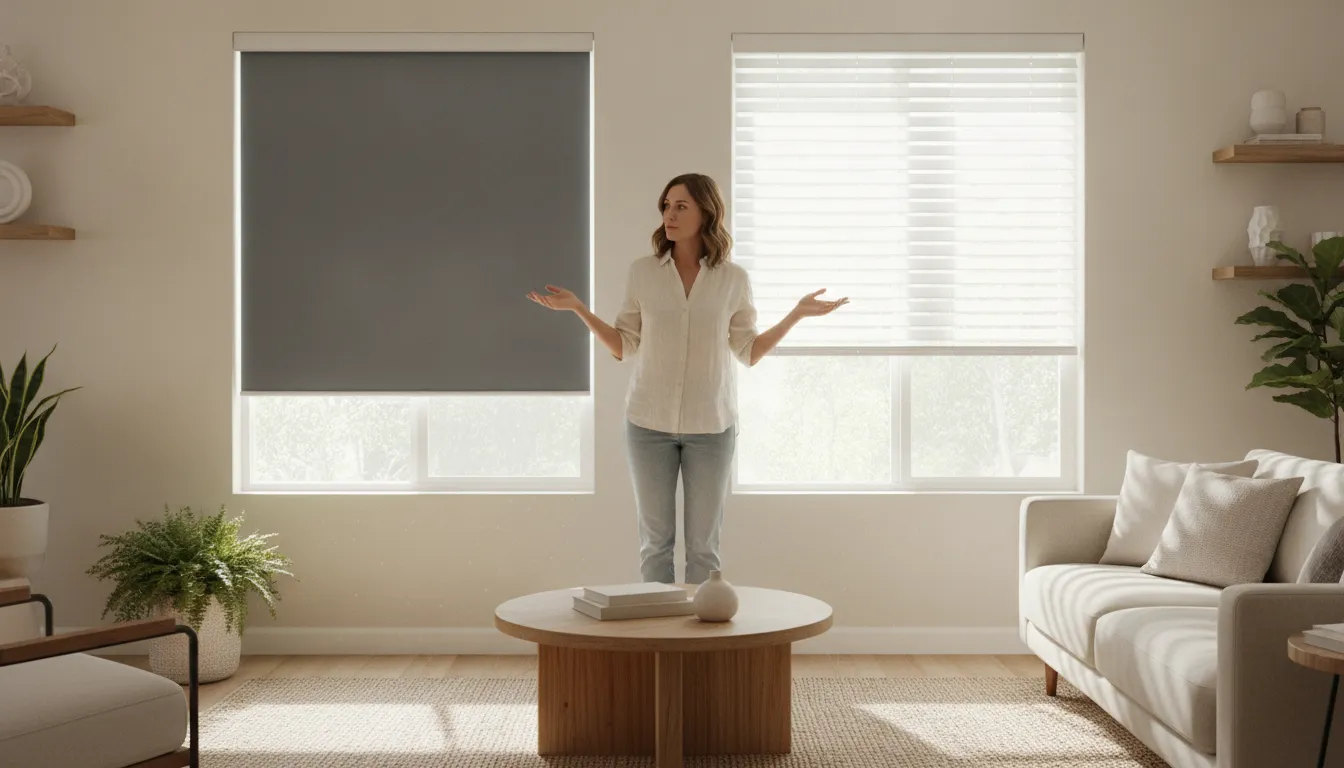
Roller shades use one continuous panel of opaque fabric for a simple, consistent appearance, while blinds use adjustable slats that can fine-tune light and privacy. Neither option automatically eliminates every beam of sunlight. Mounting, measurement, window shape, and edge gaps all affect the result.
Call Vineyard Blind & Shutter at (951) 757-4188 for a free in-home consultation.
Understanding the construction of each option makes the comparison easier. From fabric opacity and slat position to room purpose and installation. The details below can help you choose a custom treatment that fits your home instead of forcing every window into the same solution.
What is the difference between blackout roller shades and blackout blinds?
The biggest difference is how each window covering controls light. A blackout roller shade uses one continuous panel of fabric that rolls around a tube. When lowered, the panel presents a mostly uninterrupted surface across the glass. Blackout fabric is designed to block light through the material. Light can still enter at the edges, depending on the window, mount, hardware, and measurement.
Blackout blinds use individual horizontal or vertical slats instead of one solid panel. The slats may be made from faux wood, natural wood, or other blind materials. Their angle can be adjusted to direct daylight, reduce glare, or increase privacy. However, not every blind is made to block light completely. Slat spacing and gaps between slats can affect the result even when the blind is closed.
Construction and appearance
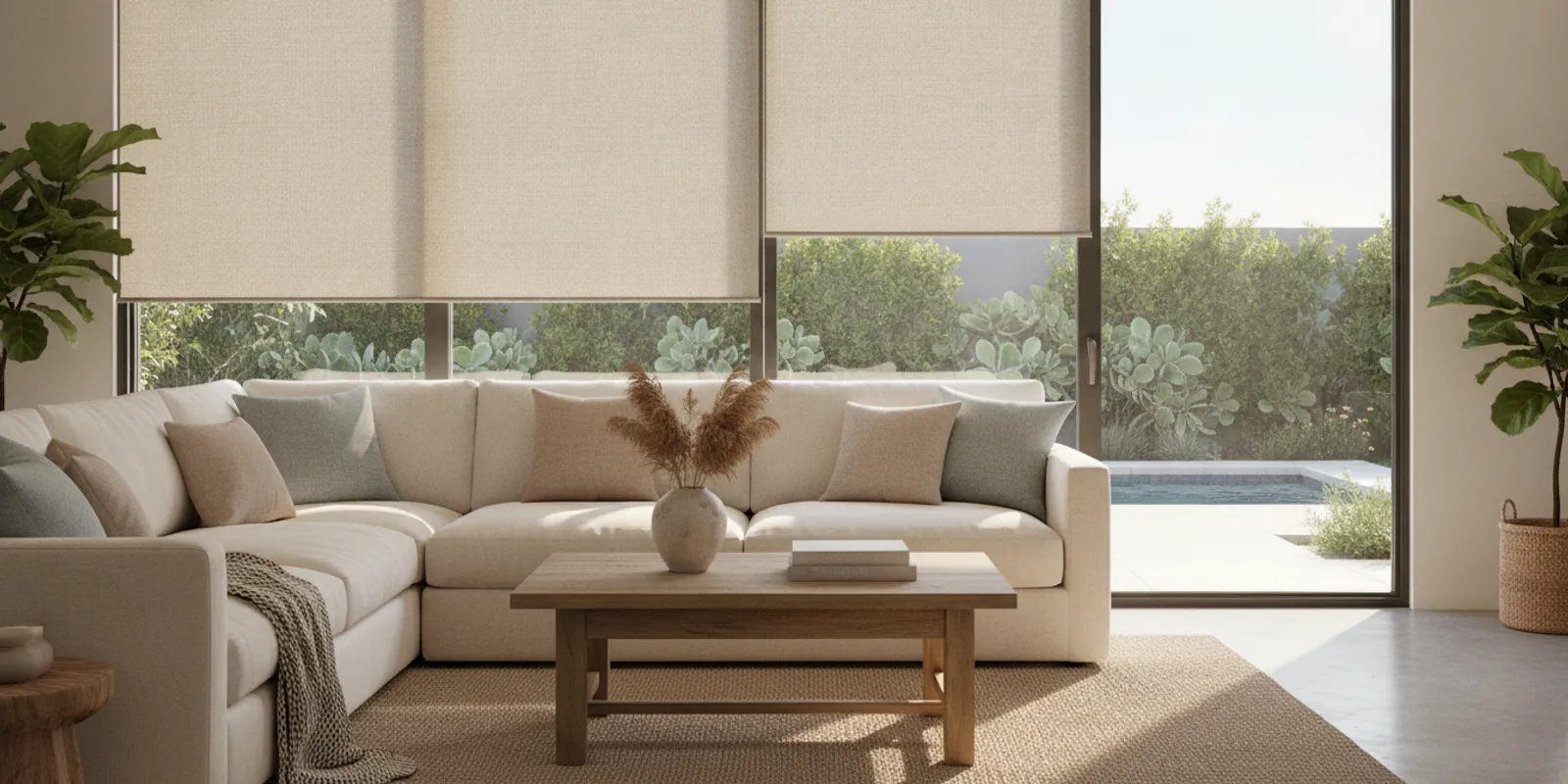
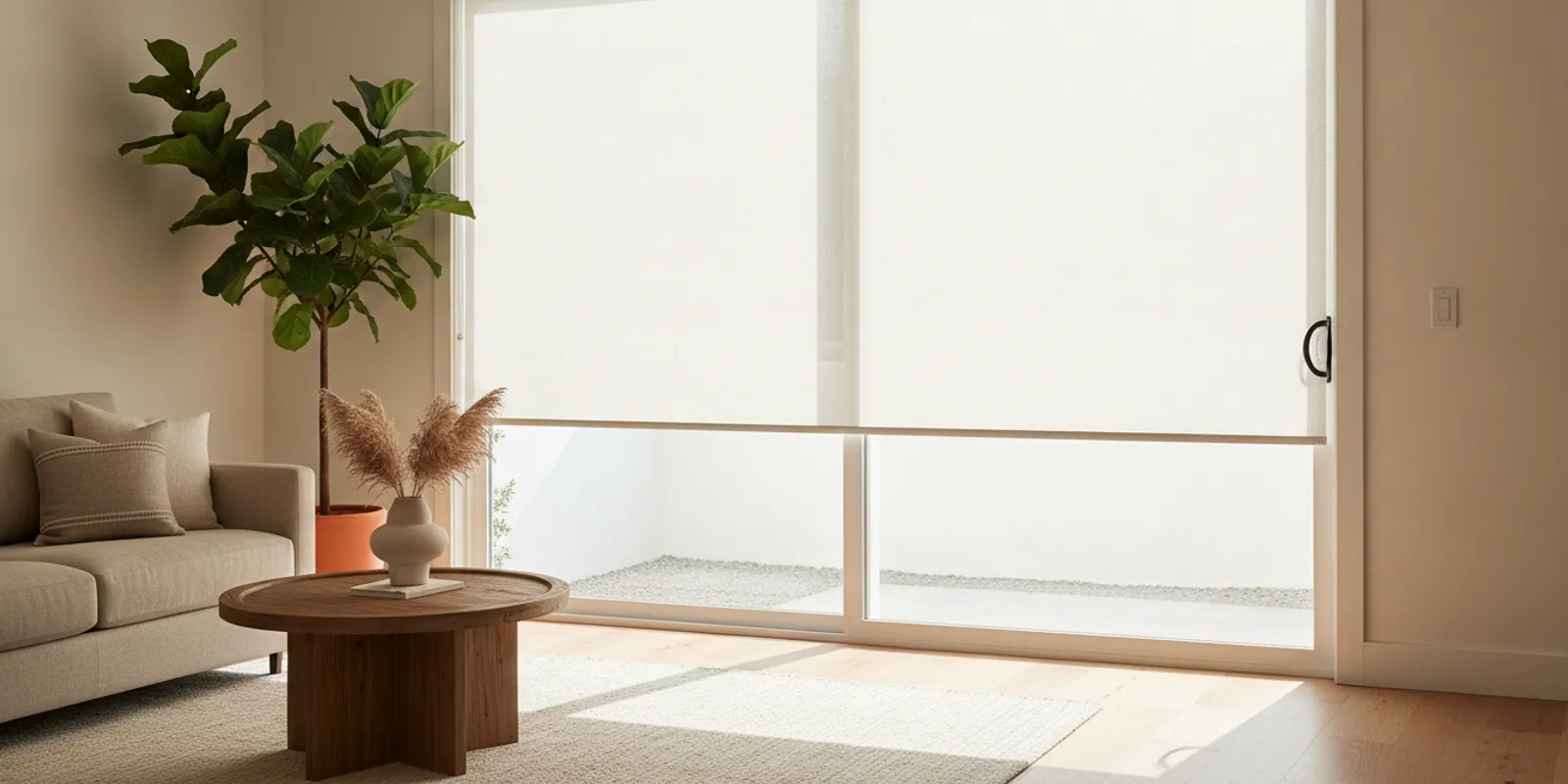
Roller shades have a clean, simple profile. The fabric may sit inside the window opening or extend over it, depending on the mounting choice. This makes them a natural fit for bedrooms, media rooms, and spaces where a broad, even light-blocking surface is the priority. You can review custom window shades as part of a wider comparison.
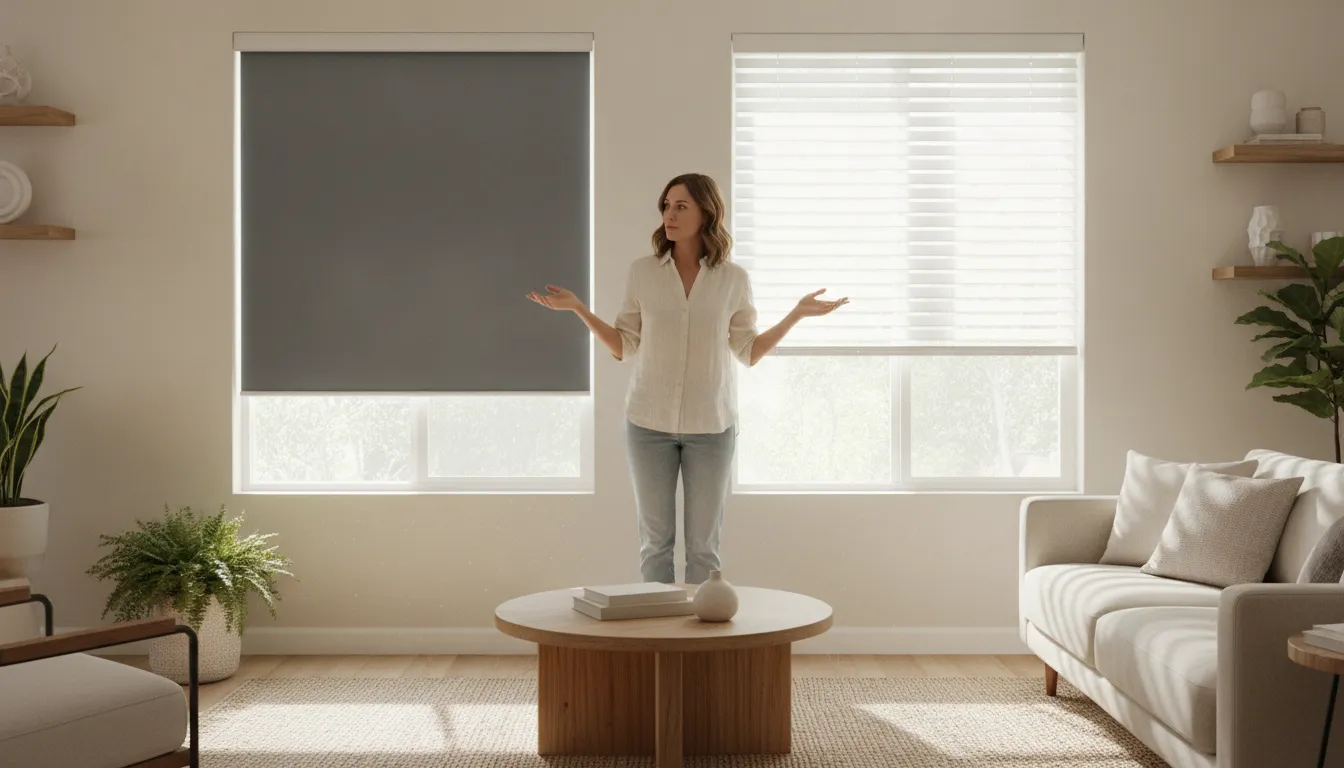
Blinds create a more structured appearance because the slats, headrail, and control system remain visible. That construction gives you more day-to-day control over the direction of light. You can tilt the slats rather than raising the entire covering when privacy and some daylight need to coexist. For custom sizing and material choices, explore custom blinds in Southern California.
Privacy, cleaning, and operation
A lowered roller shade offers a consistent privacy surface, but its effectiveness still depends on coverage around the window. A blind can offer flexible privacy through its slat position, although angled slats may leave limited sightlines from certain directions. Roller-shade fabric generally calls for gentle dusting or careful spot cleaning. Blinds can be dusted slat by slat, which may take more time across a large window.
Both products can be operated manually, and cordless options are available. Motorized operation may be useful for hard-to-reach windows or rooms with several coverings. The right choice depends on whether you value a continuous blackout panel, adjustable slats, easy operation, or a particular interior style.
Which option blocks more light and controls privacy?
Both blackout roller shades and blinds can improve darkness and privacy, but they do it differently. A roller shade uses one continuous panel, so its fabric can block light across the main glass area. Blackout fabric does not automatically eliminate every bright line around the window. Side gaps depend on the window shape, mount, hardware, and measurement.
| Consideration | Blackout roller shades | Blackout blinds |
|---|---|---|
| Material opacity | One continuous panel can use blackout fabric that blocks light through the material. | Slats may offer strong light control, but not every blind is blackout. Materials and construction vary. |
| Side gaps | Light can enter at the sides or top, especially with an inside mount or uneven opening. | Light can enter between the blind and frame, as well as through slat edges and other gaps. |
| Privacy | Closed fabric provides consistent coverage, though fit and edge coverage still matter. | Closed slats provide privacy, and slat position can balance privacy with outside light. |
| Glare control | Fully lowered fabric can reduce direct glare when coverage is appropriate. | Slat angle lets you redirect or limit incoming light without fully raising the covering. |
| Room use | Often suits bedrooms, nurseries, and media rooms where simple darkening is useful. | Often suits rooms where adjustable daylight and privacy matter throughout the day. |
For a bedroom, a properly fitted blackout roller shade may create a cleaner, more uniform darkening effect across the glass. For a living room or office, adjustable slats may be more useful when you want privacy without giving up all daylight. These are starting points, not guarantees. A close-fitting blind can perform better than a poorly fitted shade, while a roller shade with side coverage can outperform a standard installation with visible gaps.
Fit and installation can matter as much as the category. Professional measuring helps account for trim, handles, uneven openings, and operating clearance. When comparing custom blinds in Southern California with custom window shades, evaluate the window, room purpose, and times of day when glare or privacy matter most.
Are blackout roller shades or blinds better for bedrooms and media rooms?
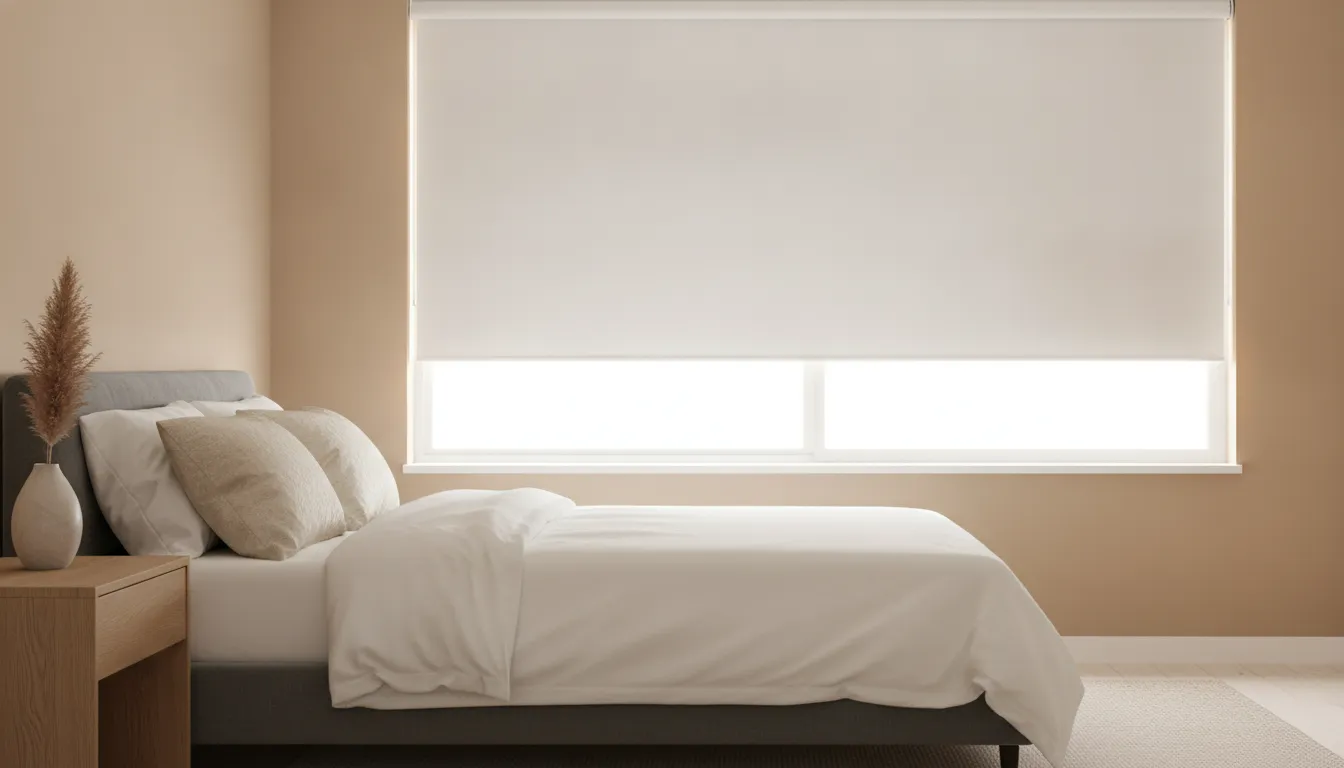
For bedrooms, nurseries, and media rooms, blackout roller shades are often the simpler choice when the main goal is a clean, consistent layer of darkness. Their continuous fabric covers the window in one panel, so there are no slats to angle or adjust. The result still depends on accurate measurement, the mount, and gaps around the window.
Bedrooms and nurseries
A blackout roller shade can help reduce unwanted daylight for children who nap, people with early bedtimes, or night-shift workers sleeping during the day. It can also provide privacy without requiring the homeowner to reposition slats. If a bedroom has strong morning or afternoon sun, window orientation and side gaps deserve as much attention as the fabric.
For a nursery or child's room, cordless operation is worth considering. Removing a looped operating cord can reduce a potential hazard, but the product should still be installed and used according to the manufacturer's instructions. Motorized shades are another option when a window is difficult to reach or a parent wants to adjust coverings without walking across the room.
Media rooms, living rooms, and offices
Media rooms usually benefit from predictable glare control. A blackout roller shade can reduce distracting light on a screen, although reflected light from other windows, lamps, and walls may still affect viewing. A close-fitting installation helps, but the best configuration depends on the room and window design.
In living rooms and offices, blinds may offer more flexibility when you want daylight at one time and privacy at another. Adjustable slats can direct light upward, downward, or away from a workspace without fully raising the covering. That control may matter more than maximum darkness in a room used throughout the day.
The practical answer to blackout roller shades vs blackout blinds is room-specific. Choose continuous blackout fabric for steady darkness and a streamlined look. Consider blinds when adjustable daylight, slat control, or a structured appearance is the priority. Vineyard's custom window shades can be reviewed alongside blind options in actual room lighting.
How do mounting and measuring affect the result?
The same shade or blind can look and perform differently depending on how it is mounted. An inside mount sits within the window opening and gives the treatment a clean, built-in appearance. It can work when the opening is deep enough and the sill, trim, or handle will not interfere. An outside mount sits on the wall or window trim around the opening. It can provide more flexibility when the recess is shallow, trim is decorative, or the opening is not perfectly square.
Neither mounting style is automatically better. Inside mounts can leave small areas of visible light at the sides because the covering must fit within the opening. Outside mounts may cover more of the surrounding area, but the installer must account for trim, nearby walls, handles, and space for the headrail or roller mechanism.
What should be checked before measuring?
Details that seem minor can affect daily use. A protruding handle may keep a shade from sitting flat. Thick casing can limit an inside mount. An uneven opening may require measurements at multiple points. With blinds, slat position and tilt-control clearance matter. With roller shades, fabric, brackets, and roll direction need to work with the window and surrounding obstructions.
Fit also affects light control. Blackout material blocks light through the fabric, but light can still enter through side gaps or around the top when the treatment does not cover the opening appropriately. Careful measuring and a mounting plan help match coverage to the shape of the window.
Why use professional measuring and installation?
Professional measuring adds a second set of eyes to practical details, including uneven openings, trim, handles, and adjoining windows. During an in-home consultation, samples can also be viewed in the room's actual lighting and decor. Vineyard Blind & Shutter provides measuring, design, and installation as part of its custom service.
Installation puts that plan into practice, with attention to level placement, hardware clearance, and consistent alignment across nearby windows. The goal is not simply to cover the glass. It is to create a treatment that operates smoothly, suits the room, and provides realistic privacy and light control.
How should Southern California homeowners choose?
Start with the room and the direction of the window, rather than choosing between product names alone. A west-facing window may bring strong afternoon sun, heat, and glare, while a bedroom may prioritize darkness and privacy. Blackout fabric can block light through the material, but the final result also depends on the mount, window shape, hardware, and side gaps.
For a bedroom, nursery, or media room, a blackout roller shade may be the most direct choice when a clean, continuous panel suits the space. In a living room or home office, solar or light-filtering fabrics may be more practical when you want to reduce glare while keeping some daylight. Review the available custom window shades with the room's lighting and daily use in mind.
Style and maintenance matter, too. Roller shades offer a simple, streamlined appearance and a fabric surface that is generally easy to dust. Blinds bring adjustable slats, which can help fine-tune privacy and daylight, along with a more structured look. Consider handles, trim, cordless operation, and whether motorization would make the treatment easier for your household.
Samples are useful in Southern California, where bright outdoor light can change how a fabric, color, or slat finish looks throughout the day. Vineyard Blind & Shutter brings a mobile showroom from its Wildomar base to your home, so you can compare options in the actual room. The free in-home consultation includes professional measuring and installation planning.
Vineyard serves homeowners in San Diego County, Riverside County, and Orange County. See the areas we serve and read this blackout roller shade guide for more selection context. The right choice matches your window's sun exposure, preferred room lighting, and household needs.
Frequently Asked Questions
Are roller shades better than blinds?
Neither is best for every room. Blackout roller shades provide a smooth, continuous fabric panel with a clean appearance. Blinds use adjustable slats, which let you fine-tune daylight, privacy, and outward visibility. Choose roller shades when consistent darkening and a simple look matter most. Choose blinds when adjustable light direction and slat control are more useful.
Can you see through blackout roller shades?
When the shade is fully lowered, blackout fabric is designed to block visibility through the material. Light can still appear around the edges if the shade, window, or mounting position leaves gaps. Accurate measurement and the right mount help reduce those gaps.
Are blackout roller shades worth it?
They can be worthwhile in bedrooms, nurseries, media rooms, and other spaces where darkness and glare control improve comfort. The value depends on the room, window size, installation, and how much you use the space. Consistent coverage may be useful when early morning light or screen glare is a recurring problem.
What are the disadvantages of blackout shades?
Blackout shades can limit natural light and outside views whenever they are closed. They may also leave side gaps if the window shape or mounting method is not suited to the opening. Fabric shades require careful handling and cleaning, while some homeowners prefer the adjustable slats and traditional appearance of blinds.
How do I choose the right option for my windows?
Consider room purpose, sun exposure, privacy, window trim, handles, and whether you want cordless or motorized operation. Professional measuring can reveal clearance or mounting issues before installation. Comparing both options in your home makes it easier to judge fabric opacity, slat control, and edge coverage in your actual light.
Schedule a Better-Fitting Blackout Solution
The right choice depends on your room, window shape, preferred style, and how much light control you need. A home consultation can help you compare blackout roller shades and blinds in the spaces where they will be installed, while accounting for mounting and light gaps.
Call Vineyard Blind & Shutter at (951) 757-4188 to schedule a free in-home consultation.
You can also schedule an in-home consultation online to discuss the windows, room use, and operating style that matter most to you.