Q: How do cellular shades vs plantation shutters differ? A: Cellular shades use fabric cells that trap air and stack out of the way. Plantation shutters use a frame and tilting louvers that stay on the window.
Homeowners in Temecula, Murrieta, and Wildomar often narrow the window covering options to these two treatments. One softens the glass and can nearly vanish when you raise it. The other reads like interior trim and stays on the opening. The better choice depends on the room, the sun exposure, and how you want to live with that window each day.
Call Vineyard Blind & Shutter at (951) 757-4188 for a free in-home consultation.
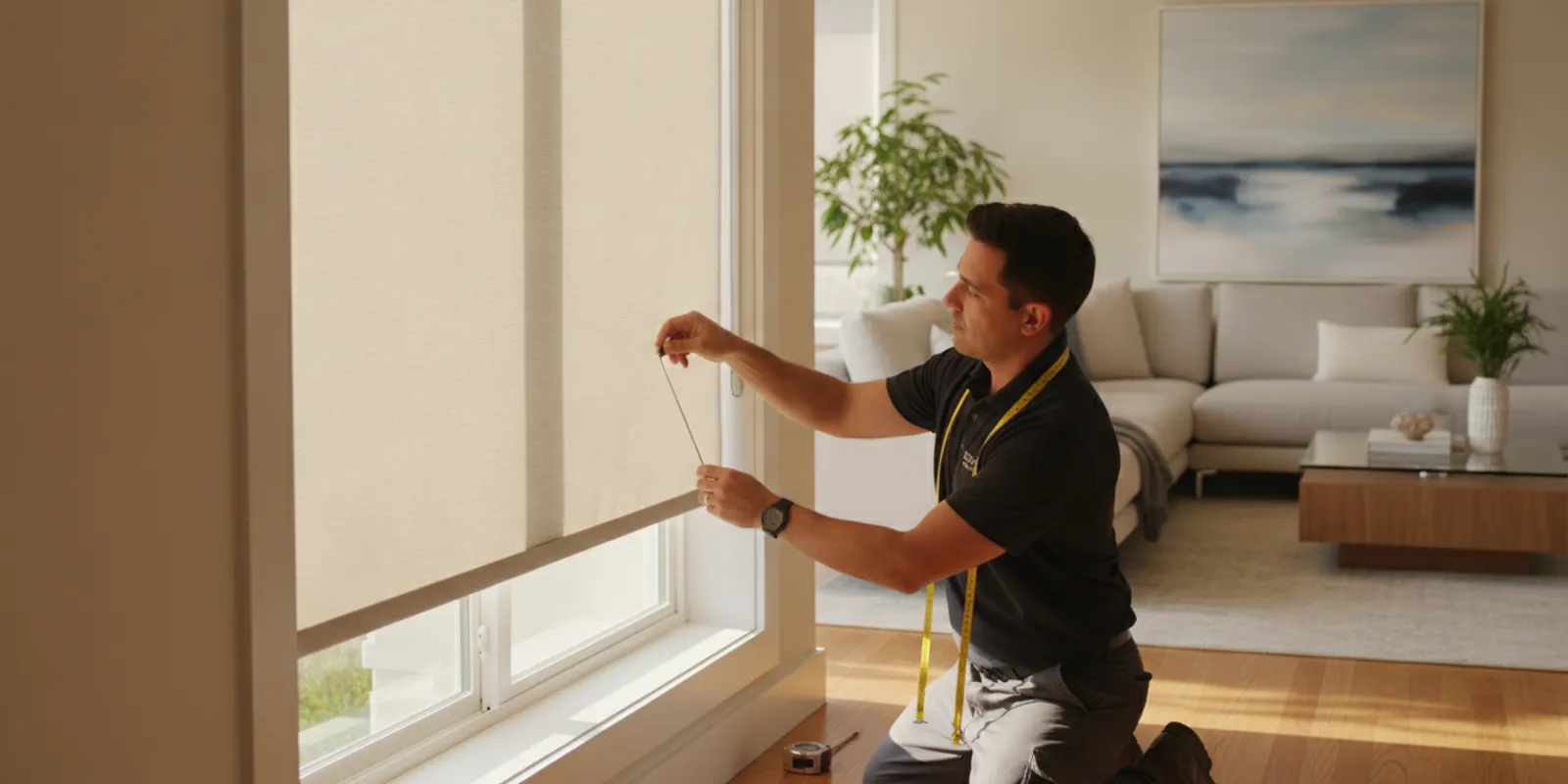
Vineyard Blind & Shutter is a veteran-owned, family-operated shop based in Wildomar. Matthew Gandy started the company after serving in the Marine Corps. Since 2005, the team has brought a mobile showroom to homes across San Diego, Riverside, and Orange counties. You compare samples in your own light, then we measure and install at no extra charge.
How Do Cellular Shades vs Plantation Shutters Work?
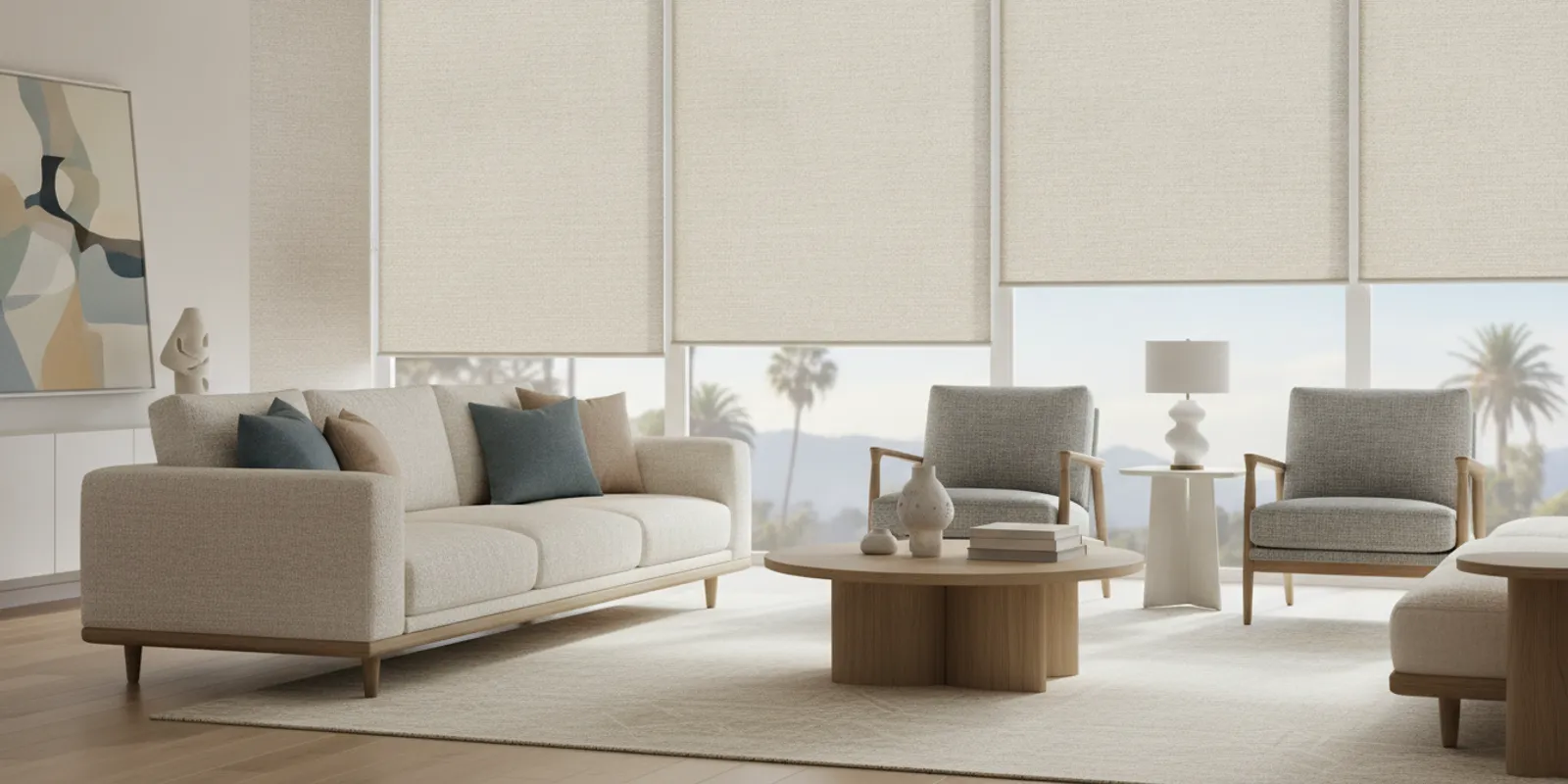
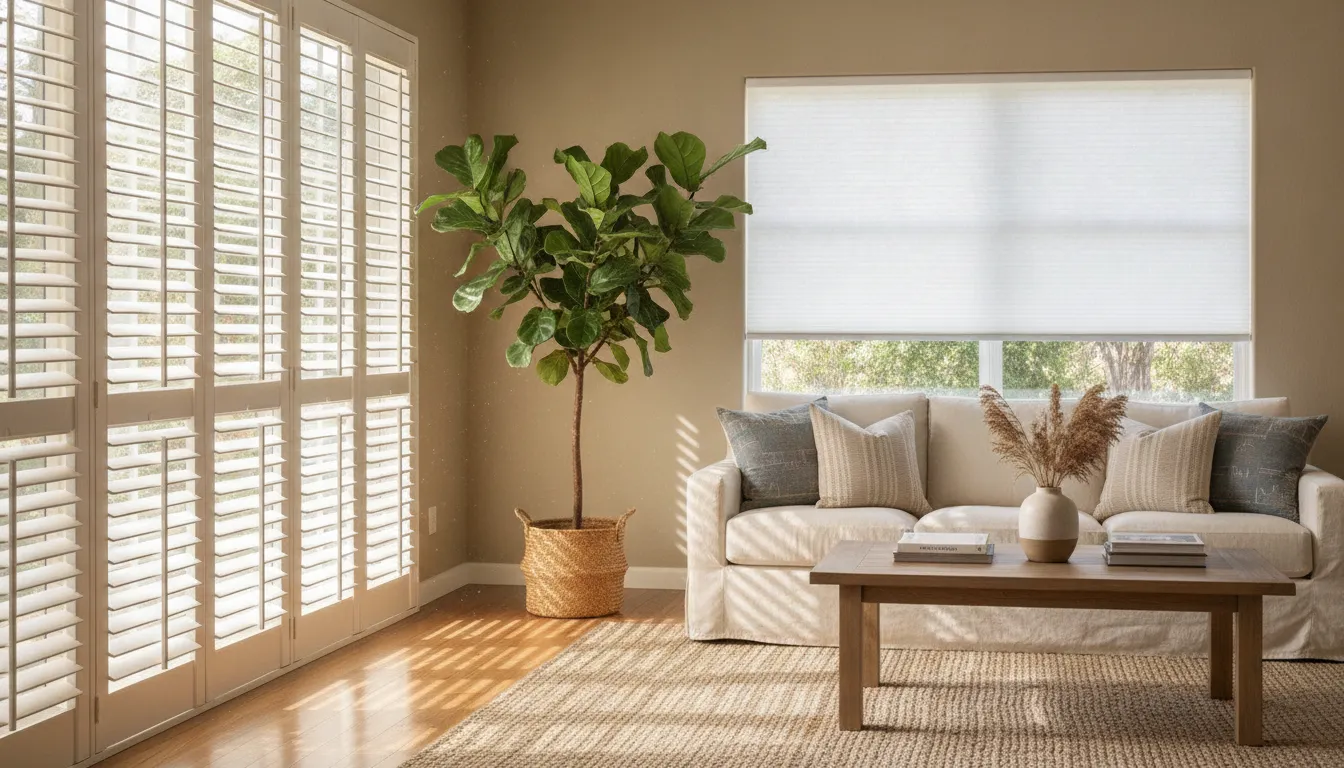
Cellular shades, also called honeycomb shades, are fabric folded into single or double cells. Those pockets hold a layer of still air against the glass. You raise the shade when you want the view, and you lower it when you want privacy. Light-filtering fabric softens glare without turning the room into a cave. Blackout fabric blocks far more of the daylight. A top-down, bottom-up lift covers the street while sky light still enters from the top.
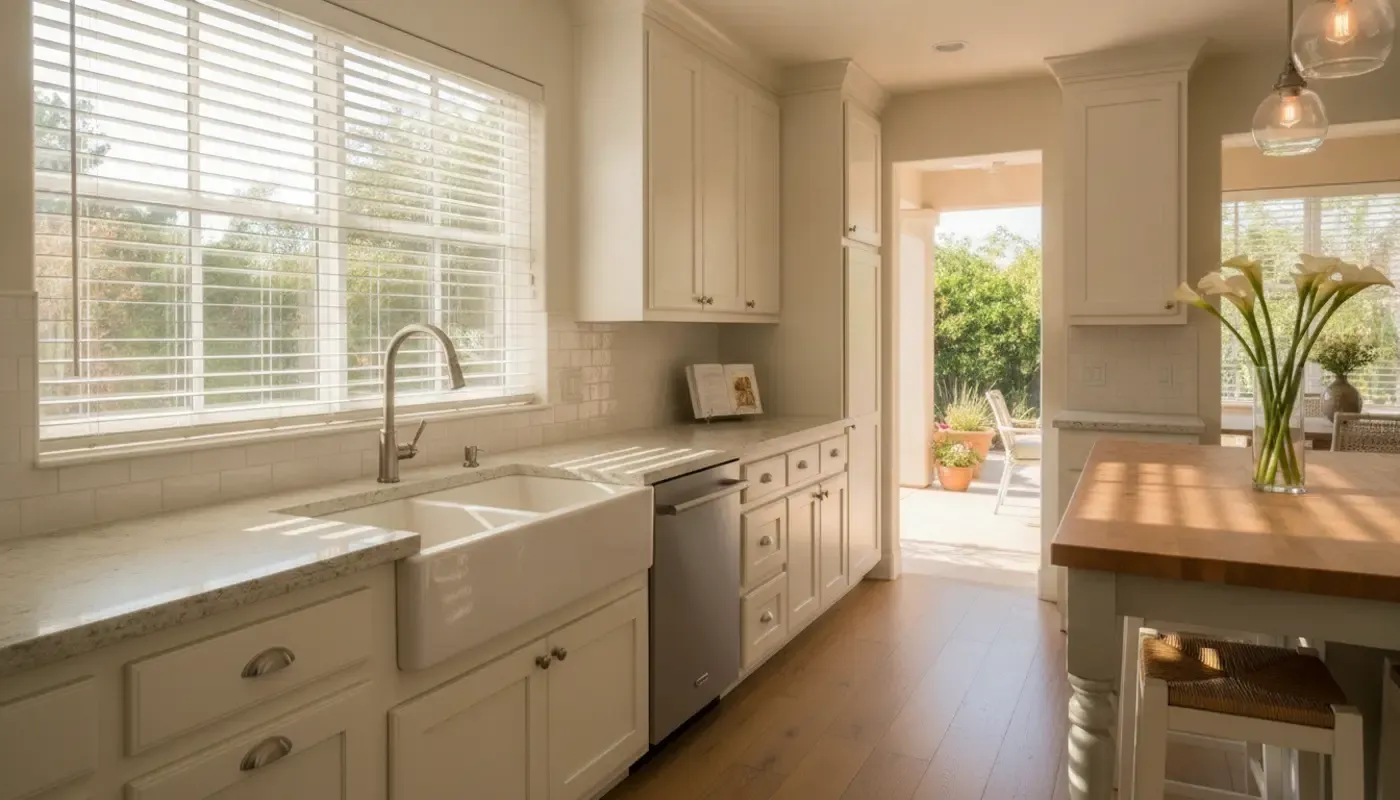
Plantation shutters are hinged panels in a frame. Wide louvers tilt to aim daylight and close for privacy. A divider rail lets the lower half stay closed while the upper half stays open. Common louver sizes are 2.5, 3.5, and 4.5 inches. Wider louvers feel more open. Narrower ones give tighter privacy on a busy street.
The daily habit is the real split between these two treatments. With cellular shades, you lift or lower one fabric panel. With plantation shutters, you tilt the louvers or swing a panel open. Both products are custom cut for the opening. Neither one is a one-size blind pulled from a big-box aisle.
Inside mount and outside mount both exist for plantation shutters, and the depth of the opening decides which one fits. An inside mount sits inside the frame and looks built into the wall. An outside mount covers the trim when the opening is shallow or out of square. Cellular shades usually sit inside the opening or just above it, and the fabric stacks into a small headrail. A fully raised shade shows more glass than an open shutter, because the shutter frame stays on the wall.
Hidden tilt and a traditional tilt rod are both normal on plantation shutters. The hidden tilt keeps the louver face cleaner, while the rod is easier to find and grab. On cellular shades, the operating choice is a cordless lift, a motor, or an older corded lift. In homes with children, we steer the order toward cordless. Fabric opacity is a separate line from the lift, so you can order light-filtering cordless shades or blackout cordless shades.
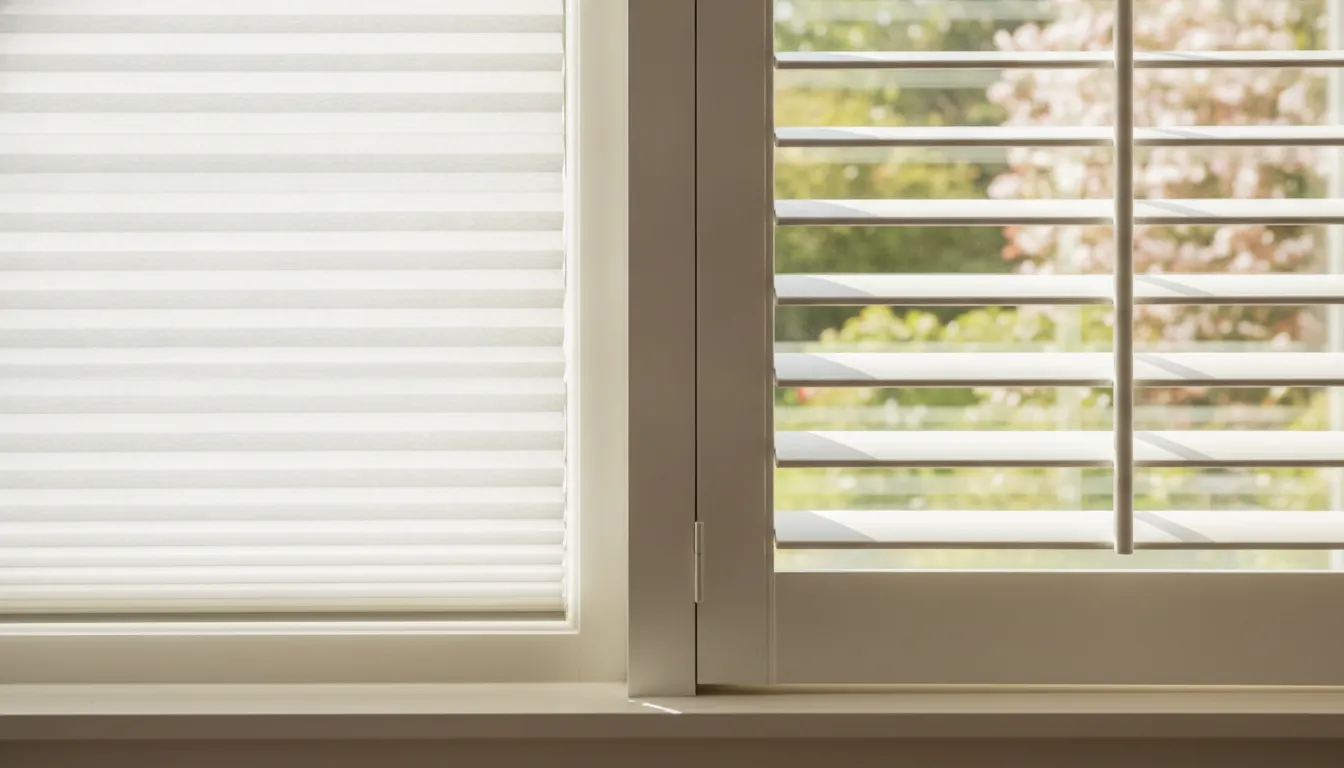
Which Option Insulates a Southern California Window?
Cellular shades are the fabric choice built for insulation. Double-cell shades add more trapped air than single-cell shades. The U.S. Department of Energy's Building Technologies Office notes that cellular shades can cut heat loss through windows and help with summer heat gain. Read the DOE cellular shades fact sheet before you treat any shade as a heater or an air conditioner.
Closed plantation shutters also add a layer in front of the glass. Wood, composite, and polycore panels slow some heat transfer when the louvers are shut. They are not a measured insulation product in the same way honeycomb cells are. Do not read a comfort gain as a guaranteed drop in your power bill, because the glass, the exposure, and how often you close the covering all matter more than a marketing slogan.
Inland Riverside County afternoons hit west-facing windows hard, and a light-filtering cellular shade is there to cut glare rather than to "block heat" the way a blackout or double-cell shade might help. Keep those two jobs separate. If the only question is summer heat, our guide on whether cellular shades are good for blocking heat stays on that single topic.
Coastal San Diego rooms and hotter inland rooms can want different cells on the same floor plan. We look at the glass, not a county average. A north window in Orange County may only need light control, while a west slider in Menifee may need a darker, tighter shade. The county name does not pick the product, because the exposure does.
Side tracks on a cellular shade close the gap at the edges, which helps with light leaks and with air moving around the fabric, and they also make the shade feel more fixed. Shutters already have a frame, so the edge gap is smaller, but the louvers themselves still leak light. If you open the louvers at dusk, you only get that extra layer for part of the day, and a shade left down on a hot afternoon only helps while it stays down.
How Do Light and Privacy Compare?
Plantation shutters win when you want to tune the light without covering the whole window. Tilt the louvers and you still see greenery outside. Close them and the room feels private, though a thin line of light can show along the louver edges. They are a poor pick if the room must go fully dark for sleep or for a projector.
Cellular shades win when the goal is a dark bedroom, a nursery, or a media room, because blackout fabric with side channels leaves less glow than closed louvers. Light-filtering fabric is the better daytime choice for a kitchen or a home office. A top-down, bottom-up lift is useful on a first-floor bath or on a street-facing bedroom where you still want sky light.
- Living rooms that face a view: tilt louvers, or use light-filtering cells you can raise.
- Bedrooms that need darkness: blackout cellular shades.
- Street-level privacy with daylight: divider-rail shutters or top-down cellular shades.
- Glare on a desk: either product works if you can close just that window.
If you are still weighing fabric styles, use that product menu and then come back to this choice. Shade-versus-shade questions, such as rollers or solar fabric, live on their own pages.
Privacy at night is a different test from privacy at noon, and both products can block a view from the sidewalk once they are fully closed. A light-filtering shade will still glow if a lamp is on behind it, and shutters with open louvers will show a slice of the room. If the window faces a walkway in Temecula, plan the closed position first, then decide how much daylight you still want during the day.
Noise is a smaller factor, but it comes up in bedrooms on busy streets, where honeycomb fabric can soften some outside sound because of the air pockets. Closed shutters add mass, which can dull a sharp noise, though neither product is a soundproof wall. If sleep is the goal, darkness and a tight edge matter more than a few decibels.
What Does Cleaning and Durability Look Like?
Plantation shutters are the lower-drama clean in day-to-day use. Dust the louvers, then wipe each one with a soft damp cloth. Polycore shutters from Sunland use a PVC body with an aluminum core running through the panel. They resist moisture, dents, and warping, which is why we often specify them in baths and kitchens. Stained wood looks rich and needs more care over time. Skip wood where steam regularly sits on the panel.
Cellular shades need a lighter hand: vacuum the face on low with a brush, and use compressed air if dust has settled inside the cells. Fabric can fade on a harsh west window over many years, but you can replace one shade later without redoing the whole house. Shutters are more often treated as part of the architecture, and they tend to stay in place through a remodel.
Cordless lifts matter in homes with kids or pets. The U.S. Consumer Product Safety Commission says cords on window coverings are a strangulation hazard, and cordless products remove that hazard. Their cordless window covering guidance is the safety baseline we follow. Both of these products can be ordered cordless.
Pets change the durability math, because a dog that noses the glass can crease a fabric shade, while louvers usually take a bump better, especially in polycore. A determined chewer can still scar any finish, and cats that sit in the sill tend to push a shade out of its tracks. If that is your house, say so during the measure, because we would rather change the product than pretend every home is the same.
Sun fade is the slower kind of wear, and inland afternoons in Winchester, Hemet, and Lake Elsinore can bleach fabric over a span of years. Painted shutters hold their color longer, and a light face on a cellular shade reflects more sun than a dark face. Dark colors absorb light and heat, while bright colors bounce more of it back, which is a color choice rather than a promise that the room will stay cool.
| Question | Cellular shades | Plantation shutters |
|---|---|---|
| Insulation. | Fabric cells trap air. | A panel sits on the glass. |
| Light. | Lift the shade, or pick the cloth. | Tilt louvers, or open a panel. |
| Darkness. | Blackout cloth gets darker. | Light leaks at louver edges. |
| Cleaning. | Vacuum the fabric face. | Dust and wipe each louver. |
| Moisture. | Keep fabric off wet sills. | Polycore handles steam better. |
| Cost. | Shades usually start lower. | Shutters usually start higher. |
| Rooms. | Bedrooms and hot glass. | Living rooms and wet rooms. |
Which Windows and Rooms Fit Each Product?
Shallow openings and odd shapes often favor cellular shades, because the headrail is slim and specialty shapes are available. Plantation shutters need enough depth for an inside mount, or we build an outside frame that sits on the trim. Arches, rakes, and French doors can take shutters, but the panel layout has to be planned so the swing does not hit a faucet or a door.
A practical mix keeps the budget in check. Use shutters where you want a built-in look and easy wipe-down care, such as the front room and the bath. Use cellular shades where you want darkness or a softer stack, such as bedrooms. Many of the homes we measure in Murrieta and Lake Elsinore end up with both.
Sliding doors are their own case, because a shutter panel on a slider has to clear the handle and the travel of the door. A cellular shade can cover that glass and lift clear when you want the opening. Very wide glass in a great room sometimes needs a different product entirely, so do not force a shutter onto a door that cannot swing.
We serve homeowners across San Diego County, Riverside County, and Orange County, including Corona, Menifee, and Winchester, and the measure is the same in each city. We check width, height, depth, and the job that window has to do. A catalog photo does not tell us whether the sill is bowed.
Price follows size, material, and options. We do not publish a flat rate, because a small bath window and a two-story living room are not the same job. In general, shades sit under shutters, and polycore sits under stained wood. Blackout fabric, side tracks, and a motor raise a shade. Louver size and an arch raise a shutter. Military, senior, and law-enforcement discounts are available, and qualified buyers can ask about six-month financing.
Stock items can arrive in a few days, while custom blinds often take two to three weeks and custom shutters often take six to eight. We say that up front so a remodel schedule stays honest. If a painter is still coming, we want the panels installed after the walls are finished, not before.
Our price-match promise applies to the same product, not to a cheaper look-alike. Name-brand shades and Sunland shutters are what we compare. A big-box special with a different fabric is not the same quote. Bring the written number and we will look at it with you. Free measuring and free installation stay in the job either way. We do not add a trip fee to make the product look cheaper.
How Should You Choose for Your Home?
Walk the house once and mark each window with the single job it has to do. That job might be darkness, a view you want to keep, steam from a shower, or a street that sits at eye level. Then match the product to that job instead of forcing one look onto every opening.
- List the rooms that must get fully dark, because those openings lean toward blackout cellular shades.
- List the rooms where you want to tilt the light and keep a built-in look, because those lean toward plantation shutters.
- Flag baths, kitchens, and pet zones, because polycore shutters usually win in those rooms.
- Flag west glass that bakes in the afternoon. Look at double-cell shades, and keep heat claims tied to the product, not the room name.
- Note shallow or shaped windows before you fall in love with an inside-mount shutter.
Bring both samples into the room. A white cell and a white louver do not look the same at 4 p.m. on a west wall in Hemet or Corona. That is why the mobile showroom comes to you. You see color and texture in your light, not under a store lamp.
If shutters are already the direction, the material choice is its own decision. Our note on composite vs wood plantation shutters covers grain, moisture, and care. It is not a substitute for this shade-versus-shutter question. For the wider shade menu, the custom shades page and the plantation shutters page show what we actually install.
Call Vineyard Blind & Shutter at (951) 757-4188 to compare samples at your home.