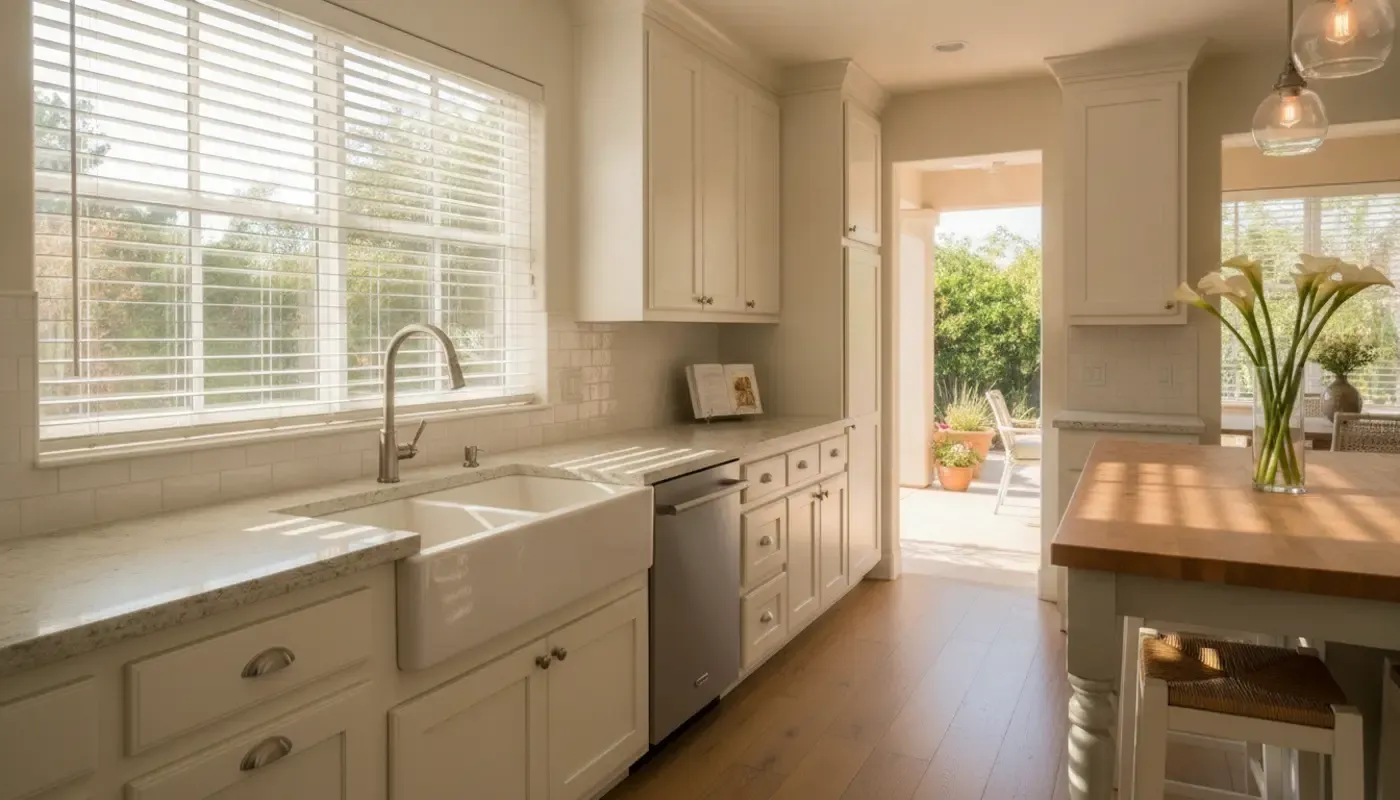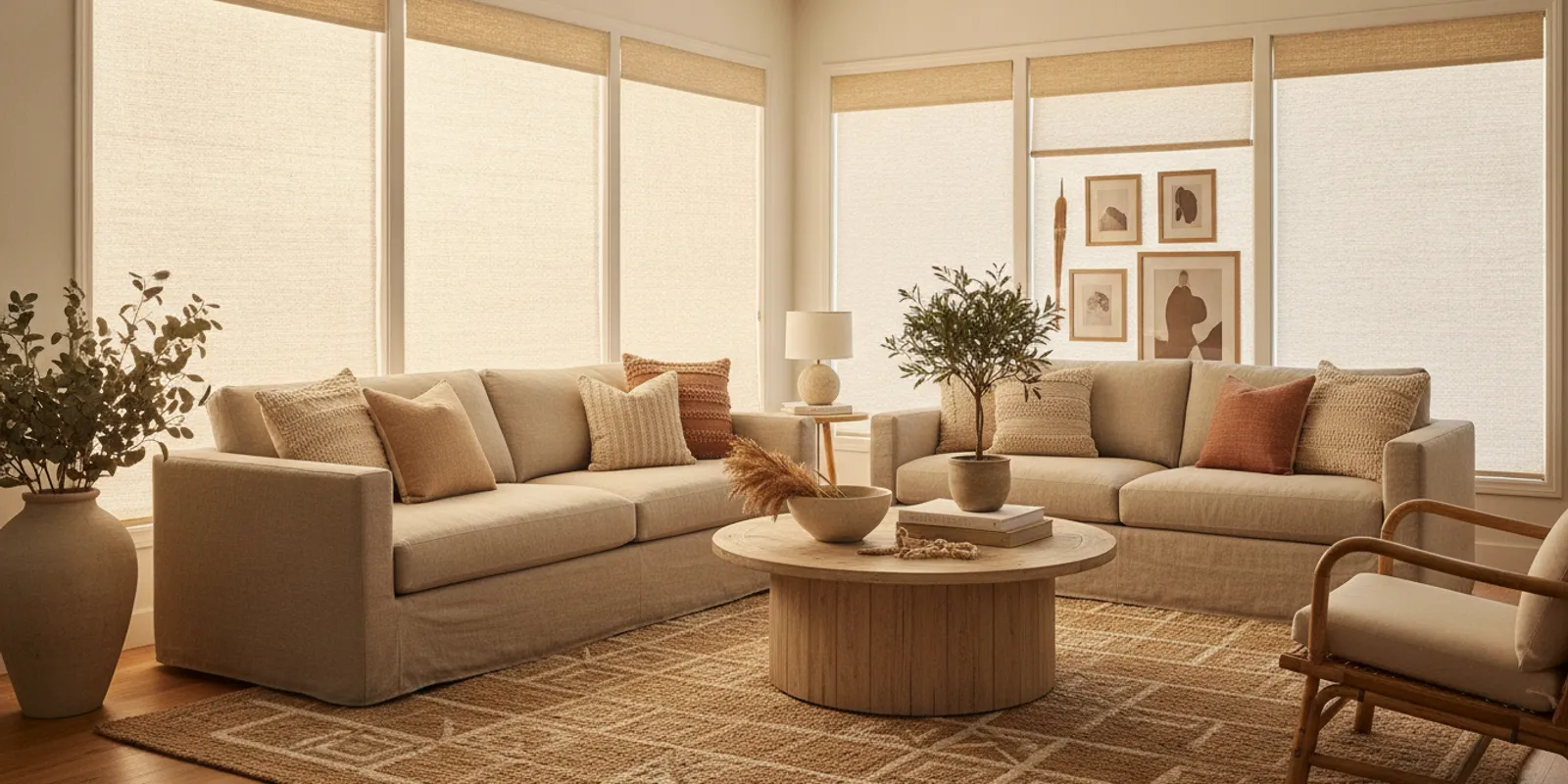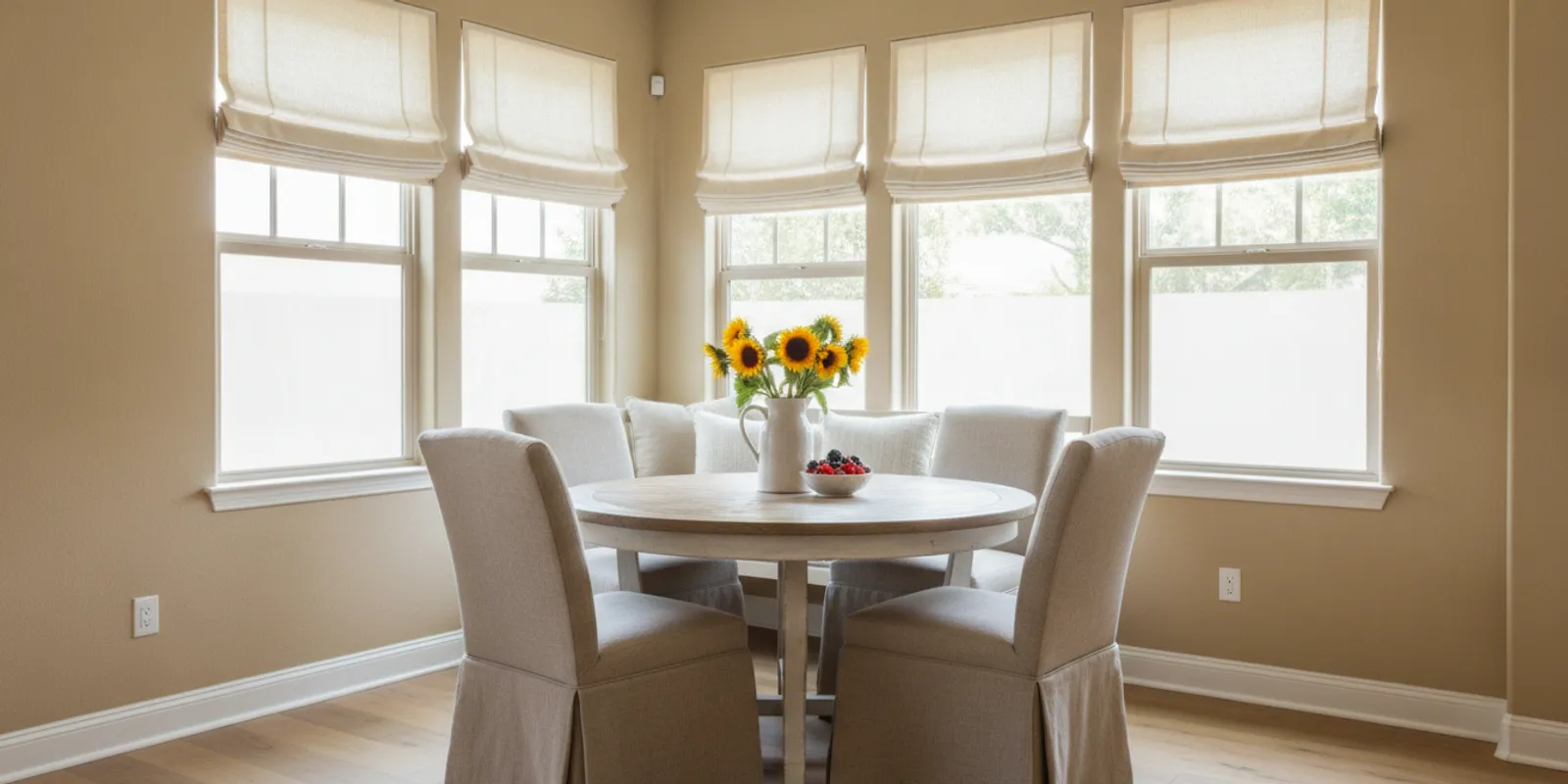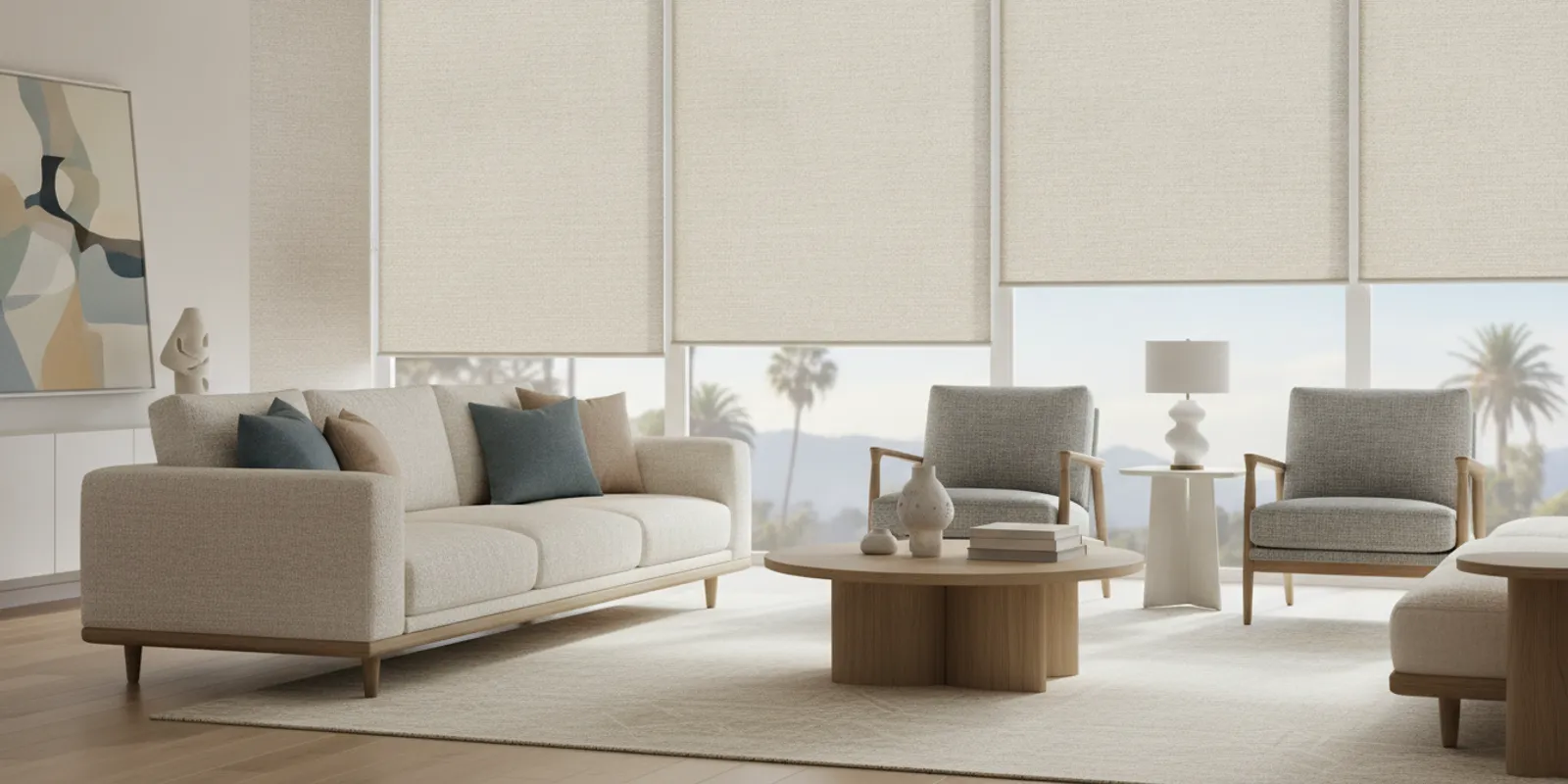
Solar shades can soften bright daylight and reduce direct glare while preserving some view outside. The right choice depends on how much light you want to filter, how much privacy you need, and the direction and use of each window. This guide explains the details to compare before choosing solar shades for your home.
Call Vineyard Blind & Shutter at (951) 757-4188 to discuss your window treatment needs.
Q: What is the main tradeoff when choosing solar shades? A: A more open weave generally preserves more of the view and admits more daylight, while a tighter weave filters more light and obscures the view more. Neither choice guarantees privacy at every hour; the difference between indoor and outdoor light matters.
What do solar shades do?
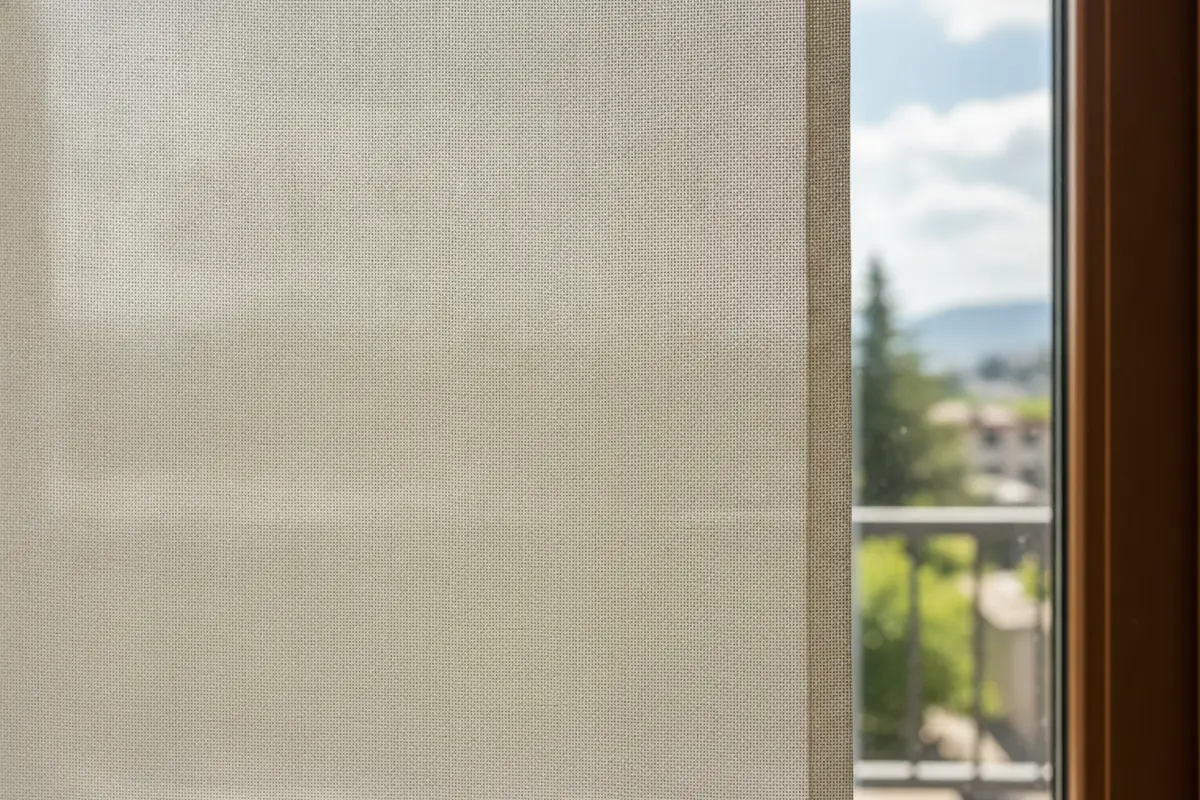
Solar shades are roller-style window coverings made with a woven fabric intended to filter daylight. Unlike an opaque covering, the fabric can let some light and a softened view through. They are often considered for rooms where occupants want to reduce harsh brightness without making the window feel completely closed off.
That balance has limits. Solar shades are not automatically blackout coverings, and they do not guarantee nighttime privacy when interior lights are on. Nor should a shade be assumed to block heat by a particular amount without product specifications. If heat or insulation is a priority, ask for the documented performance of the exact fabric and system rather than relying on the category name.
Solar shade fabrics are commonly described by openness. This refers to how open the weave is, not how much privacy a room will have under every condition. The N.C. Cooperative Extension overview of buying blinds and shades notes that solar shades have a tighter weave than some other shade types, letting in less sunlight. That can be a helpful starting point, but samples in your own window are the best way to judge a fabric.
How should you compare openness, view, and glare?
Think of openness as one part of a three-way balance: the outside view, incoming light, and visibility into the room. A more open fabric usually keeps more of the scene visible and allows more daylight through. A less open fabric can soften more of the view and brightness. Exact results vary by fabric, color, lighting, and what lies beyond the glass.
| Choice to compare | What you may notice | Good question to ask |
|---|---|---|
| More open weave | More visible outdoor detail and daylight; less visual screening | Can I see the fabric sample against this window in daytime and at night? |
| Tighter weave | A more softened view and filtered daylight | Does this fabric still provide enough light for the room? |
| Lighter fabric color | May preserve a brighter appearance and different outward view | How does this color look from inside and outside? |
| Darker fabric color | May make outdoor detail easier to perceive through the fabric, depending on conditions | Does the darker sample create the appearance I want in this room? |
| Side channels or additional layers | May change edge coverage or light control; exact fit and result depend on product | What installation details and product specifications apply? |
Do not choose from a description alone. Hold fabric samples near the glass and look through them toward a bright exterior. Then look at the window from outdoors while the room is illuminated. A fabric that feels comfortable during the day may not screen the room after dark.
Make the comparison repeatable. Place two or three samples against the same window, rather than judging one sample in a different location. Look at them from the usual seated position and while standing, because the viewing angle changes how much of the room and exterior you see. If possible, compare in morning and afternoon light. A sunny window can make a fabric appear more transparent than it seems on a cloudy day, while an interior lamp at night reverses the brightness relationship.
Color also affects the experience. The same weave in different colors may alter how clearly details outside appear and how prominent the shade looks inside the room. Bring the sample near wall paint, flooring, and nearby furnishings. Evaluate the fabric both fully lowered and partially raised; a shade that looks attractive as a sample should also suit the window when it is used every day. Write down what you notice instead of relying on memory when comparing several options.
Which rooms are a good fit for solar shades?
Solar shades may suit a living room, home office, or other space where a softened view is welcome and strong daylight can be uncomfortable. Consider what happens in the room across the day. A screen facing afternoon sun may need a different balance from a shaded window in a room used mainly in the evening.
- Living room: Decide whether preserving a view is more important than screening the room from outside.
- Home office: Check whether daylight on the screen or desk causes distracting glare at the times you work.
- Bedroom: If darkness or nighttime privacy matters, compare a layered or opaque solution instead of assuming a solar shade will meet that need.
- Kitchen: Consider how the fabric will work near cooking activity and how it should be cleaned according to its care guidance.
- Large window or sliding door: Ask about operating method, panel width, and how the shade will affect everyday access.
One home may need more than one treatment type. A solar fabric can work well in a daytime living area while a bedroom needs a more opaque option. For example, imagine a family room with a television opposite a sunny window and a bedroom facing a neighbor’s lit porch. The family room’s priority may be reducing reflections while retaining a view; the bedroom’s priority may be screening after dark. Treating these as separate problems helps avoid selecting one fabric that compromises both rooms. The same logic applies to a home office used in daylight and a kitchen window that needs frequent access.
Map each opening by its function before you compare products. Note the direction of the window, the hours the room is occupied, whether people sit or work close to the glass, and whether the view is important. A tall picture window may benefit from an uninterrupted shade, while a smaller window near a sink may require easy access and a care routine appropriate to the location. For a sliding door, consider how often people pass through and where the shade will stack when raised. These practical details may matter as much as fabric openness.
Compare related custom shade options and broader window covering types rather than forcing every room into one choice.
How do solar shades compare with other window coverings?
Solar shades are not the only way to manage daylight. Blinds have adjustable slats, shutters have louvers within a solid frame, and other shades use different fabrics or constructions. The best fit depends on whether you prioritize a filtered view, adjustable direction of light, privacy, or a particular appearance.
| Option | Light and view approach | Consider it when |
|---|---|---|
| Solar shades | Woven fabric filters light while retaining some view | You want a softer daylight effect and an outward view |
| Blinds | Tilting slats adjust the direction and amount of light | You want adjustable slats and a familiar operating style |
| Shutters | Louvers adjust light within a framed treatment | You want a more structured look and adjustable louvers |
| Opaque or room-darkening shades | More fully covers the window, depending on fit and fabric | Light reduction or a more covered window is a priority |
For a broader overview, compare custom blinds and custom shutters alongside shade samples. If your goal is to automate a shade, first check the available motorization and control choices for the specific product and window.
What should you check before ordering custom solar shades?
Start with the window itself and how you use it. Note its width and height, whether it is inside or outside mounted, whether trim or handles may interfere, and whether the window needs to open frequently. Measurements are important, but an estimate taken without accounting for the mounting surface and obstructions can lead to a poor fit. Have the final measuring process confirmed before ordering.
- List the room’s priorities. Rank view, glare control, privacy, appearance, and ease of operation. Be specific about the time of day when the problem is most noticeable.
- Inspect the window. Note trim depth, handles, nearby furniture, and any access needs. Photograph the window to help explain the situation during planning.
- Compare physical samples. View candidate fabrics against the glass at different times and from both sides when possible.
- Ask about coverage. Confirm how the shade will fit the opening, what gaps may remain at the edges, and how the installation affects trim or access.
- Clarify operation and care. Ask how the shade is raised and lowered, what control options are available, and how the chosen fabric should be maintained.
- Review the written quote. Check that it identifies the chosen fabric, measurements, operating system, installation details, and any options or exclusions.
Custom products are made for specific openings, so it is useful to have measurements and product selection reviewed together. Vineyard Blind & Shutter brings a mobile showroom to customers and offers free measurements and free installation. Learn about the mobile service process and confirm that the product and details suit your particular window.
How can you plan for privacy and nighttime use?
Privacy changes with lighting. In daylight, a bright exterior can make it harder to see into a room through some fabrics. At night, interior lighting can make the room more visible from outside. This is why the same shade may feel private in the afternoon but less private after dark. Think about the relative brightness on both sides of the glass, not just the fabric’s label. A sample held in a showroom or against a dim interior will not reproduce the conditions of a brightly lit room at night.
Test the intended arrangement in a practical way. Stand outside after dark while someone turns on the room lights, and observe what can be seen through the sample at the intended distance. Repeat with lamps positioned where they are normally used. If the window is difficult to approach from outdoors, ask whether the installer can demonstrate the fabric in a comparable lighting condition or explain its documented characteristics. Check the view from multiple angles, since a sidewalk or neighboring window may create a different concern than a private backyard.
If a window faces a sidewalk, neighbor, or shared outdoor area, decide how much screening you need at night. Options may include adding a second treatment, choosing a less open fabric, or selecting a different type of covering for that room. Ask to see how the proposed product works as a complete installation, including the sides and top of the opening. No fabric should be treated as a universal privacy guarantee.
How should you compare value and total cost?
There is no useful universal price for a custom solar shade without knowing the window dimensions, fabric, mounting conditions, controls, and number of openings. Compare itemized quotes on equivalent specifications instead of comparing only a headline price. Confirm whether measuring, installation, hardware, and any motorization are included, and ask about the expected production timeline for the selected product.
To make two quotes comparable, create a small checklist for each opening: dimensions, selected fabric and color, mount type, control method, any add-ons, measuring, and installation. If one quote uses a different fabric or includes an option the other omits, the totals do not describe the same solution. Ask the provider to identify any assumptions, such as whether the existing trim can support the planned mount or whether a particular control is compatible with the shade size. Clarifying those points before ordering can prevent surprises later.
Think about value in terms of the problem each feature solves. A motorized control may be useful for a hard-to-reach window, but may not be necessary for an easily reached opening. A more open fabric may be worth comparing where the view is a priority, while a different covering may better serve a room where privacy is the main concern. Avoid paying for a feature simply because it appears on a package; connect it to a real use in that room.
For multiple windows, decide whether each one needs the same specification. A front-facing room may call for a different fabric from a private interior space. Choosing treatments according to each room's use can be more practical than paying for identical features everywhere.
What should you ask during an in-home consultation?
A focused consultation helps turn a general preference into a workable selection. Bring photos, notes about sun exposure, and a short list of must-haves. Explain what is not working now: perhaps afternoon brightness makes it hard to watch television, reflections interfere with computer work, or the room feels exposed after sunset. Describe when the issue occurs and whether you want to preserve the view. This context makes it easier to compare samples against your actual priorities rather than choosing based only on color.
For a home with several windows, group them by need rather than assuming every opening should match. Identify which windows share similar exposure and use, then mark exceptions such as a bedroom, door, or window with an obstruction. Ask how consistent fabrics will look across the open-plan area and whether separate controls make sense. A quick sketch or labeled phone photos can help keep the discussion organized and make it easier to review a quote later.
You can ask:
- Which fabrics balance the view and light level I want in this room?
- How will this fabric look from outside after dark when the lights are on?
- What are the mounting options, and where could light gaps remain?
- Does the product have written specifications for any performance claim I care about?
- What operating and motorization choices are available for this window?
- How should I clean and care for the selected fabric?
- What exactly is included in the quote, measuring, and installation?
Vineyard serves customers in San Diego, Riverside, and Orange counties. Use the service area information to check coverage, or contact the team with your location and window details. You can also review available custom window treatment products before deciding what to compare.
What is the simplest way to choose?
Choose solar shades when a filtered view and softened daylight are central to your goals, then compare real samples in the room and check privacy after dark. Confirm the measurements, operating details, coverage, care, and written product claims before placing a custom order.
Call Vineyard Blind & Shutter at (951) 757-4188 to plan your next step.