Choosing custom blinds in Riverside starts with how each room works, not with a finish sample. Window shape, privacy, daylight, room conditions, and daily operation all influence the right fit. A short plan can help you compare options and avoid choosing a treatment that looks appealing but feels inconvenient every day.
Discuss your custom blind project
Call Vineyard Blind & Shutter at (951) 757-4188 to plan your window project.
What should you decide before comparing custom blinds in Riverside?
Start with a room-by-room list. For each window, write down what you want the covering to do and what currently bothers you. A bedroom may need more privacy at night. A living room may need adjustable daylight without losing the view. A kitchen window may be exposed to splashes or cooking residue, so cleaning and product-care instructions deserve attention.
Turn broad preferences into specific priorities. “I want more privacy” is a useful start, but it helps to note whether privacy matters all day or mainly after dark. “The room is too bright” can mean direct sun on a screen, glare at a certain time, or simply a preference for softer daylight. Different goals can point to different products or operating positions.
- Privacy: Note the sightlines from sidewalks, neighboring homes, or a nearby street, and when privacy matters most.
- Daylight: Decide whether you want to tilt slats, raise a covering, filter the light, or preserve a view.
- Room conditions: Consider moisture, cooking residue, children, pets, and how often the window treatment will be used.
- Appearance: Look at trim, flooring, furniture, and the view from adjoining rooms before settling on a finish.
- Operation: Think about who will operate each covering and whether a simple control matters.
Inspect the window opening as well as the room. Note handles, locks, cranks, deep or shallow trim, nearby cabinetry, projecting sills, and any unusual shape. These details can influence the mounting method and the clearance a treatment needs. If you plan to cover several windows, mark which openings are alike and which ones need separate consideration.
For an overview of local coverage, visit the areas we serve page. Riverside County cities listed by Vineyard include Corona, Hemet, Lake Elsinore, Menifee, Murrieta, Temecula, Wildomar, and Winchester. Confirm that your address and project are within the service area when arranging a visit.
Which blind style makes sense for each room?
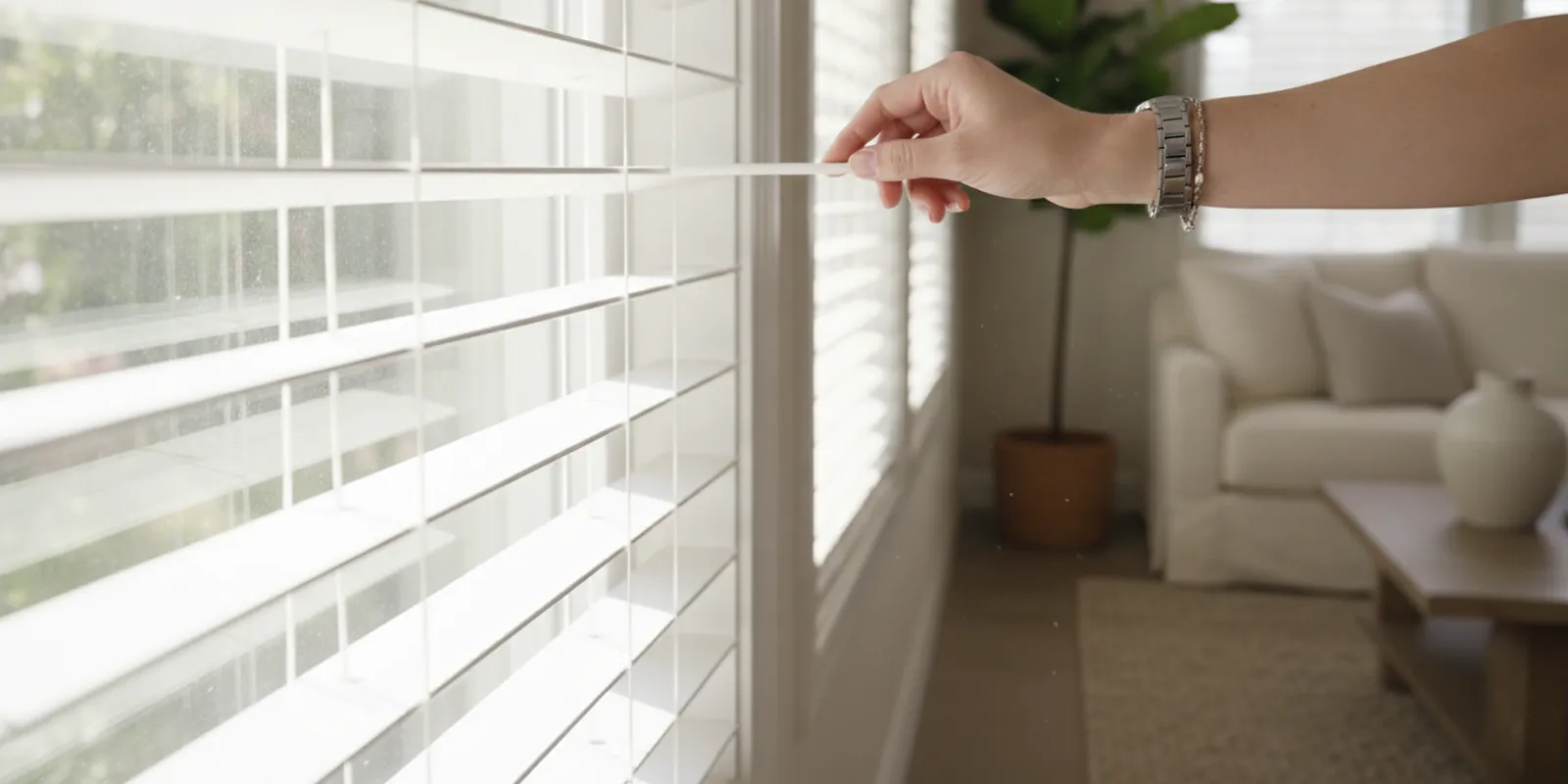
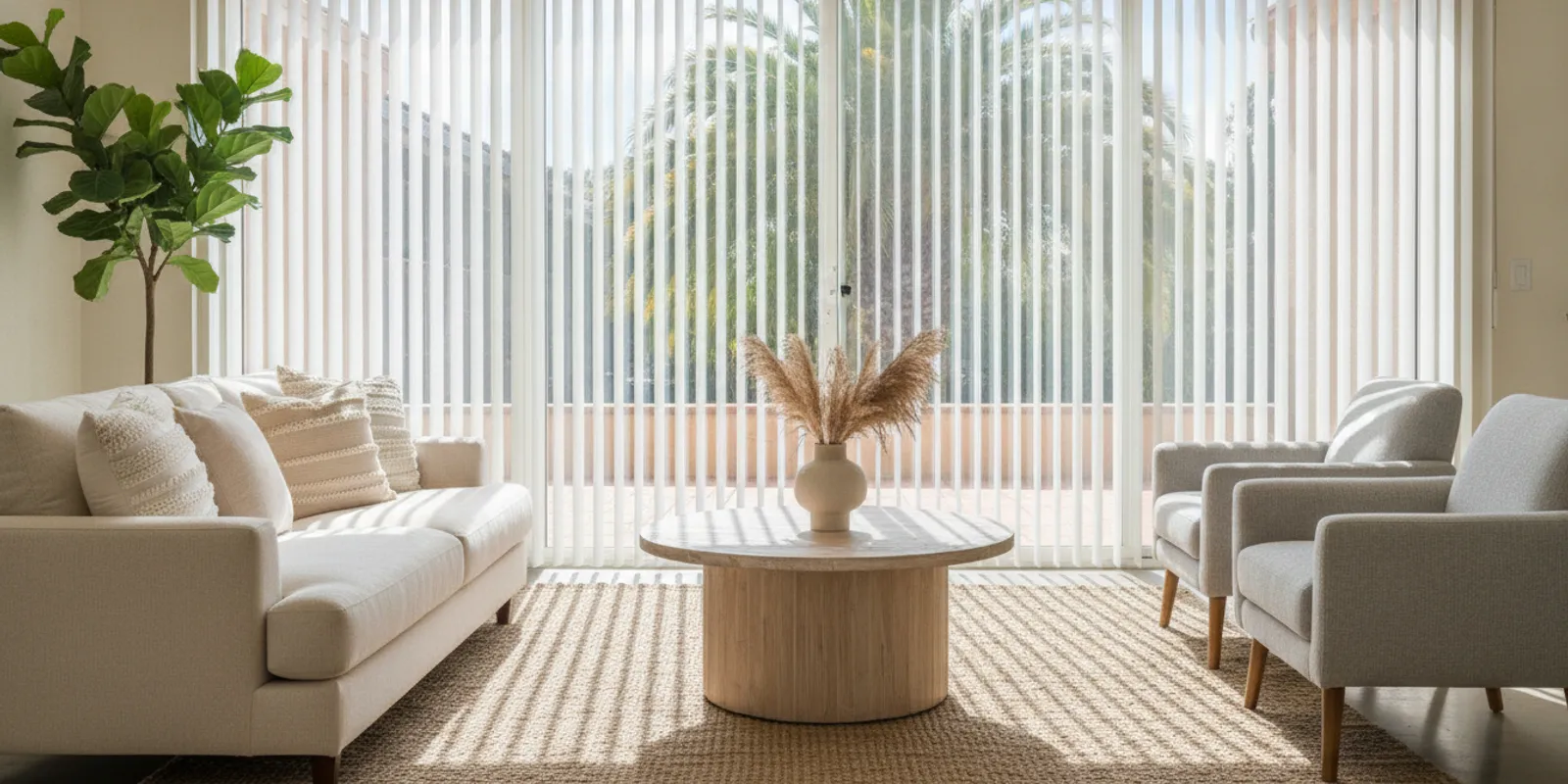
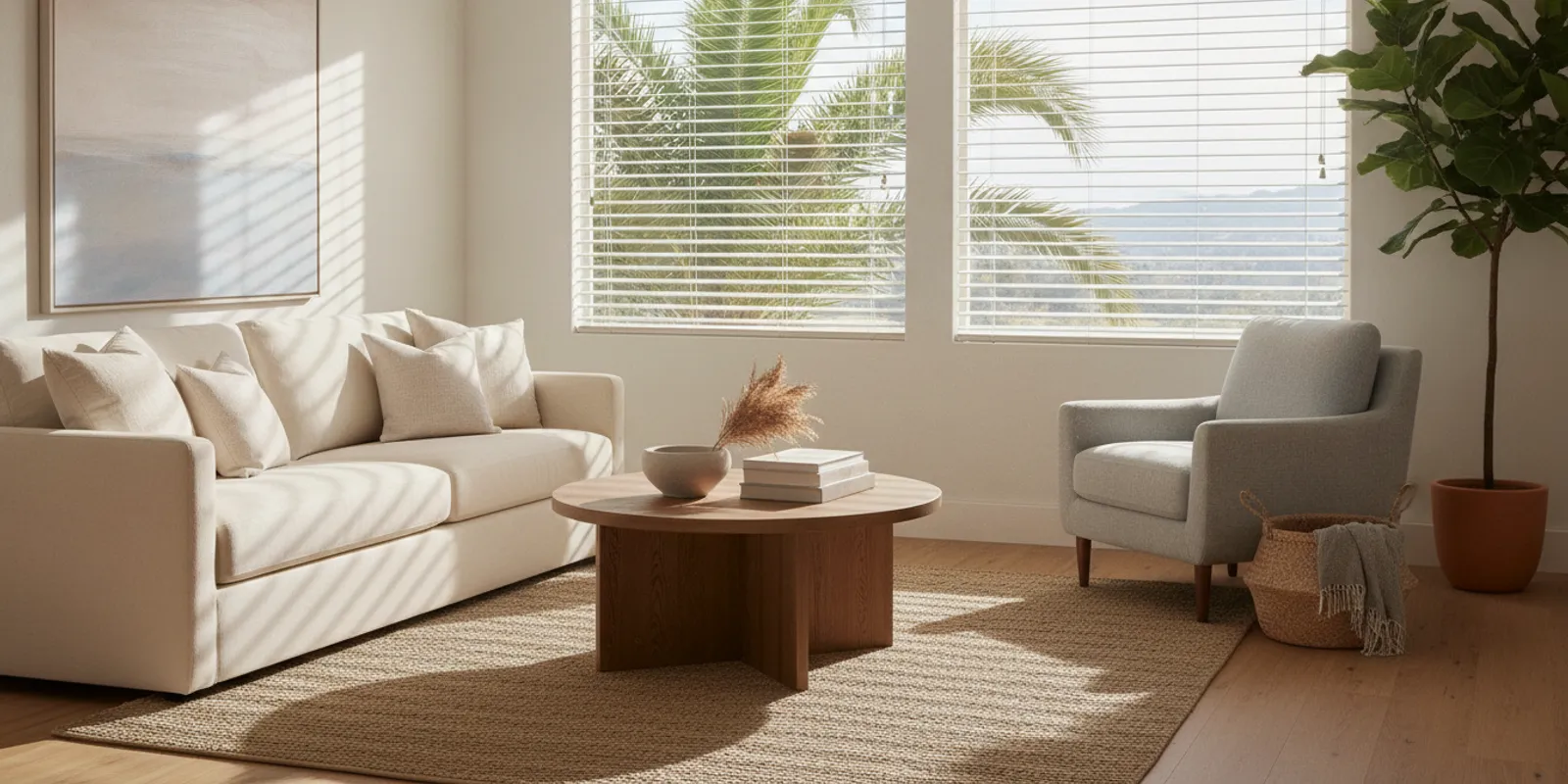
Custom blinds are not a one-style-fits-every-room decision. Horizontal blinds use adjustable slats, which let you change the angle of incoming light and the view through the window. Vertical blinds can suit many wide windows and sliding-door openings, where side-to-side operation may work with the space. Compare the construction and specifications of the particular product rather than relying only on a category name.
Faux-wood blinds provide a familiar slatted appearance and may be worth comparing where easy surface care is important. Real wood has a natural grain that can complement a warm or traditional interior. For either choice, compare finish, slat size, product-care directions, and how the blind will operate at the specific opening. A style that fits one room may not be the most practical choice next to a sink or a frequently used patio door.
| Option | Often considered for | Compare before choosing |
|---|---|---|
| Faux-wood horizontal blinds | Everyday rooms where a slatted look and surface care matter | Slat width, finish, cleaning instructions, and hardware clearance |
| Real wood blinds | Rooms where natural grain and a particular wood tone are priorities | Finish consistency, slat size, and product-care requirements |
| Vertical blinds | Wide openings and many sliding-door applications | Track placement, stack direction, traffic flow, and handle clearance |
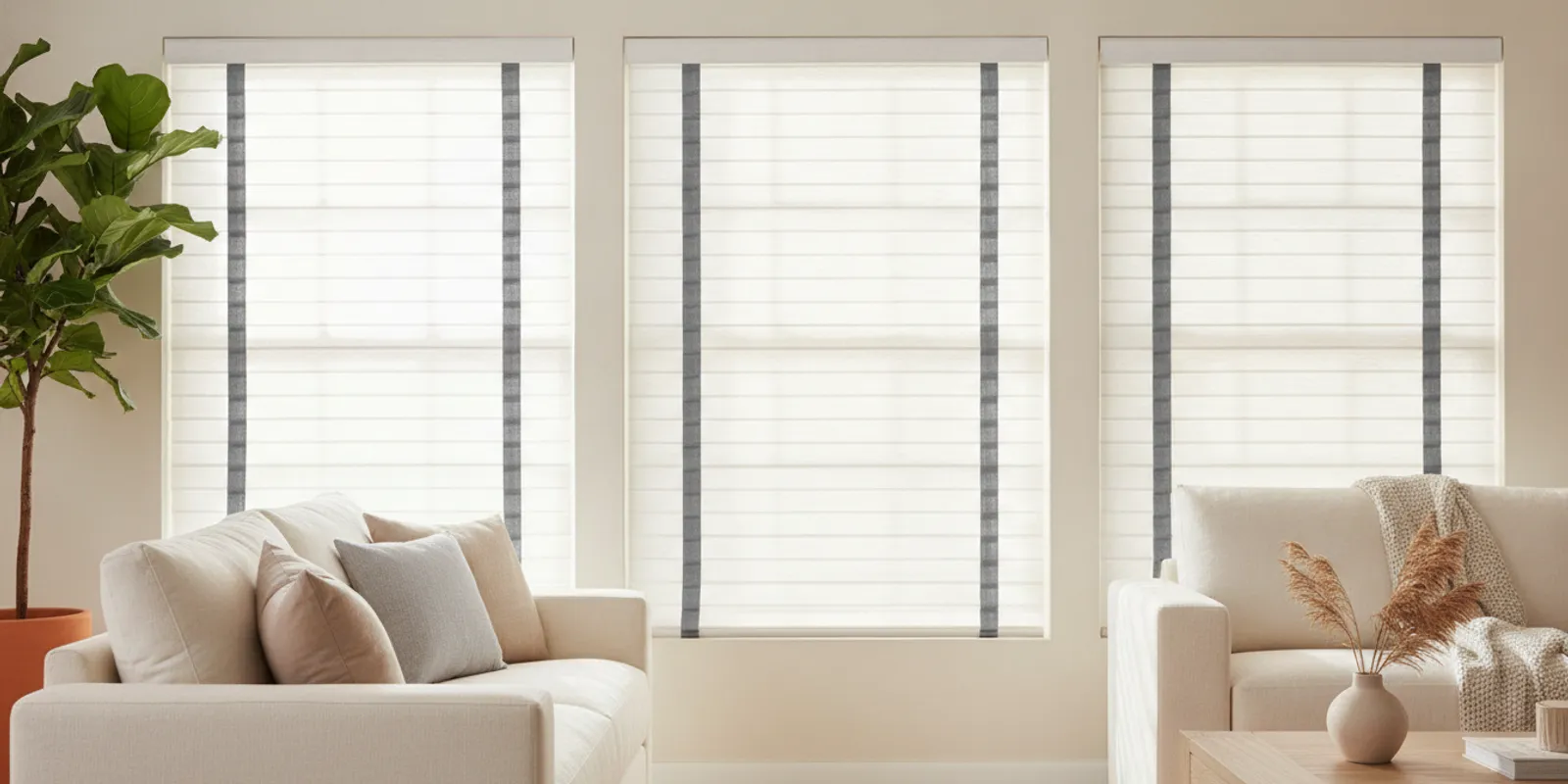
| Shades | Rooms calling for a continuous fabric or woven surface | Opacity, texture, lift style, and the desired daylight effect |
| Shutters | Homeowners seeking a structured, built-in appearance | Frame style, louver size, window shape, and opening clearance |
Think through the whole window rather than just the product face. A wide blind may need room to stack when it is open. A window crank can conflict with a close-fitting treatment. A sill that projects far into the room can affect how a covering hangs. If a patio door is used throughout the day, consider where the treatment moves and whether its open position leaves a comfortable path.
For a closer look at product categories, compare custom blinds with custom shades and custom shutters. The categories are starting points; product-level details and the room itself should guide the final choice.
How should you compare light control and privacy?
Light control and privacy overlap, but they are not the same question. Adjustable blind slats can change the amount and direction of incoming daylight. Their position can also affect what someone outside can see. Check the view from outside at the times privacy matters, especially after dark when indoor lights are on. Do not assume that a particular slat angle or a general product label guarantees privacy in every situation.
Shades create a more continuous surface, but the fabric, weave, and opacity influence both the view and the amount of daylight that passes through. If your goal is to soften bright daylight while keeping some view, explain that precisely. If you want less glare on a screen, note which window and what time of day cause the problem. If nighttime privacy is the main concern, say so before comparing samples.
Look at samples in the actual room when possible. A color can appear different in morning light, direct afternoon sun, and evening lighting. Compare it near the trim, flooring, and furnishings rather than judging it under store lighting alone. For each candidate, ask what the selected position will look like from inside and outside, and whether the product is intended to filter light, block a view, or simply adjust daylight.
Q: What is the most reliable way to choose a blind for privacy? A: Identify when privacy matters, check the actual sightline from outside, and compare the product in the intended position. A room-specific discussion and a sample are more useful than relying on a broad label alone.
What do measurements and mounting choices change?
A custom fit depends on accurate measurements and a mounting plan. An inside mount sits within the window frame and can leave trim visible, but it requires enough depth and a suitable opening. An outside mount sits over or beyond the frame; it can be considered when the opening is shallow or when the preferred appearance calls for more coverage. Neither approach is automatically right for every window.
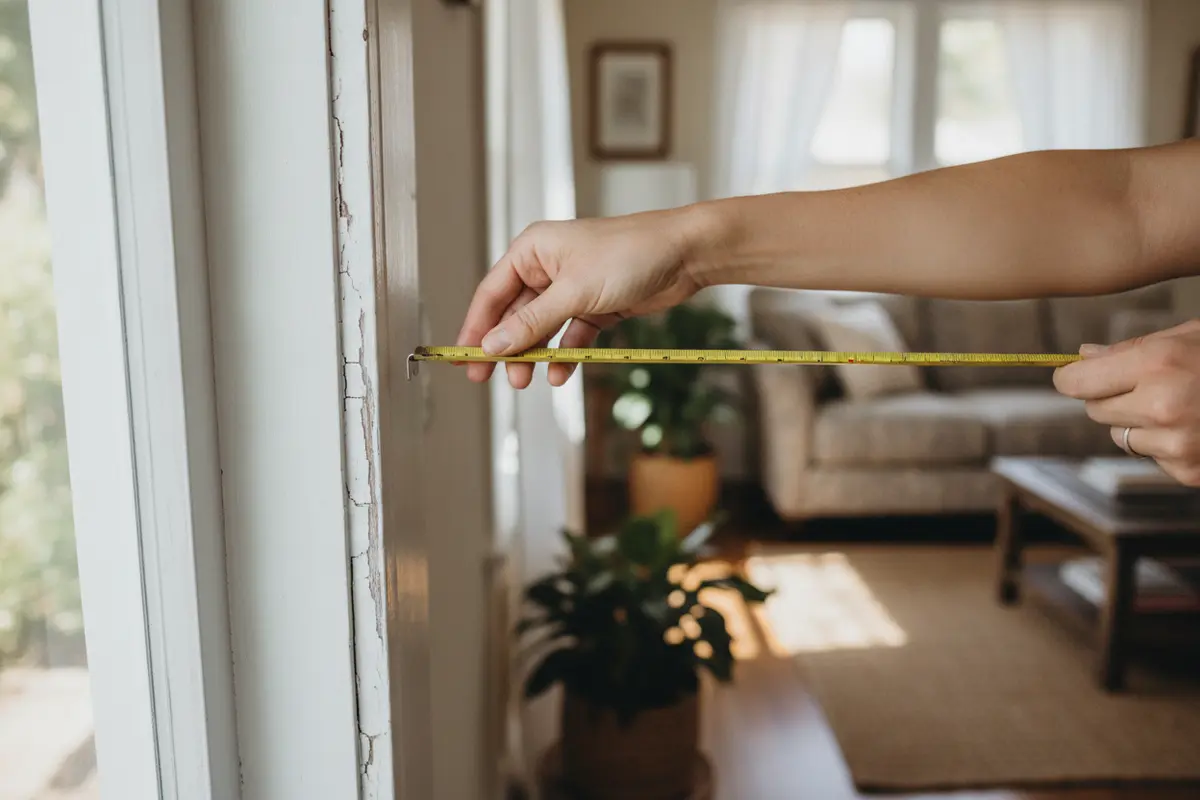
Before a measurement or product decision, identify anything that could interfere with the blind. Check window handles, locks, crank mechanisms, tile, nearby cabinetry, and furniture. For a group of adjacent windows, decide whether matching headrail heights or consistent appearance is important. At a sliding door, check the handle path, the side where a vertical treatment would stack, and the space needed to move through the doorway.
Professional measuring helps account for opening dimensions and these practical details. Vineyard Blind & Shutter provides free measuring and installation. Its mobile window treatment service brings product samples to the home, making it possible to view finishes alongside the room's furnishings and natural light. Ask how the proposed product will fit each opening and what installation details are relevant to your project.
How do you choose materials for kitchens, bathrooms, and busy rooms?
Room conditions should help narrow material options. In a kitchen, consider the distance from the sink and cooking area, how often the window is opened, and how the product may collect residue. In a bathroom, consider moisture and ventilation. The correct care approach depends on the exact product, so ask for its cleaning instructions rather than assuming that every faux-wood or fabric option can be cleaned the same way.
For a living room, you may give more weight to finish, view, and how the treatment works with furniture. In a bedroom, consider privacy, light preferences, and whether the treatment is easy to adjust from where you use it. In a home office, note screen glare and the direction of the window. These room-specific priorities help prevent a whole-house selection from being driven by one sample or one room's requirements.
Homes with young children should also consider the operating system and how it will be used. Ask about available cordless or other control options for the product under consideration, and review current consumer guidance from the U.S. Consumer Product Safety Commission. Keep the decision specific to the selected product and the household; do not assume that the same operating choice suits every window.
What should you ask about project cost and value?
Custom project pricing can depend on the number and dimensions of windows, chosen product, control features, and installation conditions. Request a complete project comparison rather than judging one sample or a starting figure. For each option, write down which windows are included, the product and finish, operating controls, mounting approach, and any special conditions that affect the work.
Compare usefulness as well as initial cost. A blind that will be adjusted several times a day may deserve priority for ease of operation and a suitable control. In a less-used room, finish and straightforward light management may matter more. If two options differ in price, ask what changes in material, features, care, or installation scope account for the difference. Do not assume that a higher-priced option is automatically a better fit.
| Project detail | What to confirm | Why it matters |
|---|---|---|
| Windows included | Room names and opening list | Confirms that proposals cover the same project scope |
| Product | Material, model, color, and controls | These details affect appearance and daily use |
| Fit | Inside or outside mount and any special conditions | Trim, clearance, and hardware can change the approach |
| Service | Measuring and installation details | Clarifies what is included in the planned work |
| Care | Product-specific cleaning directions and limitations | Helps match the selection to room conditions |
How can you prepare for an in-home selection?
A little preparation makes it easier to explain what you need and compare alternatives consistently. You do not need to settle on a product in advance. Bring useful information about the rooms and windows so the discussion can focus on how the options fit your home.
- Photograph each window straight-on, then take a wider photo showing trim, furniture, and nearby doors.
- List room names, approximate window counts, and any unusual shapes or access issues.
- Record your main goal for each window, such as nighttime privacy, adjustable daylight, or a finish that suits the room.
- Save a few examples of colors or styles you like, and note any looks you want to avoid.
- Identify the windows you would prioritize if you plan to complete the project in stages.
- Write down questions about cleaning, controls, mounting, and product-specific limitations.
Use concrete descriptions. “Reduce afternoon glare on the television while keeping some view” gives more direction than “make the room darker.” If privacy, daylight, and appearance compete, name the most important factor first. Then consider whether the remaining goals are essential or simply preferences. This makes it easier to weigh compromises rather than expecting one product to solve every issue in the same way.
You can also group the windows by need. For example, a homeowner might place street-facing front windows in one group because privacy matters, then list a kitchen window separately because wipe-down care matters, and treat a sliding door as a separate fit problem. The grouping does not mean every opening must use a different product; it gives you a clear basis for comparing a consistent whole-home look with room-specific choices.
How can you compare options without overlooking details?
Use the same checklist for every product combination or proposal. This helps prevent small differences in scope from making two options seem more comparable than they are. If one option covers fewer windows, has a different control, or uses another mounting method, record that distinction before weighing appearance or price.
For example, suppose you are comparing a slatted blind for a living room with a shade for the same opening. First clarify the shared goal: perhaps adjustable daylight with a view, or a continuous surface with a specific texture. Then compare the actual light effect, privacy at night, open position, cleaning instructions, and fit around the window hardware. The best decision depends on which qualities matter most in that room, not on a universal ranking of blinds over shades.
For multiple rooms, create a compact schedule: room, window count, priority, product candidates, and questions still to answer. Use it during the selection process and update it after looking at samples. If a room's goal changes after seeing a sample in its light, note why. This record makes it easier to review the complete project later and to keep the chosen finish and controls clear.
For local planning, use the custom Riverside blinds service-area information and contact Vineyard to confirm coverage and project details. Its service and product FAQ is another place to review general questions before a discussion.
What is the simplest way to choose custom blinds in Riverside?
Start with the purpose of each room, then compare style, material, privacy, daylight, operation, mounting, and care. Keep the window's hardware and clearance in view, and compare complete project details rather than choosing from a sample alone. A room-by-room list and a few reference photos can make the selection process more focused.
Arrange a discussion about your window project
Call Vineyard Blind & Shutter at (951) 757-4188 to discuss your custom blinds.
Frequently Asked Questions
Are custom blinds worth considering for standard windows?
They may suit homeowners who want a treatment selected for a particular opening, room, or design. Compare the complete project and installation details with other available options, then decide whether the fit, finish, and features match your priorities.
Can I choose blinds and shades for different rooms?
Yes. Rooms can have different needs for privacy, daylight, care, and appearance. It is reasonable to compare more than one category rather than assume a single style is right for every window.
What should I bring to a selection appointment?
Bring window photos, room priorities, finish ideas, and notes about handles, furniture, or unusual shapes. Questions about operation, mounting, cleaning, and project scope can also help you compare options.
Does Vineyard Blind & Shutter measure and install?
Yes. Free measuring and free installation are approved service offerings. Ask about the details for your particular project when you contact the company.
With clear priorities and room-specific measurements, you can choose custom blinds that fit your Riverside home and the way you use each window.