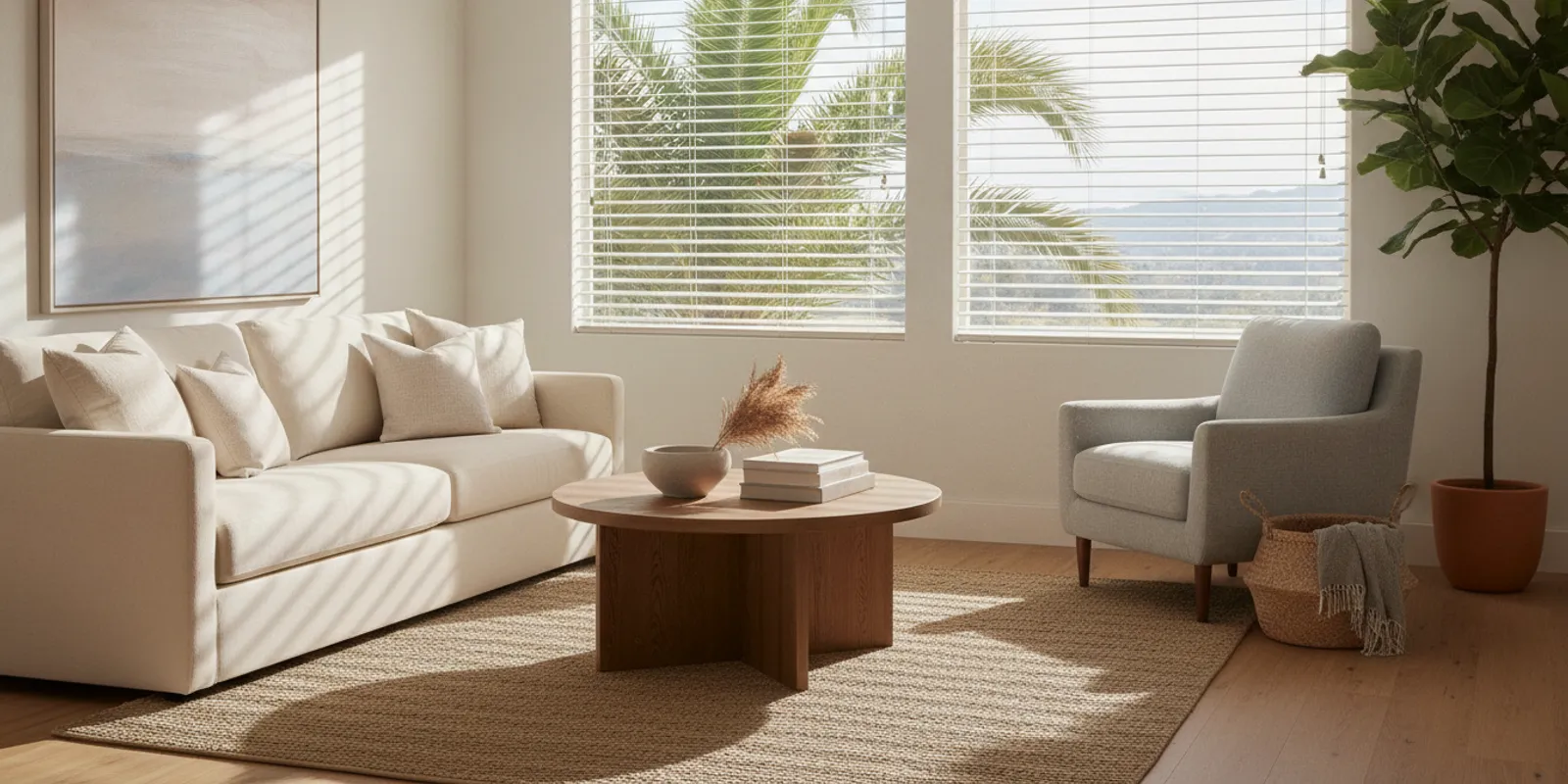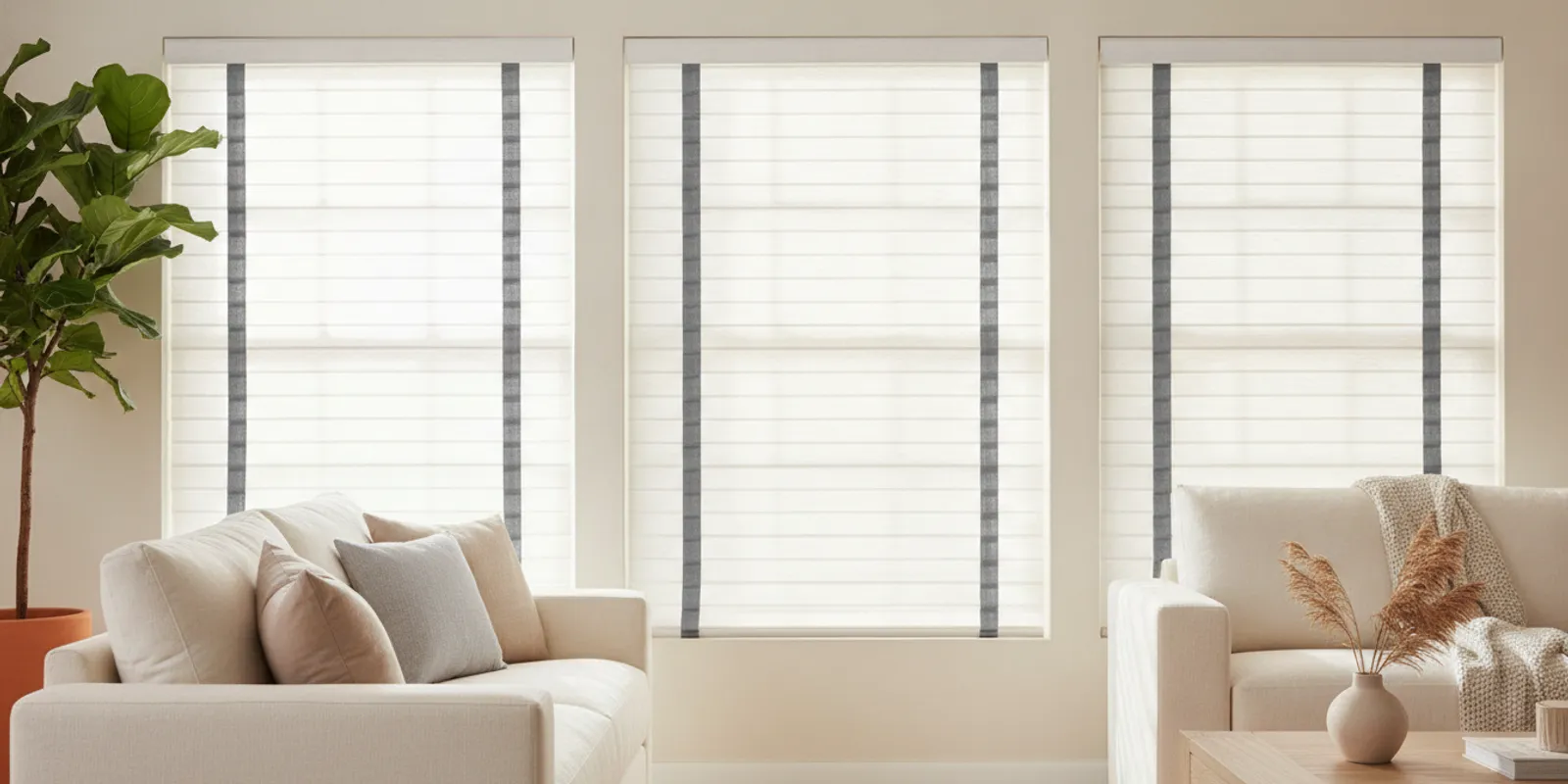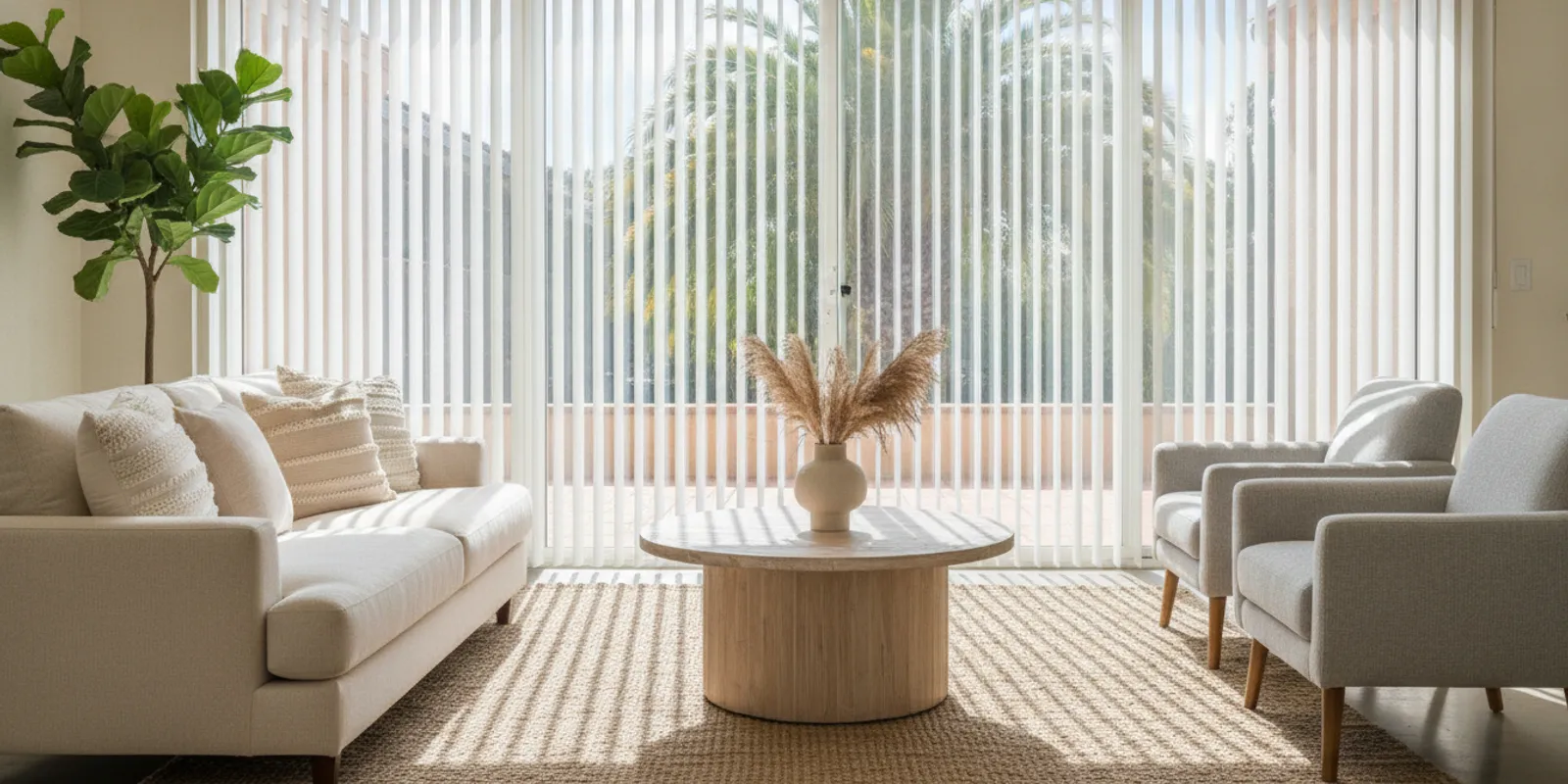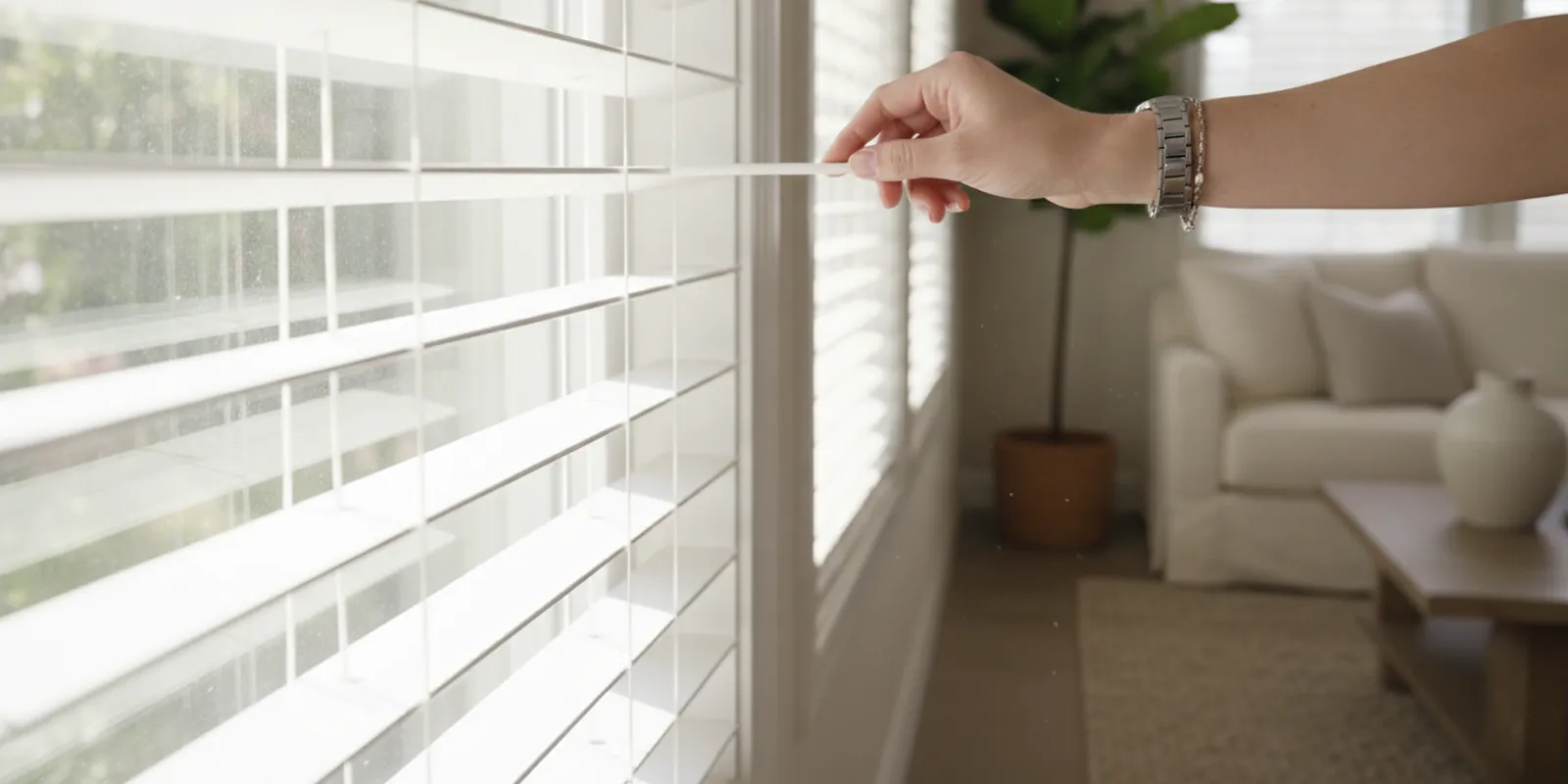
When you need to know how to close window blinds, start by identifying the operating style: horizontal slats, vertical vanes, or a shade that raises and lowers. Each works a little differently. Use the steps below to close the covering without forcing its controls, then adjust it for the privacy and light you want.
Call Vineyard Blind & Shutter at (951) 757-4188 to discuss your window blinds.
Q: What does “closed” mean for blinds? A: For horizontal or vertical blinds, closing usually means turning the slats or vanes so they overlap and limit the view through the window. It does not always mean that every bit of light is blocked. For a roller or other fabric shade, closed usually means lowered over the window.
How can you tell which kind of window blind you have?
Look at the part that moves. Horizontal blinds have rows of slats stacked across the window. A tilt wand or a cord may rotate those slats; a lift cord, cordless rail, or motor may raise and lower them. Vertical blinds have upright vanes that rotate and often slide to one side. Shades use a continuous fabric panel or other material that moves up and down.
Identify the controls before operating anything. A wand often controls slat angle, while a separate cord or bottom rail controls height. On some blinds, one cord performs more than one action. If a covering is motorized, use its designated remote, wall control, or app rather than pulling on the fabric or slats.
Do not assume every control moves in the same direction. Older and newer models can differ, and the direction that closes one set of blinds may open another. Test a small movement while watching the slats. If the control resists, stop and check whether another control needs to be released first.
How do you close horizontal blinds?
Horizontal blinds are commonly made with slats that tilt together. The goal is to rotate those slats until they overlap from the angle where you need privacy or glare control. Follow these steps gently:
- Lower the blinds to the height you want. If they are raised, use the lift control or bottom rail as designed. Keep the slats level while lowering.
- Find the tilt control. It may be a wand at one side of the headrail or a cord on some designs. Do not use the lift control to force the slats to turn.
- Turn or draw the control a little at a time. Watch the slats move. Continue until they angle toward one another and the open gaps are minimized from your viewing position.
- Check from the room where privacy matters. A slat angle that blocks a view from one direction may still leave a view from another. Adjust in small increments instead of twisting hard against the stop.
There is no universal “clockwise closes” rule. On one product, turning a wand clockwise may angle the slats one way; on another, the control may operate in the opposite direction. The useful test is what the slats actually do. If you cannot tell which direction is right, move the wand slightly in each direction and observe the result.
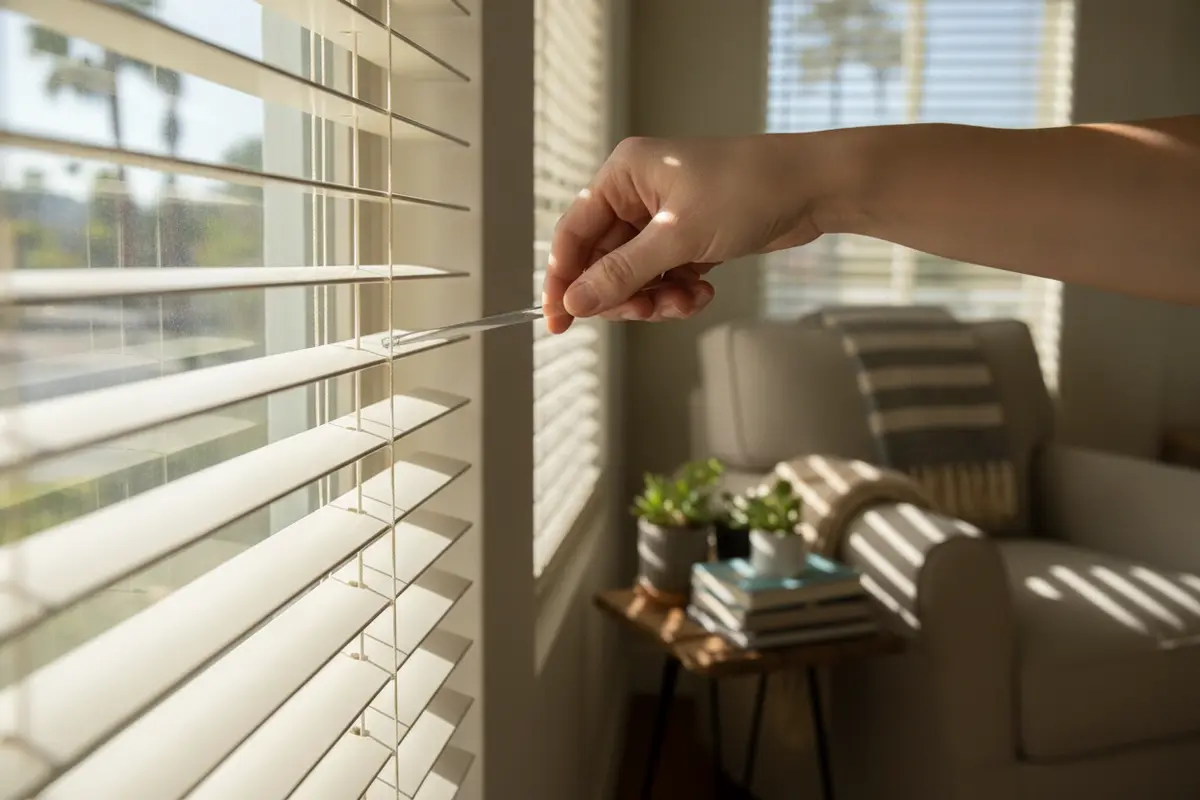
For daylight with less direct view, you may prefer a partial tilt rather than fully overlapping slats. That lets you fine-tune the balance for the room. Keep in mind that angled slats can still leave sightlines, especially after dark when the room is lit. Check the view from outside or ask someone to look from the area you want to screen.
How do you close vertical blinds?
Vertical blinds have upright vanes. Depending on the product, a chain or wand turns them, while a separate cord or control moves the carrier track so the vanes gather to one side. To close them across the window, first rotate the vanes until they are aligned and overlap, then draw the stack across the opening if it is not already there.
- Move the rotating control slowly and watch the vane edges. Stop once they turn together without scraping the window frame.
- If the vanes are stacked at one end, use the traverse control to move the stack across the track. Keep the vanes aligned rather than pulling one by hand.
- Check the overlap across the full width. A single turned vane can leave a narrow gap even if the others look closed.
Some vertical systems have a specific stacking direction or a particular sequence for turning and drawing. If the carrier is not moving, do not pull harder on a vane. Check whether the rotating control has reached its limit or whether the system needs the vanes aligned before they can traverse.
How do you close a shade or a cordless blind?
A roller shade generally closes by lowering its fabric panel over the glass. A cordless shade may operate by gently pulling its bottom rail down or by moving the rail to the desired position, depending on the design. Keep the rail level and use the control points intended for the product. Avoid tugging at one corner, which can make the material roll unevenly.
For a motorized window covering, use the wall switch, remote, or approved app control and wait for the shade to complete its movement. If it stops short, check for an obstruction and follow the product instructions before trying again. Do not pull down on a motorized shade to make it move unless its instructions specifically permit manual operation.
“Closed” can mean fully lowered or simply adjusted to cover the part of the window you want screened. A lowered shade can still allow some light around its edges, depending on its fit and design. If light control is important, compare the actual product and installation details rather than assuming every shade blocks all light.
Which direction should you tilt blinds for privacy and light?
Choose the angle based on what you are trying to do and where people can see the window from. For daytime privacy, angle horizontal slats so a person at the likely outside viewing height has a limited line of sight into the room, while checking how much daylight remains. For glare control, adjust the angle until direct brightness is reduced at the seat or screen you use.
At night, interior lights can make it easier to see into a room. Closing the slats reduces open sightlines, but does not guarantee complete privacy. Walk to the room's usual viewing positions and check for gaps along the edges and between slats. If the window faces a walkway or a nearby home, use a covering that suits that exposure and close it before turning on interior lights.
Blinds are adjustable, so the best setting may change through the day. Try a few positions and consider whether the room needs a clear view, filtered daylight, or stronger screening at different times. If reducing heat or improving insulation is the goal, do not treat any generic slat position as a guaranteed result. Product construction, window conditions, and fit matter. The U.S. Department of Energy provides general information about home energy use at Energy.gov; check product-specific documentation for claims about a particular covering.
Why are the blinds not closing properly?
If blinds stop, tilt unevenly, or leave a gap, first pause instead of forcing the control. A small check can distinguish a simple alignment issue from a repair that needs product-specific instructions.
- Slats tilt unevenly: Make sure the slats are not tangled or caught against a window handle. Move the tilt control gently through a small range and watch for an individual slat that is out of line.
- The lift cord will not move: Check that the blinds are not caught on an object or pulled at an angle. Follow the manufacturer's operating instructions; do not yank a locked cord.
- Vertical vanes will not traverse: Align the vanes with the track before using the draw control. Check for an obstruction along the sill or track.
- A shade rolls unevenly: Raise or lower it using the intended control and keep the bottom rail level. Stop if the fabric bunches or rubs against the frame.
- A motorized covering stops: Check for a physical obstruction and use the proper control. Refer to the product instructions for power, reset, or limit-setting steps.
Do not take the headrail apart or cut a cord as a first step. Blind mechanisms differ, and an improvised repair can damage the covering or create a safety concern. For a custom fit or replacement, it helps to note the window width and height, the type of control, and what happens when you try to close it. Vineyard's custom blinds information can help you compare styles, while the mobile window treatment service explains how product samples can be viewed at home.
How can you close blinds safely around children and pets?
Keep operating cords out of reach of young children and pets, and follow the product's safety instructions. Do not leave loops where a child could reach them. If you are selecting new window coverings, ask about cordless or motorized operating options and review how those controls work in daily use.
When raising or lowering a blind, keep children and pets away from the moving parts. Do not let anyone play with cords, chains, or the bottom rail. Check that the covering moves freely and does not have frayed or damaged components. If you see a safety issue, stop using the control until you can address it appropriately.
What should you do if blinds still will not close?
Try this short checklist before deciding whether the covering needs adjustment or replacement:
- Identify whether the problem is with tilting, raising, lowering, or sliding across the window.
- Check for a visible obstruction at the sill, frame, or track.
- Use the control intended for that movement and test it gently in small increments.
- Look for slats or vanes that are out of alignment, without forcing them back into place.
- Compare the result with the product's instructions, if available. Stop if the control binds or the material bunches.
If the problem persists, a photo of the full window and a close-up of the control can help explain what is happening when you ask for advice. If you are replacing several coverings or dealing with windows that are not standard rectangles, measure each opening separately and note handles, trim, and other obstructions. For measuring and installation information, see Vineyard's pages about custom shutters and custom shades. You can also contact Vineyard Blind & Shutter with questions about options; the company offers free measurements and free installation.
What should you check before choosing a replacement?
Think about how you use the window, not only how the blind looks when it is fully shut. If you regularly adjust the view during the day, horizontal slats or vertical vanes let you change the angle without raising the entire covering. If you prefer one simple movement, a shade that lowers over the glass may feel more straightforward. For a wide window or sliding opening, note where the covering can stack and whether that position interferes with access.
Consider the control as part of the decision. A wand, lift control, cordless rail, or motorized control each has a different daily routine. Choose a system you can operate comfortably and explain who will use it. If there are young children or pets at home, ask about the product's operating and safety features before deciding. Look at samples in the room when possible, because color and texture can look different under your own lighting than in a photograph or showroom.
Fit also affects how a covering closes. Record the width and height of each opening and note handles, trim, shallow frames, or other obstacles. A window that appears like the one beside it may have different dimensions. Custom measuring helps account for those differences, but avoid guessing at mounting details if you are not sure how the product will sit. Vineyard's mobile service page describes bringing window treatment options to the home, where you can consider samples alongside the room and its windows.
How do common window coverings compare when closed?
The right operation depends on whether you want adjustable slats, a full fabric panel, or vertical coverage for a wide opening. This comparison describes general operating differences, not a promise that every product performs the same way.
| Covering type | How you close it | What to check |
|---|---|---|
| Horizontal blinds | Lower to the preferred height, then tilt the slats until they overlap. | Slat angle, gaps at the sides, and the view from outside. |
| Vertical blinds | Rotate vanes to overlap, then draw the stack across the window if needed. | Vane alignment, track movement, and full-width coverage. |
| Roller or cordless shades | Use the intended control to lower the panel over the window. | Level movement, fabric alignment, and light around the edges. |
| Motorized coverings | Use the designated remote, switch, or app control. | Obstructions, control response, and the product's operating instructions. |
For a broad comparison of product styles, visit the guide to types of window coverings. The best choice depends on your windows, room, preferred control, and how you use the space.
What is the simplest way to close window blinds?
Identify the covering and the control before moving anything. Tilt horizontal slats until the gaps are reduced, rotate vertical vanes into an overlapping position and draw them across if needed, or lower a shade using its intended control. Move slowly, check the view and light from the room, and stop if a mechanism resists.
For a set that continues to bind or does not cover the window the way you need, compare the product style and fit rather than forcing the hardware. Custom blinds, shutters, and shades can be measured for the individual opening, with free measurements and free installation available from Vineyard Blind & Shutter.
Call Vineyard Blind & Shutter at (951) 757-4188 to talk through your window covering options.
Once you know which control moves your covering, close it with small, steady adjustments and check that the result suits the room.