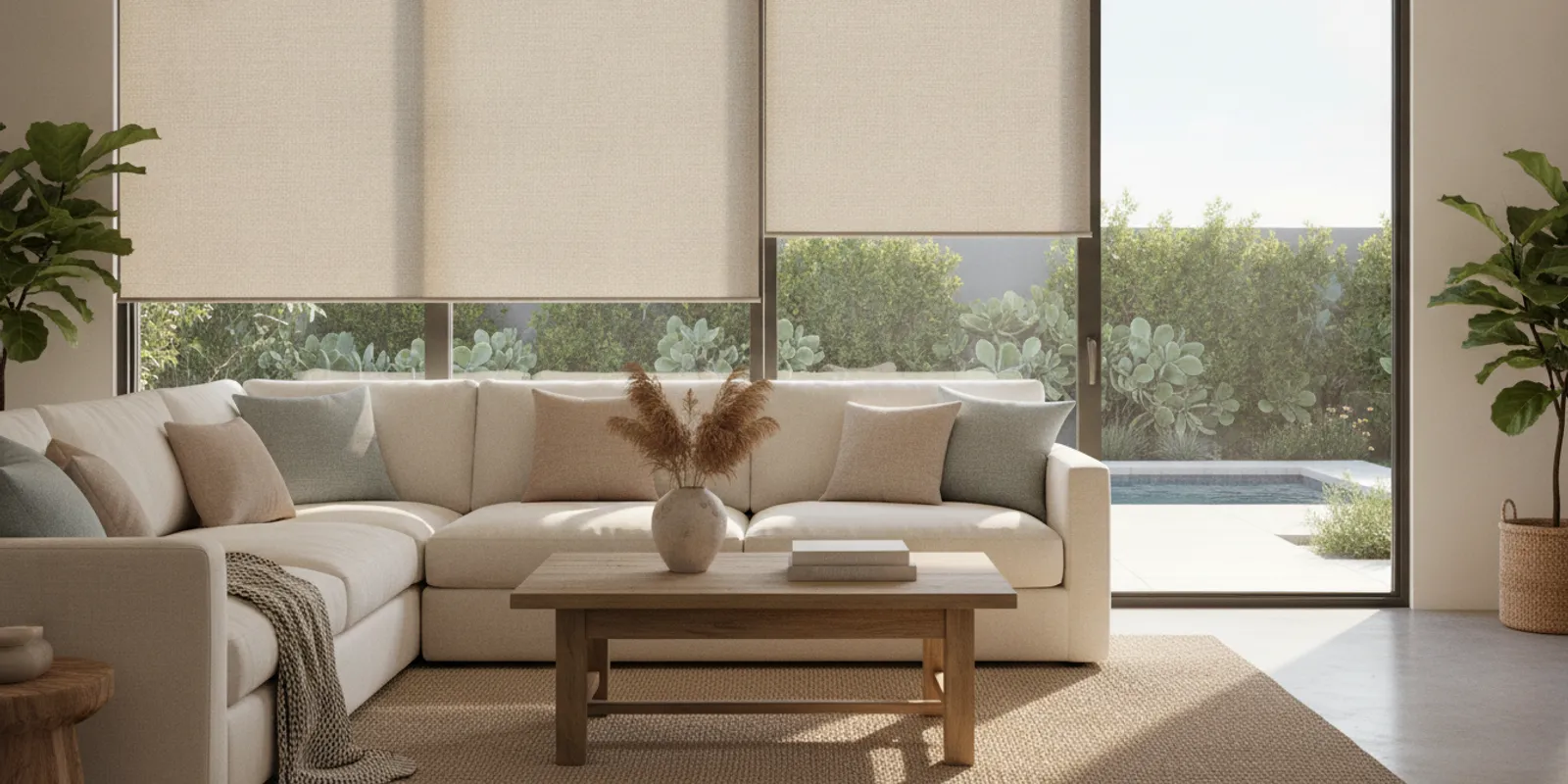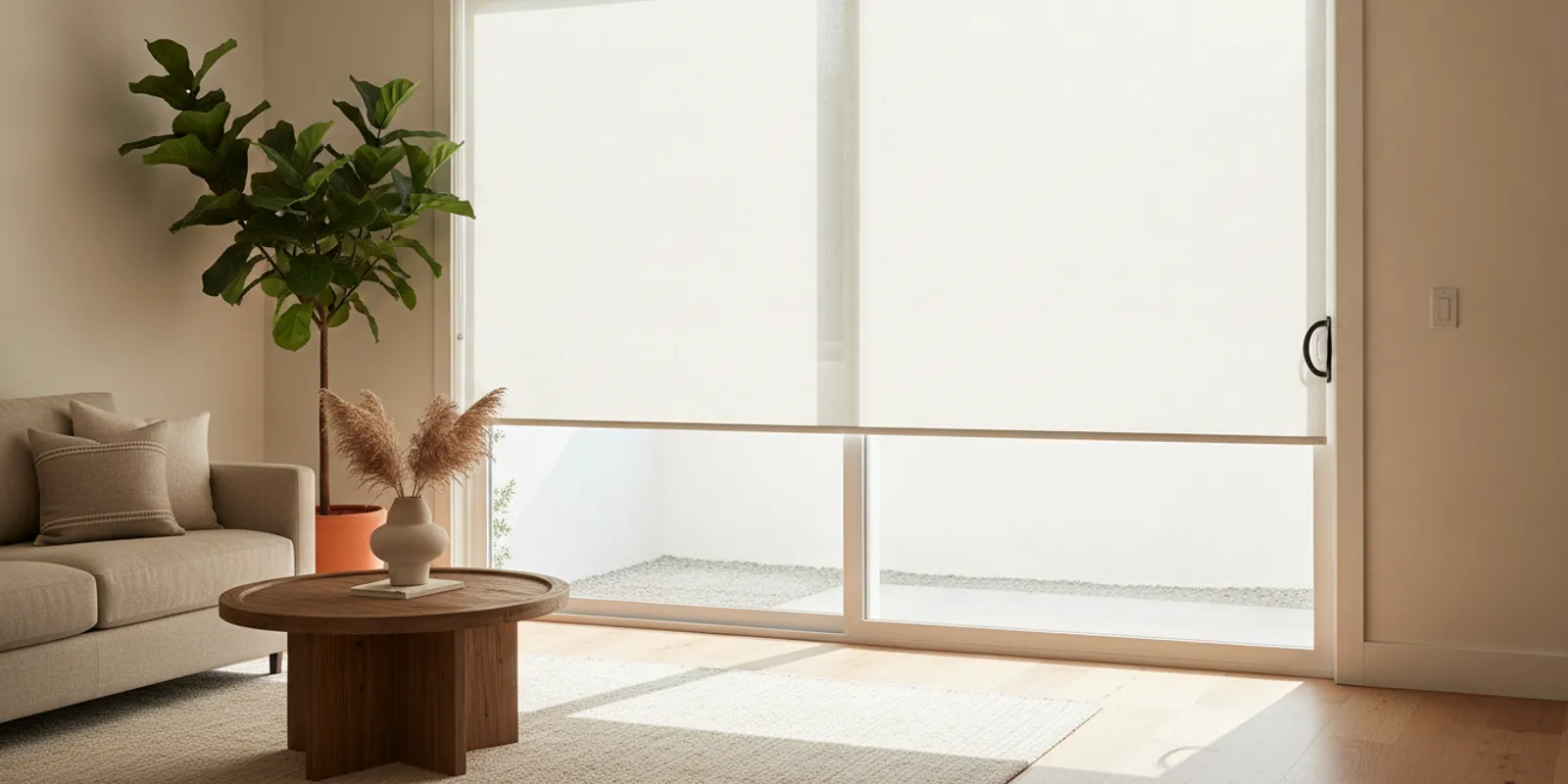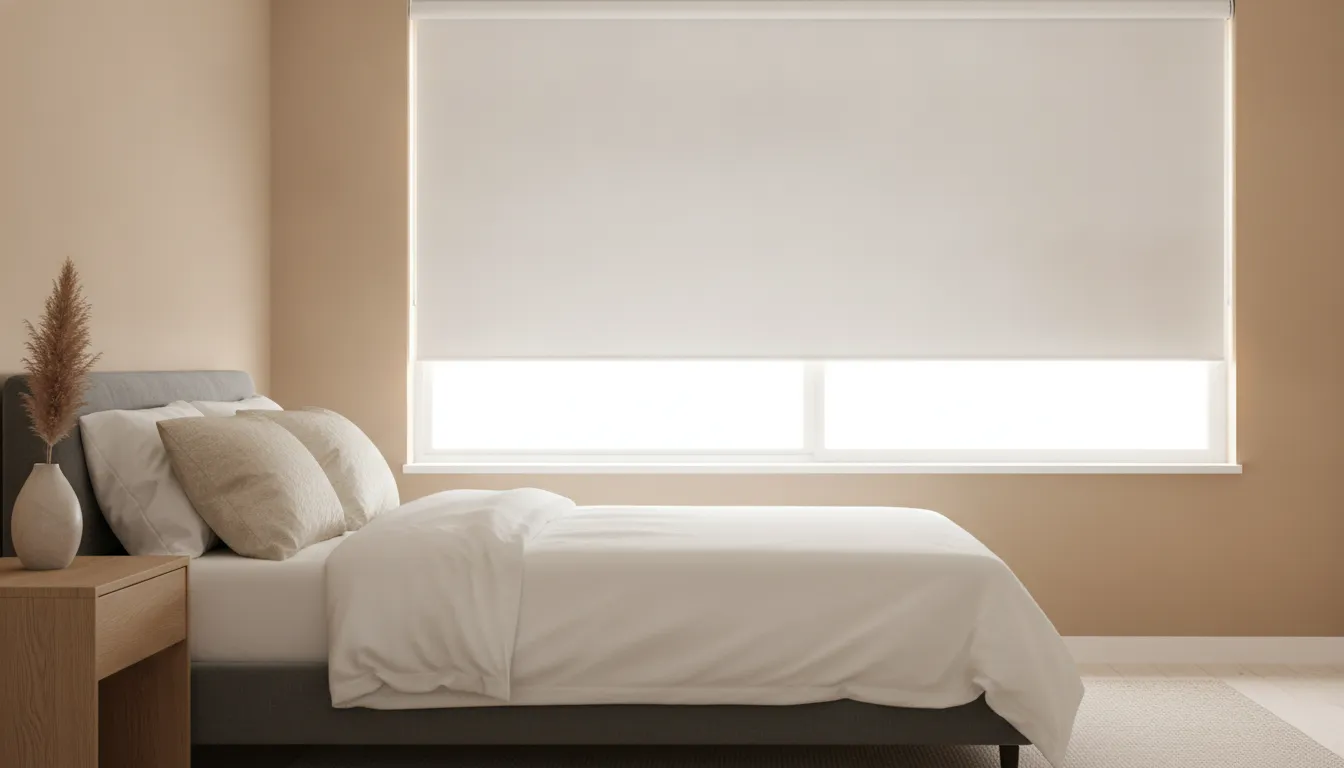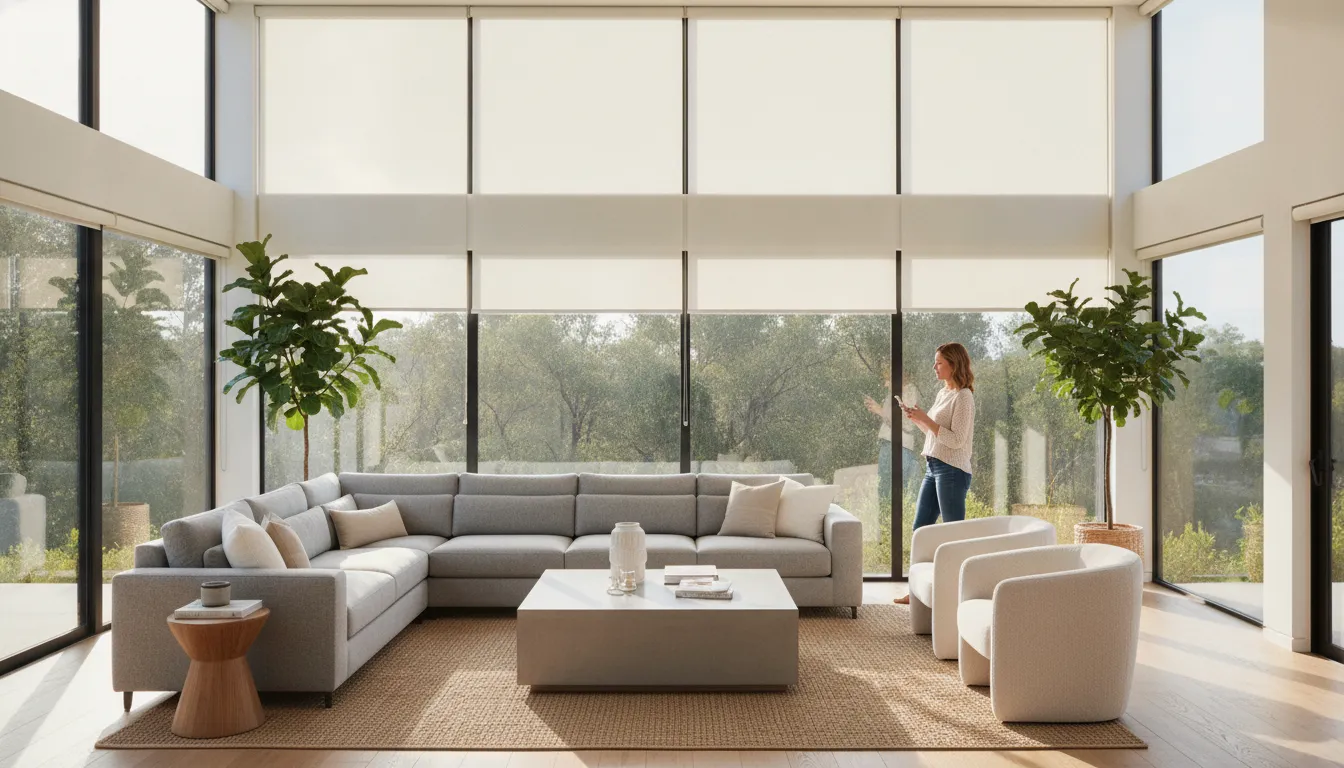
Motorized roller shades can make bright Southern California rooms easier to manage. From morning glare to afternoon heat, while removing dangling cords that can concern families with children or pets. One of the biggest questions Southern California homeowners ask is what drives custom motorized roller shades prices. And whether a quoted price reflects the features their windows actually need.
How much do custom motorized roller shades cost? A typical custom motorized roller shade may range from about $250-$600 per window. With the final price shaped by window size, fabric, motor system, power source, and smart-home features. Because each project is different, an in-home assessment is more reliable than an instant online quote.
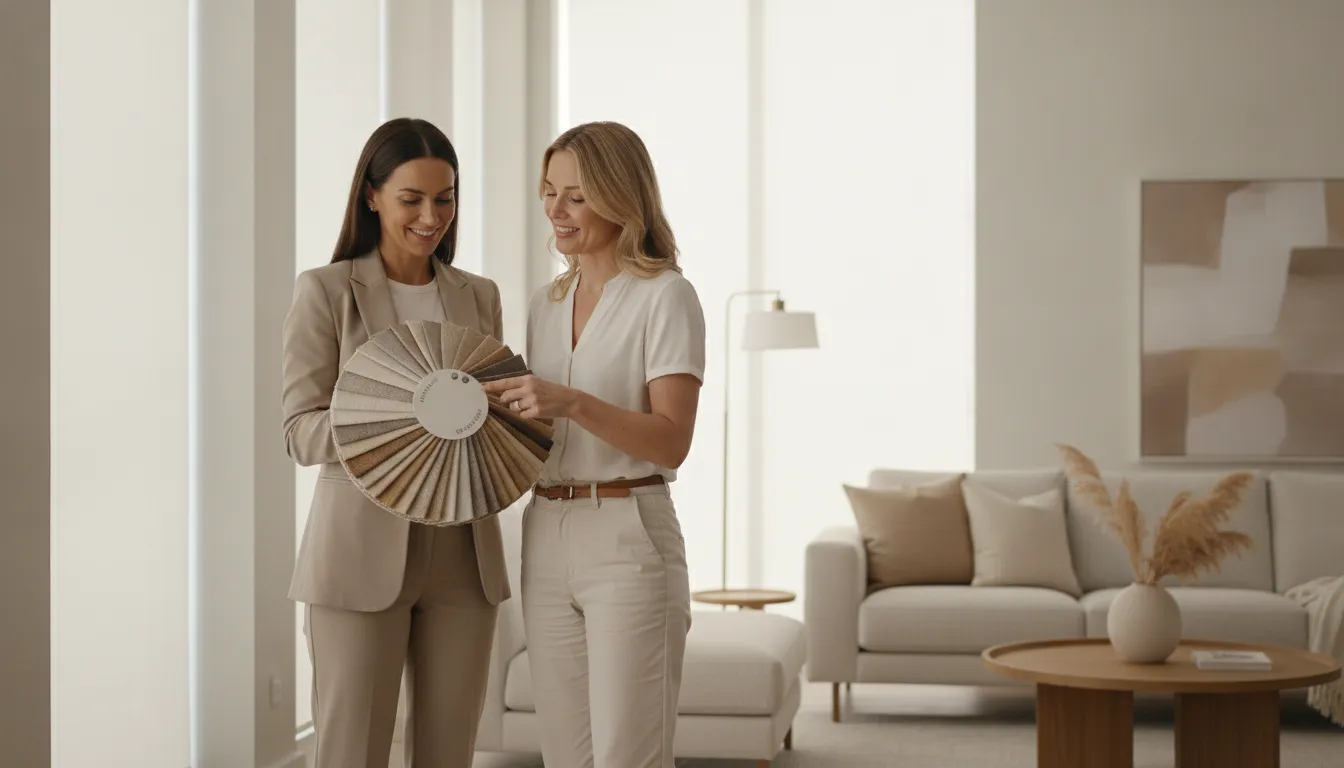
Vineyard Blind & Shutter brings a mobile showroom to homes across Riverside, San Diego, and Orange counties. So you can compare fabrics in your own light and receive professional measuring as part of a free consultation. The first step is understanding how each component changes the investment.
Call Vineyard Blind & Shutter at (951) 757-4188 for a free consultation today.
What Drives the Cost of Custom Motorized Roller Shades?
There is no universal price tag for motorized roller shades because each window and project has different requirements. As a realistic market starting point, a typical custom motorized roller shade may fall in the range of $250 - $600 per window. Larger openings, premium fabrics, advanced controls, and more involved installation can move the total above or below that range. Treat it as a planning estimate, not a flat rate.
The most accurate pricing comes from looking at the complete system rather than the shade alone. A free in-home assessment helps account for the window dimensions, mounting conditions, preferred fabric, power access, and control system. It also avoids the misleading precision of an online instant quote that does not account for the details of your home.
These are the main factors that shape the final investment:
- Motor type: The drive system affects both the initial price and how the shade operates. A basic motor may cost less than a system designed for quieter performance, heavier shades, or more advanced controls.
- Power source: Battery-powered and hardwired options solve different installation needs. Battery systems can simplify placement when wiring is not convenient. While hardwired motors may make sense when dedicated power is already available or several shades will be controlled together.
- Smart-home integration: App control, voice commands, scheduling, wall switches, and compatibility with a home's existing platform can add equipment and setup requirements. Some configurations may also need a hub or bridge.
- Fabric selection: Solar, blackout, and light-filtering fabrics provide different levels of glare control, privacy, light management, and visual softness. Their construction and performance affect the product cost as well as how well the shade fits the room's purpose.
- Window size and quantity: A large or unusually wide window may require a stronger motor and specialized hardware. Ordering several shades can also change the project total because the quote covers multiple products, controls, and installation points.
Features should be selected around how you use each room. A bedroom may prioritize blackout fabric and scheduled closing, while a bright living room may benefit more from solar fabric and glare control. The best value is not necessarily the lowest starting price. It is a system that fits the opening, performs reliably, and includes the capabilities you will actually use.
To explore product options before requesting a quote, review these custom motorized roller shades. Vineyard Blind & Shutter brings samples and design guidance to your home. So you can evaluate fabric choices in the same natural light where the shades will be installed. Because pricing is custom per project, the consultation and professional measuring are essential parts of comparing your options accurately.
The Motor: Battery vs Hardwired and How It Shapes Your Price
The power system is one of the most important choices in a motorized roller shade quote. Battery-powered and hardwired motors can both provide smooth, convenient operation, but they involve different installation requirements and long-term maintenance. Motor type is a primary customization factor alongside fabric and smart-home features, so it should be discussed before comparing custom motorized roller shades prices.
Battery-powered motors: simpler installation and lower upfront labor
Battery motors are often the practical choice when the window area is already finished and you do not want electrical wiring added. The installer can mount the shade, set up the controls, and avoid opening walls or routing wire to a nearby power source. That generally means a lower installation cost and less disruption, especially for bedrooms, offices, and individual windows.
The tradeoff is ongoing battery care. Batteries eventually need to be replaced or recharged, and the timing depends on the motor, shade size, usage, and battery system. A high or hard-to-reach window can make that maintenance inconvenient. When comparing quotes, ask whether the price includes the battery pack, what type of batteries it uses, and how the motor indicates low power. A battery option may add a modest product premium, but it can still be the more economical route when electrical work would be extensive.
Hardwired motors: higher installation cost, less routine maintenance
A hardwired motor connects to the home's electrical system, so it can be a strong fit for a new build. Remodel, or multi-window project where wiring can be planned in advance. Once installed correctly, it does not require routine battery replacement. That can be appealing for large shades, frequently used rooms, or windows that are difficult to access.
Hardwired systems usually cost more to install because they may require professional electrical work, wiring, wall access, and additional finishing. The exact amount depends on the home's construction, outlet location, number of windows, and whether a licensed electrician is needed. Rather than assuming one flat surcharge, request a project range that separates the shade, motor, wiring, and labor. If wiring is simple, the difference may be manageable. If walls must be opened and repaired, the installation portion can materially change the total.
How the choice affects your total budget
As a planning range, a typical custom motorized roller shade may fall around $250-$600 per window before larger sizes. Premium fabrics, advanced controls, or unusual installation conditions raise the total. Battery power often keeps labor closer to the base installation, while hardwiring can move a project toward the higher end because of electrical work. These are market-range estimates, not a flat rate. Window dimensions, fabric type, motor brand, controls, and wiring access all matter.
A professional in-home assessment is the best way to compare the two options. Proper measuring matters because automated shades need a precise fit and reliable operation. A mobile showroom consultation also lets you evaluate the shade in your own lighting before choosing the lower upfront cost of batteries or the reduced maintenance of hardwiring.
How Smart-Home Integration Affects Your Budget
Smart-home control can make motorized roller shades easier to use every day, but each added control method can affect the project total. Basic app control is common with motorized systems. It lets you raise, lower, or schedule shades from a phone, often without adding a separate device beyond the system's control module. If you want the shades to respond to Alexa or Google voice commands. Work with broader home routines, or communicate with other brands, the setup may need additional compatibility equipment.
App control, voice commands, and scheduling
App-based control is a practical starting point for many homeowners. You can operate individual shades, group several windows together, and create schedules for morning light, afternoon heat, or evening privacy. Scheduling can be especially useful when windows receive intense Southern California sun, since shades can adjust while you are away. The price impact depends on the motor platform and how many shades need to be connected, rather than on the app alone.
Voice control through Alexa or Google may require a compatible bridge or hub. A bridge translates communication between the shade motors and the smart-home system. Some products include that capability, while others treat it as an additional component. The same consideration applies if you want scenes that coordinate shades with lighting, thermostats, or security devices. Ask whether the quote includes the bridge, setup, and programming so an apparently lower price is not missing the equipment needed for the features you want.
Wall switches and control preferences
A wall switch can provide a convenient alternative to a phone, particularly in bedrooms, living rooms, or homes where several people need access. It may add hardware and installation time, especially when the switch must be wired or placed in a new location. A hub or bridge can also add to the upfront investment, although it may be worthwhile if you plan to expand the system later.
When comparing motorized shades technology, separate essential convenience from features you may never use. A battery-powered shade with app control may be enough for one room. A larger project with voice commands, scheduled scenes, wall controls, and multiple zones calls for a more complete system design. Include those preferences at the consultation stage, because the right motor and control platform should be selected before the shades are ordered. That approach produces a more useful comparison of custom motorized roller shades prices than comparing shade fabric alone.
Fabric Choice: Solar, Blackout, and Light-Filtering Shades
The fabric is more than a color or decorating decision. It determines how much daylight enters the room, how much privacy the shade provides, and how effectively it helps manage heat and glare. Those differences also affect custom motorized roller shades prices, because specialty weaves, room-darkening liners, and performance materials can cost more than a basic light-filtering option.
Light-filtering fabric for everyday flexibility
Light-filtering shades soften direct sunlight without making a room completely dark. They work well in living rooms, kitchens, and home offices where you want privacy and reduced glare while keeping a comfortable level of natural light. This is often the most balanced choice when the main goal is a polished appearance with convenient scheduled control.
Light-filtering fabric can also be a practical value choice for rooms that do not need full darkness. Instead of paying for a heavier blackout construction everywhere, you can reserve upgraded fabric for bedrooms, media rooms, or other spaces with more demanding light-control needs.
Blackout fabric for bedrooms and media rooms
Blackout shades block substantially more incoming light than standard light-filtering fabric. They are useful for bedrooms, nurseries, guest rooms, and media spaces where early-morning sun or screen glare is disruptive. Motorization makes the benefit more convenient: shades can close on a schedule, respond to a remote, or be adjusted without walking across the room.
If you are comparing room-darkening options, review our guide to blackout roller shades. Keep in mind that blackout performance depends on more than the fabric alone. Light can still enter around the edges unless the shade and installation are specified to minimize those gaps.
Solar fabric for heat and glare control
Solar shades are designed to reduce harsh sunlight and views through the glass while preserving some outward visibility. They can be especially useful on bright Southern California exposures. The right openness level balances privacy, daylight, and the amount of glare reaching floors, furnishings, and screens.
Shades and blinds function as interior or exterior physical barriers that can help reduce solar heat gain and glare, according to the Rutgers Green Manual. That does not mean every shade produces the same savings. Window orientation, glass, climate, fabric, and operating schedules all matter.
Energy performance can be part of the long-term value calculation. An Illinois Institute of Technology study reported approximately a 25% reduction in building energy consumption during both heating and cooling seasons when automated insulating window shades were used. The result comes from a specific study and building application, so it should be treated as a reference point rather than a guaranteed household savings figure. Still, it shows why fabric selection and automated control deserve consideration alongside appearance.
As a realistic starting point, a typical custom motorized roller shade may fall around $250-$600 per window, with larger windows, premium solar or blackout fabrics, and added control features pushing the range higher. A professional measurement helps match the fabric to each room instead of over-specifying every window. Vineyard Blind & Shutter can review light, heat, privacy, and budget goals together before finalizing the shade package.
How to Compare Custom Motorized Roller Shades Prices
Comparing custom motorized roller shades prices is easier when every quote describes the same product and service. A lower number may reflect a smaller window, a basic battery motor, light-filtering fabric, or installation that is billed separately. A higher number may include blackout fabric, stronger hardware for a wide opening, smart-home controls, and professional installation.
As a practical market guide, many typical custom motorized roller shades fall in the range of $250-$600 or more per window. That is a planning range, not a flat rate. Window dimensions, fabric selection, motor system, wiring, and control features can move the final price substantially. Treat any instant online estimate as a starting point until the windows are measured and the product specifications are confirmed.
| Feature tier | Planning range | What the quote may include |
|---|---|---|
| Basic motorized shade | $250-$400 | Standard-size window, battery-powered motor, and light-filtering fabric |
| Mid-range custom shade | $400-$600 | Custom fabric, upgraded motor, wider window sizing, and a remote or app control |
| Premium integrated shade | $600+ | Blackout or specialty fabric, oversized dimensions, hardwired power, and smart-home integration |
Use the same checklist for every quote
Ask each provider to identify these details in writing:
- Motor type: Is the system battery-powered, rechargeable, or hardwired? Does the motor support the shade's size and fabric weight?
- Fabric: Is it solar, light-filtering, or blackout? What openness, privacy level, color, and backing are included?
- Power: Are batteries, charging equipment, wiring, a transformer, or electrical work included or priced separately?
- Smart features: Does the price include a remote, app control, scheduling, voice control, hub, or bridge? Some systems require additional equipment.
- Installation: Does the quote include professional measuring, mounting, programming, cleanup, and warranty support?
Also compare the total for the full project, not only the per-window figure. A multi-window order may involve different sizes, shared controls, or a mix of fabric types. Vineyard Blind & Shutter provides a mobile showroom, so homeowners can compare samples in their actual lighting before choosing among custom window shades. A free in-home assessment helps turn a broad range into a quote based on your windows, priorities, and preferred control system.
DIY vs Professional Installation: What to Expect
Installing a manual roller shade may look straightforward: mark the brackets, drill a few holes, and hang the shade. Motorized roller shades require more precision. The shade must sit level, the brackets must support the tube and motor, and the operating system must be balanced so it raises and lowers evenly. A small alignment error can lead to rubbing, uneven movement, or unnecessary strain on the motor.
Power is another consideration. Battery-powered shades need the motor, battery compartment, and control location positioned for convenient access. Hardwired systems may require a plan for routing electrical connections and coordinating the work with an appropriately qualified professional. Smart-home controls add another setup layer, including pairing the shade, configuring limits, and confirming that schedules or voice commands work as intended.
What a DIY installation usually involves
A DIY project typically means measuring each window, selecting compatible brackets and power options, locating secure mounting points, drilling accurately, and completing the motor setup. You may also need to adjust the upper and lower travel limits so the shade stops at the correct positions. These tasks can be manageable for an experienced homeowner with the right tools. But they leave little room for guesswork when several windows have different dimensions or mounting conditions.
The biggest risk is not simply a shade that looks slightly crooked. An incorrect measurement can create gaps, prevent the shade from operating properly, or require reordering a custom product. Before choosing the DIY route, confirm exactly what the product warranty covers and whether installation errors or unauthorized modifications could affect that coverage.
Why professional installation can be the better value
Professional service starts before installation. Vineyard Blind & Shutter includes in-home measuring and consultation as part of its custom process. Helping confirm the fit, mounting approach, fabric, and motor configuration before the order is finalized. Professional installation then covers bracket alignment, shade balancing, limit-setting, and a final operation check. Warranty support is another practical advantage, since the installer understands the product and its setup.
Professional installation is typically built into the quote rather than treated as an unexpected add-on. That makes it easier to compare the full project cost, including the product and labor, instead of comparing a DIY product price with an incomplete professional estimate. Vineyard's mobile showroom also brings samples and motorized options to your home, so you can assess fabric color. Openness, and light control in the lighting where the shades will actually be used.
For a single accessible window, DIY may be reasonable. For multiple custom shades, hardwired power, unusual windows, or smart-home controls, professional measuring and installation can reduce mistakes and provide a smoother path from selection to daily use.
Are Motorized Roller Shades Worth the Cost for SoCal Homes?
For many Southern California homeowners, the value of motorized roller shades is not limited to how they look. The right system can make daily routines easier, improve privacy, reduce glare, and help manage the intense sunlight that reaches west- and south-facing rooms. Those benefits become more meaningful when the shades are sized, powered, and programmed for the specific windows in your home.
Convenience that fits your routine
Motorization is especially useful for windows that are difficult to reach, such as tall living-room glass, skylights, or several windows grouped together. A wall switch, remote, or compatible smart-home control can raise or lower multiple shades at once. Scheduling can also help you open shades in the morning, limit afternoon glare, or close them for evening privacy without walking from room to room.
Light control is another practical advantage. Solar fabrics can soften glare while preserving a view, while light-filtering and blackout options give bedrooms, media rooms, and nurseries more control over brightness. Vineyard's custom window shades can be evaluated with the rest of the room in mind, rather than selected from a small screen image that may look different in Southern California daylight.
A safer choice for children and pets
Traditional window coverings with looped or dangling cords can create a preventable hazard for young children and pets. Motorized roller shades remove those operating cords from the window area, which makes them a useful safety upgrade in bedrooms, playrooms, and homes with curious animals. Safety alone may justify the investment for some families, particularly when replacing several older treatments at the same time.
Can energy savings improve the long-term value?
Shades can also help moderate solar heat gain and glare. The Rutgers Green Manual identifies internal barriers such as shades and blinds as tools for reducing heat gain and glare. Although results depend on the window, fabric, orientation, and how consistently the shades are used. A motor makes consistent operation easier, which is important during the hottest part of the day.
An Illinois Institute of Technology study found that automated insulating shades reduced energy use by approximately 25 percent during both heating and cooling seasons. The study also reported a potential three- to five-year payback in many commercial applications. That finding should not be treated as a guaranteed residential result, since a SoCal home's climate, glass, insulation, utility rates, and shade selection all differ. It does show why energy performance can be part of the value calculation, not an afterthought. Read the Illinois Tech study for its methodology and context.
When reviewing custom motorized roller shades prices, compare the complete outcome, not only the hardware line item. A properly measured shade with the right fabric, dependable controls, professional installation. And a clear warranty may deliver more useful value than a lower-priced system that fits poorly or is difficult to operate. Vineyard's custom window coverings approach includes an in-home assessment, so the recommendation can account for each room's light, privacy, and safety needs.
How to Get an Accurate Quote for Your Windows
Online calculators can provide a rough starting point, but they cannot account for the details that make motorized roller shades a custom product. Window dimensions, mounting conditions, fabric, motor type, power source, and smart-home features all affect the final investment. A reliable quote should reflect your actual windows and the complete installation, not just a generic product price.
Measure the windows you want to cover
Begin with a list of each window, including its width, height, location, and whether it is inside or outside mounted. Note unusually deep frames, narrow trim, large expanses of glass, and windows that are difficult to reach. These details help identify possible mounting or motor requirements. Your measurements are useful for planning, but they should not replace professional measuring. Small errors can affect fit, fabric coverage, and motor performance.
Schedule a free in-home consultation
With Vineyard Blind & Shutter's mobile showroom, product samples come to your home instead of asking you to make decisions from a screen or a small store sample. During the visit, you can view fabrics in the rooms where they will be installed, under your own daylight and evening lighting. A professional can also measure the windows, review mounting conditions, and discuss light control, privacy, and child or pet safety. You can request a free in-home estimate to start the process.
Choose the motor, power, fabric, and controls
Ask how battery-powered and hardwired motors would work in your home. Then compare solar, light-filtering, and blackout fabrics based on the room's sun exposure and your privacy goals. Finally, decide whether you want wall controls, remote operation, app control, voice commands, scheduling, or smart-home integration. Each choice can change the product and installation requirements, so it should be included before the quote is finalized.
Review a complete project quote
A useful quote should show the selected shades, number and size of windows, fabric, motor and power system, control options, measuring, delivery, and installation. For planning purposes, a typical custom motorized roller shade may fall within a broad range such as $250-$600 per window. But larger windows, premium fabrics, stronger motors, and connected features can move the project higher. Treat this as a market-range guide, not a promised price. The most important comparison is whether competing quotes cover the same specifications and services.
Schedule professional installation
Once you approve the project, arrange installation with the same attention to detail as the product selection. Professional installation helps ensure brackets are secure, shades operate evenly, motors are configured correctly, and controls work as expected. Vineyard's consultation model includes professional measuring and installation, so the quote can represent the finished project rather than leaving important labor and setup costs for later.
Taking these steps gives you a quote based on your windows, your preferences, and the complete scope of work. It also makes it easier to compare custom motorized roller shades prices fairly, because you are evaluating equivalent products and services.
Call Vineyard Blind & Shutter at (951) 757-4188 for a free consultation today.