Choosing window shades is less about finding a universal winner and more about matching the treatment to your room, style, and daily routines. One option creates soft fabric folds that add texture and visual warmth, while the other rolls neatly around a central tube for a clean, streamlined profile. Because both can be custom-fit, the right choice can improve light control, privacy, and the finished look of your windows without forcing you into a one-size-fits-all solution. Vineyard Blind & Shutter brings fabrics and operating options to your home through a convenient mobile showroom, so you can compare them in your actual lighting. Call Vineyard Blind & Shutter at (951) 757-4188 for a free consultation.
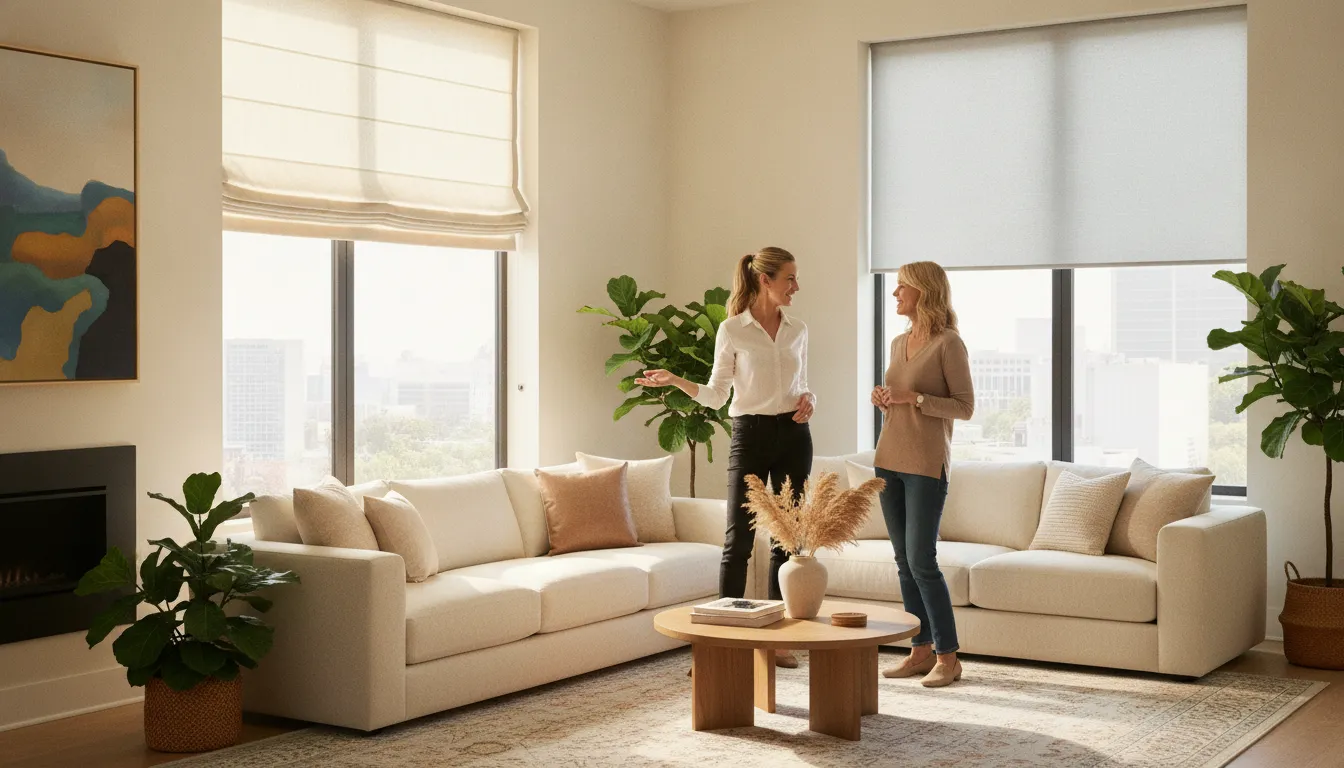
When comparing roman shades vs roller shades, remember the basic difference: Roman shades fold into soft fabric pleats, while roller shades roll smoothly around a tube. Your room's design, light-control needs, and preferred maintenance will help determine which style fits best.
That visual distinction affects everything from how much space a shade occupies when raised to how it handles sunlight and complements your furnishings. Start by looking at the construction and appearance of each style, then weigh the practical differences that matter most in your home.
What Are the Main Differences Between Roman Shades and Roller Shades?
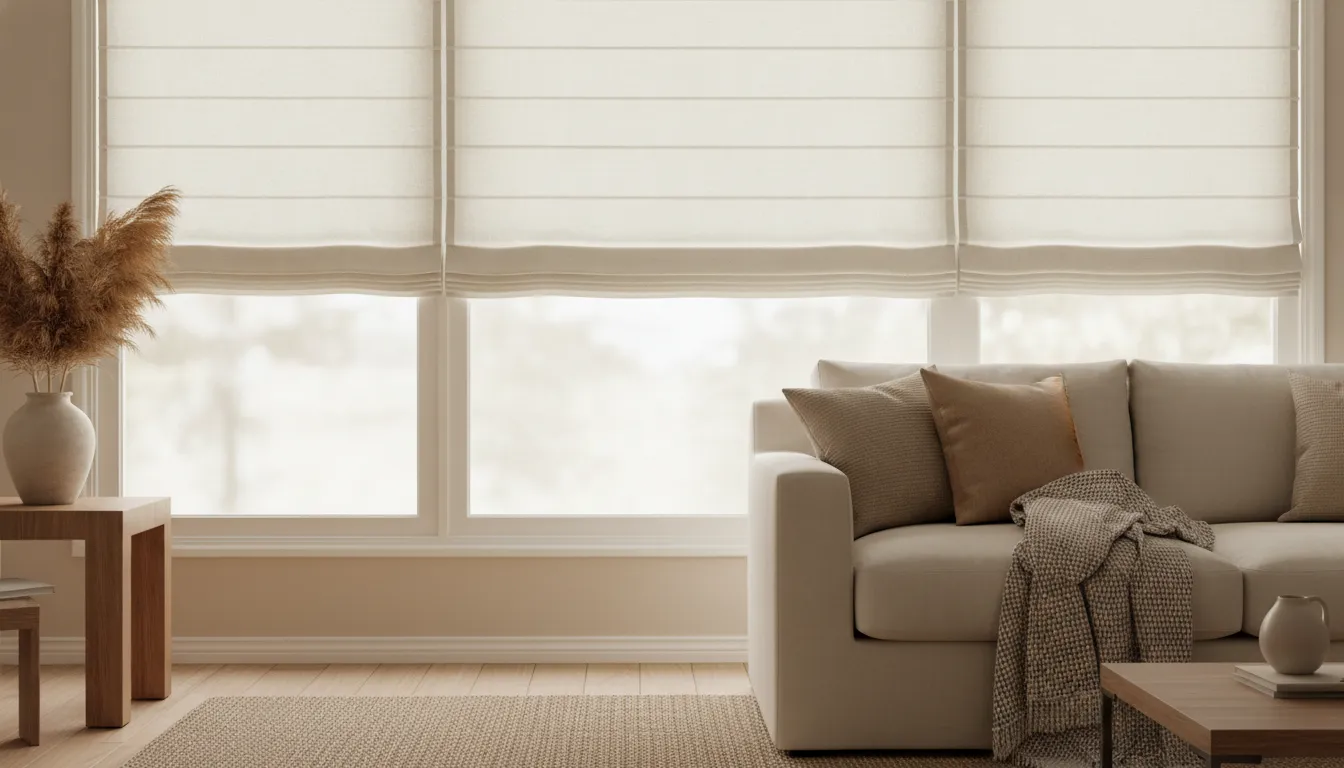
Both styles manage light, privacy, and window coverage, but their construction creates very different experiences in a room. Roman shades bring layered fabric and a tailored or relaxed decorative look. Roller shades keep the profile clean and compact, which can be especially useful when space around the frame is limited. Explore custom window shades to see how fabric, operating systems, and fit can be matched to your windows.
How Roman Shades Work
A Roman shade lifts by folding its fabric into structured pleats. Depending on the design, those folds may be crisp and tailored, or deeper and softer. Waterfall and hobbled folds create a relaxed, elegant appearance, while a flat fold offers a more orderly profile. When the shade is raised, the fabric stacks at the top of the window. That stack can be a strong design feature, but its depth may slightly reduce the clear glass area and incoming light.
How Roller Shades Work
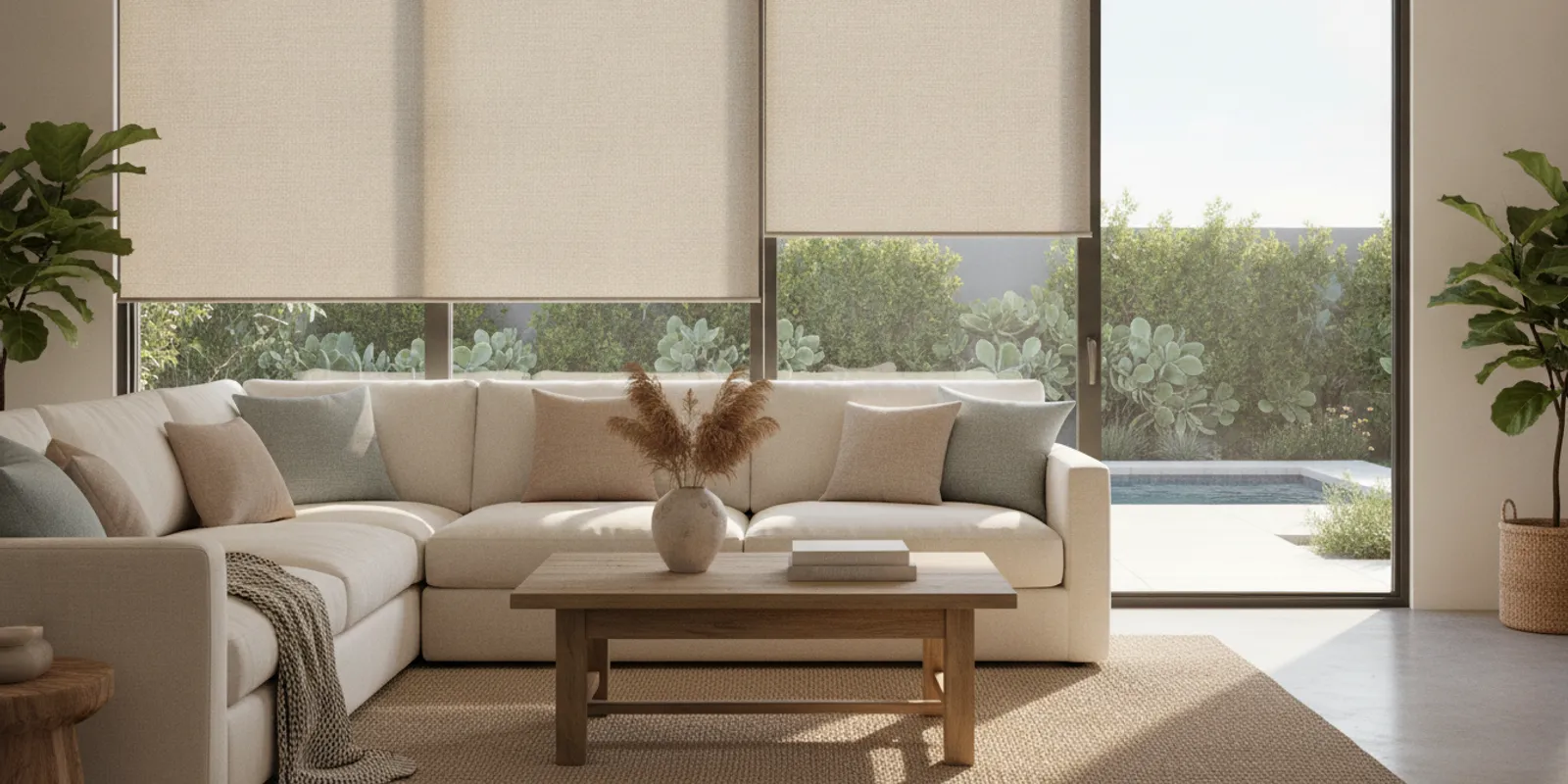
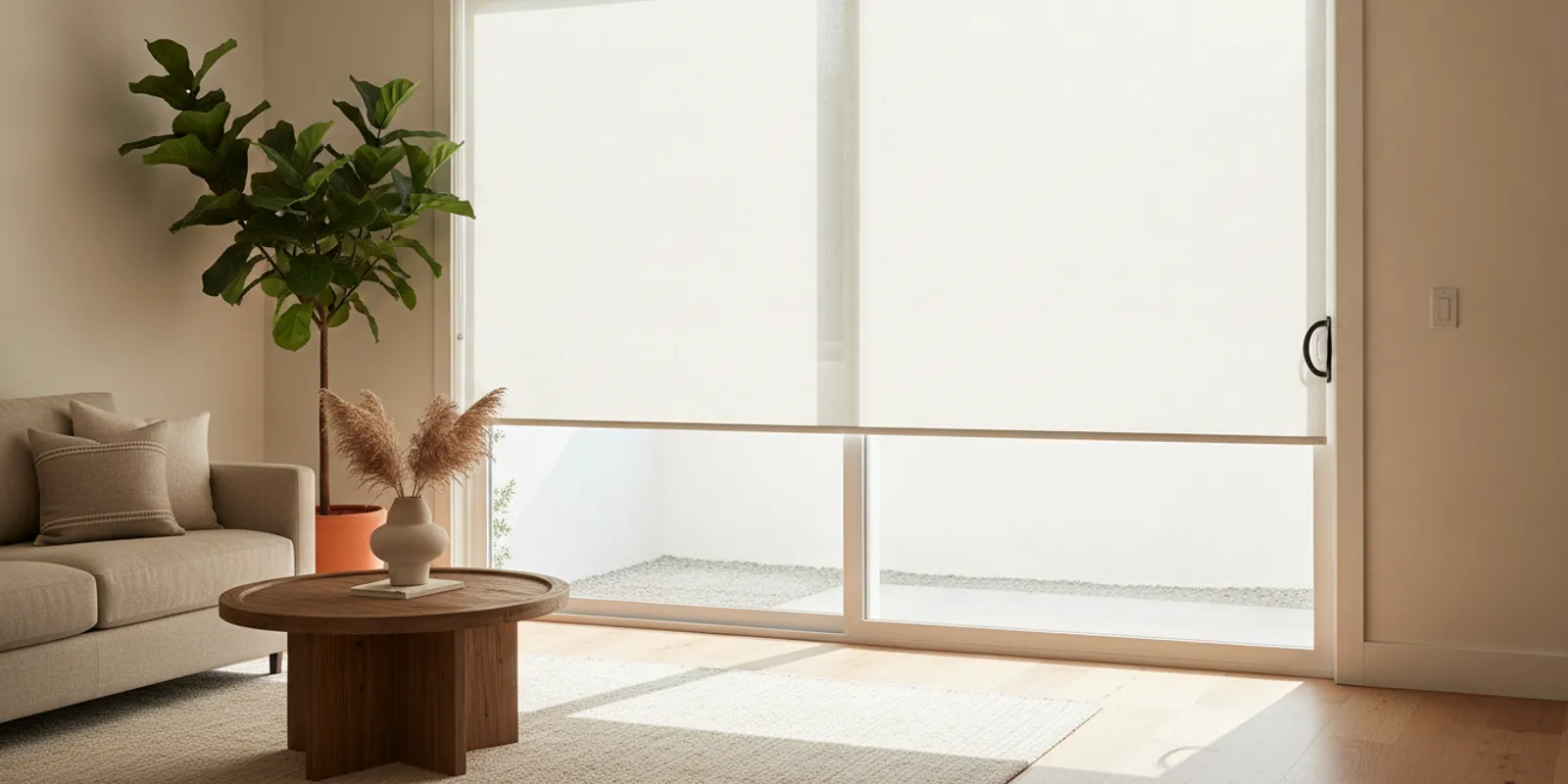
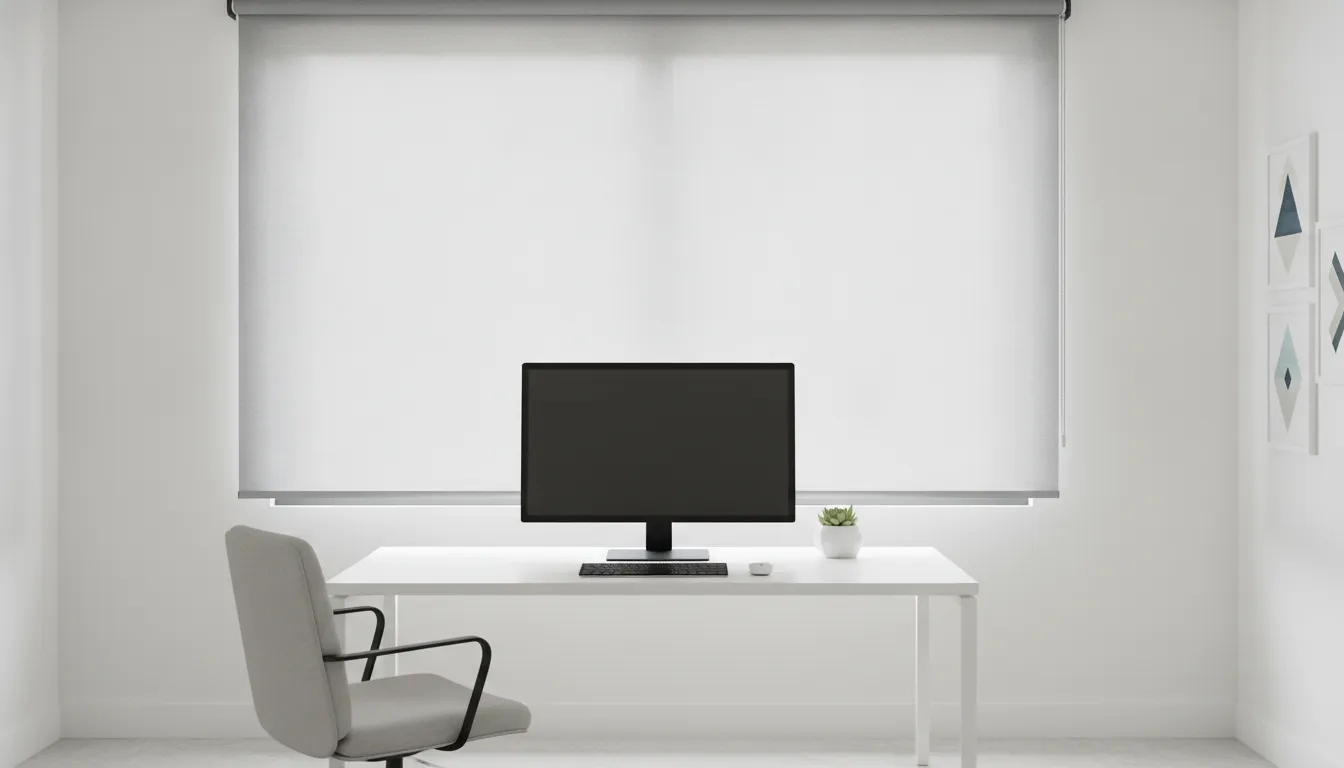
A roller shade rolls around a central tube as it opens. The result is a smooth, unobtrusive treatment that works well with modern interiors and smaller window frames. Spring-loaded and chain-operated systems are established, durable options for consistent daily use. Roller shades can also be configured in different fabrics and operating styles, so a streamlined appearance does not mean giving up practical control.
| Feature | Roman Shades | Roller Shades |
|---|---|---|
| Look & style | Layered, fabric-rich, tailored, or relaxed. | Sleek, smooth, and low-profile. |
| Light control | Fabric folds stack at the top when raised. | Continuous fabric rolls fully around the tube. |
| Operation | Fabric folds upward through the shade. | Spring-loaded or chain-operated tube mechanism. |
| Cost range | Generally the more decorative, premium option. | Typically the more economical, utilitarian option. |
| Maintenance | Fabric folds may need more careful dusting or cleaning. | Smooth surface is generally straightforward to wipe down. |
| Best rooms | Living rooms and bedrooms needing a softer finish. | Small frames, offices, and rooms favoring a compact look. |
The practical choice depends on whether the priority is layered texture or a minimal footprint. A custom measurement also matters, particularly for Roman shades, because the fabric weight and stack depth need to be accounted for before installation. A simple way to narrow the decision is to work through the selection in order:
- List the rooms and note each window's light exposure, privacy needs, and available frame space.
- Decide which look fits the decor: layered fabric warmth for a Roman shade, or a sleek low profile for a roller.
- Pick the fabric and lining features that match those needs, such as blackout, thermal, solar, or light-filtering options.
- Have a professional measure to confirm mounting, stack depth, and a precise custom fit before installation.
How Roman Shades vs Roller Shades Compare on Light Control and Privacy
Light control depends less on the shade name than on the fabric, lining, and installation details. Roman shades can use blackout or thermal linings to strengthen privacy and reduce incoming light. Roller shades offer a broader fabric range, including light-filtering, blackout, and solar materials. That makes either style adaptable, but the best choice depends on whether you want a softly filtered room, a dark sleeping space, or daytime views without harsh glare.
Blackout Options for Bedrooms and Media Rooms
For bedrooms and media rooms, a Roman shade with a blackout lining can create a substantial barrier against outside light while preserving the layered fabric appearance. The fold design remains visible when the shade is lowered, so it suits homeowners who want darkness without giving up a more decorative finish.
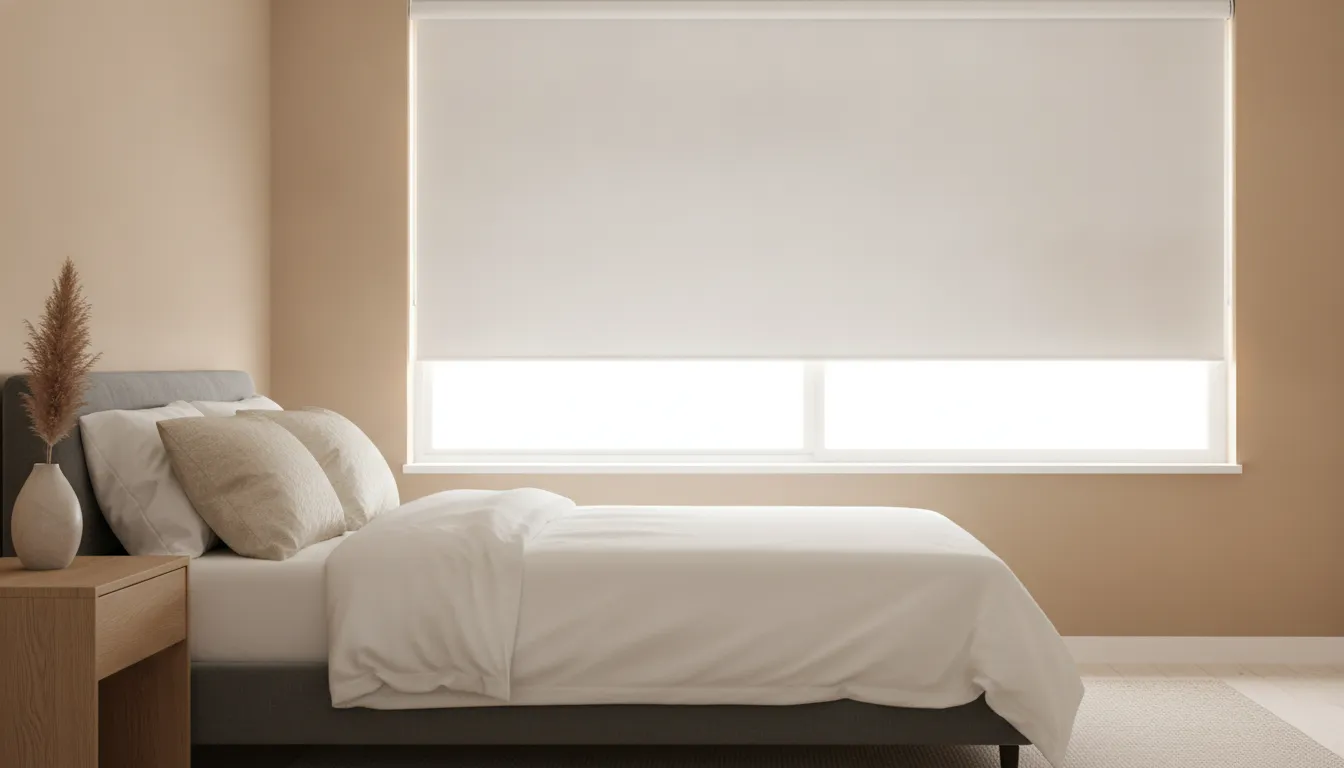
Roller shades take a streamlined approach to blackout control. A blackout fabric blocks light through the shade itself, while a cassette can cover the upper roller and side tracks can minimize the gaps along the window edges. These upgrades are especially useful in bedrooms, nurseries, and media rooms where even narrow strips of light can affect sleep or screen visibility. A properly measured custom shade also helps reduce side gaps around unusual or oversized windows.
Solar roller shades serve a different purpose. Their specialized fabric can reduce glare and solar heat gain while maintaining outdoor views, making them practical for bright living rooms, offices, and windows facing strong afternoon sun. They are not the same as blackout shades, so pair them with another treatment when complete darkness is the priority.
Flexible Privacy During the Day
Top-down/bottom-up operation is available on both Roman and roller systems. You can lower the upper portion for daylight while keeping the lower portion covered, or raise the bottom to preserve privacy without making the room feel closed in. This is helpful for street-facing windows, bathrooms, and rooms where sunlight changes throughout the day.
Motorization makes these adjustments easier, particularly on tall windows or multiple openings. Explore motorized roller shades for cordless control and convenient scheduled adjustments. For a precise recommendation, professional measuring can account for fabric choice, mounting position, side gaps, and the privacy level each room requires.
Are Roman Shades or Roller Shades Better for Energy Efficiency?
Energy performance depends less on the shade name and more on the fabric, lining, fit, and how consistently you operate it. A well-fitted Roman shade with an insulated or thermal lining can create a more substantial barrier at the window than a standard, lightweight roller shade. However, a solar roller shade may be the better choice when your main concern is reducing glare and summer heat while preserving an outward view.
Insulated Linings and Thermal Performance
Windows can be a major source of seasonal heat transfer. The U.S. Department of Energy reports that about 30% of a home's heating energy can be lost through windows. In cooling seasons, roughly 76% of sunlight reaching standard double-pane windows enters as heat. Window coverings cannot replace efficient glazing or proper air sealing, but they can help manage the heat and light that reach the room.
For winter comfort, choose a Roman shade with a thermal lining and a close custom fit. The added fabric and lining can reduce drafts and slow heat movement near the glass. For summer-facing windows, consider a solar roller shade. Its specialized openness level can reduce solar heat gain and glare while maintaining some view to the outdoors. Light-filtering and blackout roller fabrics are also available when privacy or stronger light control matters more than preserving the view.
Custom measurement matters for energy performance. Gaps around an undersized treatment allow light and conditioned air to bypass the covering, especially on large or irregular windows. Roman shades also need careful planning for their folded stack when raised, while roller shades can use a cassette or side tracks to reduce edge gaps. Ask about an AERC rating when comparing products. The Attachments Energy Rating Council provides independent certification for the energy performance of window coverings, giving you a more useful basis for comparison than appearance alone. Daily operation is just as important as product selection: a Department of Energy study of residential window coverings found that 75% of them remain in the same position every day. Close shades during hot, sunny periods to limit heat gain. On sunny winter mornings, open coverings on sun-facing windows so solar gain can help warm the home. Motorization, scheduling, or simple household reminders can make those adjustments easier to maintain.
What Do Roman Shades Cost vs Roller Shades?
Roller shades are usually the more budget-conscious choice when you want straightforward light control and a clean, practical appearance. A custom roller shade may cost roughly $80-$400 per window, depending on the fabric, dimensions, control system, and finish. Light-filtering fabrics and basic manual systems tend to sit toward the lower end, while blackout, solar, motorized, or larger-window options can raise the total.
Roman shades are generally a more decorative, premium choice because they use more fabric and construction to create tailored folds. A realistic range is about $300-$1,200 per window, depending on the fabric, lining, fold style, size, and operating system. A simple flat fold may cost less than a waterfall or hobbled fold, while blackout or thermal lining and motorization can add to the investment. The goal is not simply to choose the lowest price, but to match the treatment to the room, window, and performance you need.
What Makes Custom-Fit Shades Worth the Investment?
Custom sizing affects more than appearance. A shade fitted closely to the window can improve light blocking, privacy, and energy performance compared with a standard product that leaves larger gaps around the frame. This matters especially for unusually sized windows, patio doors, and rooms where glare or temperature changes are noticeable. You can compare options for custom blinds and other custom window coverings based on the needs of each opening.
How Does Roman Shade Stack Depth Affect Measuring?
When raised, a Roman shade folds into a stack at the top of the window. That stack has depth and may slightly reduce the clear glass area, so the mounting position and available top clearance should be considered before choosing the style. A professional measurement accounts for the shade's weight, fold pattern, and retracted position. This is particularly important for shallow windows or windows where preserving every bit of natural light matters.
Vineyard Blind & Shutter provides free professional measuring and consultation, helping homeowners compare fabric, operating, and installation choices before committing to a range. The result is a more accurate quote and a shade selected for how the room is actually used.
Which Shade Belongs in Each Room of Your Home?
The best shade is the one that supports how you use the room. Consider the amount of natural light, available wall and frame space, privacy needs, and the atmosphere you want to create. A fabric Roman shade can add softness and visual warmth, while a roller shade keeps the window treatment streamlined and unobtrusive.
- Living rooms: Roman shades suit spaces where a softer, finished fabric look is part of the design. Choose a lining based on privacy and light-control needs.
- Bedrooms: Roman shades with blackout or thermal linings create a layered, comfortable look. Roller shades with blackout fabric, a cassette, or side tracks are useful when reducing edge light is a priority.
- Home offices: Roller shades work well near desks and smaller frames because their low-profile design takes up little space. Solar roller fabric can reduce screen glare while preserving an outside view.
- Kitchens: Roman shades can soften hard surfaces such as tile, stone, glass, and countertops. A washable, practical fabric and appropriate inside-mount fit help keep the treatment useful in an active room.
- Kids rooms: Either style can be specified with cordless or motorized operation, reducing the need for dangling cords around beds, play areas, and furniture.
Kid-Friendly and Motorized Options
Both Roman and roller shades are available with manual, cordless, and motorized lift systems. Cordless operation offers a clean profile and is practical for frequently used windows. Motorization adds convenience when windows are hard to reach, grouped together, or exposed to strong morning or afternoon sun. It can also support child-safe window treatment design by eliminating operating cords.
For a home with several room types, it is not necessary to use one shade style everywhere. Roman shades may define the living room and bedroom, while roller shades handle the office, narrow windows, or areas where glare control matters. If you prefer a more architectural alternative, plantation shutters can provide a durable option with adjustable light control.
Measurements matter, especially when a Roman shade needs clearance to stack above the glass or when a roller shade must fit closely within a small frame. Vineyard Blind & Shutter provides in-home measuring and design consultation, helping you match each window to the right material, mounting approach, and operating system.
Frequently Asked Questions
Are Roman shades or roller shades better for light control?
Both can provide effective light and privacy control when matched with the right fabric or lining. Roman shades can use blackout or thermal linings, while roller shades are available in light-filtering, blackout, and solar fabrics. For a bedroom, a blackout roller with a cassette or side tracks can reduce side light gaps. For flexible daytime privacy, ask about top-down/bottom-up operation, which is available for both styles.
Do Roman shades provide better insulation than roller shades?
Roman shades can provide stronger thermal performance when made with an insulated lining, particularly where the fabric's layered construction fits the room's needs. A standard roller shade may be thinner, but solar and other performance fabrics can still help manage glare and heat. The fit matters as well, because a custom shade can cover the window more precisely and limit unwanted light and air gaps.
Which shade style is easier to clean?
Roller shades are generally easier to maintain because their smooth surfaces can often be dusted or wiped down. Roman shades have fabric folds that may collect dust and can require careful vacuuming or professional cleaning, depending on the material and lining. Your fabric selection, household activity, and cleaning routine should all factor into the decision.
Can Roman and roller shades both be motorized?
Yes. Both styles can be ordered with manual, cordless, or motorized lift options. Motorization is useful for hard-to-reach windows and offers cordless convenience for homes with children or pets. It can also make it easier to operate multiple shades consistently throughout the day, especially in rooms with strong sun exposure.
Ready to Choose the Right Shade for Your Home?
The best choice depends on your rooms, lighting, privacy needs, and the look you want every day. A free in-home consultation lets you compare Roman and roller shade fabrics in your own lighting, with professional measuring and installation guidance. Call Vineyard Blind & Shutter at (951) 757-4188 to schedule your free consultation. We can help you narrow the options with confidence.