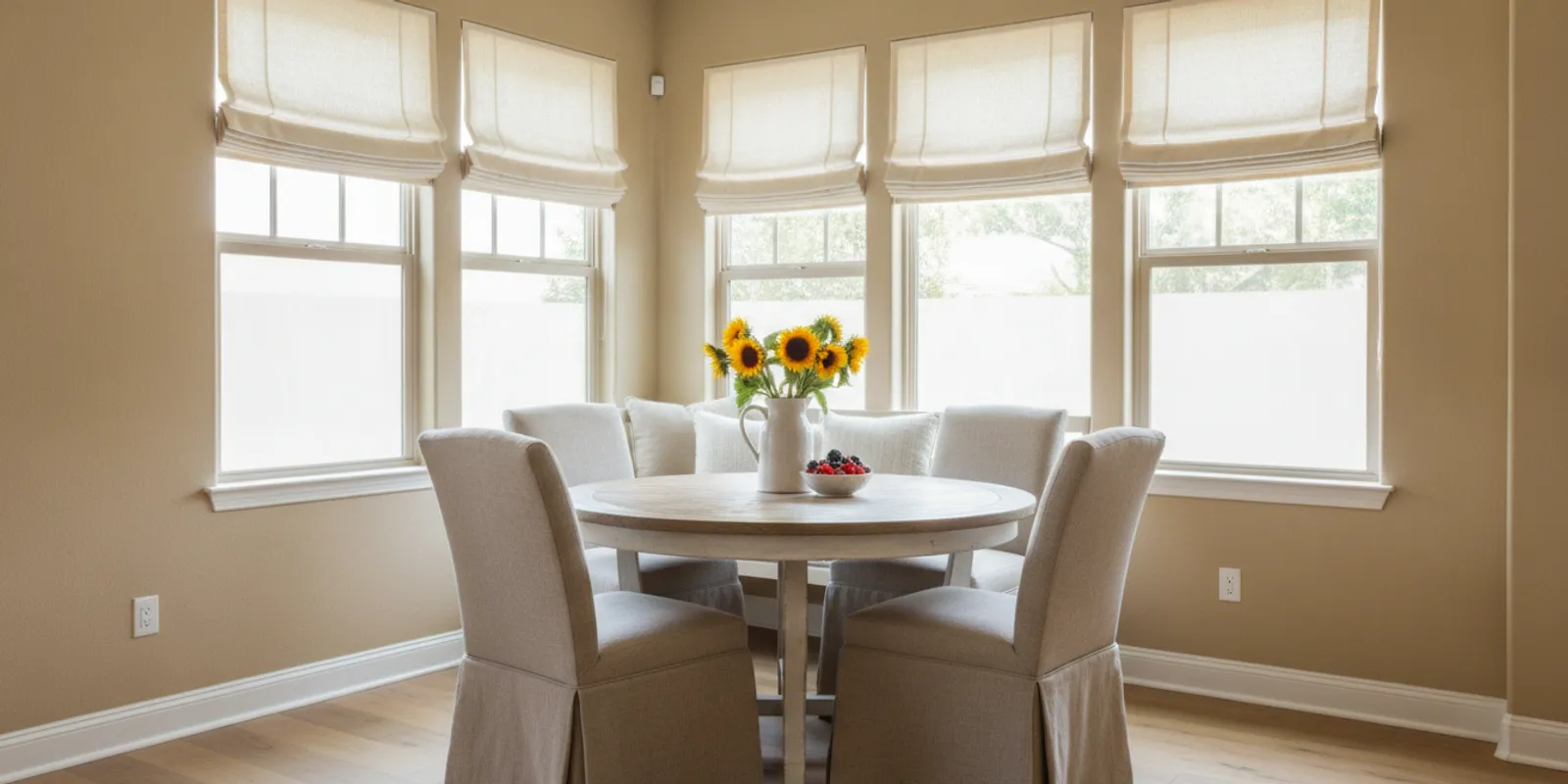
Custom window shades in Southern California can make a breakfast nook more comfortable without making the room feel closed in. In Temecula and nearby communities, the right choice depends on when sunlight reaches the glass, how much privacy you need, where people sit, and how the shade will be operated each day. Start with those conditions rather than choosing a fabric from a catalog.
Call Vineyard Blind & Shutter at (951) 757-4188 to plan your custom window shades.
What should you consider before choosing custom shades for a breakfast nook?
A breakfast nook may serve several purposes. It can be a place for morning meals, homework, reading, a laptop, or casual conversation. The window treatment should support those activities at the times when the room is most difficult to use. Spend a day observing the space before comparing products.
Q: What is the best first decision? A: Describe the light, privacy, and operating problem in the room before choosing a shade style.
- Light: Does direct sun land on the table, floor, or someone’s face? Is the problem brief or does it last for much of the day?
- Glare: Does sunlight make a phone, laptop, television, or glossy table difficult to see?
- Privacy: Can neighbors, pedestrians, or passing vehicles see into the nook during the day or after interior lights are on?
- Operation: Will someone adjust the treatment from a chair, or will it usually remain in one position?
- Clearance: Are there handles, trim, cabinetry, plants, benches, or table edges close to the window?
- Care: Will food, dust, pets, or frequent activity make simple cleaning important?
Write down specific observations. “Late-morning sun creates glare on the left side of the table” gives a designer more useful information than “the nook is too bright.” Also note the window direction, the usual seating positions, and whether the problem changes with the season. These notes help you compare opacity, openness, lining, and control options without expecting one setting to solve every concern.
It is also useful to view the window from outside. A fabric that seems private in bright daytime conditions may show silhouettes after the room’s lights are turned on at night. Privacy is therefore a question about the exact material, lighting conditions, and sightline, not only the product category.
Vineyard’s window covering comparison guide provides a starting point for comparing shades, blinds, and shutters. Use a broad comparison to make a shortlist, then evaluate samples and mounting details for your own opening.
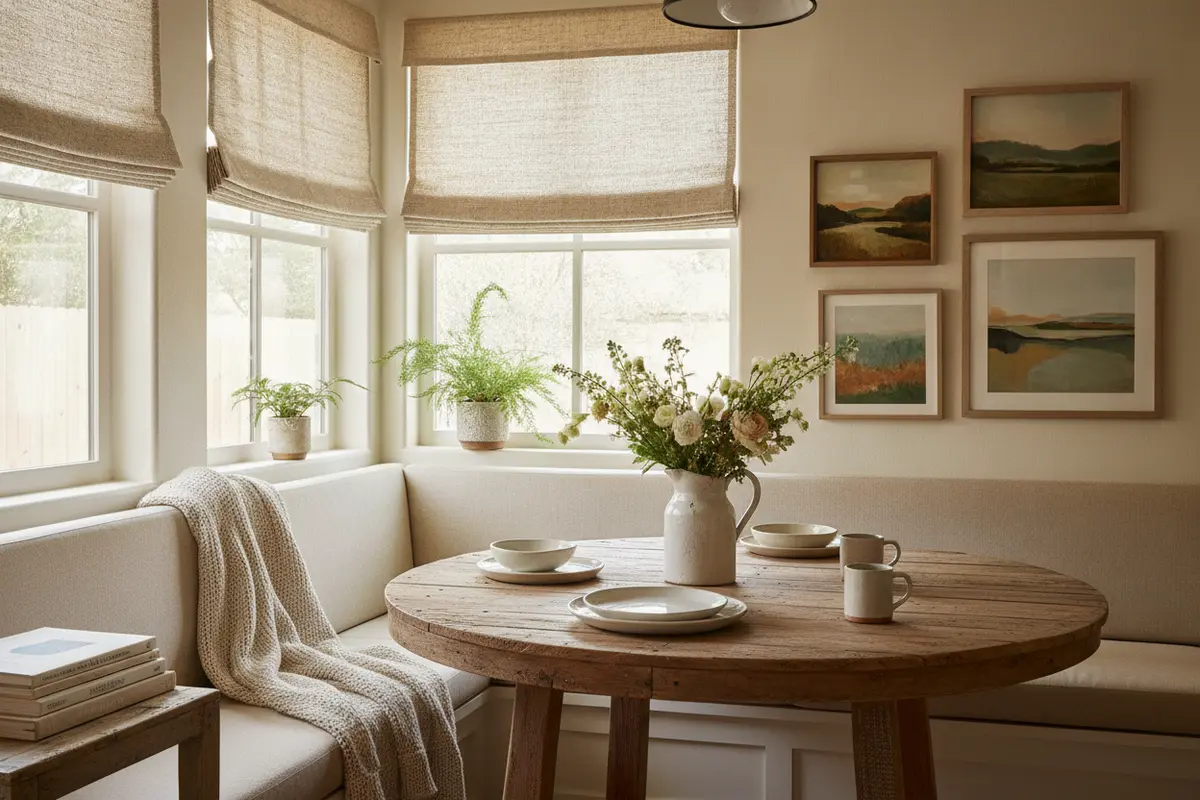
Which shade styles might suit a Temecula breakfast nook?
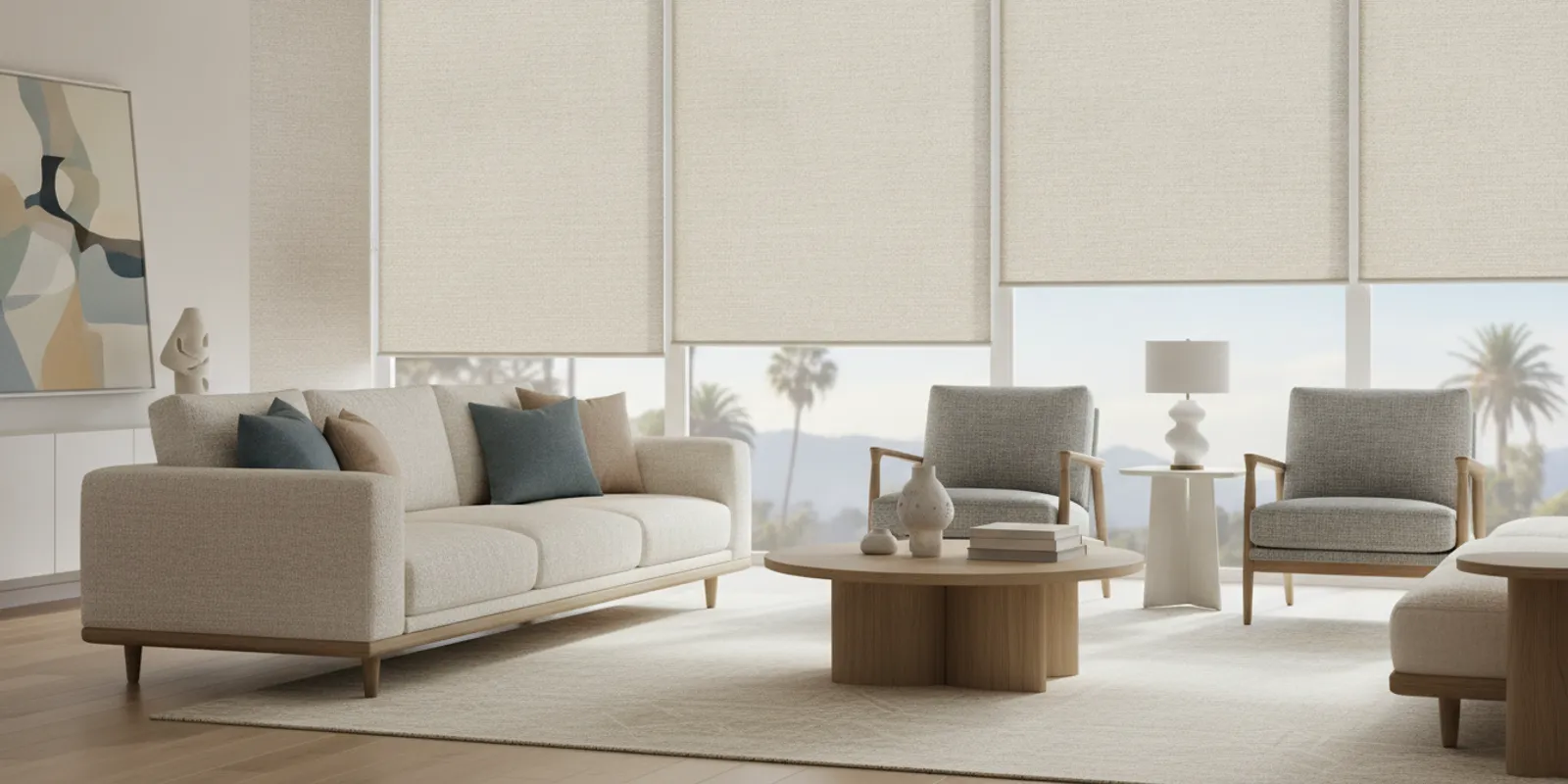
Shade names describe general constructions, but they do not determine the finished result. Two roller shades may differ in fabric openness, transparency, texture, lining, and the way they roll. Two Roman shades may have different folds and raised stacks. A woven shade can introduce visible texture, while a cellular shade may create a more structured profile. Compare the actual material and configuration intended for your window.
| Shade style | Details to compare | Questions for the nook |
|---|---|---|
| Roller | Openness, opacity, texture, roll profile, and control | Will the roll and control clear trim, handles, and seating? |
| Roman | Fabric weight, folds, lining, and raised stack | Will the folds crowd nearby wall space when raised? |
| Woven | Material, texture, privacy behavior, and lining | How does the exact weave look from the table and outside? |
| Cellular | Cell design, light-control configuration, and profile | Does the shape suit the frame and desired appearance? |
| Layered or dual | Independent light and privacy settings | Will the added hardware fit and remain easy to operate? |
A light-filtering fabric may soften daylight while still allowing silhouettes to be visible at night. A lining may change the appearance, privacy behavior, and amount of light passing through. Do not infer heat or insulation performance from a shade’s color or a general label. If heat reduction matters, request documented specifications for the exact product, material, and configuration.
Review custom window shades and natural woven wood shade considerations while building a shortlist. Consider the room’s proportions as well as its finishes. A pronounced weave may become a focal point in a small nook, while a quieter material may connect the nook to an open kitchen or living area.
How can you balance daylight, glare, and privacy?
Daylight, glare, and privacy overlap, but they are separate choices. A shade that makes afternoon light feel softer may not provide nighttime privacy. A privacy-oriented material may not deliver a particular insulation result. Decide which concern is most important, then identify the compromises you are willing to accept.
Begin with the activity affected by glare. Someone eating breakfast may tolerate more light than someone reading at the same table. A screen may need a different solution from a window that is mainly viewed from a hallway. If discomfort lasts only two hours, adjustable operation may be more useful than leaving the shade fully lowered all day. Ask who will operate it and whether the control is reachable when chairs are occupied.
For privacy, inspect the opening in both daytime and evening conditions. Exterior brightness can make a material appear more private during the day. Interior lighting can make the room more visible after dark. If the nook faces a close neighboring window, discuss the sightline directly and review the selected sample in front of the glass if possible.
Homes with young children should include safety in the control discussion. The U.S. Consumer Product Safety Commission encourages consumers to buy and install cordless window coverings in its window covering cord safety guidance. You can also review the federal safety standard information for operating cords on custom window coverings. Ask which control options are available for the specific treatment and how they should be used.
What should you note before measuring the window?
Custom shades need to work with the frame and everything around it. A rough tape measure can help you record approximate dimensions, but it should not replace a confirmed measurement and mounting plan when the frame, trim, or clearance is uncertain.
- Inspect the frame. Note the depth, condition, trim, and whether an inside mount appears possible. If an outside mount is considered, clarify how much surrounding wall or trim the shade will cover.
- List nearby obstacles. Include handles, locks, tile, cabinetry, shelves, plants, furniture, and fixtures that may interfere with movement or access.
- Check for variation. Width and height can differ at separate points in one opening. Nearby windows may look aligned while having different depths or trim.
- Decide what should remain visible. Ask how much glass and trim will show and where the shade will sit when fully raised.
- Plan control access. Consider which side the control belongs on and whether someone can reach it around a table, bench, or chairs.
- Consider the sill. A deep sill may affect the shade’s path. A narrow sill may affect where plants or other objects can remain after installation.
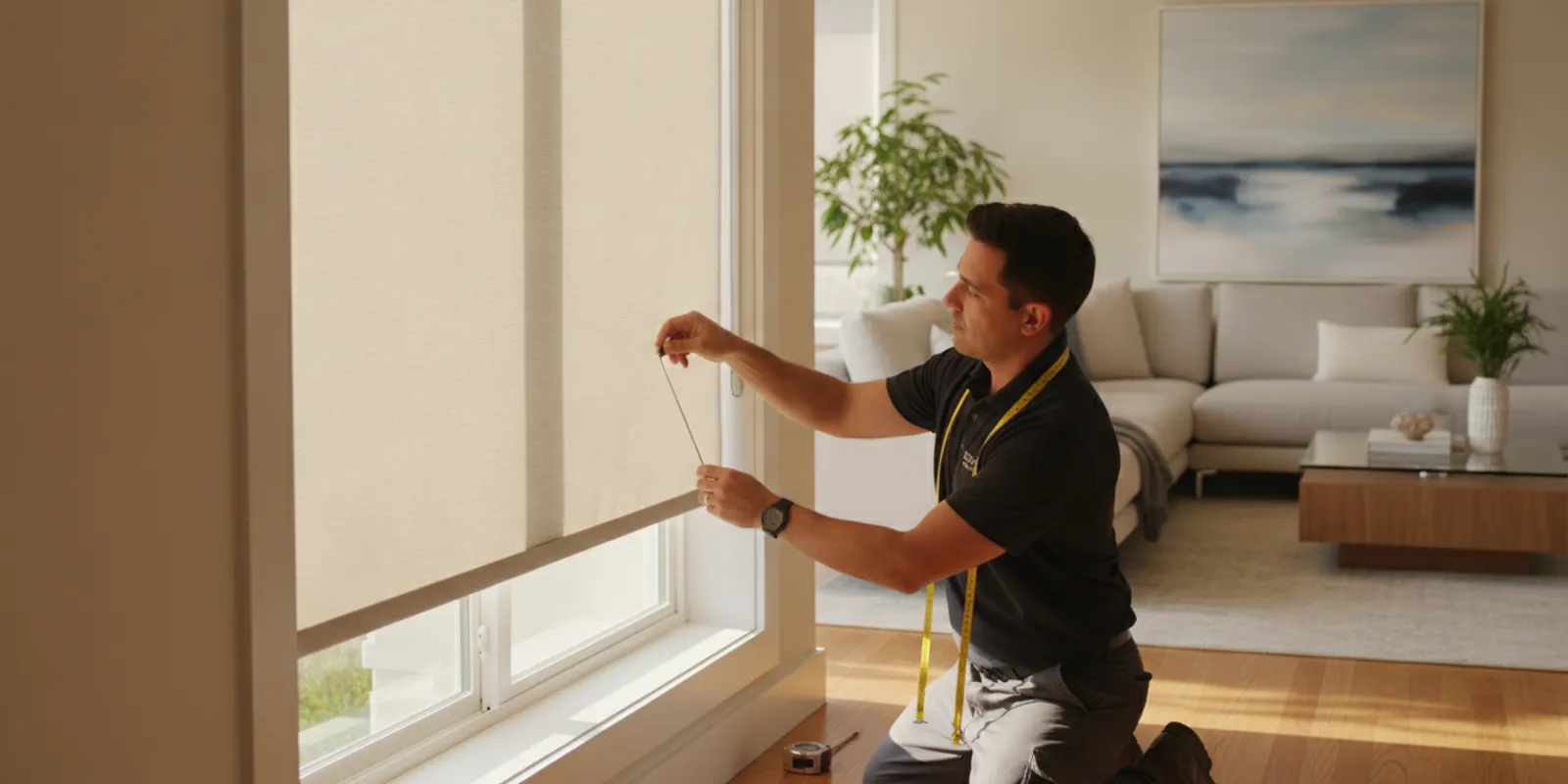
For a bay window or a group of openings, discuss each window rather than assuming one measurement applies to all. Small differences can affect alignment and the finished appearance. Vineyard’s mobile window treatment service brings samples to the home, and the company offers free measuring and free installation. Seeing the material in the actual room can make frame, color, and clearance questions easier to identify.
How should you compare samples at home?
A sample should be evaluated beside the window, not only under showroom lighting. Place it near the glass and step back to view it from the table. Check it in morning light, during the brightest part of the day, and again when interior lights are on in the evening. A fabric that looks neutral elsewhere can appear warmer, cooler, lighter, or heavier beside your cabinets and wall color.
Compare more than color. Ask about opacity, lining, texture, cleaning instructions, control type, and the shade’s appearance when raised. Turn the sample toward the exterior if possible. Look from the usual seating position and from the approach to the room. This can reveal whether a pattern feels distracting or whether the material provides the visual softness you want.
If the nook connects to a kitchen or living area, place the sample near adjacent finishes and existing treatments. Coordination does not require every window to use the same opacity or operation. You might choose a similar tone across the room while using a different light-control configuration at the nook. The window treatment gallery can help you identify styles, but photographs should be a starting point rather than a substitute for a physical sample.
Ask how the selected material should be cleaned. Food and everyday activity do not automatically make one material unsuitable, but care instructions should match how you use the room. Do not assume a finish is washable, stain-resistant, or appropriate for a particular location without confirming the product guidance.
What should a custom shade quote include?
Before approving an order, make sure the product and installation details are understandable. The discussion should identify the style, fabric or material, color, measurement plan, mounting approach, operating configuration, and installation scope. If several windows are included, the quote should make clear which treatment belongs to each opening.
- What light-filtering and privacy behavior should I expect from this exact fabric?
- How will the selected mount fit around trim, handles, and nearby furniture?
- What will the shade look like when fully raised?
- What care does the material require, and what should I avoid?
- Which control options are available, and where will they be placed?
- What is included in measuring and installation?
- How will differences among windows affect alignment?
- What should happen if the room layout changes before installation?
For two windows side by side, ask whether matching treatments can align at the top and whether differing frame depths affect that plan. For a window over a bench, discuss the clearance between the lowered shade and the seating. Near a door, check whether the control or raised stack affects the door path. These details are easier to resolve while the order is still being planned.
How do custom shades compare with blinds and shutters?
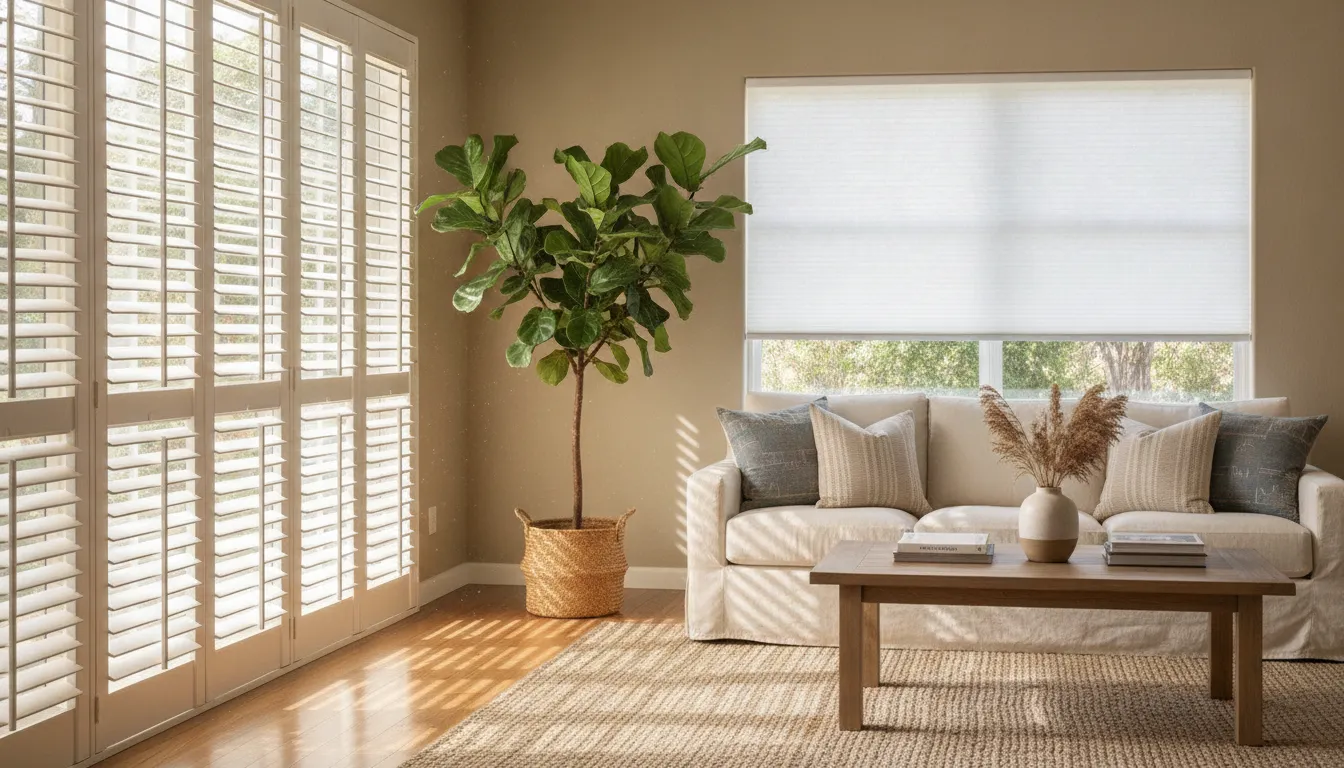
Shades generally use fabric or a similar material and offer choices in texture, opacity, and light control. Blinds use slats that can be tilted to adjust light and view. Shutters have a more structured appearance with adjustable louvers. Each option can be custom fitted, so the practical comparison is about the opening, the room’s use, and how you prefer to adjust daylight.
| Option | Potential reason to compare it | Questions to ask |
|---|---|---|
| Custom shades | Soft materials, varied opacity, texture, and compact profiles | What happens to privacy and glare with this exact material? |
| Blinds | Tilting slats and directional light adjustment | Will slat operation remain convenient from the seating area? |
| Shutters | Structured appearance and adjustable louvers | Will the frame and louver layout suit the nook’s proportions? |
A shade may suit a nook when a soft material and compact profile are priorities. Blinds deserve comparison when directional adjustment matters. Shutters may appeal when you want a defined architectural treatment. None is a universal answer. Review custom blinds and custom shutters alongside shades if you are still deciding.
Think about the raised position as well as the lowered position. A treatment can look excellent across the glass but feel bulky when open. Conversely, a compact treatment may leave more of the window available but offer fewer adjustment positions. Ask to compare the full operating range in a configuration similar to your opening.
What would a practical selection process look like?
Imagine a Temecula nook with two windows. One faces morning sun, while the other sits under an overhang and remains relatively comfortable. Treating both openings alike may create a consistent appearance, but their light-control needs differ. Record when each window is bright, where glare lands, and whether anyone can see directly into it. Then ask whether the same fabric can meet both needs or whether coordinated but different configurations make more sense.
Now imagine that the table sits close to the glass. A shade that is difficult to reach behind a chair may become frustrating even if its fabric looks right. Check the control location, the shade path, and the raised stack. If a plant or decorative object is near the sill, mention it before final measurement. Operation belongs in the selection discussion alongside color and texture.
In a third example, the nook opens into a larger room with several windows. You may want visual continuity but stronger privacy at the nook. Decide which details should match: a color family, material texture, or top treatment. Then allow light control and operation to vary where the room’s use requires it. Matching every specification is not always the same as creating a coordinated result.
For a business or shared space, add questions about repeated use and control access. A shade that works for one household may be less convenient where different people use the room. Identify who needs to operate it, how often the window is opened, and whether furniture is moved for meetings or service. These observations help make the order practical rather than merely attractive.
What should you check on installation day?
Before installation, clear access to the window and move breakable items from the sill or nearby table. Keep the approved product details available so you can compare the delivered treatment with the selection. If furniture, a plant, or another room feature has changed since measuring, point it out before work begins.
After each shade is installed, operate it through its full range. Check that it moves as expected, that the control is accessible, and that it clears trim, handles, furniture, and the table. View the result from the normal seating position as well as close to the window. Ask how to operate and care for the selected material.
For multiple openings, review each shade individually and then look at the set together. A useful checklist includes operation, clearance, control access, appearance when raised, alignment with neighboring treatments, and the light and privacy effect you expected. Take note of questions while the installer is present so they can be addressed clearly.
Call Vineyard Blind & Shutter at (951) 757-4188 to discuss free measuring and free installation.