Day and night shades use two fabric layers with alternating sheer and opaque bands. Align the bands to let in filtered daylight; shift them to create a more covered surface. If you want adjustable light and privacy without switching between separate window coverings, understanding how day and night shades work can help you decide whether they suit your room.
Call Vineyard Blind & Shutter at (951) 757-4188 to discuss shade options.
How do day and night shades work?
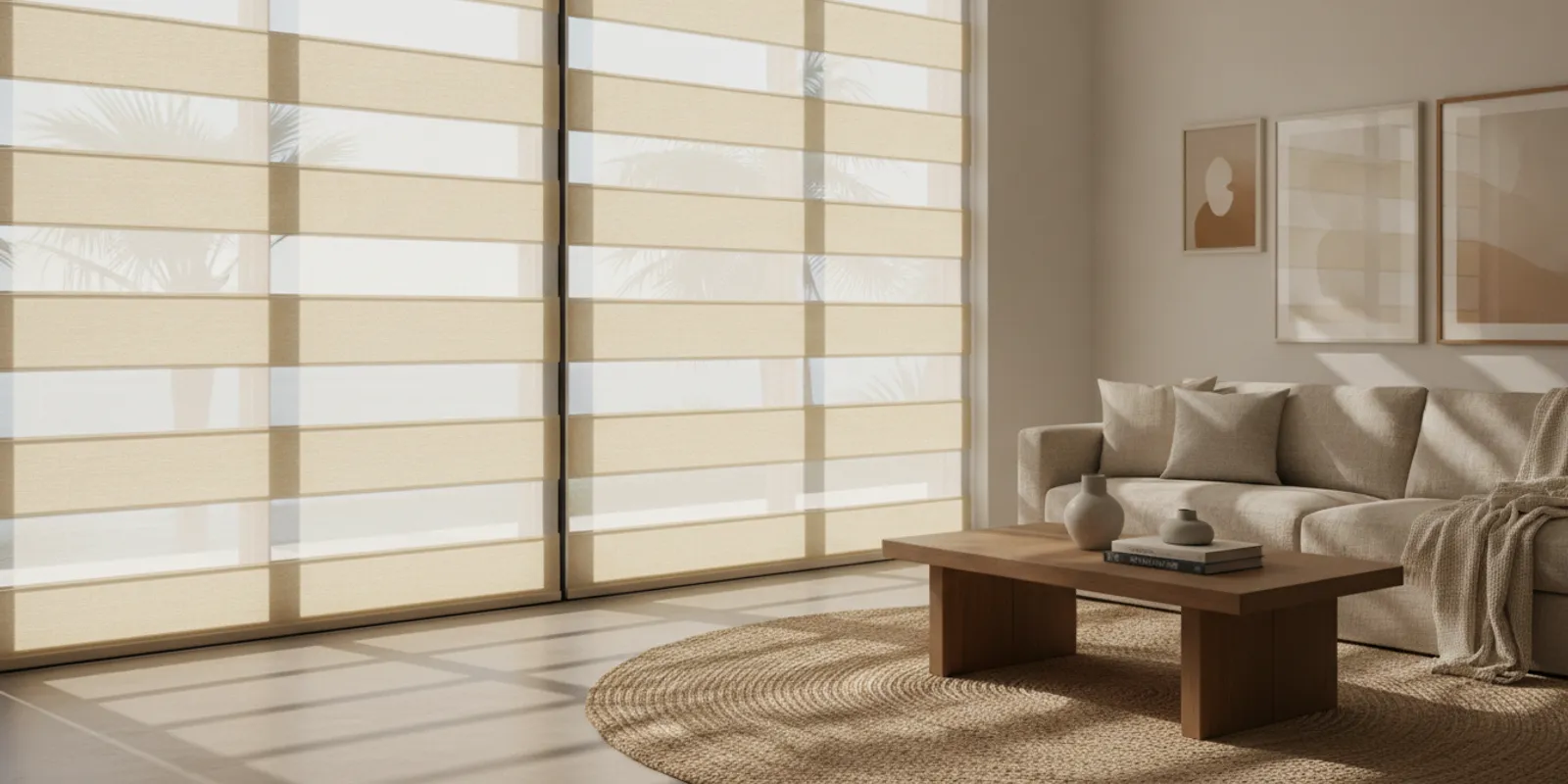
A day and night shade, also called a dual-layer or zebra shade, pairs two fabric layers in one operating system. The layers carry horizontal stripes: some bands are more open and translucent, while others are more opaque. As the shade moves, one layer shifts relative to the other. The changing alignment alters how much of the window is covered by opaque material.
When the more open bands line up, daylight can pass through the translucent sections. When the opaque bands overlap the open sections, the shade creates a more continuous fabric surface. This changes light and visual screening, but does not guarantee complete darkness or total privacy in every condition.
The shade typically stays at a chosen height while its bands are adjusted. Exact operation, control style, and light transmission depend on the product and its construction. Ask to see a sample move before deciding; a stationary fabric swatch cannot show the full effect.
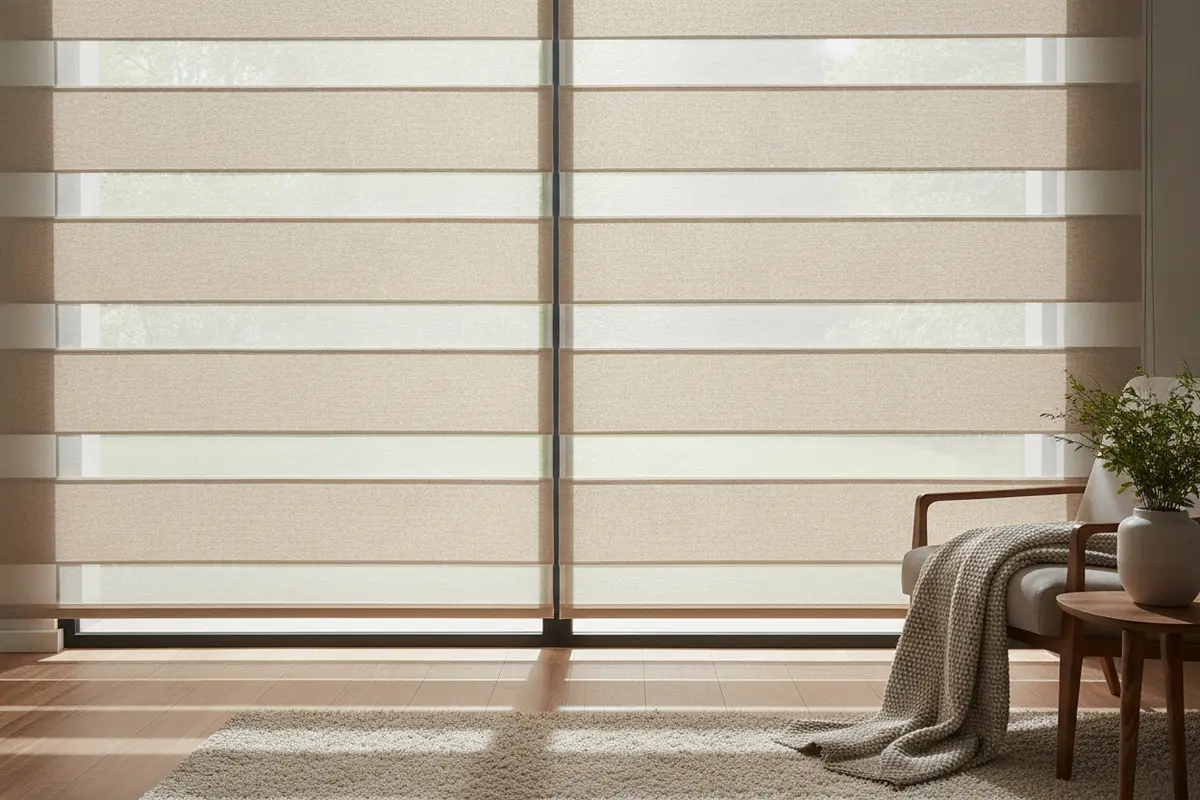
Q: What changes when you adjust a day and night shade? A: The two fabric layers shift, bringing sheer or opaque bands into alignment to vary daylight and visual coverage.
What do these shades offer for light and privacy?
The main appeal is flexibility. Instead of raising a shade completely to see outside or lowering it to cover the glass, you can adjust band alignment while keeping the treatment over the window. That can help when daylight changes or when you want a more covered appearance without moving the shade up or down.
Think of privacy as a range rather than an on-off feature. With open bands aligned, the room receives more light, but people may see shapes or activity through the fabric. The result depends on brightness indoors and outdoors, viewing angle, and fabric openness. Overlapping opaque bands increases visual coverage, but it should not be treated as a promise of room darkening.
At night, an illuminated room can be more visible from outside through translucent portions. If nighttime privacy matters, test the shade under realistic lighting and ask what the opaque alignment does and does not conceal. For a bedroom or street-facing window, consider whether another product or an additional covering would better suit the need.
- More filtered daylight: align open bands to admit light through sheer sections.
- More visual coverage: shift layers so opaque bands overlap open portions.
- View and privacy tradeoff: a more open setting can reveal more view and less screening.
- Nighttime check: assess visibility from outside when room lights are on.
Which rooms are a good fit for day and night shades?
These shades can work where people want to tune daylight and prefer a horizontal pattern. Living rooms, dining areas, home offices, and shared spaces are reasonable places to consider adjustable banded fabric. The right choice still depends on window orientation, what is outside, and how much privacy the room needs.
In a sleeping room, decide whether the available coverage meets your expectations after dark. Do not assume opaque stripes alone provide blackout performance. Compare fabric options and the result at the edges of the window as well as across the center.
For rooms with moisture, frequent cooking, or demanding conditions, confirm that the specific material and care instructions suit the setting. Do not choose based only on product name or appearance. Review the range of custom window shades with actual samples, since fabrics can behave differently in your room.
How do you compare day and night shades with other options?
There is no single best shade for every window. A roller shade generally presents one fabric surface and a straightforward up-or-down position. Cellular shades use a different construction and appearance. Day and night shades stand out for shifting bands while the shade remains over the window.
This functional comparison is a starting point, not a guarantee for every model. Product construction, fabric, fit, and installation affect the actual result. Confirm details for the specific options under consideration.
| Option | How you adjust it | What to consider |
|---|---|---|
| Day and night shade | Raise or lower the shade and shift layered bands | Adjustable filtered light and visual coverage; assess nighttime privacy and opacity |
| Roller shade | Raise or lower a single fabric panel | Simple appearance; compare openness and coverage needs |
| Cellular shade | Raise or lower a pleated, cell-structured shade | Different construction and look; compare operation and product details |
| Blinds | Tilt slats and raise or lower the treatment | Slat angle offers another way to manage light and view; compare materials and cleaning |
Describe the outcome you want instead of relying only on a category label. For example: “I want afternoon daylight, but I do not want a clear view into the room from the sidewalk.” That gives a product specialist a practical basis for showing suitable samples and explaining tradeoffs.
What should you check before selecting fabric and controls?
Begin with the window’s use and surroundings. A bright backyard window poses a different challenge from a street-facing window or a room where people watch a screen. Observe the glass at different times of day. Note direct sun, reflections, neighboring windows, and the view you want to keep.
- Set the priority. Decide whether filtered daylight, view, daytime screening, nighttime privacy, or style matters most. If priorities compete, rank them.
- Test band alignment. See the shade with sheer sections aligned and opaque sections overlapping. Check from inside and consider what someone outside may see.
- Compare fabrics in the room. Color and openness can look different under showroom lighting. Consider samples beside your actual window and finishes.
- Check control location. Confirm which side the control will be on and whether it is accessible around furniture, handles, or other features. Ask which operating options are available for that product.
- Consider the full window. Note trim, handles, nearby walls, and obstructions that may affect mounting or operation. Custom fit depends on accurate measurements and installation approach.
- Review care instructions. Ask how the selected fabric should be cleaned and what to avoid. Materials do not all tolerate the same cleaning method.
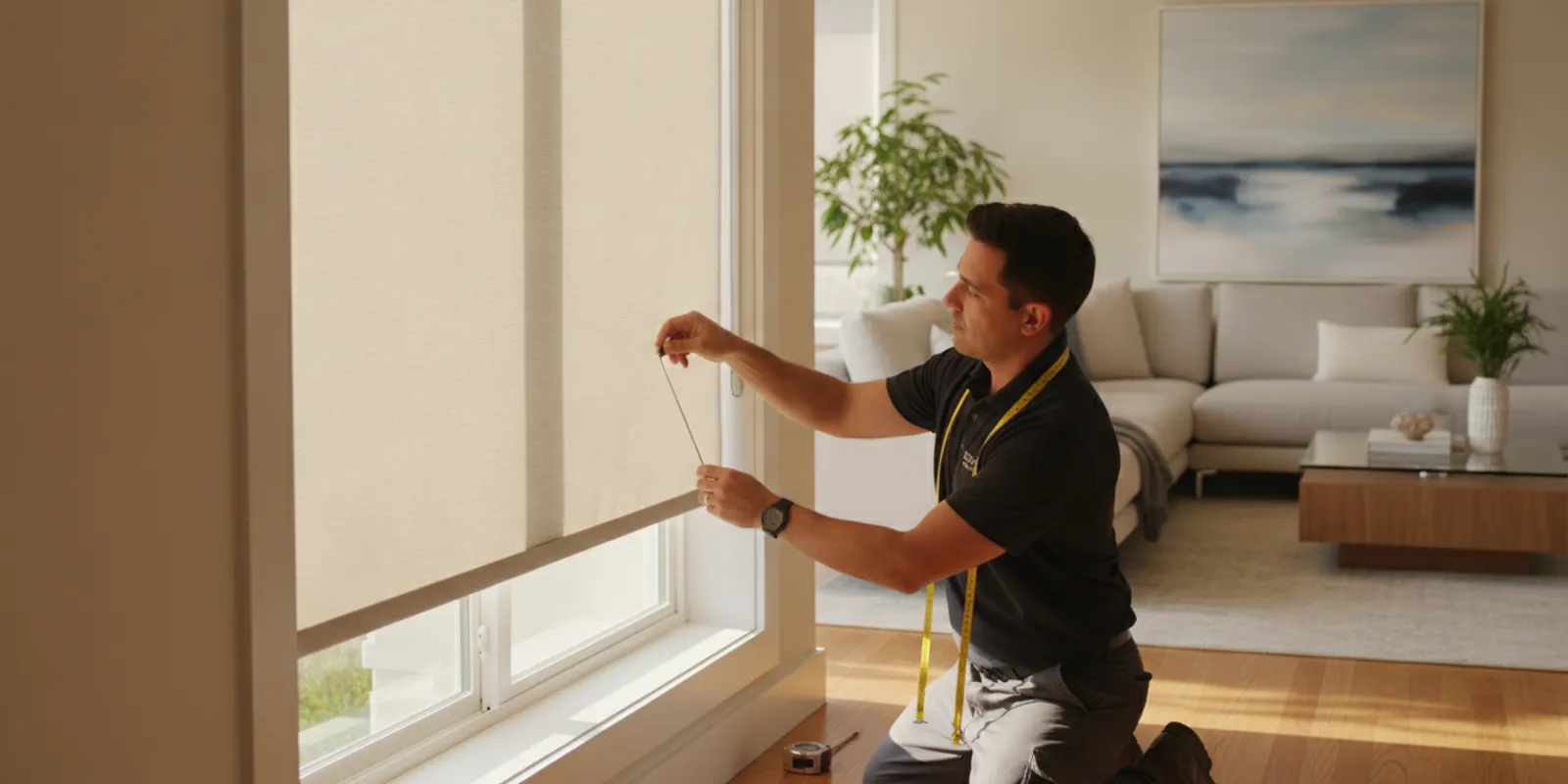
Vineyard Blind & Shutter provides mobile window treatment services and free measuring. Seeing samples at home can help you compare color and opacity against room finishes. The company serves San Diego, Riverside, and Orange counties.
How does custom measuring help with fit?
A shade is selected for an individual opening and intended mounting position. Inside mounting places it within the window frame when the opening and product allow. Outside mounting places it on or beyond the frame. Each approach changes appearance and how much surrounding area the treatment covers.
Do not assume two similar-looking windows have identical dimensions. Width and height can vary across an opening. Also note whether trim, handles, or other features affect available space. A professional measurement can identify details that are easy to miss when measuring once or at one point.
During the measuring discussion, clarify which dimensions are being recorded and where the shade will sit. Confirm how the operating mechanism will be reached and whether planned coverage meets your expectations. Vineyard offers in-home consultations and contact options for discussing a project. Measurements and product selection are specific to each window; do not order based on a rough visual estimate.
How can daylight and window orientation change the result?
The same shade can feel different on windows that face different directions. A window receiving strong direct sun may create glare at certain hours, while a shaded window may need a more open setting to keep the room bright. Observe the window during the hours you use the room, rather than judging it from one quick look. Notice whether the sun reaches a desk, television, or seating area, and whether reflections are part of the problem.
Band alignment offers an intermediate adjustment, but it does not redirect sunlight in the same way that tilting blind slats can. If your main concern is a sharp beam of sun, test the shade at the relevant time and decide whether filtered light is enough. For broader background on how window coverings relate to energy use, consult the U.S. Department of Energy’s home energy information; product-specific performance still depends on the chosen materials and installation.
A simple observation log can make the choice more concrete. Write down the room, time, sun condition, and what you want to improve. For instance: “At 4 p.m. the west-facing living room gets glare on the television, but we still want daylight.” That description is more useful than asking for a shade that simply “blocks the sun,” because it identifies both the problem and the desired tradeoff.
What questions help you compare samples side by side?
Ask to operate the actual sample, not just view a product photograph. Move the layers through their range, check how they behave at the height you expect to use, and note whether you can comfortably reach the control. The pattern can appear different when the bands are open versus overlapped, so look at both states against the room’s colors and furnishings.
- How much can I see through the open alignment from inside?
- What can someone outside see when the room is lit at night?
- Does the selected fabric provide the visual coverage I expect at the sides?
- Can the shade be mounted in the position the window allows?
- What cleaning method does the manufacturer recommend for this fabric?
- Which control and control side are available for this specific model?
It may help to compare day and night shades with the broader custom blinds, shutters, and shades product range rather than treating a particular style as the default answer. If a window has a special shape, deep trim, or a nearby handle, mention it early. These details can change mounting options and should be considered before a selection is finalized.
What are common misunderstandings about day and night shades?
Do the stripes make a room completely private?
Not automatically. Sheer bands allow some visibility, and conditions change what can be seen. Evaluate the fabric and alignment when privacy matters, including after dark with interior lights on.
Do opaque bands make a shade blackout?
Do not equate an opaque-looking stripe with full blackout. Light may still enter around the edges, and fabric construction varies. If darkness is essential, explain that goal and ask about products and installation details intended for it.
Can the shade preserve an outside view?
More open bands may allow a view through portions of the fabric, but the pattern interrupts it. The amount visible depends on fabric and alignment. Compare a sample against the actual window rather than relying on a product photo.
Does every room need the same fabric?
No. A front room, bathroom, and bedroom can have different needs for privacy, moisture suitability, and light. Check the product’s material and care guidance for its intended location.
How should you think through a real room example?
Consider a living room with a street-facing window. During the day, the household wants natural light and a view, but in the evening it wants less visibility from outdoors. A useful test is to compare the open and overlapped positions in daylight, then imagine the room with its usual lamps on after dark. If the sheer portions still leave too much visibility, the key requirement is stronger nighttime screening, not simply a different band color. Ask about alternatives before assuming the layered shade will meet that need.
Now consider a home office where reflections on a monitor are the main concern. The useful question is whether filtered daylight reduces the distraction while keeping the workspace comfortable. Check the screen from the seated position and at the time the glare occurs. If the shade only looks effective when viewed from across the room, that may not solve the practical issue. Testing the sample in its actual setting helps reveal this difference.
A kitchen window raises a different set of questions. Consider cooking splashes, moisture, and how often the surface may need attention. Rather than assuming all shades are suitable, confirm product material and cleaning guidance. If the room’s needs point toward another shade construction, compare it with the options on Vineyard’s shade page and discuss the tradeoffs with a specialist.
How can you plan for several windows at once?
When several windows are part of the same project, decide whether a consistent look matters more than identical performance. Matching fabrics can create visual continuity, but a bedroom, office, and street-facing living room may call for different levels of screening. List the windows separately and note their dimensions, orientation, room use, nearby furniture, and privacy needs. This gives you a practical way to compare choices without assuming one configuration will work everywhere.
Also consider how each window is used during an ordinary week. A shade over a seldom-used guest room may be adjusted less often than one beside a dining table or work area. The most convenient control position and operating method can therefore matter as much as the fabric. Mention any reach or access concern during planning, then verify the proposed arrangement at each opening before the order is finalized.
How can you make the shade decision confidently?
Use a short checklist when comparing samples. Name the room’s main challenge: glare, privacy, desired view, or decorative finish. Demonstrate both band positions and check the shade at the height you expect to use. Look at the window from likely sightlines, not just directly in front. Finally, confirm fabric, control, mounting approach, measurements, and care requirements for the chosen product.
If comparing several rooms, keep a note for each: window location, preferred light, privacy concerns, and any obstructions. This avoids choosing fabric for one room and assuming it works equally well elsewhere. A shade that suits a bright living area may not offer the coverage wanted in a bedroom.
Ask for a clear explanation of what the fabric does and does not provide. Filtered light differs from room darkening; visual screening differs from guaranteed privacy. Precise questions keep expectations realistic and make comparisons useful.
Arrange an in-home shade consultation with Vineyard Blind & Shutter.
Day and night shades can offer a flexible way to adjust filtered light and visual coverage when the fabric and fit suit the room. Compare samples in the space, test both band positions, and choose for the privacy and light conditions you actually need.
Call Vineyard Blind & Shutter at (951) 757-4188 to discuss shade options.