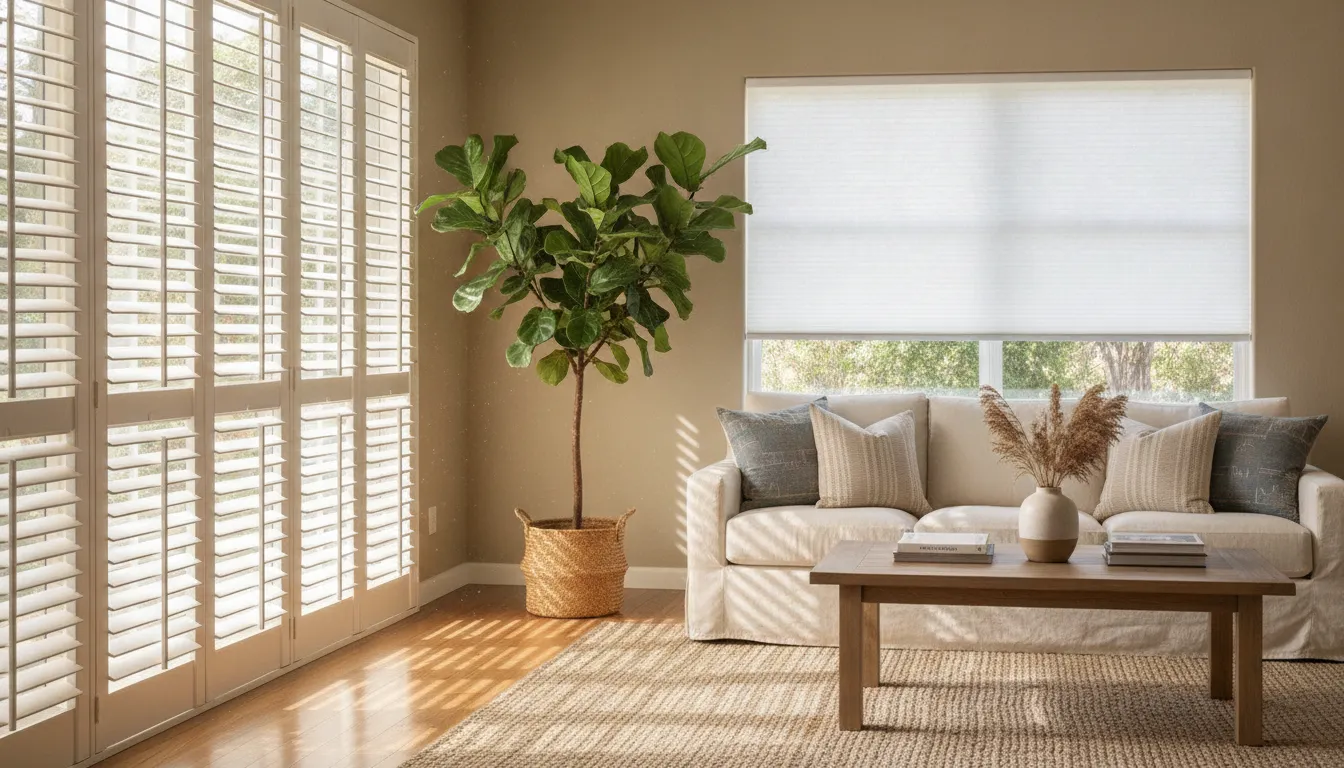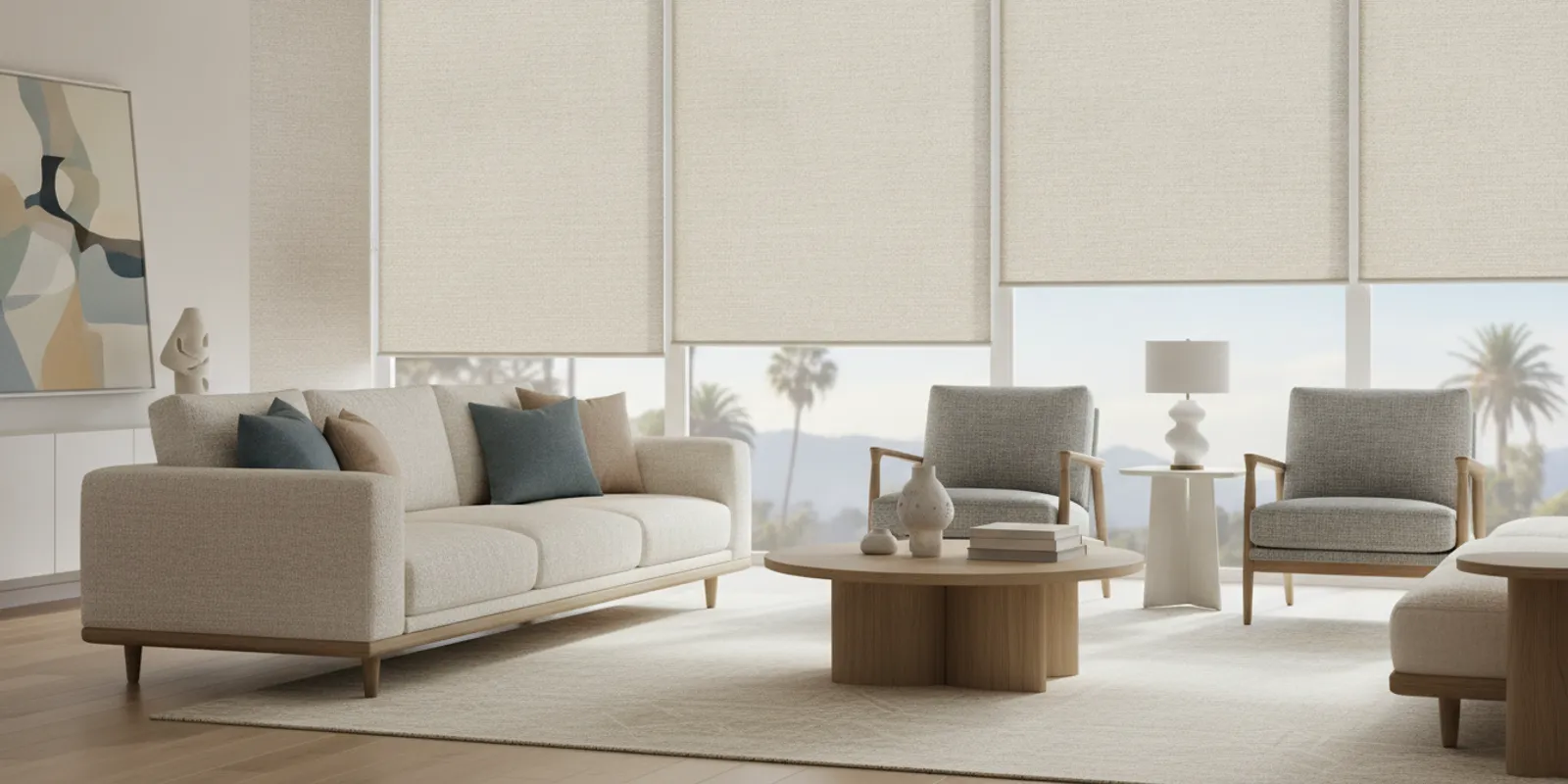
Natural window coverings can make a room feel warmer without making the design feel busy. If you are comparing woven wood shades vs bamboo shades, start with the category difference. Woven wood describes a broader shade family. Bamboo describes a primary material used in some of those shades. Both can bring texture and filtered daylight to a window. The weave, liner, moisture exposure, control style, and custom fit determine how well either option works in your home.
How Do Woven Wood Shades vs Bamboo Shades Compare?
Start with the terminology. A woven wood shade is usually made by weaving natural materials such as bamboo, reeds, grasses, jute, or other wood-based fibers into a shade panel. Bamboo shades use bamboo as the defining material, often in a more consistent reed, slat, or grass-like construction. In everyday showroom language, the categories can overlap: a bamboo shade may also be called a woven wood shade when it is part of a broader natural-weave collection.
That overlap matters because the label alone does not tell you how much light enters. It also does not tell you how private the room feels at night or whether the shade is a good choice near a sink. Ask to see the actual sample. Examine the openness of the weave. Confirm which liner and operating system are available for the exact style you like.
What Is the Difference in Materials and Weave?
Bamboo is a grass with a distinctive linear grain and a clean, organic appearance. Depending on how it is split, flattened, dyed, or woven, it can look crisp and lightly structured or soft and textural. A bamboo-forward shade often suits rooms where you want an uncomplicated natural accent and a consistent material story.
Woven wood is more of a construction and design category than one single material. A collection may combine bamboo with reeds, grasses, jute, or other fibers to create different widths, patterns, and textures. That broader material mix can give you more ways to coordinate a shade with flooring, cabinetry, furniture, or woven décor.
Natural materials also vary from piece to piece. Differences in grain, knots, color, and strand placement are part of the character rather than a manufacturing defect. If you want a very uniform appearance across several windows, ask how the selected material is matched and whether samples can be compared before the order is finalized.
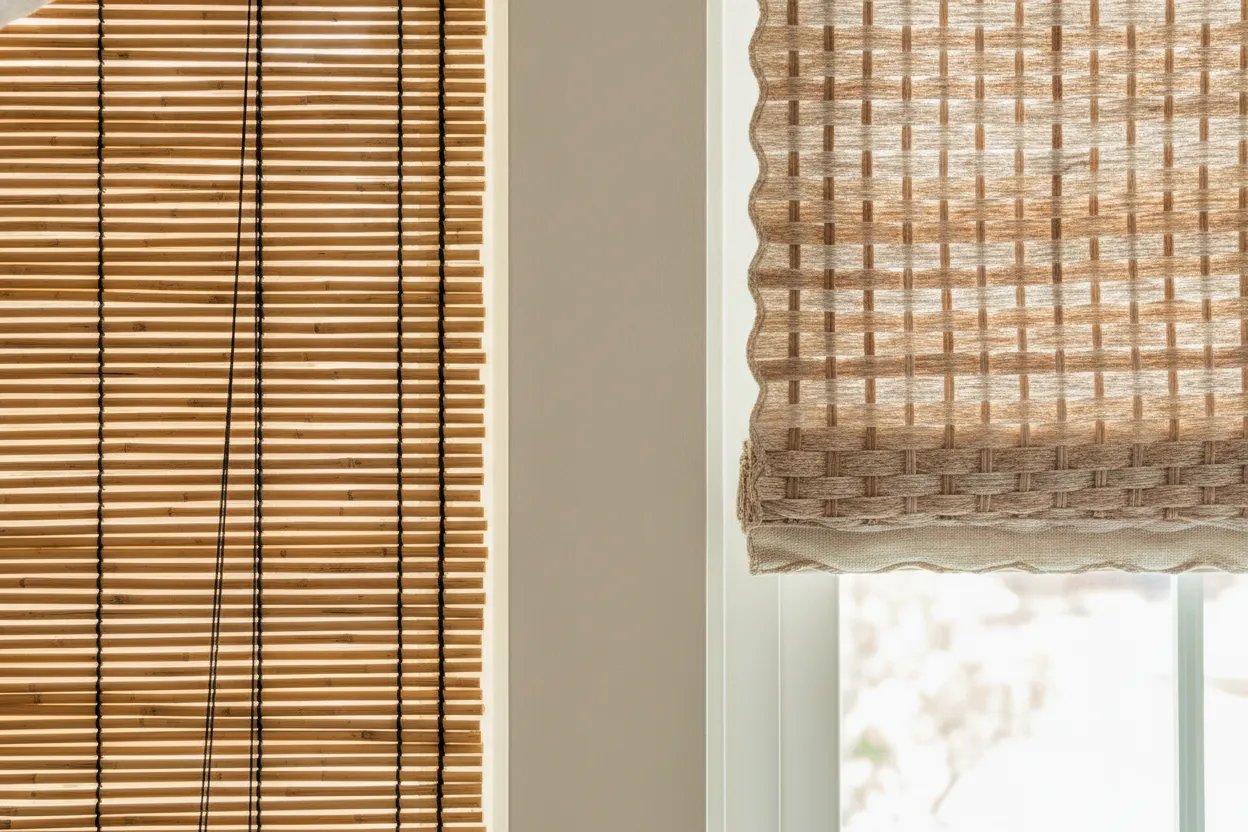
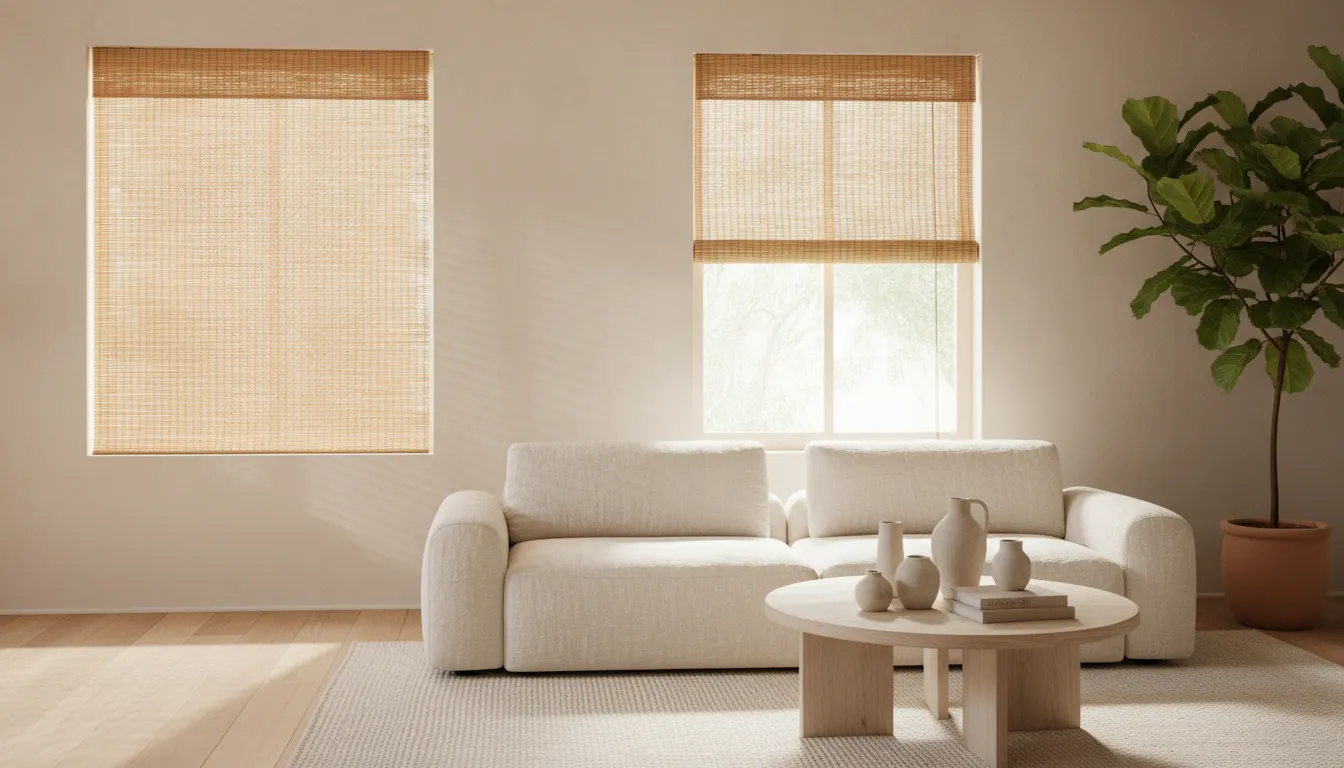
The weave, material color, and liner work together to determine the finished look and light control.
Which Option Gives Better Privacy and Light Filtering?
Neither an unlined bamboo shade nor an unlined woven wood shade should be treated as a complete privacy solution. An open weave can soften sunlight while still allowing silhouettes, streetlights, or interior activity to be visible after dark. The exact result depends on the weave density, the room’s lighting, the window’s exposure, and the distance between the glass and nearby observers.
For living rooms and dining areas, a light-filtering or privacy liner can preserve some daylight while reducing the view into the room. For bedrooms, nurseries, and media rooms, a blackout liner can provide much stronger light control. The liner is a separate performance decision from the natural material. A beautiful shade without the right liner may look right in a sample room but disappoint you at night or during a bright afternoon.
Ask these questions before ordering:
- Can people see into the room when interior lights are on?
- Will the weave create noticeable pinpoints or bands of light?
- Do you need soft daylight, privacy, room darkening, or near-blackout conditions?
- Will the liner change the view from outside or the appearance of the shade from inside?
A liner may also change the shade’s stack, weight, and operating feel. That is one reason a sample and a professional fit review are more useful than choosing by a product name alone.
How Should You Handle Moisture and Humidity?
Natural fibers need more care around water than many synthetic window-covering materials. A kitchen window well away from the sink can be a reasonable location, while a shade that regularly receives splashes, steam, or condensation deserves a closer review. Bathrooms, laundry rooms, and coastal-facing rooms may expose a shade to more moisture than a dry bedroom or living room.
Bamboo and other woven materials should not be presented as waterproof simply because they are natural or treated. Repeated dampness can affect the material, finish, cords, liner, or headrail over time. Use ventilation, keep the shade away from direct splashes, and follow the care instructions for the chosen collection. If the window is close to a tub, shower, sink, or frequently open door, tell the window-covering professional before selecting the material.
For a high-moisture location, the right answer may be a different shade material, a carefully protected natural weave, or a natural shade used only where it will stay dry. The best choice is the one that matches the room’s actual conditions, not just its design style.
Are Woven Wood or Bamboo Shades More Durable?
Durability depends on more than whether the label says bamboo or woven wood. The material thickness, weave, edge treatment, liner, headrail, lift system, window size, and frequency of operation all affect service life. A shade that is opened and closed several times a day needs a dependable control system and a smooth installation, especially on a wide or tall window.
Look closely at the edges. A neat edge treatment can help the panel maintain its shape and finished appearance. Ask how the shade is supported, whether the material is appropriate for the span, and how the control will be operated without pulling at the woven panel. For large openings, multiple shades may provide more manageable operation than one oversized shade, although that decision can introduce small light gaps between panels.
Regular care is simple but important. Dust with a soft brush or use a vacuum attachment on a low setting. Do not saturate the material or use a cleaning product unless the manufacturer’s instructions allow it. For a deeper maintenance routine, see this guide to cleaning woven wood shades and ask about the care requirements of the exact sample.
Which Style Works Better in Your Room?
Bamboo-forward shades often work well when you want a calm, lightly structured natural look. They can complement coastal, modern, minimalist, and casual interiors without competing with artwork or patterned furniture. A more varied woven wood pattern can add stronger texture and visual depth to a neutral room, particularly when the shade is part of a layered design.
Color matters as much as material. Light natural tones can keep a small room bright, while darker stains can add contrast to pale walls or cabinetry. Remember that daylight changes how the shade reads. Request a sample near the actual window, preferably at more than one time of day, before deciding on a color.
Natural shades can also be paired with drapery or side panels. That combination can soften the edges of a window, add another privacy layer, and make a large opening feel more finished. If you are comparing several window-covering categories, Vineyard’s overview of blinds, shutters, and shades can help you place natural shades within the larger set of options. You can also browse the custom shades service for additional configurations.
How Do Liners, Mounts, and Controls Change the Fit?
A natural shade is not just a piece of woven material. The mount and operating system determine how it sits in the opening and how comfortably you use it every day. An inside mount can preserve trim and create a tailored appearance when the window has enough depth. An outside mount can cover more of the opening and may be useful when the frame is shallow or when you want to reduce visible gaps.
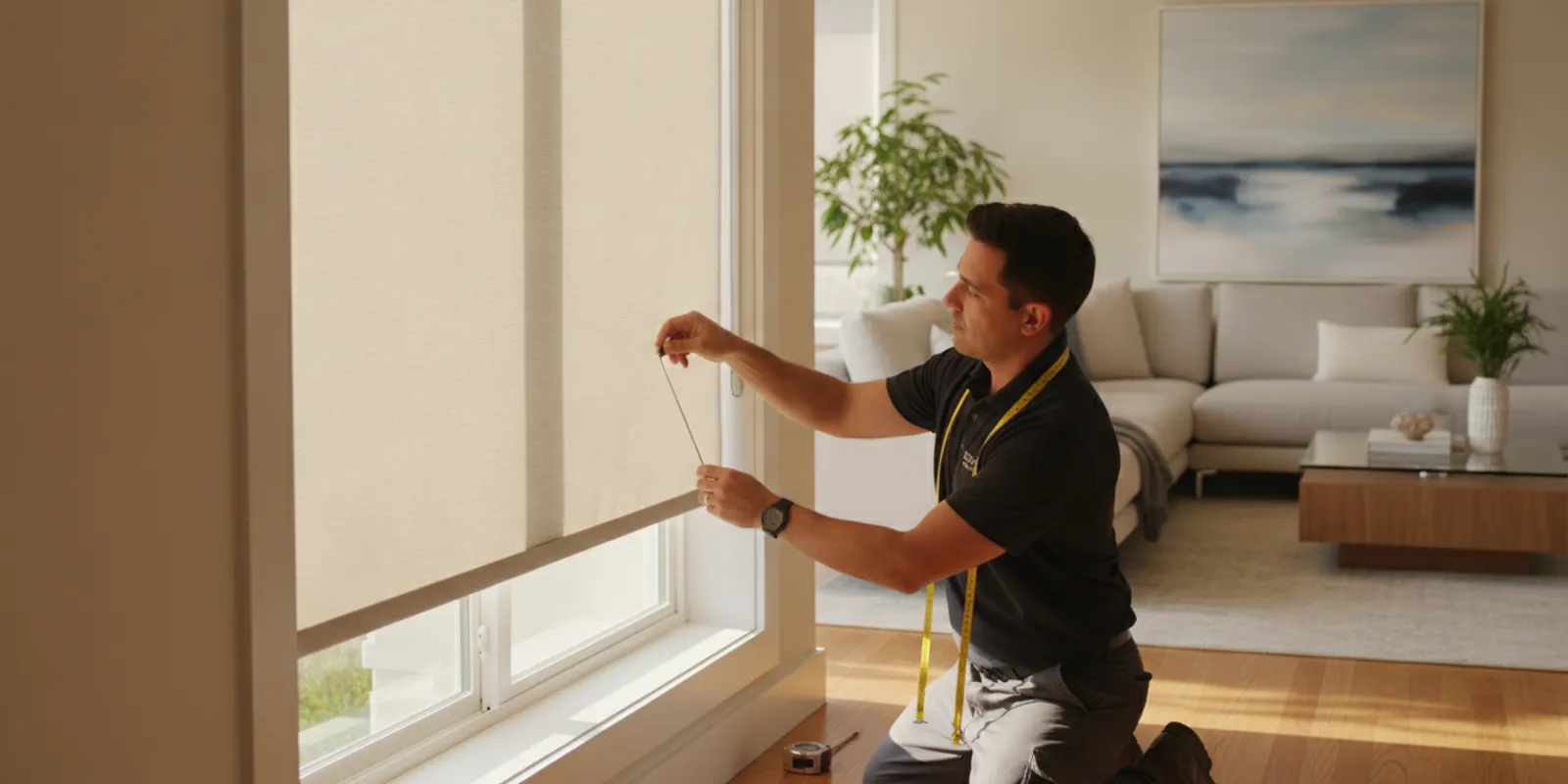
Measure the width, height, depth, sill, trim, handles, and nearby obstructions. Patio-door handles, cranks, security sensors, and window locks can interfere with the shade or its liner. A custom measurement should also account for how neighboring shades will align and where the material will stack when raised.
Control choices include cordless, continuous-loop, and motorized systems, depending on the product and window. Homes with young children should give safety priority to the control selection. The U.S. Consumer Product Safety Commission advises that the safest option around young children is cordless window covering operation; review its window-covering cord safety guidance when planning a room used by children.
For more detail on balancing light control with the natural look, read this guide to woven wood shades with liners. It covers the practical difference between unlined, privacy-lined, and blackout-lined configurations. Vineyard also provides in-home service across Southern California.
What Is the Practical Cost Difference?
Custom natural shades are priced by the window, but there is no reliable single price for every bamboo or woven wood style. As a planning range, many custom window shades fall around $250–$600 per window before the final quote is confirmed. Window size, material, liner, control system, mount, installation requirements, and the number of windows can move the total up or down.
Compare complete configurations rather than comparing material names alone. A lower-priced unlined shade may not meet the privacy goal that a lined shade meets, and a motorized shade may solve a hard-to-reach window more effectively than a manual model. Ask what is included in measuring, installation, hardware, and any control upgrades so the proposals describe the same finished result.
Which Should You Choose for Woven Wood Shades vs Bamboo Shades?
Use this short decision framework:
- Identify the room’s privacy and light-control goal.
- Check moisture, sun exposure, window depth, and nearby hardware.
- Compare the actual material sample with and without a liner.
- Confirm the mount, control, care instructions, and complete installed price.
| Choose based on | Lean toward bamboo-forward shades | Lean toward a broader woven wood collection |
|---|---|---|
| Material look | You prefer a clean, recognizable bamboo texture. | You want more choices in fibers, patterns, and texture. |
| Light and privacy | You like filtered daylight and will select the right liner. | You want to compare several weave densities and liner combinations. |
| Room conditions | The shade will stay protected from splashes and persistent dampness. | You need a collection reviewed for a particular exposure and fit. |
| Design direction | You want a simple organic accent that blends into the room. | You want a stronger pattern or a more customized natural texture. |
| Window requirements | The size and control needs match the selected bamboo construction. | You need to compare mounts, liners, edge details, and control systems. |
In either case, the best fit starts with the window rather than the label. A sample review can reveal how the weave filters the light, how the liner changes privacy, and whether the color works with your finishes. A local measuring visit can also identify clearance issues that are easy to miss when ordering from a photo or a standard-size chart. Use the contact page to plan the next step.
What Should You Ask Before Ordering?
Bring the following questions to a consultation or in-home measuring appointment:
- Is this shade classified as bamboo, woven wood, or a blend of natural fibers?
- What privacy level will I have during the day and after the interior lights come on?
- Which liner is available, and how will it change the appearance and stack?
- Is the material suitable for this room’s humidity, splashes, and sun exposure?
- Which mount and control will work around handles, trim, and nearby furniture?
- How will multiple shades align across the opening?
- What care routine and operating limits should I expect?
Q: Is bamboo the same as woven wood? A: Not always. Bamboo is one natural material used in some woven wood shade collections, while woven wood is a broader category that can include several fibers and weave patterns.
Frequently Asked Questions
Are bamboo shades good for privacy?
Unlined bamboo shades usually filter light rather than provide complete privacy. A privacy or blackout liner can improve privacy, especially when interior lights are on at night.
Can woven wood shades be used in a bathroom?
They may work in a bathroom that stays well ventilated and protects the shade from direct splashes, but natural materials are not automatically waterproof. Review the exact product and the room’s moisture exposure before ordering.
Do bamboo shades block heat?
Do not assume that a natural weave will provide a specific thermal result. Light control and heat reduction depend on the material, liner, window, orientation, and installation. Ask about the documented specifications of the selected configuration.
Are woven wood shades hard to clean?
Routine care is generally gentle dusting or low-suction vacuuming, but cleaning instructions vary. Avoid saturating the material and follow the manufacturer’s directions for the exact shade.
Can woven wood and bamboo shades be motorized?
Some collections offer motorized or other upgraded controls, while availability depends on the shade construction and window size. Confirm compatible controls before choosing the material.