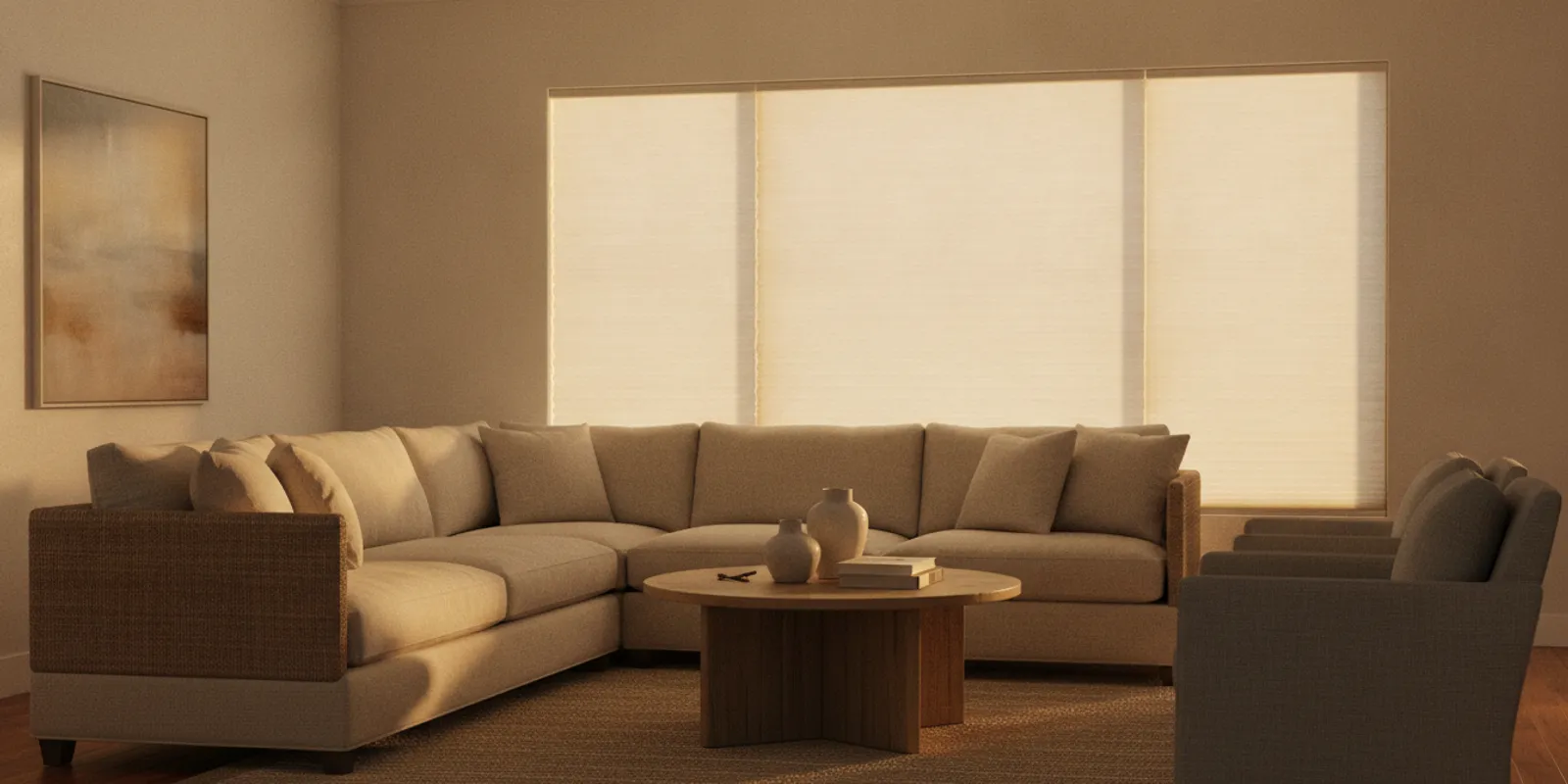
Sliding glass doors bring in natural light and make Southern California homes feel connected to the outdoors. But their size can also create glare, heat gain, privacy concerns, and awkward operating challenges. The right treatment needs to move with the door, fit its clearance, and suit how your family uses the room. For help comparing materials and measuring the opening, call Vineyard Blind & Shutter at (951) 757-4188 for a free in-home consultation.
The best window coverings for sliding glass doors depend on your priorities: vertical blinds and panel tracks offer easy side-to-side operation, cellular shades help manage heat with insulating air pockets. Roller shades create a clean modern look, and custom shutters provide a durable, tailored finish.
A custom solution can also account for light control, mounting depth, and the way the covering clears the moving panel. Comparing each option by operation, insulation, privacy, and design will make the choice much easier.
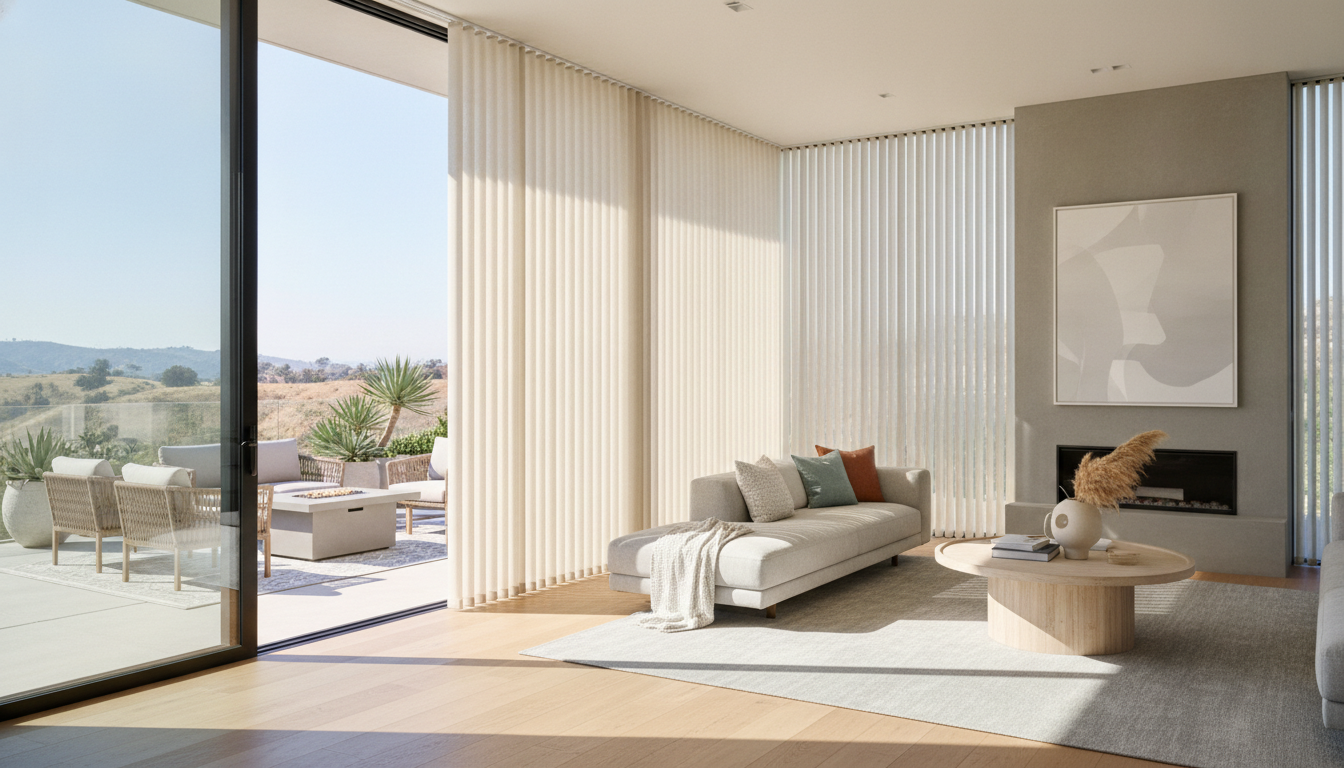
What Are the Best Window Coverings for Sliding Glass Doors?
The right treatment depends on how often the door is used, how much privacy you need, and whether heat control is a priority. Because sliding doors move from side to side, coverings that stack or operate in the same direction usually feel more natural than treatments that swing into the opening. Compare the main options below before choosing a style for your home.
| Type | Operation | Light Control | Insulation | Best For |
|---|---|---|---|---|
| Vertical blinds | Individual vanes tilt and move side to side with the door. | Adjustable; tilt the vanes to balance sunlight and privacy. | Moderate, depending on material and fit. | Busy doorways, practical everyday use, and flexible light control. |
| Panel track blinds | Wide fabric panels glide side to side and stack neatly. | Available in different opacities, from softer filtering to greater privacy. | Moderate; fabric choice affects performance. | Contemporary rooms or spaces where the treatment may also divide a room. |
| Cellular shades | Fabric cells raise, lower, or move vertically across the opening. | Light-filtering and room-darkening fabrics can support different needs. | Strong; the honeycomb structure traps air and provides insulation. | Rooms where energy efficiency and temperature comfort matter most. |
| Roller shades | One continuous shade rolls up and down. | Choose a fabric openness or opacity that matches the room. | Varies by fabric and installation. | Modern interiors that call for a clean, minimalist appearance. |
| Plantation shutters | Louvers adjust for light and privacy; panels open for access. | Precise louver adjustment provides directional control. | Solid materials can add a substantial layer at the opening. | Homeowners seeking a durable, custom architectural look. |
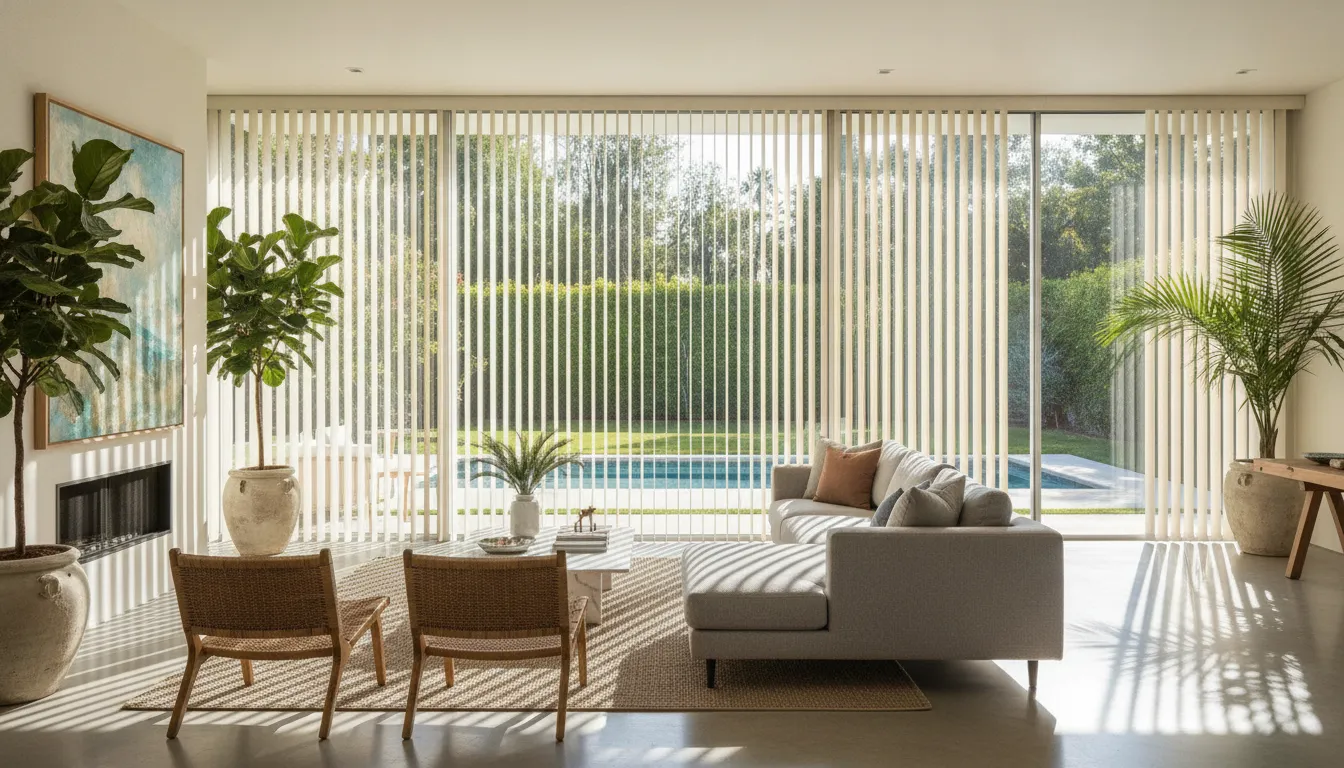
Vertical blinds are specifically designed to complement the side-to-side movement of a sliding glass door. Panel tracks offer a similar motion with broad fabric panels, and some systems can serve as stylish room dividers as well. Vertical fabric panels may also be available in hundreds of colors, textures, and opacity levels, making them easier to coordinate with a larger room design. Learn more about vertical blinds and panel systems.
For warm Southern California rooms, cellular shades deserve special attention. Their honeycomb design traps air, and the U.S. Department of Energy identifies cellular shades as highly energy-efficient window treatments. See the Department of Energy's cellular shade guidance. Roller shades, meanwhile, keep the visual treatment unobtrusive and streamlined. A professional measurement helps ensure the selected covering clears the door, stacks in the right direction, and fits the opening cleanly.
Vertical Blinds vs. Panel Track Blinds: Which Works Best?
Both options are designed for the side-to-side movement of a sliding glass door. So the right choice often comes down to style, scale, and how you use the room. In Southern California, where patios and living areas frequently flow together, the treatment should open smoothly without getting in the way of everyday indoor-outdoor movement.
When vertical blinds make sense
Vertical blinds are a traditional, practical choice for large glass doors. Their individual vanes rotate to adjust light and privacy, then draw to the side when you want a clear path through the doorway. That familiar operation makes them a sensible option for busy rooms and households that want straightforward coverage without a visually heavy installation.
They can also be a budget-conscious starting point compared with more design-forward systems. Choose vertical blinds when easy operation, flexible light control, and a conventional appearance matter more than creating a strong architectural statement. Explore custom blinds for sliding doors to see options that can be measured for the opening and coordinated with the rest of the room.
When panel track blinds are the better fit
Panel track blinds use broad fabric panels rather than narrow vanes. The panels glide side-to-side, creating a cleaner, more contemporary look across an expansive door. Skyline-style panels are available in more than 450 colors, along with different textures, openness factors, and opacities, giving you more latitude to coordinate the treatment with flooring, upholstery, and the surrounding view.
This wider format can be especially effective on oversized openings where many individual vanes would feel visually busy. Panel tracks may also serve a second purpose: sliding panels can separate spaces and function as stylish room dividers when the door is part of an open-concept living area.
Choose vertical blinds for familiar, economical function and easy vane-by-vane adjustment. Choose panel tracks for broad fabric surfaces, contemporary styling, and the possibility of dividing an open room. Either way, professional measuring helps the treatment clear the door and operate comfortably every day.
Sources: Hunter Douglas guide to window treatments for patio and sliding glass doors.
Shades and Shutters for Large Sliding Glass Doors
For a large glass opening, the right treatment needs to cover a wide span without making the door difficult to use. Shades and shutters can provide privacy, light control, and a finished look while supporting the indoor-outdoor flow that is central to many Southern California homes.
Cellular Shades for Insulation and Comfort
Cellular, or honeycomb, shades use a structured design that traps air inside the shade. That air pocket creates an insulating layer between the room and the glass. The U.S. Department of Energy describes cellular shades as highly energy-efficient window treatments in its window attachment guidance, while product guidance explains that their honeycomb construction helps provide insulation.
This can make cellular shades a practical choice when a sliding door receives intense afternoon sun or when the room feels noticeably warmer near the glass. Look for a configuration designed for a wide opening, and choose the opacity based on whether you need daytime privacy, softened light, or stronger glare control. Explore custom shades for sliding doors to compare available styles.
Roller Shades and Plantation Shutters
Roller shades suit homeowners who prefer a minimalist, clean appearance. Their simple profile keeps attention on the room and the view, and different fabric options can create a softer look without adding visual bulk. A roller shade guide notes that this style offers a sleek, unobtrusive aesthetic for modern sliding glass doors.
Plantation shutters create a more substantial, custom look, especially when the surrounding room has traditional, coastal, or transitional details. Their solid frame and adjustable louvers can complement the architecture while allowing you to manage privacy and incoming light. For large openings, professional measuring is important so the panels clear the door and operate smoothly. See plantation shutters for large windows for more options.
Motorized operation is worth considering for any treatment that is wide, tall, or used several times each day. Motorized shades can make large sliding doors easier to operate and may improve safety by reducing the need for dangling cords. They also let you adjust coverage without reaching across furniture or standing near the moving door. The best window coverings for sliding glass doors balance insulation, appearance, and easy daily operation.
What Should You Consider Before Choosing Sliding Door Coverings?
The right treatment should make the door easier to use, more comfortable throughout the day, and consistent with the room's design. Before comparing products, consider how sunlight enters the space, how often the door is used, and how precisely the covering needs to fit around the frame.
Start with light control and privacy
- Decide how much light you want. Blackout materials are useful where glare, afternoon sun, or privacy is the main concern. Light-filtering fabrics soften incoming daylight, while sheer options preserve a brighter, more open feel. Choose based on the room's purpose rather than assuming one opacity works everywhere. Blackout, light-filtering, and sheer options each solve a different problem.
- Consider insulation and energy efficiency. Large glass doors can contribute to solar heat gain. Window coverings can reduce solar heat gain and improve energy efficiency, especially in warmer climates. Cellular designs are especially useful when insulation is a priority because their honeycomb pockets trap air. Review DOE guidance on window treatment energy efficiency before making a selection.
- Choose the right mounting position. An inside mount creates a neatly fitted appearance when the frame has enough depth for the operating hardware. An outside mount may be better when the frame is shallow or when you want to cover more of the surrounding trim. Measure the available depth and confirm that the treatment will leave enough clearance for the door to open and close smoothly. Mounting options for sliding doors can affect both fit and appearance.
- Prioritize a custom fit. Off-the-shelf sizes may leave gaps along the sides or above the door, allowing unwanted light through and creating a less finished look. Custom-fit coverings are measured for the actual opening, which helps prevent light gaps and supports smooth operation. For large openings, explore custom blinds for sliding doors that can be built around the door's dimensions.
- Use color strategically. Color affects the room's mood, but it can also influence heat management. Lighter-colored treatments tend to reflect more heat than darker colors, which can be helpful for sunny Southern California rooms. Compare samples in the room where they will be installed, since indoor and outdoor light can change how a fabric or finish appears.
- Account for daily traffic. If the door is a main path to a patio, choose a durable treatment with an operating style that will not interfere with movement. Check the clearance, handle position, and direction of travel before ordering. A careful measurement and professional installation can prevent a beautiful covering from becoming an obstacle.
Match the treatment to the room
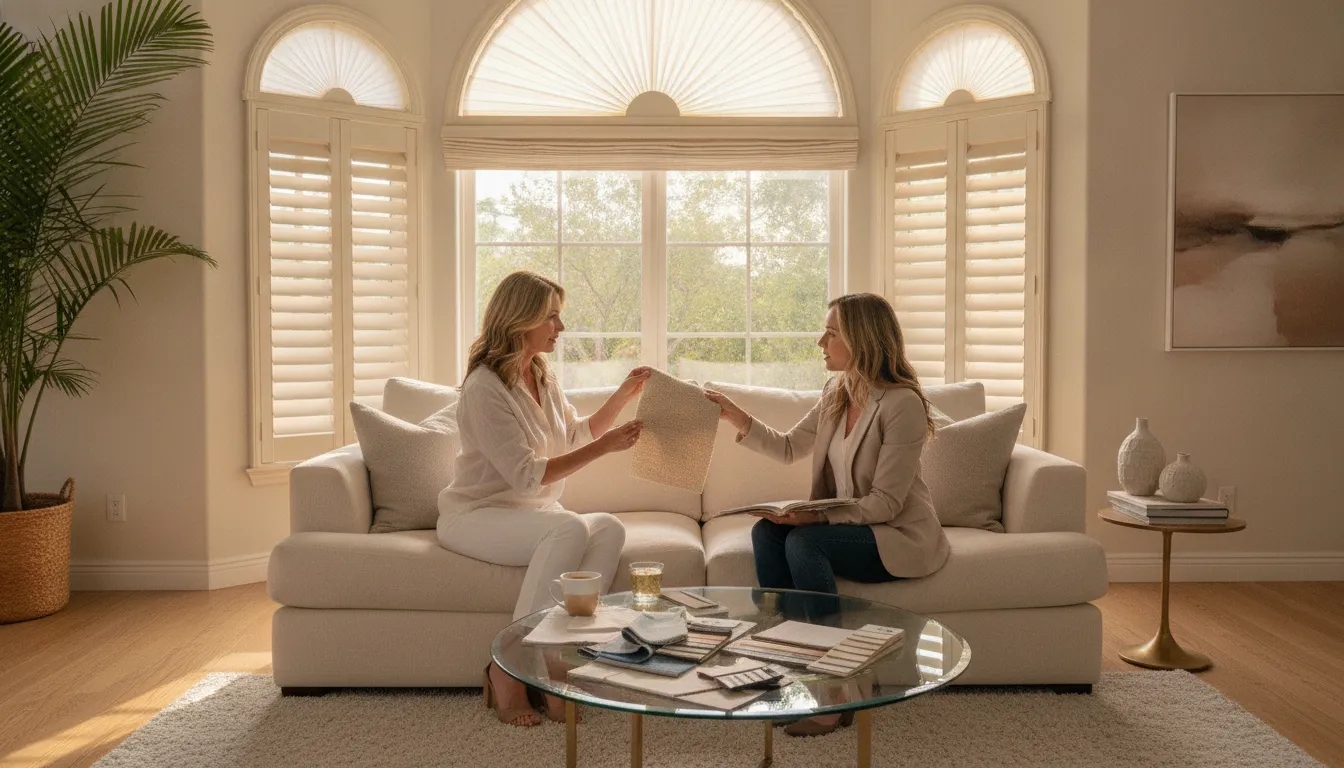
A living room may benefit from flexible light filtering, while a bedroom or media area may need stronger privacy and glare control. If you are furnishing a new home, use this sliding glass door treatments checklist alongside your measurements so the door treatment coordinates with the rest of the home. A professional in-home consultation also lets you review samples in your actual lighting and confirm the frame clearance before choosing.
Why Southern California Homeowners Prefer Custom Sliding Door Treatments
Sliding glass doors connect Southern California homes to patios, yards, and bright outdoor living spaces. That connection is valuable, but large panes of glass can also bring intense afternoon sun, glare, and unwanted heat into the room. Custom-fit treatments help homeowners keep the view and easy door access while making the space more comfortable.
Designed for indoor-outdoor living
Sliding doors are used differently from ordinary windows. The treatment needs to move with the door, stay clear of handles and tracks, and provide privacy when the family needs it without making the room feel closed in. A made-to-measure solution can account for the opening width, door direction, available frame depth, and clearance around the moving panel.
Custom sizing also creates a cleaner appearance than forcing an off-the-shelf product into an unusually wide opening. The same careful approach can help with other distinctive windows. For additional ideas, see these window coverings for bay windows.
Better comfort in strong California sun
The U.S. Department of Energy notes that window coverings can reduce solar heat gain and improve energy efficiency, especially in warm climates. Southern California homeowners often prioritize heat management when selecting window attachments. A custom treatment can cover the opening more completely, limiting bright glare and hot spots around the edges. Light-colored materials may reflect more heat than darker options, which can be useful for doors exposed to strong sun.
The right choice depends on the room and orientation. A living room may need soft light and an open view, while a bedroom or media room may benefit from stronger privacy or light control. A professional can help compare fabrics, slats, panels, shades, and shutters for the way each room is used.
See the choices in your own home
Vineyard Blind & Shutter brings its mobile showroom directly to homeowners in Riverside County, San Diego County, and Orange County. Instead of judging a small sample under showroom lighting, you can see colors, textures, and opacity levels beside the actual door, flooring, and furnishings. The visit also allows the team to evaluate clearances and measure the opening accurately.
Vineyard is veteran-owned and family-operated, with more than 20 years of experience. Consultations, measuring, and installation are included as part of the professional service. To compare options for window coverings for sliding glass doors, request a free in-home consultation and discuss the best fit for your space.
Frequently Asked Questions
Q: What can I use instead of curtains for sliding glass doors? Several options work well, including vertical blinds, panel track blinds, roller shades, cellular shades, and shutters. Vertical blinds and panel tracks move side to side, so they work with the door's opening pattern. Roller shades create a clean, minimal look, while cellular shades can add insulation. The best choice depends on your preferred light control, style, and daily traffic through the doorway.
Q: Are panel track blinds good for sliding glass doors? Yes. Panel track blinds use broad fabric panels that glide along a track, making them practical for wide openings. They can provide a more contemporary appearance than traditional vertical blinds, and the panels may also divide a room when the door is open. Choose a configuration that stacks away from the active door panel to preserve an easy path.
Q: Should you choose blinds or curtains for sliding doors? Blinds are often easier to operate when the doorway is used frequently because they are designed for controlled side-to-side movement and precise light adjustment. Curtains can provide a soft appearance and broad coverage, but fabric may need more clearance around the opening. Consider whether you need privacy, frequent access, insulation, or a streamlined profile before choosing.
Q: Can you install motorized blinds on sliding glass doors? Motorized shades and blinds can be installed on many sliding glass door configurations. They are useful for large or hard-to-reach openings and can reduce the need to handle cords, which may support a safer room setup. A professional should confirm the available clearance, power arrangement, and track or shade configuration before installation.
Q: What is the best covering for sliding glass doors in Southern California? There is no single best option for every home. Cellular shades are a strong choice when insulation is a priority, while lighter-colored shades or blinds can help reflect more heat. Vertical blinds and panel tracks suit frequent indoor-outdoor traffic. A custom measurement helps reduce side gaps and match the treatment to the door, frame, and surrounding furniture.
Ready to Choose the Right Sliding Door Covering?
A custom fit can make daily access, light control, and the overall look of your sliding glass door feel more intentional. Schedule a free in-home consultation to compare materials and options in your own space. Call (951) 757-4188 to get started with Vineyard Blind & Shutter.